
Summary
Editor's rating
Is it worth the money for an average golfer?
Mid-mallet look, navy finish, and slant neck feel
How it feels in the hands and over 18 holes
Alloy steel shaft, AI insert, and that Panlite window
Build quality and how it holds up after a few weeks
Roll, forgiveness, and distance control on real greens
What you actually get out of the box
Pros
- Forgiving head with AI insert that keeps ball speed more consistent on off-center hits
- Comfortable balance thanks to the SL 90 counterweighted shaft, easy to swing over long sessions
- Navy PVD finish and alignment lines give a clear, glare-free view at address
Cons
- No extra front weights included, so customization costs more
- Price is on the high side compared to simpler mallets that still get the job done

Specifications
View full product page →| Brand | Odyssey |
A tech-heavy putter that still feels familiar
I’ve been rolling the Callaway / Odyssey AI-One Jailbird Mini Slant 33" for a few rounds now, plus a bunch of practice on the putting green and at home on a mat. I’m not a pro, just a regular golfer who three-putts more than I’d like, so I was mainly looking for something stable that helps with distance control, not a magic wand. This putter is sold with a lot of tech talk (AI insert, special shaft, adjustable weights), so I wanted to see if any of that actually shows up in real use.
Right away, the first thing I noticed was the head shape and alignment. It’s the Jailbird Mini head, so a mid-sized mallet, not as huge as some full mallets, but still bigger than a blade. On the practice green, it gave me a bit more confidence over 6–10 footers because it sits flat and the lines are easy to aim. I’d been using a standard Anser-style blade before this, so the extra forgiveness was obvious from day one.
Over about three full rounds and a couple of long practice sessions, I paid attention to three things: distance control, forgiveness on mishits, and feel/sound. My stroke is slightly arcing, so the slant neck made sense for me. I didn’t change anything in my setup except switching straight from my old putter to this one, and I could see right away that heel and toe mishits were rolling out closer to my good strikes.
It’s not perfect, and it’s not cheap. There are details that bugged me, like the headcover and the fact that you basically need extra weights if you want to play with the head feel properly. But overall, it’s a pretty solid mallet for someone who wants forgiveness and a very predictable roll, without going into super weird shapes or super heavy counterbalanced setups.
Is it worth the money for an average golfer?
Let’s talk money. This putter sits in the higher price range compared to basic putters from lesser-known brands, but it’s in line with other Odyssey and big-name models. You’re clearly paying for the brand, the AI insert tech, the SL 90 shaft, and the adjustable weights. If you’re just starting golf and still figuring out your stroke, this might feel like overkill, and a cheaper mallet could get you 70–80% of the performance for less cash.
From my point of view as a regular golfer who plays most weeks, the value is pretty decent but not outstanding. The performance is solid, the feel is nice, and the forgiveness is real, not just marketing talk. At the same time, you don’t get extras like spare weights in the box, and the headcover is fairly standard. If this came with at least one more weight set and a slightly better cover, I’d be more enthusiastic about the overall package.
Compared to some cheaper putters I’ve owned, the main difference here is the consistency across the face and the balance. Mishits are punished less, and the putter feels easier to swing for long sessions. If you care about shaving a few putts per round and you already have a half-decent stroke, then spending more on a putter like this starts to make sense. If you only play a few times a year, the price might be hard to justify.
So in the end, I’d say the value is good for someone who plays regularly and wants a modern mallet with proven tech, but there are definitely cheaper options that will also get the job done if you’re on a tight budget. It’s not a rip-off, but it’s not a bargain either. You’re paying a fair price for a solid, well-thought-out putter with some useful tech baked in.
Mid-mallet look, navy finish, and slant neck feel
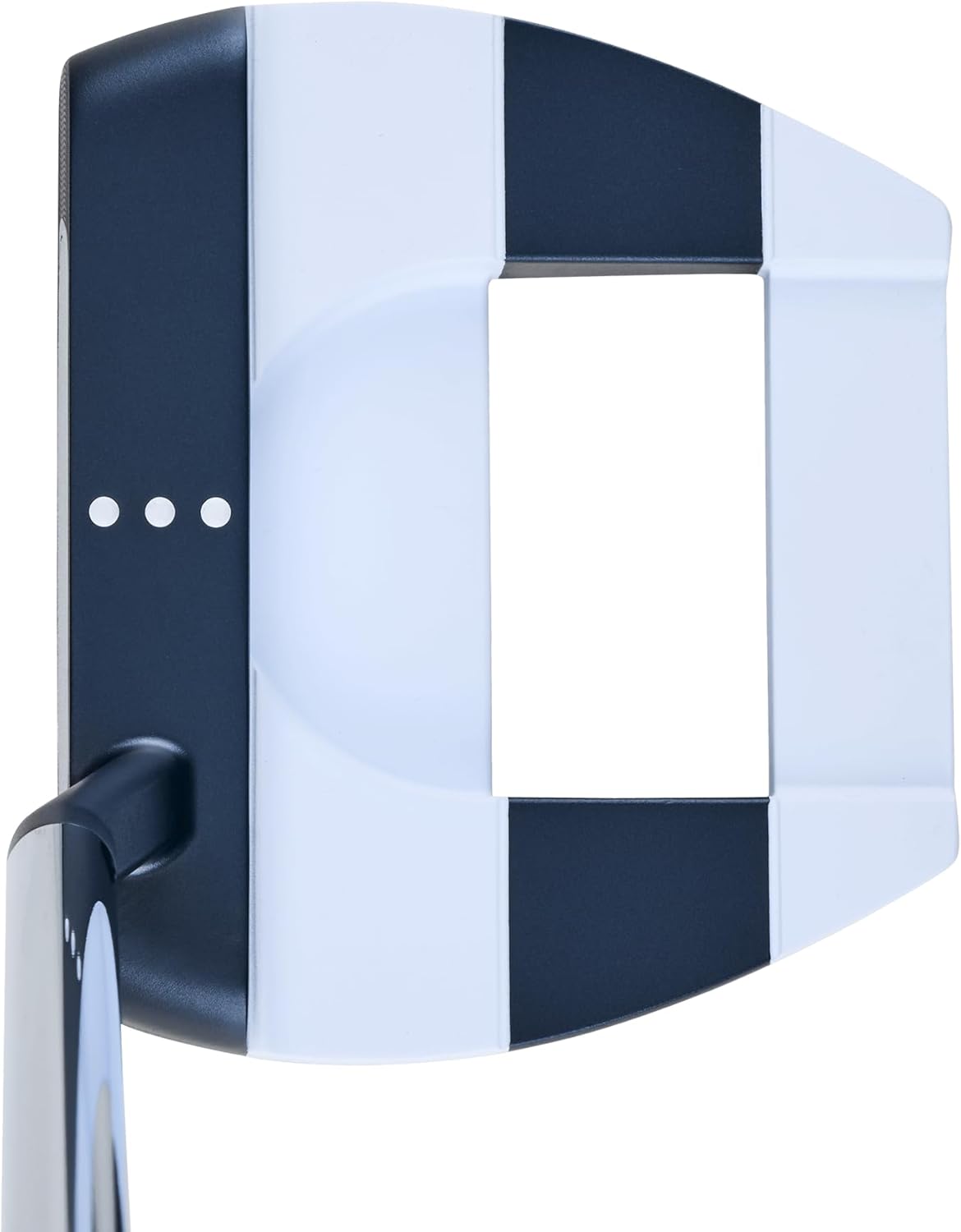
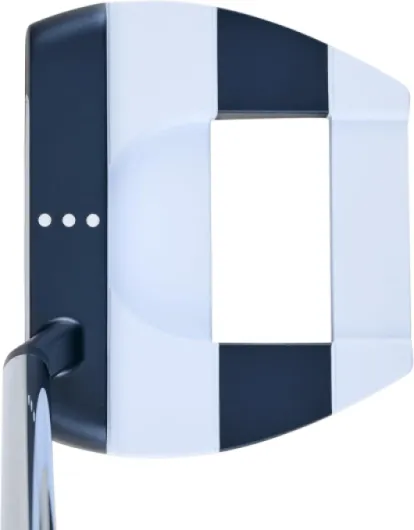
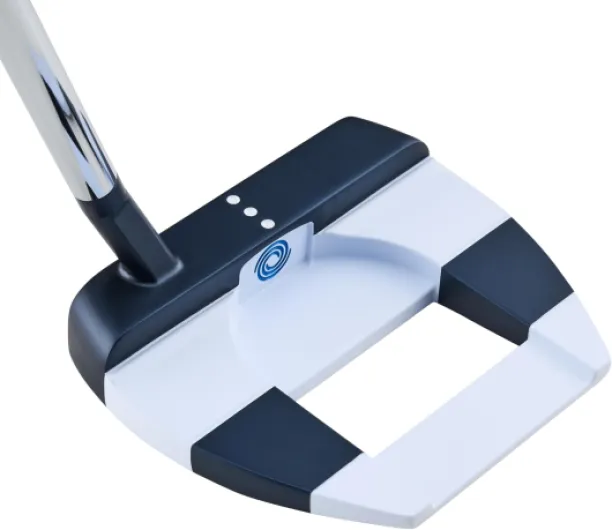
Design-wise, this is a Jailbird Mini mallet, so it’s in the middle ground between a traditional blade and those massive spaceship mallets. The footprint at address is confidence-boosting without feeling like you’re swinging a frying pan. On the green, the first thing that stands out is the navy blue PVD finish. It looks clean and does help cut down glare in bright sun compared to shiny chrome. After a few rounds, I didn’t notice any chipping or weird marks, just the usual light wear you’d expect from brushing greens and occasionally tapping a ball out of the cup.
The slant neck is meant for players with a slight arc in their stroke. When I set it down, the face has a bit of toe hang, not face-balanced like some other mallets. For me, that matched my natural path better than a fully face-balanced mallet I tried before. If you’re a straight-back-straight-through person, this neck might not be ideal, but for a small arc it’s pretty natural. The transition from shaft to head looks clean, and there’s no weird offset that messes with your eyes.
Alignment is pretty straightforward. You’ve got the Jailbird-style head shape and lines that help frame the ball. I found it easy to line up on short putts, and on longer putts it was mainly about trusting the line I picked. The head sits flat on the ground, so it’s not fussy about lie as long as you’re reasonably close to the right fit. The 33-inch version felt fine for my height (around 5'8"), but if you’re taller you might want 34 or 35 inches.
Overall, the design is functional and modern without being weird. It looks like a proper tour-style mallet with a bit of color. If you’re used to classic blades, it will feel bigger, but not cartoonish. If you like very minimalistic looks, the navy, windows, and graphics might feel a bit busy, but for me it stayed on the right side of sporty and practical.
How it feels in the hands and over 18 holes
In terms of comfort, the first thing I noticed was the overall balance. The SL 90 shaft with the counterweight in the butt means the head doesn’t feel too heavy, even at 33 inches. I’m used to standard steel putters, and this one felt a bit easier to swing for a long session on the practice green. After 30–40 minutes of non-stop putting, my hands and forearms were less tired than with my old, heavier setup. That’s not magic, just slightly better weight distribution for my taste.
The pistol grip is a pretty standard size (listed as 4 1/4 inches). It’s not an oversized fat grip, but it’s not a thin pencil either. For my medium-sized hands, it felt natural. I could still feel the face without getting too handsy. If you’re a fan of big SuperStroke-style grips, you might swap this out, but out of the box it’s totally usable. The texture is grippy enough even when your hands get a bit sweaty in warm weather, and I never felt like it was slipping.
On the course, over full rounds, the putter stayed comfortable in all kinds of lies: fringe, first cut, even when I had to putt through a bit of rough around the green. The head shape glides reasonably well through slightly longer grass, and the weight isn’t so heavy that you feel like you’re hacking at it. At 33 inches, I felt nicely over the ball without hunching too much, but that obviously depends on your height and posture. I didn’t feel any awkwardness with the slant neck – the way it sets up at address is pretty natural.
Overall, I’d say the comfort level is quietly good. It doesn’t blow you away, but you don’t really think about it after a few holes, which is what you want from a putter. If you need a very specific grip shape or length, you’ll probably customize it anyway, but straight out of the box it’s friendly to most average golfers.
Alloy steel shaft, AI insert, and that Panlite window
This putter uses an alloy steel shaft with what they call the SL 90 design. In practice, that means it’s a lighter steel shaft with about 20–30 grams of weight in the butt end under the grip. When you hold it, you can feel that the balance is slightly different from a normal steel putter – the head is still present, but the club doesn’t feel tip-heavy. On long practice sessions, that lighter feel made it easier on my wrists compared to a very heavy putter I used before.
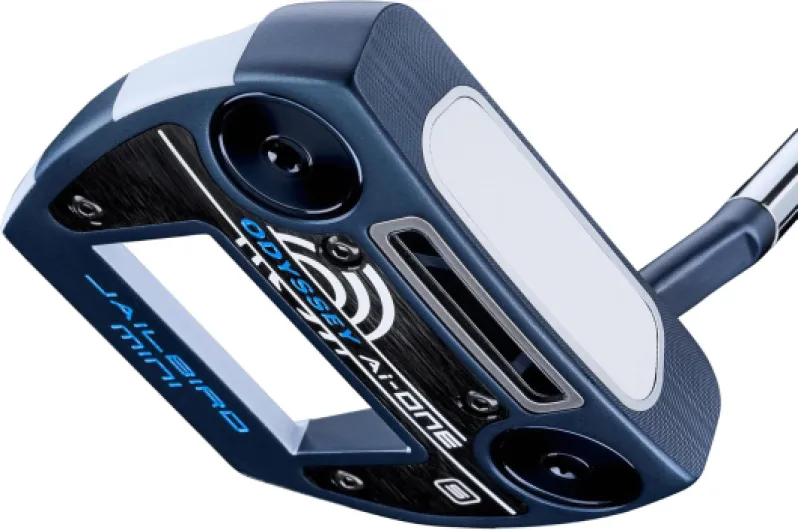
The face is where most of the marketing talk comes from: an AI-designed insert with an aluminum back and a White Hot urethane layer on the front. The idea is that the aluminum structure behind the insert is shaped to keep ball speed more consistent across the face. The urethane layer is basically the same material feel that a lot of Odyssey users already know. In hand, you can clearly see the different materials, and when you tap a ball, the sound is more muted than a solid milled face but still gives enough feedback to tell if you hit it center or not.
On the back of the head, you have that Panlite window, which is a clear automotive-grade polymer. It’s there mainly to show off the internal insert structure. From a performance standpoint, it doesn’t change much; it’s more of a visual thing. It didn’t scratch or fog up in my few weeks of use, even with some light bag chatter. Time will tell how it holds up after a full season, but for now it looks solid enough.
The head itself is made from typical putter metal (alloy steel construction overall). The finish and milling around the edges looked consistent – no rough spots, no sharp edges. The pistol grip is standard quality: decent texture, not too soft, not super firm. It’s not a luxury oversized grip, but it fits the overall build. In short, the materials feel reliable and suited for regular play, even if some of the tech like the window is more visual than game-changing.
Build quality and how it holds up after a few weeks
Durability is always hard to judge long-term, but after a few weeks of use and normal bag abuse, I can at least say how it holds up early on. The navy PVD finish on the head still looked good after multiple rounds. No obvious chipping, just a few tiny marks on the sole from regular use, which is totally normal. The top line and visible areas stayed clean, so you’re not looking down at a beat-up head after a short time.
The Panlite window in the back was something I was a bit skeptical about. I expected scratches or maybe fogging, but so far it stayed clear. I don’t baby my clubs; they go in a cart bag, they bump into other irons and wedges, and I put the cover on and off a lot. After that, the window still looked fine. Long-term, I can’t promise anything, but at least it doesn’t feel flimsy or like it’s going to crack the first time it hits something.
The shaft and grip also held up as expected. The alloy steel shaft didn’t show any weird discoloration or bending, and the SL 90 design doesn’t change anything in terms of toughness. The grip still felt the same after a handful of rounds, no twisting or early wear spots. It’s not a luxury grip, but it’s not cheap junk either. The stitching and Velcro on the headcover were okay, though I could see the cover being the first part to get tired if you’re rough on your gear.
Overall, the putter gives the impression of being ready for regular, weekly use without falling apart. It’s not some delicate collector’s item you’re scared to use. If you treat your clubs reasonably well, I don’t see any obvious red flags in terms of durability, at least based on the first few weeks. The only long-term question mark is the cosmetic look of the PVD finish and window after a full season, but so far, so good.
Roll, forgiveness, and distance control on real greens
Performance is where this putter actually justifies most of its price. Over several rounds, the biggest thing I noticed was the forgiveness on off-center hits. I purposely hit some putts off the heel and toe during practice, and the drop in distance was smaller than with my old blade. On the course, that translated into fewer putts coming up embarrassingly short when I didn’t catch the center perfectly. The ball still rolled close enough that I had a decent tap-in instead of a three-putt situation.
The AI-One insert does its job in terms of consistent roll. The face feel is on the softer side because of the White Hot urethane, but not mushy. On medium-speed greens, I quickly got used to the required stroke length. On very slow greens, I had to hit it a bit harder than I’d like, but that’s true with most soft inserts. The sound is a muted "tock" rather than a click, which I personally like. It gives enough feedback to know when you’ve mishit it, but it doesn’t feel harsh.
Distance control from 20–40 feet was solid after a short adjustment period. The head is stable through impact, so as long as I made a decent stroke, the ball speed felt predictable. The adjustable front weights are supposed to let you tweak this, but since I only had the stock setup, I can’t say much about the full range of options. Still, even stock, it felt balanced enough that I didn’t feel the urge to mess with it immediately.
On short putts inside 6 feet, the combination of the alignment lines and mallet stability definitely helped. I still missed my share due to bad reads or bad strokes, but the putter itself didn’t feel like the weak link. Compared to my old blade, I had fewer pushes and pulls because the head didn’t twist as easily on slight mishits. Overall, I’d rate the performance as reliably good for an average golfer: it won’t magically fix a terrible stroke, but if you’re halfway decent, it makes life a bit easier on the greens.
What you actually get out of the box
When you open the box, you get exactly what’s listed: the putter and the putter cover, that’s it. No extra weights in the package, no tool, no fancy extras. The club I had was the 33-inch version, right-handed, with the pistol grip and slant neck. The color is listed as dark blue, and in person it’s a pretty deep navy, not some flashy bright blue. If you’re used to the classic silver or black putters, this does look a bit different in the bag, but not in a loud way.
The spec sheet mentions interchangeable front weights in 5, 10, 15, and 20 grams. On the actual club, you can clearly see the weight ports in the front of the head. Out of the box, mine came with a setup that felt medium-heavy, not super light, not a sledgehammer either. The problem is: if you want to really experiment, you’ll probably have to buy extra weights separately, which adds to the cost. For a club at this price, I would have liked at least one extra pair of weights in the box.
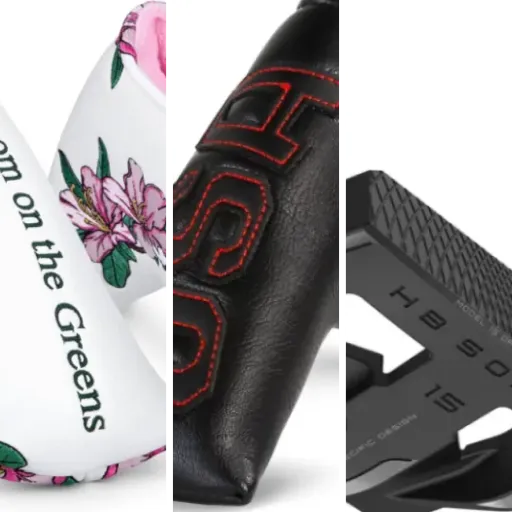
The headcover is decent but nothing more. It’s padded enough to protect the head, the closure stays on, but it feels pretty standard. Stitching looked okay after a few weeks, but it doesn’t scream high-end. It does match the navy theme, so at least it doesn’t look like a random cover thrown on top. If you’re picky, you might end up replacing it with something more robust over time, especially if you’re rough with your gear.
Overall, in terms of presentation, it’s pretty straightforward: you pay for the tech in the head and shaft, not for a fancy unboxing experience. Compared to some boutique putters that come with extras and premium covers, this is more practical and basic. That’s fine for me, but if you like the feeling of getting a lot of accessories for your money, this one is pretty barebones.
Pros
- Forgiving head with AI insert that keeps ball speed more consistent on off-center hits
- Comfortable balance thanks to the SL 90 counterweighted shaft, easy to swing over long sessions
- Navy PVD finish and alignment lines give a clear, glare-free view at address
Cons
- No extra front weights included, so customization costs more
- Price is on the high side compared to simpler mallets that still get the job done
Conclusion
Editor's rating
After a few weeks with the Callaway / Odyssey AI-One Jailbird Mini Slant 33", my overall feeling is that it’s a very solid modern mallet that actually delivers on the basics: stable head, predictable roll, and decent feel. The AI insert and the SL 90 shaft aren’t just buzzwords – together they give a nice mix of forgiveness and control, especially if you have a slight arc in your stroke. It doesn’t magically fix bad reads or terrible strokes, but it makes your average putt a bit more reliable, which is really what matters.
I’d recommend this putter mainly to intermediate and regular golfers who play often enough to notice small improvements in distance control and mishit forgiveness. If you like the idea of a mid-sized mallet with a softer face and a more modern look, this fits nicely. On the other hand, if you’re a beginner on a budget, or if you prefer the crisp feel and sound of a milled blade, you might want to look elsewhere or at least try this in a shop before buying.
It’s not perfect – the lack of included extra weights and the fairly basic headcover are small downsides, and the price is on the higher side. But if you’re okay with that and want a putter that feels stable, looks a bit different without being over the top, and offers consistent performance across the face, this Jailbird Mini Slant is a pretty safe bet for your bag.