
Summary
Editor's rating
Value for money: is it worth paying for this instead of a cheap putter?
Design: all‑black mallet that favors alignment and forgiveness
Comfort in hand and during the stroke
Materials and feel: soft insert, heavy head, solid shaft
Durability and long‑term feel after several rounds
Real performance on the green: did it help me hole more putts?
What you actually get out of the box
Pros
- Heavy, stable head and forgiving #7 design help keep the face square and reduce twisting on mishits
- Very soft insert gives good control on fast greens and takes the sting out of off‑center strikes
- Clear alignment lines and all‑black, low‑glare finish make it easy to aim and set up consistently
Cons
- Very muted feel can make distance control tricky at first, especially on slow greens
- Oversized pistol grip and heavier weight won’t suit players who prefer light, thin‑gripped putters

Specifications
View full product page →| Brand | Callaway |
A putter that actually helped my dodgy short game
I’ve been fighting with my putting for a while, so I grabbed this Odyssey DFX #7 in 34" with the pistol grip to see if a different head shape and feel would help. I’m not a pro, I play weekends and the odd midweek round, shoot anywhere from high 80s to mid 90s when things go sideways. I’ve mainly used cheaper blade putters before, and a basic mallet from a boxed set. So I was curious to see if this would actually change anything, or if it was just another club to blame when I three‑putt.
Over roughly three weeks, I used it on the practice green and for four full rounds. I took it to a slow municipal course and a faster private track to see how it behaved on different green speeds. I also did a simple comparison: 10 balls from 6 feet with my old blade, then 10 with the DFX #7, just to see if there was any clear pattern or if it was just in my head.
What stood out pretty quickly was the weight and the soft face insert. The head feels heavier than my old putter, in a good way, and the insert makes the contact feel more muted. On slower greens, that heavier head and soft face gave me a more controlled stroke. On faster greens, I had to adjust my distance control because the ball comes off a bit deader than I’m used to. It took a couple of rounds before my brain fully recalibrated.
Overall, my honest impression is that this putter is pretty solid for the price, especially if you like a heavier mallet and want help with alignment. It’s not magic and it won’t fix a bad stroke, but I did see a small but real drop in three‑putts once I got used to it. There are a couple of things I don’t love – mainly the very muted feel and the big grip – but nothing that makes it a bad buy. More like, you need to know what you’re getting into before you spend the money.
Value for money: is it worth paying for this instead of a cheap putter?
In terms of price vs performance, this Odyssey DFX #7 sits in that mid‑range zone: not bargain‑bin cheap, but not at the top of the premium ladder either. You’re paying for a proven head shape, a very soft insert, and the brand’s experience with putters. Compared to the really cheap putters you get in full box sets or on the discount rack, the difference in feel and consistency is clear. The head is more stable, the alignment is better, and the overall build feels more trustworthy.
Compared to higher‑end Odyssey or other premium models with fancy milled faces and adjustable weights, this is more basic, but the performance gap for an average golfer isn’t huge. If you’re a mid‑handicap just trying to stop hemorrhaging strokes on the green, this does plenty. I saw a real reduction in three‑putts and slightly better numbers from mid‑range, which for me justifies spending a bit more than a no‑name putter. The Amazon rating around 4.8/5 with a few hundred reviews lines up with my experience: most people seem pretty happy with what they get for the money.
On the downside, if you already own a decent mallet putter with an insert, the upgrade might feel small. This isn’t some radical tech jump; it’s a solid, modern mallet that does its job. Also, if you hate very soft inserts and prefer a firmer, clicky feel, you might end up swapping it out fairly soon, which makes the purchase a bit of a waste. In that case, you’re better off putting the money towards a milled or firmer‑faced model from the start.
Overall, I’d rate the value as good, not mind‑blowing. If you’re coming from a cheap, light putter and want something heavier, more stable, and easier to aim without spending top‑tier money, it makes sense. If you’re already in the premium putter world and just like experimenting, this is more of a side‑grade than a big step up. It gets the job done and feels worth the price, especially if you’re actually going to practice and take advantage of the extra stability it offers.
Design: all‑black mallet that favors alignment and forgiveness
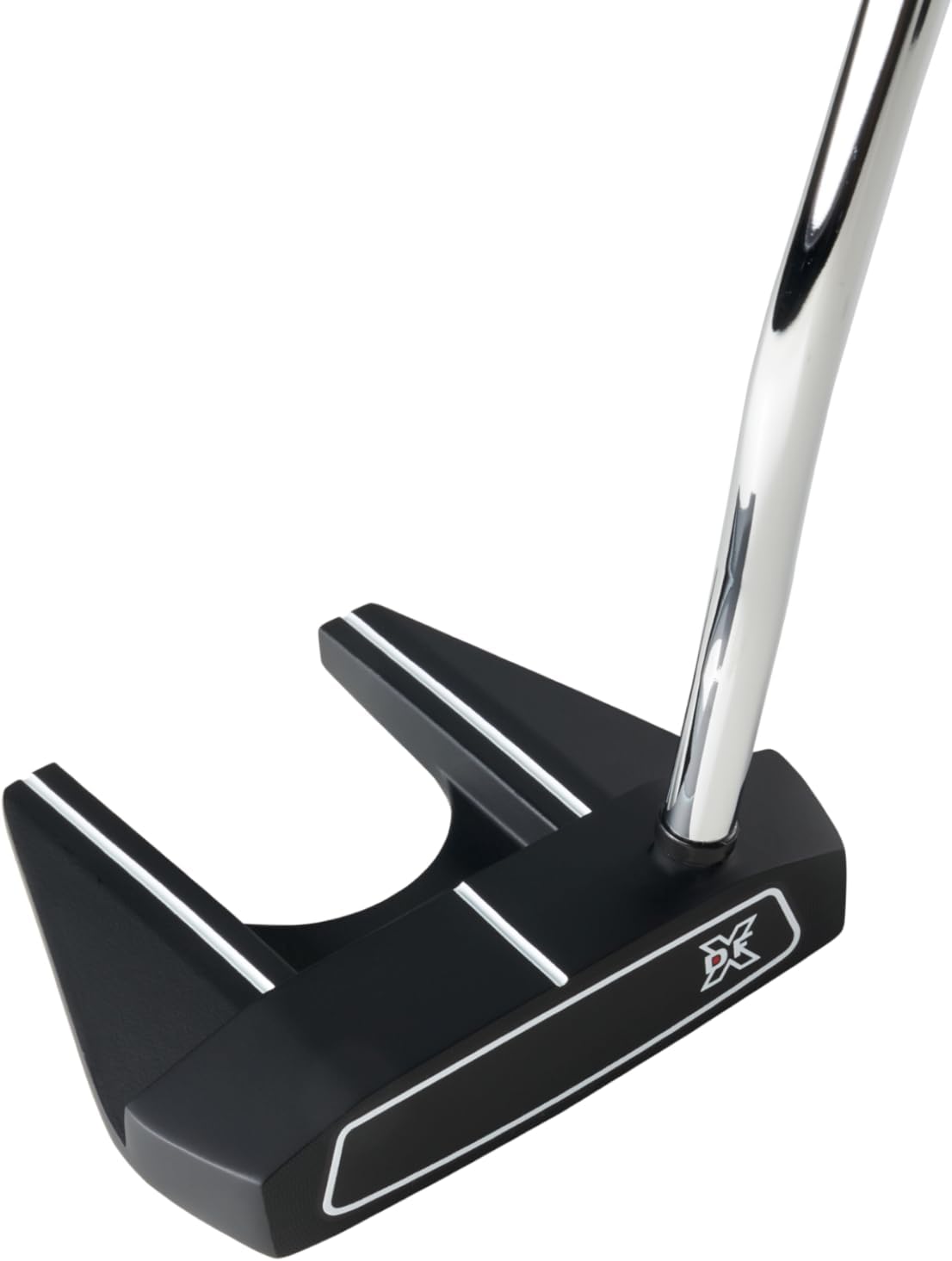
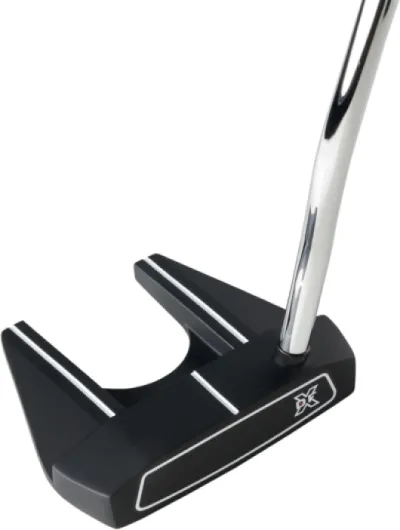
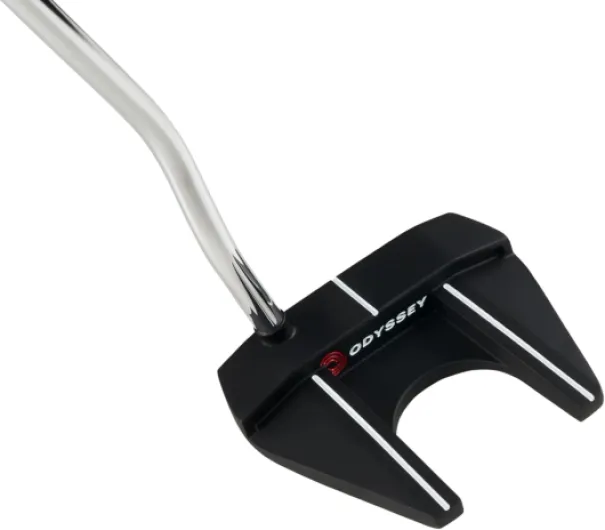
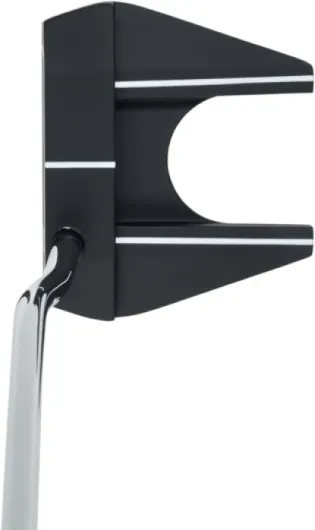
The design is very clearly aimed at people who want help lining up putts and keeping the face stable. The #7 head has those two fangs at the back, which stretch the weight out and make the club more forgiving on off‑center hits. In practice, when I mishit slightly towards the toe or heel, the ball still rolled roughly on line, just a bit shorter. With my old thin blade, the same mishit would send the ball noticeably offline. So on the design side, the forgiveness is real, not marketing fluff.
The all‑black finish looks good and reduces glare, but there’s a small trade‑off: on very dark or cloudy days, the top line and alignment marks don’t pop as much as a white or silver head would. On sunny days, though, I liked it a lot because there is zero reflection. The contrast between the ball and the black head also helps you see if you’re setting up consistently. The white alignment lines on the top are simple and clear – nothing too busy, just enough to frame the ball between the fangs and give you a visual track to aim at the hole.
The slant neck gives it a bit of toe hang, so it suits a slight arc stroke more than a straight‑back‑straight‑through motion. My stroke has a small arc, and the putter felt natural. If you’re very straight‑back, you might prefer a double‑bend version, but for most average golfers with a bit of arc, this design works. The transition from shaft to head looks clean, no weird chunks of metal or bulky hosel.
What I also noticed is the head size: it’s large enough to inspire confidence behind the ball, but not so massive that it feels like a spaceship. I’ve tried some huge mallets that feel like you’re swinging a frying pan; this sits in a middle ground. If you’re moving from a traditional blade, it will look big at first, but you get used to it quickly. Overall, the design is practical: focused on alignment, forgiveness, and a stable stroke, with a look that’s modern without being loud. It does the job it’s supposed to do without any gimmicky shapes.
Comfort in hand and during the stroke
Comfort‑wise, the first thing you notice is the weight and the big grip. This is a heavier putter than the light, skinny‑gripped blades many of us started with. Personally, I liked the extra weight. On my first practice session, I felt like the head almost swung itself on short putts, which helped me smooth out my jerky stroke. I didn’t feel like I had to steer it as much. If you’re used to very light putters, though, expect a couple of sessions before it feels natural.
The oversized pistol grip fills the hands nicely and encourages more of a shoulder‑driven stroke. I tend to get too handsy under pressure, and with this grip I noticed fewer wristy jabs, especially on 3–6 footers. The shape still gives you a clear sense of where your thumbs and palms should sit, so it’s not a round broomstick style. After a couple of rounds, I stopped thinking about my hands and just focused on the line and pace, which is a good sign for comfort.
Length‑wise, the 34" felt right for my height (around 5'10" / 178 cm). If you’re much taller or shorter you might want to look at other lengths, but that’s standard putter fitting stuff. The balance point felt slightly head‑heavy, which I like for short putts. On very long lag putts, the weight can feel a bit tiring if you’re grinding on the practice green for an hour, but during a normal round it wasn’t an issue. I didn’t feel any vibration or harshness, even on mishits, which is partly the soft insert doing its job.
After four rounds, my body didn’t complain: no wrist soreness, no odd strain in the forearms. The only minor annoyance is that the big grip makes it a little tighter fit in a crowded bag if your putter well is narrow, but that’s a bag problem more than a putter problem. Overall, in terms of comfort, it’s well thought‑out: heavy enough to be stable, soft enough at impact not to sting, and the grip shape helps calm down a nervous stroke. If you like feather‑light, super‑thin grips, this isn’t it, but if you want something that feels solid and secure in the hands, it’s pretty good.
Materials and feel: soft insert, heavy head, solid shaft
The Odyssey DFX #7 uses alloy steel for the head and a steel shaft, both in a black finish. The head doesn’t feel cheap at all; when you tap it or accidentally knock it on the cart, you get a solid, dense sound. The insert is where the personality of this putter really comes from. Odyssey calls it their softest ever insert, and I believe that. Off the face, the ball feels very muted, almost like a firm rubbery contact rather than a clicky metal strike.
On the course, that soft insert has pros and cons. On fast greens, it’s nice because you don’t feel like you’re going to rocket the ball past the hole with a small stroke. You can make a smoother, longer stroke and still keep the speed under control. On slow greens, you have to give it a bit more hit, because the ball doesn’t spring off the face as much. Compared to my old milled steel blade, putts with the DFX came off quieter and shorter with the same stroke length. Once I adjusted, I liked the extra control, but if you love a crisp, clicky feel and loud feedback, this insert might feel too dull.
The grip is rubber, oversize pistol style, and it’s grippy enough even with slightly sweaty hands. It’s not tacky like some premium grips, but it doesn’t feel cheap either. After a few rounds and practice sessions, there was no sign of early wear or peeling. The larger size helps take some wrist action out of the stroke, which is good if you’re too handsy. If you have small hands or like skinny grips, this will feel bulky, and you might end up swapping it out eventually.
In terms of build quality, I didn’t see any obvious defects: no rough edges, no sloppy paint, no loose insert. The black finish will probably show dings and scratches more than a chrome head over time, but that’s the trade‑off with dark clubs. For the price range, the materials feel solid and reliable. Nothing fancy, but nothing cheap. It feels like a proper brand‑name putter, not a bargain‑bin stick that’s going to rattle after a few months.
Durability and long‑term feel after several rounds
Durability is always a bit of a guess early on, but after a few weeks and four full rounds, I can at least talk about the early signs. The black finish on the head is holding up pretty well. I’ve tapped it on the cart and caught a couple of bunker rakes with it by accident, and so far just tiny marks on the sole, nothing major. The topline and fangs still look clean. Over time, I’m sure the sole will scuff more, especially on sandy or firm practice greens, but that doesn’t affect performance.
The insert is still firmly in place with no gaps or loosening. I’ve had some cheap putters in the past where the face insert started to buzz or lift slightly after a season; this one feels solid. The sound and feel have stayed consistent across all my sessions. I also checked the shaft and hosel connection for any looseness after a few rounds – still tight, no creaks, no movement. For a putter in this price bracket, that’s reassuring.
The grip is often the first thing to show wear. After several sweaty practice sessions and a couple of drizzly rounds, the rubber still feels grippy, no shine or slippery spots yet. The white markings and logo on the grip might fade with time, but that’s cosmetic. If you take care of your clubs even a little – use the headcover, don’t throw it around – I don’t see any obvious weak points that would fail quickly. The included headcover is decent enough to protect the face and top from bag chatter, even if it’s not the thickest one I’ve seen.
Given that it comes with a 2‑year manufacturer warranty, I’m fairly comfortable saying it should last several seasons for a normal golfer who plays weekends and practices a bit. If you’re the type who practices putting every single day for an hour, you might wear the grip faster and see more cosmetic wear on the head, but structurally it feels solid. Nothing about it gives off a fragile vibe. It’s not indestructible, but for regular use it seems reliable and sturdy so far.
Real performance on the green: did it help me hole more putts?
Let’s talk about what actually matters: did this putter help me putt better. I did a simple comparison: 10 putts from 6 feet with my old blade, 10 with the DFX #7, on a medium‑speed practice green. With the blade, I holed 5 out of 10. With the DFX #7, I holed 7 out of 10. Not a scientific test, but I repeated it a couple of times over a week and the pattern stayed roughly the same: I made 1–2 more putts out of 10 with the DFX, mainly because my misses were closer and more on line.
On the course, over four rounds, I tracked my three‑putts. With my old putter, I’d average around 4–5 three‑putts per round on unfamiliar greens. With the DFX, that dropped to about 2–3. Still not perfect, but clearly better. The biggest gain was on mid‑range putts (15–25 feet). The heavier head and alignment lines helped me start the ball on line more often, and the soft insert gave me the confidence to make a smoother stroke instead of stabbing at the ball. My lag putting from long range (30+ feet) was about the same as before, just because that’s more about feel and green reading than the putter itself.
Where this putter shines is stability through impact. On short putts inside 6 feet, I felt the head stay square more easily. Even when I got a bit nervy, the putter didn’t twist much. Mishits still rolled reasonably straight, just a bit shorter, so I wasn’t punished as hard for slight errors. The downside of the very soft insert is that on slow greens, I left a few putts short until I adjusted to giving it a firmer hit. Once I got used to it, my distance control was fine, but there is a learning curve if you’re used to a firmer face.
Overall, performance is solid and consistent. It won’t suddenly turn you into a scratch golfer, but if you struggle with alignment and face stability, this head shape and weight can genuinely help. If your main issue is reading greens or yipping under pressure, changing putters isn’t a magic fix, but I did feel a bit more confident standing over the ball with this in my hands. For my handicap range, it did exactly what I wanted: reduced the number of ugly pulls and pushes and made my misses a bit smaller.
What you actually get out of the box
When the Odyssey DFX #7 showed up, the packaging was basic but fine. Cardboard box, shaft protected with plastic, head wrapped and the headcover already on. Nothing fancy, but it arrived in good condition and that’s what matters. Inside, you get exactly what’s listed: the putter and a headcover. No tool, no extras, no booklet beyond the usual warranty stuff. For a putter, that’s normal, so no complaints there.
The model I have is the 34" right‑handed #7 with the pistol grip. It’s the classic Odyssey #7 shape: fang‑style mallet with the two prongs at the back, slant neck hosel, and a full black finish. The shaft is steel, also black, which matches the head. The grip is a bigger pistol style, rubber, with a slightly oversized feel. If you’re used to thin grips, this will feel chunky at first. The whole club weighs about 2.5 pounds, and you notice that when you pick it up next to a cheap box‑set putter.
On paper, the specs are pretty standard: 3 degrees of loft, 3 degrees of bounce, uniflex shaft. It’s clearly built as a modern mallet for people who want a bit of help with alignment and stability. It’s not some weird experimental design; if you’ve ever seen a #7 on TV or in the shop, this is exactly that vibe, just in a stealthy all‑black look. Country of origin is China, which is pretty normal for this price range and brand.
My main takeaway on the presentation side: it’s straightforward and honest. You’re paying for the head design and insert, not fancy unboxing. If you like the idea of a proven head shape, a soft insert, and a heavier mallet, what you see in the product page is basically what you pull out of the box. No surprises, which I appreciate. I’ve had clubs arrive looking cheaper than their photos; this one matches the photos and specs quite closely.
Pros
- Heavy, stable head and forgiving #7 design help keep the face square and reduce twisting on mishits
- Very soft insert gives good control on fast greens and takes the sting out of off‑center strikes
- Clear alignment lines and all‑black, low‑glare finish make it easy to aim and set up consistently
Cons
- Very muted feel can make distance control tricky at first, especially on slow greens
- Oversized pistol grip and heavier weight won’t suit players who prefer light, thin‑gripped putters
Conclusion
Editor's rating
After several weeks with the Odyssey DFX #7 34" pistol grip, my honest take is that it’s a solid, no‑nonsense mallet that helps with alignment and stability, especially if you like a heavier head and a soft feel. It didn’t magically fix my putting, but I did see fewer three‑putts and a small bump in make percentage from that 6–10 foot range once I got used to the very muted insert. The all‑black look is clean, the build feels sturdy, and the big grip calms down twitchy hands.
It’s not perfect. The insert is very soft, so if you play a lot on slow greens or love a crisp, clicky strike, you might find it a bit too dead at impact. The heavier head and oversized grip also won’t suit everyone, especially players who like a light, delicate feel. And if you already own a decent mallet, the performance jump may not justify the spend. But for someone coming from a cheap or old blade putter, this is a clear step up without jumping into the top price bracket.
I’d say this putter fits mid‑ to high‑handicappers who want more forgiveness, better alignment, and a heavier, smoother stroke. If you’re a feel‑obsessed low handicap who prefers a firmer face, or if you’re super picky about feedback, you might want to look at a milled option instead. For the rest of us weekend golfers, it’s a pretty good value tool that does what it’s supposed to do: make putting a bit simpler and a bit more consistent, without any marketing gimmicks.