
Summary
Editor's rating
Is it good value for money?
2-ball design: easy to aim, but not for everyone’s eye
In-hand comfort and swing feel: heavier but stable
Build quality and feel: solid head, soft insert, basic grip
Durability after several rounds and practice sessions
On-course performance: more makes inside 6 feet, learning curve on long putts
What you actually get with this Odyssey DFX 2-Ball
Pros
- Very forgiving 2-ball mallet design that makes alignment easier
- Soft insert and heavier head help stabilize the stroke on short putts
- Solid build quality and finish with a practical headcover and 2-year warranty
Cons
- Very soft feel can make long-distance pace control tricky at first
- Chunky mallet head and all-black look won’t suit golfers who prefer traditional blades

Specifications
View full product page →| Brand | Callaway |
A forgiving putter that actually helped my stats on the greens
I’ve been playing mid-handicap golf for a few years, and putting has always been the part that annoys me the most. I picked up this Odyssey DFX 2-Ball 33" (right-handed, pistol grip) because I wanted something more forgiving than my old blade putter. I’ve used it for several rounds and a few practice sessions on the putting green, so I’ve had time to see how it behaves on good and bad days.
The first thing I noticed is the heavier head and very soft face insert. You really feel the head swinging, and the contact is more muted than with a classic steel-faced putter. At the start it threw me off a bit, especially on longer putts, but on short ones it gave me more control and stopped me from yipping the ball past the hole.
I didn’t suddenly become a putting wizard, but I did see a real difference inside 2–3 meters. Putts that I’d usually push or pull slightly were at least starting on a better line. I also had fewer three-putts on slower greens because the 2-ball design helped me line things up quicker. It’s not magic, but it’s clearly more forgiving than my old budget putter.
To be clear: it’s not perfect. The feel is almost too soft for my taste on very long putts, and if you’re used to a light, clicky putter, you’ll need some time to adjust. But overall, for a branded putter from Callaway/Odyssey at this price point, I’d say it’s pretty solid for average golfers who want something easy to aim and don’t mind a heavier, softer feel.
Is it good value for money?
In terms of price vs. performance, I’d put this Odyssey DFX 2-Ball in the “good value” category for most average golfers. You’re not paying the crazy prices of some top-end premium putters, but you still get a known brand (Callaway/Odyssey), a proven head shape, and a decent insert technology. Compared to the random no-name putters or the ones that come in cheap starter sets, the difference in forgiveness and feel is pretty clear.
If you already own a high-end Odyssey or Scotty Cameron, this is probably not an upgrade. It’s more aimed at people who are coming from a basic or older putter and want something more modern and forgiving without spending a fortune. In that context, I think the money is well spent. The fact that it’s consistently rated around 4.8/5 by a few hundred buyers lines up with my experience: most people will be satisfied, as long as they like the softer feel and heavier head.
There are cheaper mallet putters on the market, but often they cut corners on the insert quality, finish, or feel. Here, you get a solid build, a useful alignment system, and a trusted brand warranty. On the flip side, if you’re on a very tight budget or only play a few times a year, it might feel like overkill, and a cheaper used putter could be enough for you.
So overall, I’d say the value is solid but not mind-blowing. You’re paying a fair price for what you get: a reliable, forgiving putter that can realistically help your putting stats if you commit to it. There is better gear out there if you’re ready to pay more, but for most weekend golfers, this sits in a nice sweet spot between performance and cost.
2-ball design: easy to aim, but not for everyone’s eye
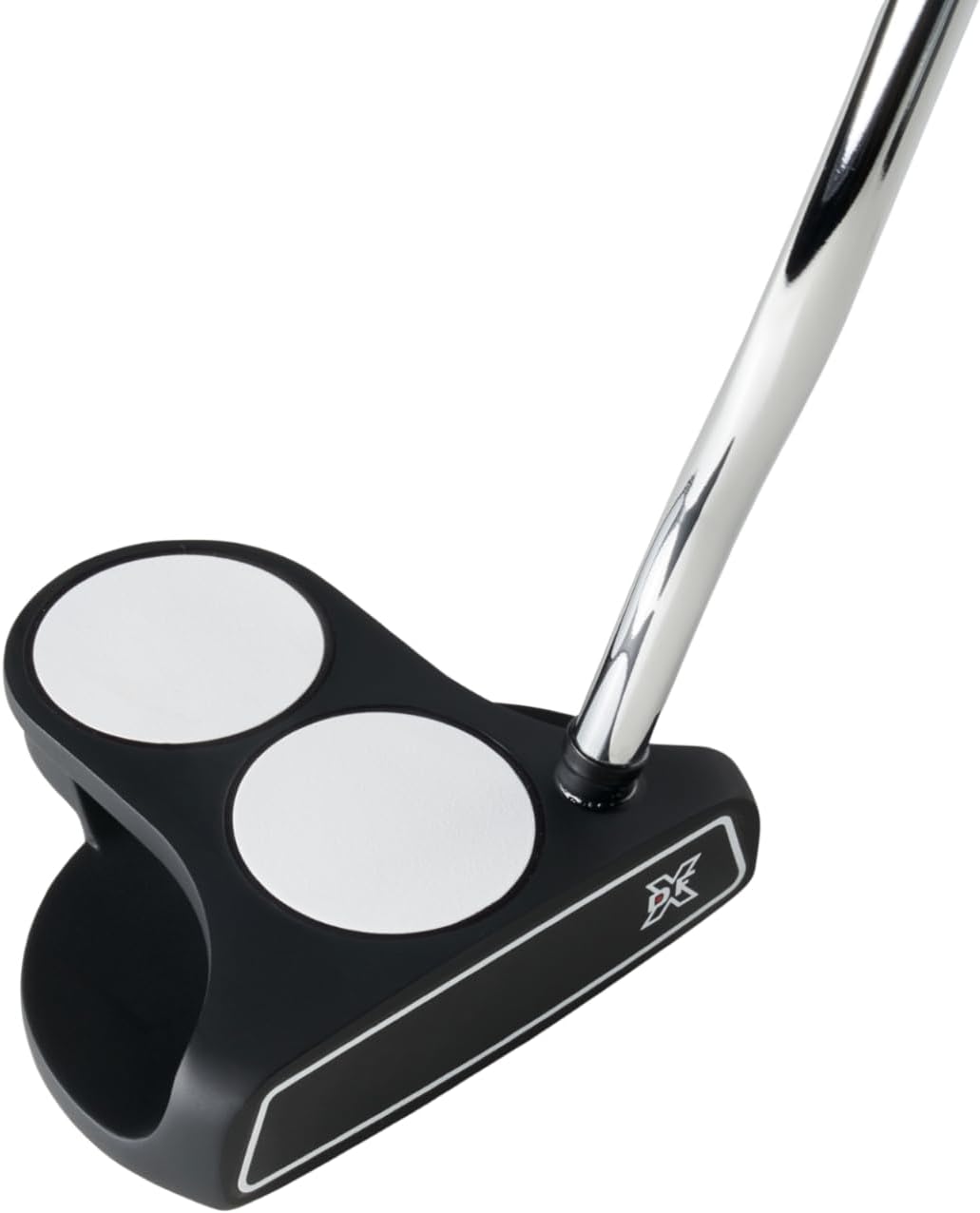
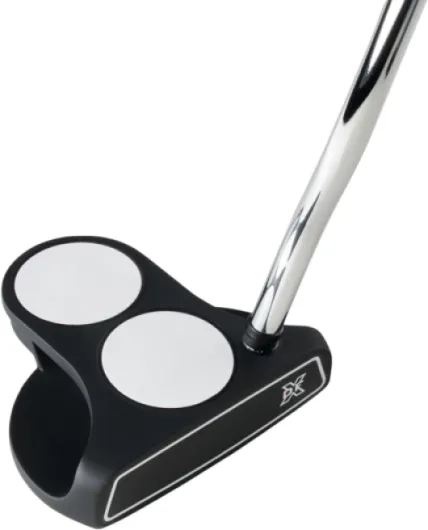
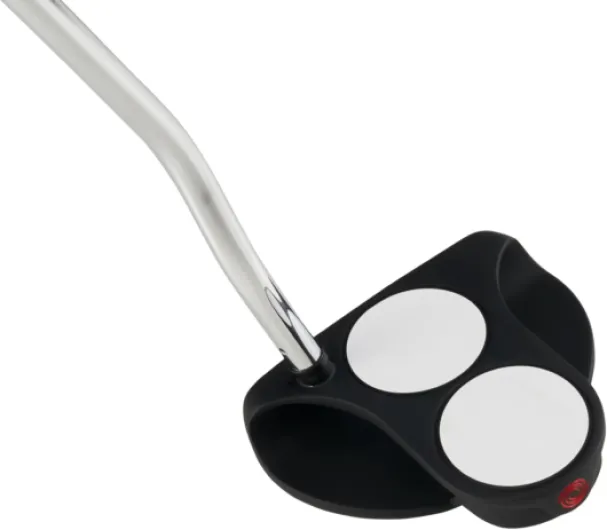
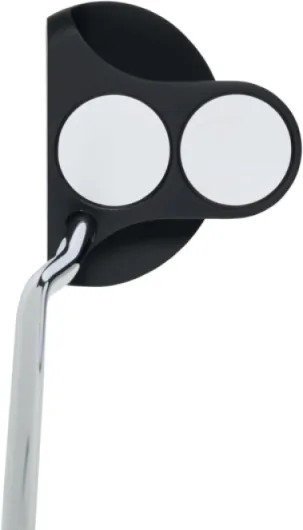
The main design feature here is obviously the 2-ball head. You literally have two white circles on the top of the putter that line up with your actual ball. In practice, that makes it very easy to set up your aim. On straight putts and gentle breaks, I felt more confident that at least I wasn’t mis-aimed by 5 degrees like I sometimes am with a thin blade. After a couple of rounds, I noticed I was spending less time fiddling with my alignment and more time focusing on distance.
The head shape is a large mallet, which adds forgiveness on off-center hits. When I hit the ball slightly towards the toe or heel, the head doesn’t twist much, and the ball still gets to the hole with decent pace. With my old blade, a slight mishit would die 30–40 cm short or drift way off line. Here, mishits are more forgiving – not perfect, but clearly more playable. The downside is that it’s bulkier behind the ball, so if you’re used to a slim profile, it can feel a bit like you’re holding a small spaceship at address.
Visually, the all-black head and shaft are pretty clean. No shiny chrome that blinds you in the sun, which I liked. The contrast between the black head and the white 2-balls makes alignment even easier. On the other hand, if you prefer a more classic, traditional look, this might feel a bit too modern or chunky. Personally, I got used to it quickly, but I know a couple of golf buddies who tried it and said, “Nice roll, but I hate the look.”
From a practical point of view, the design is focused on forgiveness and alignment, not on looking fancy. It’s made to help regular golfers hit more decent putts, not to impress anyone on the practice green. If you like mallets and want something that almost forces you to line up properly, the design does its job. If you love thin, minimalist blades, this will probably feel overkill.
In-hand comfort and swing feel: heavier but stable
The first thing you notice when you pick it up is the weight. This putter is on the heavier side, especially in the head. For me, that actually helped smooth out my stroke. I tend to get a bit wristy under pressure, and the heavier head forced me into a more pendulum-style motion. After a couple of sessions, I felt my stroke getting more repeatable, especially on those annoying 1–2 meter putts that usually cost me shots.
In terms of grip comfort, the standard pistol shape sits nicely in the hands. It’s not overly thick, so you still feel some connection and can control the face. If you’re used to super fat grips that kill all wrist movement, this will feel slimmer and livelier. I played 18 holes several times with it and never felt any discomfort or fatigue in my hands or forearms. The weight distribution is head-heavy but not so extreme that it’s tiring.
On the course, the stability through impact stands out. Even on slightly off-center hits, the putter doesn’t twist much in your hands, which is reassuring. When I got lazy with my stroke, the putter still kept the ball on a decent line. The downside is that on very fast greens, the combination of soft insert and heavier head takes some time to calibrate. I left a few putts short in my first round because I didn’t trust myself to hit harder with such a heavy head.
Overall, from a comfort point of view, it’s well-balanced for players who like a bit of weight in their putter. If you prefer ultra-light, whippy feels, this is not it. But if you want something that feels stable and controlled in your hands, especially under pressure, it does a solid job.
Build quality and feel: solid head, soft insert, basic grip
Material-wise, it’s pretty standard for a modern putter in this price range: alloy steel shaft, alloy steel head, rubber grip. Nothing exotic, but nothing that screams cheap either. The head has a matte black finish that seems to hold up well. After several rounds, plus being thrown into the bag without babying it, I only saw some very light marks on the sole, nothing on the top line. So from a durability perspective, the finish feels solid enough for regular play.
The insert is the interesting part. Odyssey calls this their softest insert, and I believe it. The feel at impact is very muted, especially with softer balls. You don’t get that sharp click; it’s more like a quiet “thump.” On short putts, I liked that a lot: it gave me the impression I could be more aggressive without the ball jumping off the face. On long lag putts, though, I had to adjust and hit the ball harder than with my old metal-faced putter. If you like a lot of feedback and sound, this might feel too dead for you.
The rubber pistol grip is fine but nothing special. It’s standard size, with a decent texture that doesn’t slip even when your hands get a bit sweaty. It’s not as cushioned or chunky as some modern oversized grips, which can be a plus or minus depending on your taste. Personally, I found it comfortable enough, but if you’re picky about grips, you might end up swapping it for a SuperStroke or something similar after a few rounds.
Overall, the materials feel reliable and practical. You’re not getting premium cosmetic touches, but you are getting a head and insert that feel well built and should last. For the price and the brand, I’d say the build quality is in line with expectations: solid, functional, and clearly better than entry-level box-set putters, but not some luxury showpiece either.
Durability after several rounds and practice sessions
Durability is often overlooked with putters because they don’t take the same beating as irons or wedges, but it still matters. After several rounds and multiple practice green sessions, the black finish on the head has held up pretty well. The usual wear is on the sole, where you see some light scuffing from contact with the ground, but nothing dramatic. The top line and 2-ball alignment marks still look clean, which is important because once those get scratched, it’s visually annoying at address.
The insert hasn’t shown any signs of damage or separation. I’ve hit plenty of putts, including some mishits towards the toe/heel, and it still feels consistent across the face. No dead spots, no visible cracks or peeling. Given Odyssey’s history with inserts, I’m not too worried about this part, and the 2-year warranty is a bit of extra peace of mind if something weird happens.
The rubber grip is holding up as expected. It’s not wearing out fast, and the texture is still grippy. Of course, like any standard grip, after a season or two of heavy use, you’ll probably want to replace it, but that’s normal maintenance and not a flaw. I didn’t notice any loosening or twisting of the grip on the shaft, which can happen with cheaper clubs.
The shaft and overall construction feel solid. No rattles, no weird vibrations, and no bending issues. I’ve tossed it in and out of the bag, leaned on it a bit while waiting on greens (as we all do), and it hasn’t shown any signs of weakness. Overall, from a durability standpoint, it feels like a reliable club you can keep for several seasons without babying it, as long as you use the headcover and do basic care.
On-course performance: more makes inside 6 feet, learning curve on long putts
Performance-wise, I’ll keep it simple: my short putting got better, my long putting needed an adjustment period. Over four full rounds and a couple of practice sessions, I tracked my putts roughly. I went from averaging around 34–35 putts per round with my old blade to about 31–33 putts with this Odyssey DFX 2-Ball. The biggest change was inside 1.5–2 meters, where I felt more confident and missed fewer easy ones.
The alignment help from the 2-ball design is real. When I set up, it’s much harder for me to accidentally aim 5 cm left or right of the target because the two white discs give an obvious visual reference. Combined with the heavier head, it makes it easier to keep the face square at impact. I’m still human, I still pull or push some, but at least I know my starting line is usually close to what I intended.
On longer putts (8–12 meters), it took me a couple of rounds to dial in the distance because of the very soft insert. The ball doesn’t jump off the face, so you need to be more assertive with your stroke. Once I got used to it, my speed control was fine, but if you only play occasionally and switch between different putters, this could be annoying. The roll itself is smooth, and the ball stays on line quite well, even on slightly off-center hits.
In short, the putter does its job for average golfers: it forgives mishits, helps with alignment, and encourages a more stable stroke. It won’t magically fix a terrible putting technique, but if you’re somewhere around mid-handicap and struggle mostly with consistency and aim, it can realistically shave a couple of putts off your card once you adapt to the feel.
What you actually get with this Odyssey DFX 2-Ball
Out of the box, you get one putter and one headcover. That’s it, no extra weights or fancy tools. The putter I tested is the right-handed 33" version with a pistol-style rubber grip. The head is the classic 2-ball mallet shape, which means you have two white discs on top that you align with your ball. The whole thing is black (head and shaft), with some small white markings and Odyssey branding.
Specs-wise, it’s a 3° loft, regular flex steel shaft, weighing about 0.66 kg. It’s clearly on the heavier side compared to cheap box-set putters I’ve used. The grip is standard size, not oversized, which I personally like because I feel more wrist control. The insert is marketed as Odyssey’s softest, and you can feel it: the ball comes off the face quietly, with a dull sound rather than a metallic click.
The putter comes with a 2-year manufacturer warranty, which is decent for a club you’ll probably keep in the bag for a while. It’s made in China, which is pretty normal these days, even for big golf brands. The headcover is basic but does its job: padded enough, easy to get on and off, and it protects the face and top line from bag chatter.
Overall, the presentation is simple and functional. No fancy extras, but nothing feels cheap either. You’re clearly paying for a known brand head design and insert tech, not for packaging or accessories. For someone who just wants to unbox it, throw it in the bag and go play, it gets the job done without fuss.
Pros
- Very forgiving 2-ball mallet design that makes alignment easier
- Soft insert and heavier head help stabilize the stroke on short putts
- Solid build quality and finish with a practical headcover and 2-year warranty
Cons
- Very soft feel can make long-distance pace control tricky at first
- Chunky mallet head and all-black look won’t suit golfers who prefer traditional blades
Conclusion
Editor's rating
After using the Odyssey DFX 2-Ball 33" for several rounds, my overall opinion is that it’s a solid, no-nonsense putter that can genuinely help average golfers, especially on short putts. The heavier head and very soft insert encourage a smoother stroke and make it easier to keep the face square, while the 2-ball alignment system is simple but effective. I clearly saw fewer three-putts and more confidence inside 2–3 meters once I got used to it.
It’s not perfect. The very soft feel can be tricky on long putts at first, and if you prefer a crisp, clicky impact, this probably won’t suit you. The design is also quite chunky, so traditional blade lovers may not like the look behind the ball. But if you’re coming from a generic or older putter and want something more forgiving without spending top-tier prices, this is a good, practical upgrade.
I’d recommend it mainly to mid- and high-handicap players who struggle with alignment and consistency on the greens and who like a slightly heavier putter. Low-handicap players who are picky about feel and already own a premium putter might not see a big benefit. For most weekend golfers, though, it’s a reliable tool that can help tidy up the weakest part of many people’s games: putting.