
Summary
Editor's rating
Is it worth the money for the average slicer?
Looks, shape, and what it’s like behind the ball
Feel, balance, and how forgiving it really is
Build quality and what the club is actually made of
How it holds up after real use
On-course performance: distance, dispersion, and slice control
What you actually get with this Rogue ST Max D
Pros
- Very forgiving on off-center hits, with fewer wild slices
- Clear draw bias that genuinely helps a slicer straighten the ball
- Comfortable balance and feel with the 55g stiff shaft, easy to swing for most mid-handicaps
Cons
- Premium price compared to older or used drivers
- Draw bias can be too much for players who already hit a draw or hook
- Stock grip is basic and may need replacing after a season for frequent players

Specifications
View full product page →| Brand | Callaway |
A left‑handed driver that actually helps with the slice
I’ve been playing left-handed for years, and finding decent lefty drivers in stiff flex is always a bit of a hunt. I grabbed this Callaway Rogue ST Max D 2022, 9° with the Tensei Blue 55g stiff shaft mainly because my miss is a big wipey slice. I’ve used older Callaway drivers and a Ping G400 before, so I had a fair idea of what I was looking for: something that keeps the ball in play, even when my swing isn’t pretty.
First round with it, I noticed one thing right away: the ball stopped peeling off to the right as much. For context, I’m around a 15–16 handicap, driver swing speed about 100–103 mph. With my old driver, a bad swing meant aiming at the left rough and still ending up in the trees right. With the Rogue ST Max D, those same swings turned into a gentle fade or even a straight push that stayed on the course. Not magic, but very noticeable.
I hit around four range sessions and three full rounds before writing this, so it’s not a one-bucket impression. I tried different tee heights, different ball positions, and even a couple of shaft settings. The pattern stayed pretty clear: this thing is built to help people who slice, and it does that job well. It doesn’t suddenly give you a tour player swing, but it cleans up the worst of the damage.
So this review is from the angle of a regular weekend golfer who fights a slice and doesn’t care much about the marketing buzzwords. I’ll go through how it looks, how it feels, how it performs on the course, and if I honestly think it’s worth the money compared to just buying a used driver or something a bit cheaper.
Is it worth the money for the average slicer?
Price-wise, this sits in the premium driver category. It’s not a bargain-bin club, and you’re paying for the latest Callaway tech and name. Compared to picking up a used driver that’s a few years older, you’re definitely spending more. So the real question is: do you actually get enough out of it to justify that extra cash?
For me, the answer is: yes, if you really struggle with a slice and want forgiveness. The main value here is not that you gain 20 yards, it’s that you hit more fairways or at least keep more balls in play. Losing fewer balls and not re-teeing as often is worth quite a bit in terms of both money and sanity. After three rounds, I noticed I was finishing with more of the same ball I started with, which wasn’t always the case before.
On the other hand, if you already hit it fairly straight or even draw the ball, I don’t think this specific Max D head is the smartest buy. You’d probably be better off with something more neutral like the Rogue ST Max (non-D) or even a different brand entirely. In that case, the extra money wouldn’t give you much because the built-in draw bias could actually hurt you.
So in terms of value, I’d rate it as good but not mind-blowing. You pay a premium, but you do get a driver that’s easy to hit, feels solid, and clearly helps with a slice. If budget is tight, you might look for this model used or look at an older Mavrik or Epic Flash draw model. But if you’re willing to pay for something current and forgiving, this Rogue ST Max D holds up pretty well for the price.
Looks, shape, and what it’s like behind the ball
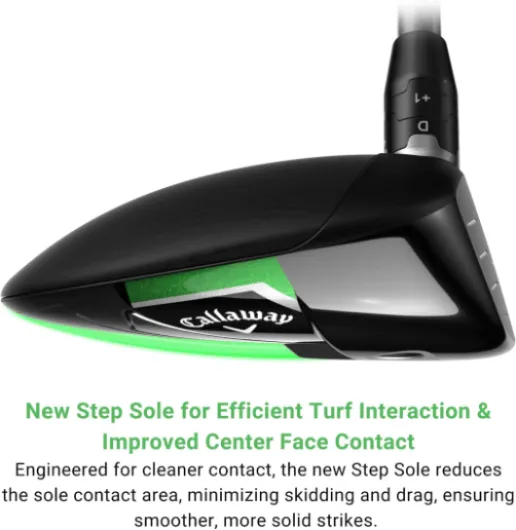
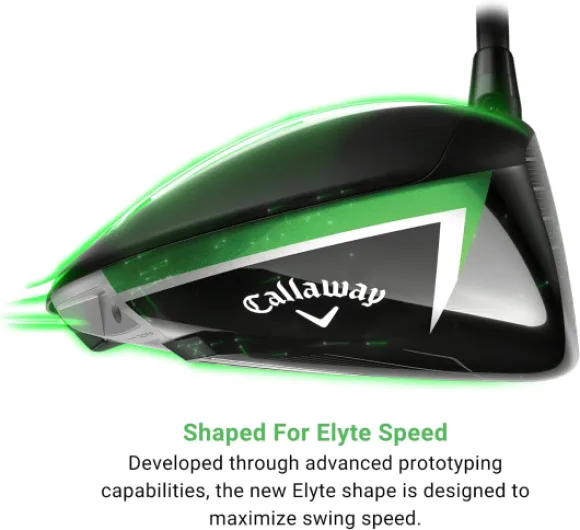
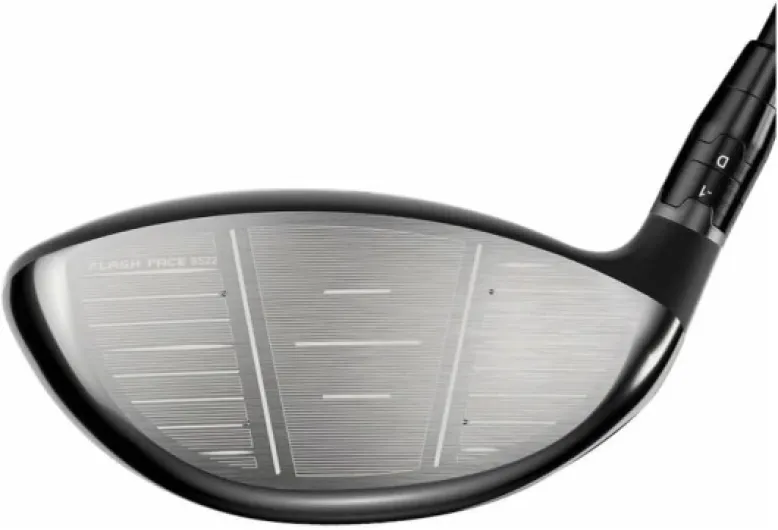
In terms of looks, the Rogue ST Max D has a big, confidence-boosting shape. At address, it’s slightly stretched back, so you really see that elongated profile they talk about. As a lefty, it’s nice to finally have something that doesn’t feel like an afterthought. The head sits a bit more upright, and you can tell there’s some draw bias when you set it down – the face doesn’t look wildly closed, but it definitely doesn’t look open.
The color scheme is pretty tame: mostly dark with some gold/bronze accents. No loud neon or crazy graphics, which I like. The crown has that carbon look with a subtle pattern. It’s not distracting at all. When you put it behind the ball, the alignment is straightforward: simple shape, clear topline, and it frames the ball nicely. If you’re used to very compact, pear-shaped heads, this will feel a bit larger and more stretched, but for most mid-handicappers, that’s actually reassuring.
One thing I noticed is the face depth feels in the middle – not super shallow, not super deep. That helped with tee height; I didn’t have to dramatically change my setup from my old driver. The draw bias isn’t screaming at you visually, but when you swing, you can feel the head wanting to turn over a bit. If you already draw or hook the ball, that might be a red flag. For slicers, it’s exactly what you want.
Sound-wise, it’s more on the modern metallic side, but not obnoxiously loud. I’d call it a firm “crack” rather than a hollow “ting.” Off the face, mishits don’t sound horrible, but you can still tell when you catch it low or on the toe. Overall, the design is very forgiving-oriented: big footprint, upright lie, stretched back shape, and a look that gives you the feeling you’ve got a bit more room for error.
Feel, balance, and how forgiving it really is
From the first swings, the thing that stood out was the overall balance. The head has some weight to it, but with the 55g shaft it doesn’t feel like you’re swinging a sledgehammer. I’d say it feels slightly head-heavy in a good way, which makes it easy to feel where the clubhead is during the swing. As someone who sometimes gets quick at the top, that helped me smooth things out a bit.
In terms of comfort, the forgiveness is the main story. On shots where I caught it a bit on the toe or slightly low, I still got a ball that flew out there in a playable way. Distances obviously dropped compared to a pure center strike, but the ball didn’t just fall out of the sky or shoot way offline. My typical miss on bad days is a high right slice. With this driver, those turned into more of a straight ball that just started right, or a gentle fade. Still not perfect, but I stayed in play way more often.
Feel off the face is firm but not harsh. Sweet spot strikes feel powerful and solid, with a nice “thump” at impact. Mishits give enough feedback that you know you missed, but they don’t sting your hands, even on colder days. I used it during a slightly chilly morning round and never had that painful vibration you sometimes get with older drivers.
Over 18 holes, I didn’t feel tired swinging it. The lighter shaft plus the forgiving head makes it pretty easy to swing repeatedly without feeling like you have to force it. If you like very heavy shafts, you might find it a bit light, but for an average golfer it hits a good balance. Comfort-wise, I’d say it’s easy to live with, easy to swing, and takes some stress out of tee shots, especially if you’re used to fighting a slice and watching balls sail OB.
Build quality and what the club is actually made of
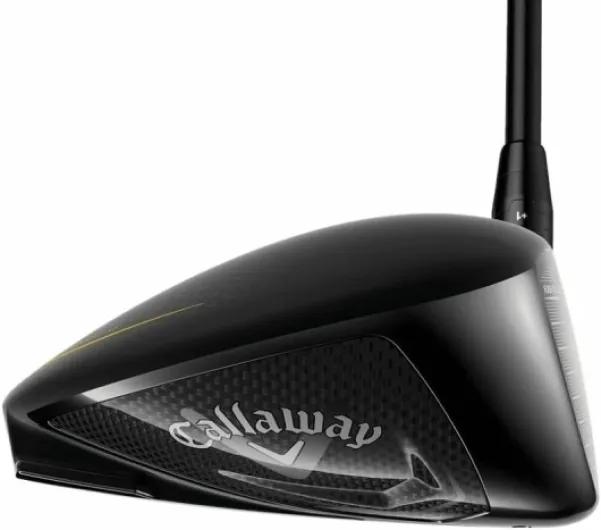
On paper, there’s a lot going on: titanium unibody construction, triaxial carbon crown and sole, tungsten cartridge, graphite Tensei Blue 55g shaft, and a standard rubber grip. In practice, what matters is whether it feels solid and holds up. After multiple range sessions and a few rounds, nothing has rattled, nothing has come loose, and the face still looks good aside from the usual ball marks you’d expect.
The titanium body gives it a sturdy feel when you tap it or accidentally bump it against the cart. It doesn’t feel cheap or hollow. The carbon crown is lighter but doesn’t feel fragile. I’ve wiped it down a bunch of times, no peeling, no weird finish issues. The tungsten weight is buried in the back; you don’t really notice it except for the way the club feels during the swing – the head has a bit of heft, but not in a clumsy way.
The Tensei Blue 55g shaft is pretty smooth. It’s not some ultra high-end aftermarket version, but it’s far from junk. The graphics are clean, the finish hasn’t scratched easily, and there’s no weird flex point feeling. It loads predictably. For a stock shaft, I’d say it’s pretty decent, especially if you’re not a gear nerd who swaps shafts every month.
The stock rubber grip is fine. Nothing fancy, just a basic grip that gets the job done. I’d personally swap it out after a season for something I prefer, but out of the box it’s usable: good enough traction, not too soft, not too firm. Overall, the materials feel like what you’d expect from a modern premium driver: solid head, decent shaft, and a grip that’s okay but not a big selling point. No shortcuts jumped out at me while using it.
How it holds up after real use
I’ve put this driver through a decent amount of use: about 5–6 range sessions (roughly 60–80 balls each) and 3 full rounds. So we’re talking a few hundred hits at least. So far, there’s no structural issue at all. No rattling sounds, no loose weights, no weird flex in the shaft. The face shows normal ball wear marks, but nothing out of the ordinary.
The crown finish has held up fine. I’m not super precious with my clubs, and I’ve definitely bumped it against the bag and the cart a couple of times. No obvious chips or scratches on the top, just some light scuffs you only see if you look closely in the right light. The sole obviously gets scratched from turf and sand, but that’s standard for any driver – nothing concerning there.
The rubber grip is still in good shape. I played in slightly humid conditions once, and while it’s not the grippiest thing on the planet, it didn’t slip or feel sketchy. If you play a lot or sweat a ton, you’ll probably want to regrip after a season anyway, but that’s normal maintenance, not a defect. The shaft hasn’t shown any signs of twisting or weird wear around the hosel either.
From a durability standpoint, I’d say it feels like a typical modern Callaway driver: solid enough for regular use, not fragile, and no obvious weak points so far. Of course, I can’t tell you how it will look after 3–4 years of heavy play, but based on what I’ve seen, I don’t have any real worries. If you treat it like a normal club and don’t smash it on the cart path in anger, it should hold up just fine.
On-course performance: distance, dispersion, and slice control
This is where it gets interesting. I tracked a few rounds with a GPS app and some range sessions with a basic launch monitor at the range. My swing speed with driver is around 100–103 mph. With my old Ping G400 (also 9° stiff), my average total distance was about 240–245 yards with a pretty wide dispersion. With the Rogue ST Max D, I saw average totals more in the 245–255 yard range when I hit it decently, with fewer balls going way off line.
The biggest difference wasn’t raw distance, it was how often I hit playable tee shots. Before, I’d lose 3–4 drives per round to either a huge slice or a low heel shot that just died. With this driver, that number dropped to maybe 1–2 truly awful drives, and even those weren’t as bad as before. The draw bias definitely shows up: my default shot went from a fade/slice to more of a straight ball or a small fade. I even saw a few baby draws, which almost never happened with my old setup.
Ball speed on center strikes looked slightly higher on the range monitor compared to my old driver, maybe 1–2 mph more on average, but that’s not a massive change. Where it helped more was on off-center hits. Toe shots still got out there with decent distance, and low strikes didn’t balloon and drop like rocks. That lines up with all the talk about high MOI and tungsten low and back – you feel it in how mishits behave.
It’s not perfect, though. If you already have a natural draw or hook, this head will probably overdo it and send you left (for a lefty, that’s right-to-left movement). Also, in strong wind, the slightly higher launch and spin you can get with this forgiving setup might cost you a bit of distance compared to a lower-spin “pro” head. But for a typical mid-handicap who just wants the ball to stay in play, the performance is very solid and forgiving. It does exactly what it’s advertised to do: help slicers hit more fairways.
What you actually get with this Rogue ST Max D
Out of the box, it’s pretty straightforward: you get the driver head, the Tensei Blue 55g stiff shaft already installed, and a headcover. No fancy extras, no wrench included in my case (I already had one from another Callaway club). The club I tested is left-handed, 9° loft, stiff flex, with a graphite shaft and a standard rubber grip. It’s a 460cc head, so full-size, nothing compact or “player only” about it.
All the tech jargon from Callaway boils down to a few simple things: weight pushed low and back, draw bias, and a head that’s meant to be very forgiving. They talk about tungsten cartridges, Jailbreak frame, AI face, and all that. On the course, what you actually feel is this: the head wants to square up, and off-center hits don’t get punished as hard as with older drivers I’ve used.
The Tensei Blue 55g shaft in stiff feels on the lighter side compared to some older stiff shafts I’ve played (like a 65g stiff from Ping). It’s not whippy, but it’s not a telephone pole either. I’d say it suits someone in that 95–105 mph swing speed window pretty well. If you’re swinging way faster, you might find it a bit soft, but for an average single- or mid-handicap player, it feels fine.
Overall, the presentation is pretty standard but solid: decent headcover, clean build, and everything feels well put together. No obvious quality issues, no loose ferrules, no weird glue marks. It’s not flashy in the box, but it looks and feels like a modern premium driver once you put it down behind the ball.
Pros
- Very forgiving on off-center hits, with fewer wild slices
- Clear draw bias that genuinely helps a slicer straighten the ball
- Comfortable balance and feel with the 55g stiff shaft, easy to swing for most mid-handicaps
Cons
- Premium price compared to older or used drivers
- Draw bias can be too much for players who already hit a draw or hook
- Stock grip is basic and may need replacing after a season for frequent players
Conclusion
Editor's rating
After a few weeks with the Callaway Rogue ST Max D 2022 (left-handed, 9°, stiff, Tensei Blue 55g), my takeaway is pretty simple: it’s a very forgiving driver that clearly helps reduce a slice, especially for a mid-handicap golfer like me. I didn’t suddenly become a long-drive champion, but I did see slightly better distance and, more importantly, much tighter dispersion. Fewer balls went wildly right, and my default shot shape became more playable.
It’s not perfect. If you already draw or hook the ball, this head is probably the wrong tool. The price is on the higher side, and the stock grip is just average. But the build quality is solid, the head looks good behind the ball, and the feel at impact is satisfying without being harsh. For a left-handed player who fights a slice, it ticks a lot of boxes: easy to launch, forgiving on mishits, and clearly biased to help shots turn over instead of peeling off to the right.
I’d recommend this driver to golfers who: slice the ball regularly, play a couple of times a month or more, and want something modern and forgiving without having to tinker too much. People who should probably skip it: natural drawers or hookers of the ball, golfers on a tight budget who can’t justify premium pricing, or low-handicap players looking for a compact, workable head. Overall, it’s a pretty solid option if your main goal is simple: keep more drives in play and make tee shots a bit less stressful.