
Summary
Editor's rating
Value: you pay for the convenience, not the logo
Design: the leg system is the whole point
Comfort: your back will notice the difference
Materials and build: sturdy enough, but not bulletproof
Durability: good for regular trips, questionable for heavy abuse
Performance: airport and parking lot test
What this travel cover actually is (and isn’t)
Pros
- Leg and wheel system makes it much easier to move through airports and car parks
- Rolls smoothly on four wheels with good maneuverability from the pivoting casters
- Solid zippers, decent padding, and internal cinch straps keep the bag and clubs stable
Cons
- Fabric shows scuffs and wear on corners after a few flights
- Heavier and bulkier than basic covers, especially when you have to lift it over curbs or stairs

Specifications
View full product page →| Brand | Sun Mountain |
Dragging clubs through airports doesn’t have to suck
I’ve dragged golf clubs through enough airports to know it’s usually a pain. Standard travel covers are basically big dead weights on two stiff wheels that you have to drag behind you. After a couple of trips, your shoulder and lower back let you know they’re not happy. That’s why I wanted to try the Sun Mountain ClubGlider Journey and see if the leg system is just a gimmick or actually useful.
I used this bag for a couple of trips: one short European hop and one longer trip with a connection. So it’s had a few baggage belts, a couple of grumpy check-in agents, and some rough pavements. My main goal was simple: can I move my clubs around an airport and parking lot without feeling like I’m dragging a dead body behind me?
The first impression is that it’s a proper travel cover, not some flimsy budget thing. It’s on the heavier side compared to basic covers, but that’s partly because of the built-in leg system and tray. The real test, though, is what happens once you extend those legs and start pushing it around. That’s where this thing is very different from a normal two-wheel cover.
Overall, my experience is that it does what it promises: it makes moving clubs around way easier. It’s not perfect, and there are a couple of details that bug me, but in terms of comfort and ease of transport, it’s a big step up from the usual drag-behind golf travel bag. If you travel with clubs more than once a year, it’s the kind of upgrade you actually notice on trip number one.
Value: you pay for the convenience, not the logo
Price-wise, the Sun Mountain ClubGlider Journey sits clearly above the basic travel covers but below some of the beefiest hard cases. You’re paying mainly for the leg and wheel system and the Sun Mountain name, not for fancy branding or luxury materials. If you compare it to a cheap two-wheel fabric cover, it’s noticeably more expensive. If you compare it to a full hard case, it’s often a bit cheaper and definitely easier to store.
From my point of view, the value depends a lot on how often you travel with your clubs. If you do one golf trip every three years, this is probably overkill. A basic bag with a stiff arm will get the job done, and you’ll just suck up the hassle for that one weekend. But if you’re doing one or two trips a year or more, the comfort and ease of use start to justify the extra cost pretty quickly. After a single long airport trek with this bag gliding in front of me, I honestly didn’t feel like going back to my old drag-behind cover.
In terms of protection per pound spent, it’s decent but not top of the pile. A hard case will protect better against serious abuse, but those are heavier, bulkier, and more annoying to store. The Journey is more of a compromise: easier to live with, kinder on your back, good enough protection if you pack smart. So you’re paying for practicality and comfort rather than maximum armor.
Overall, I’d say the value is pretty solid for a golfer who travels occasionally but wants the process to be less of a hassle. It’s not cheap, and there are tougher options if you don’t care about how it rolls, but for a mix of ease, protection, and storage, the price feels reasonable. I don’t feel like I wasted money, but I also wouldn’t call it a bargain. It’s fairly priced for what it does.
Design: the leg system is the whole point
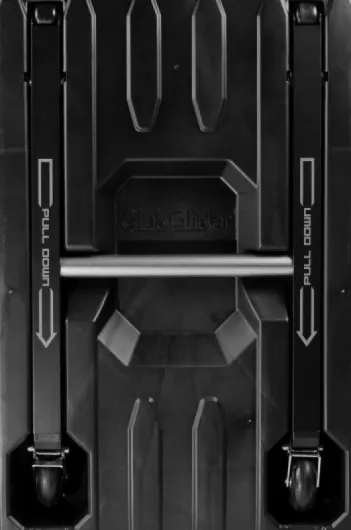
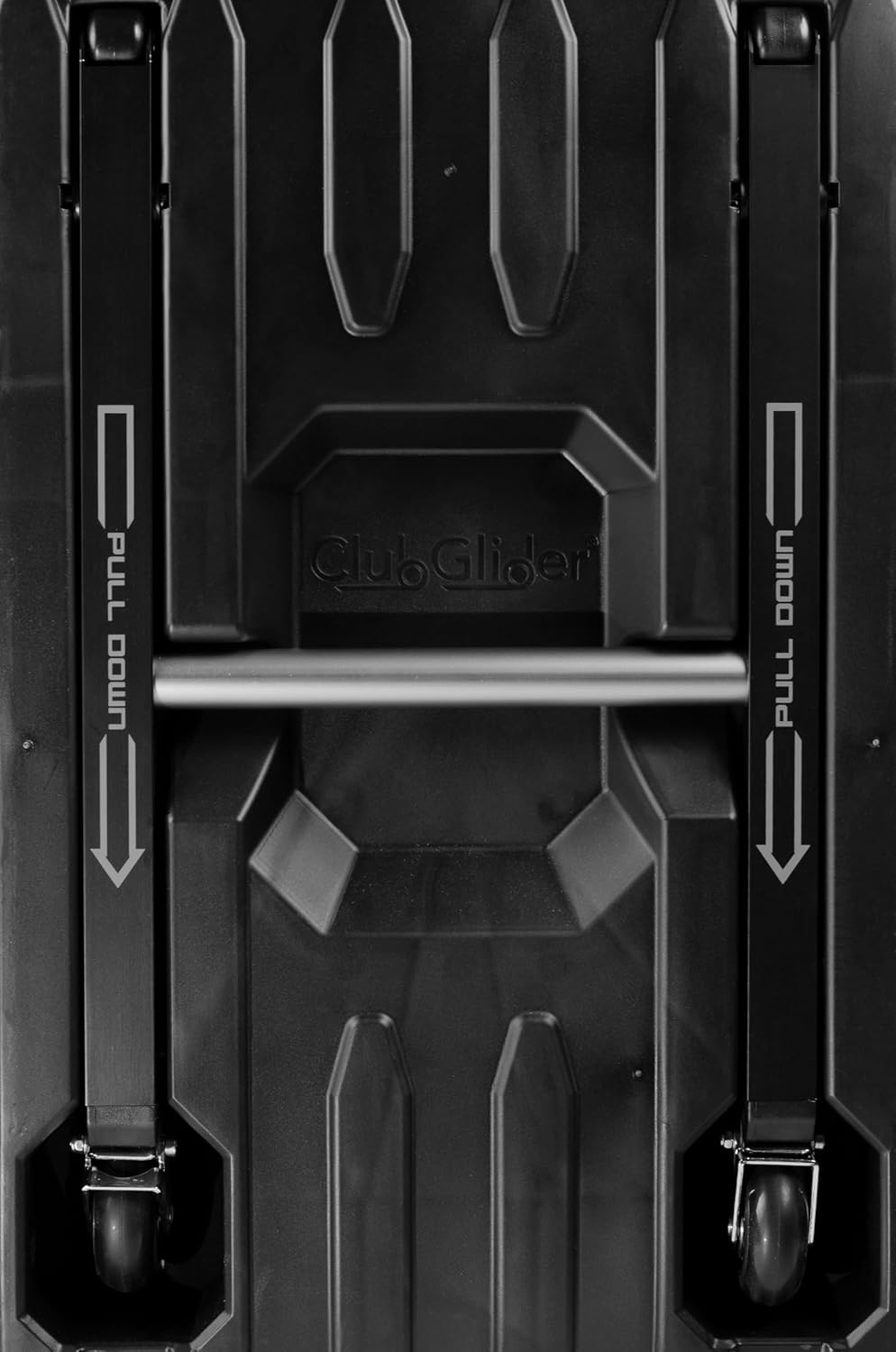
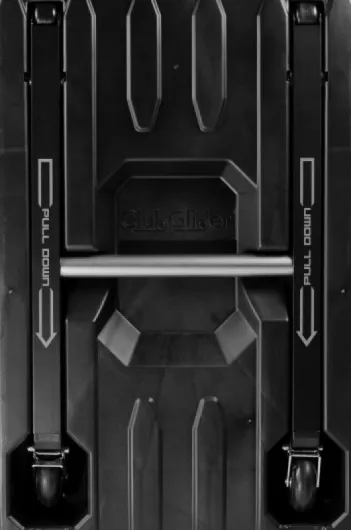
The design is built entirely around that ClubGlider leg mechanism. When the legs are folded in, it looks like a fairly standard soft travel cover with two fixed wheels at the back. Once you extend the legs, you suddenly have four contact points with the ground and the bag is fully supported. Sun Mountain claims the legs support 100% of the weight when extended, and honestly, that matches my experience: once it’s up, you’re basically just steering, not lifting.
The wheels are pivoting casters at the front, which is what makes it roll so easily in tight spaces. Compared to a normal two-wheel bag that you drag behind you at an angle, this one moves more like a suitcase on four wheels. You can push it in front of you, pull it beside you, turn it on the spot, and it stays pretty stable unless you hit a big pothole or curb. In big airports and long corridors, this is where it really shines. You don’t feel like you’re constantly adjusting your grip or dragging something that wants to tip over.
In terms of layout, access is straightforward: the two-way zippers run the full length, so loading the clubs is easy. You lay it flat, drop your bag in, cinch the internal straps, and zip it up. The interior pockets are handy for shoes or small gear, but don’t expect a ton of organized storage. It’s fairly basic: big space for your bag, a couple of pockets, and that’s it. No fancy compartments or dividers beyond what your golf bag already has.
One thing I liked: when the legs are retracted, they fold into a molded tray under the bag, so you’re not dealing with metal bits sticking out. It also folds down for storage when you’re not traveling, which is nice if you don’t have a garage the size of a driving range. On the downside, all this design focus on the leg system means the bag is a bit bulkier and more complex than a standard cover. If you never extend the legs, you’re basically carrying extra weight and hardware for nothing, so this bag makes the most sense if you actually use that feature regularly.
Comfort: your back will notice the difference
Comfort here is less about padding against your body and more about how much effort it takes to move this thing. With a standard golf travel cover, you’re basically dragging 20–25 kg on two wheels, slightly tilted, with the weight pulling on your arm and shoulder. After a long walk from the car park to check-in, plus a bit of queuing, you feel it. With the ClubGlider Journey, once the legs are out, you’re pushing rather than dragging, and that’s a big difference.
On my trips, I noticed that my shoulder and lower back were much less tired. The bag stands upright and rolls forward, so your arm is more relaxed, and you’re not constantly fighting the weight. I could push it with just two fingers on the handle in smooth areas. In crowded airports, weaving around people was much easier because I wasn’t lugging something heavy at an angle behind me. The bag feels more like a trolley than a dead weight, and that’s exactly what I wanted.
The handles themselves are decent. They’re not padded like crazy, but they’re solid and well placed. You’ve got a main top handle for lifting into cars or onto a trolley, and side handles that help when you’re dragging it over a step or lifting it onto a conveyor. When you do have to lift the whole thing—like over a curb—it’s still heavy, especially with a full set and shoes inside. The bag doesn’t magically make the weight disappear; it just removes most of the time you have to actually carry it.
In practice, if you’ve had back or shoulder issues from hauling clubs around, this bag makes life easier. It doesn’t make the airports shorter, but it makes the walking part less of a grind. If you only travel once every few years, maybe you don’t care. But if you do one or two golf trips a year, the improved comfort is noticeable from the first airport run. That’s the main reason I’d pick this over a cheaper basic cover.
Materials and build: sturdy enough, but not bulletproof
The outer shell is made from 1200 denier polyester, which is on the tougher side for fabric travel covers. In hand, it feels thick and fairly rigid, not floppy. When I packed my clubs, shoes, and a few clothes around the heads, the bag kept its shape well enough that it didn’t look like it was about to tear or sag. The stitching around the handles and stress areas feels reinforced and doesn’t give that cheap, loose-thread vibe you get on bargain covers.
The zippers are heavy-duty two-way models that run the full length of the bag. This is one of the better parts of the build. I’ve had cheaper travel bags where the zip track misaligns or the puller bends after one rough baggage handler toss. On this one, the zips feel solid when you pull them around corners, even when the bag is packed fairly tight. I didn’t baby it at all at check-in; I just yanked it shut and it held fine. So in terms of zips and stitching, it feels pretty solid.
Where it’s not perfect is the wear and tear on the fabric. After a couple of flights, I already had some scuffing on the bottom and corners where it rubbed on belts and concrete. Nothing ripped, but you can tell these are the spots that will eventually wear through if you travel a lot. One Amazon review mentioned the same thing: fabric shows signs of wear in a few spots, not the toughest bag on earth. I agree with that. It’s miles better than ultra-cheap covers, but if you’re flying with clubs every month, I wouldn’t expect this to look fresh after a season.
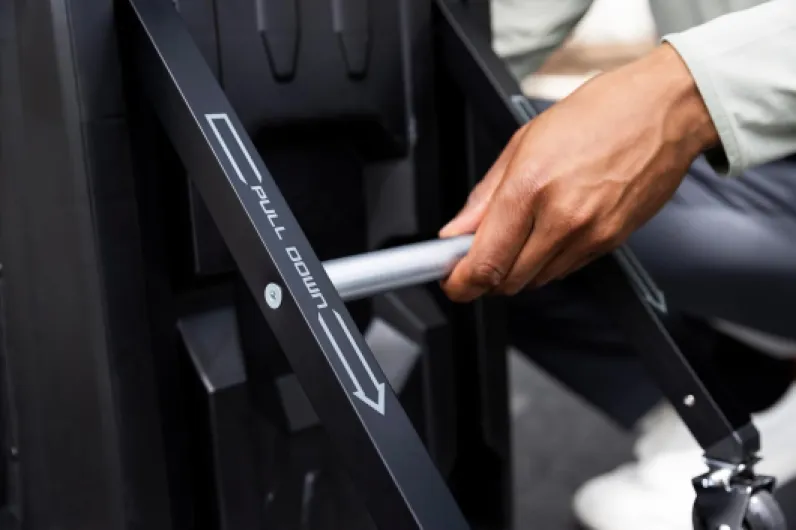
The leg mechanism and molded tray are plastic and metal, and they feel well put together. The legs extend and retract in one motion, and I didn’t have any sticking or bending. They lock out firmly and don’t wobble much when rolling. That said, this is still a moving mechanical part. If something is going to fail after heavy use, it’ll probably be the leg system before the fabric itself. For the average golfer doing a few trips a year, I think the materials are good enough. For tour-level travel frequency, I’d be a bit more cautious and probably add extra head protection and maybe some padding where the fabric rubs most.
Durability: good for regular trips, questionable for heavy abuse
Durability is where I’d say the ClubGlider Journey is solid but not indestructible. After a few flights, the structure is still fine: the legs extend and retract smoothly, the wheels spin well, and the zippers work like day one. No broken teeth, no bent frame, no weird rattling sounds. So from a mechanical standpoint, it seems well built. The molded tray hasn’t cracked or warped, even after some rough handling at baggage claim.
The weak point, as mentioned earlier, is the outer fabric in high-wear areas. The 1200D polyester is thick enough, but the bottom corners and edges pick up scuffs pretty fast. I’ve got visible marks from conveyor belts and rough concrete, plus some light fraying where it clearly dragged or rubbed. It’s still cosmetic at this stage, but it tells me that if I were flying every other week, I’d probably be looking at patches or tape at some point down the line.
The stitching around handles and stress points has held up well so far. I’ve lifted it loaded into car boots and onto trolleys without feeling anything stretch or tear. That gives me some confidence that it won’t just fail randomly. The leg mechanism also feels more robust than I expected. No bending or misalignment yet, and it still locks into position cleanly. I can see this lasting several years for the average golfer who takes a couple of golf holidays per year.
If you’re a really frequent traveler—like monthly trips or more—I’d say you might want to keep an eye on those wear spots and maybe reinforce them early or accept that this bag has a working life and isn’t going to look fresh forever. For normal use, the durability is good enough that I’d buy it again, but I wouldn’t call it bombproof. It’s a decent balance between weight, usability, and toughness, but there are tougher (and heavier, and often more expensive) options out there if durability is your only priority.
Performance: airport and parking lot test
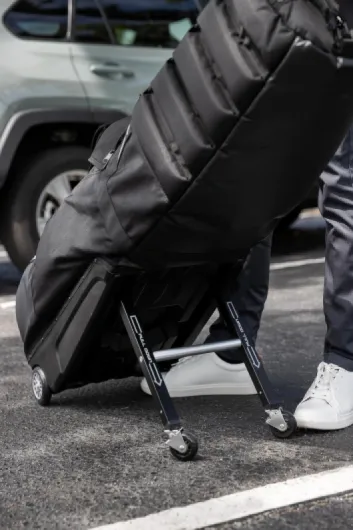
This is where the ClubGlider Journey actually earns its keep. In pure use, the rolling performance is very good. Once the legs are extended, the bag really does feel like it’s gliding. I could push it with one hand while checking my phone with the other, and it stayed straight most of the time. In long airport corridors, it felt a lot less tiring than dragging a standard two-wheel cover behind me. You’re not constantly lifting the front end to get it moving; it just rolls.
The pivoting caster wheels at the front are the secret. They let you change direction without wrestling the bag. In queues, elevators, and tight corners, it’s easy to turn it and slot into place. In car parks with rougher ground, you do feel bumps a bit more, but it still rolls fine. The main annoyance is curbs and stairs: you still have to lift the whole thing, and because the base is a bit bulky, it’s not as easy as a simple soft bag. But that’s the trade-off for the extra stability when rolling.
Protection-wise, I’d say it’s good but not perfect. The internal cinch straps hold the golf bag in place nicely, so it doesn’t slide around. I used a stiff arm inside to protect the club heads (and I’d recommend doing the same), and with that setup my clubs arrived without any damage or noticeable impact marks. The padding is focused more at the top, where the heads are, and less at the sides. So if a baggage handler really drops it sideways from height, it’s still fabric and padding, not a hard shell.
Overall, in real travel conditions, the performance is pretty solid: it rolls smoothly, reduces fatigue, and keeps gear reasonably protected. It’s not indestructible, and you still need to pack smart (stiff arm, towels around heads, etc.), but compared to a regular two-wheel travel cover, the handling difference is very clear. After using it once, going back to a basic drag-behind bag would feel like a downgrade in terms of comfort and effort.
What this travel cover actually is (and isn’t)
The Sun Mountain ClubGlider Journey is basically a golf travel cover with a built-in leg and wheel system. Internally, it’s sized for a full cart or stand bag: roughly 52" x 15" x 12" on the inside. That’s enough for a normal 14-club setup, shoes, and a few bits of clothing stuffed around the heads if you like. It’s not the biggest travel cover out there, but it’s enough for most golfers who aren’t trying to move their entire wardrobe in one bag.
On the outside, you get a black-gunmetal look, two interior-access pockets, and heavy-duty zippers that run the full length of the bag. The zips are proper chunky ones, so they don’t feel like they’re going to explode if you slightly overpack. The official weight is around 4.85–5.8 kg depending on which spec you read, and in hand it feels solid but not ridiculous. You definitely notice you’re lifting something substantial when it’s fully loaded, but that’s kind of the point of the leg system: you shouldn’t be carrying it much.
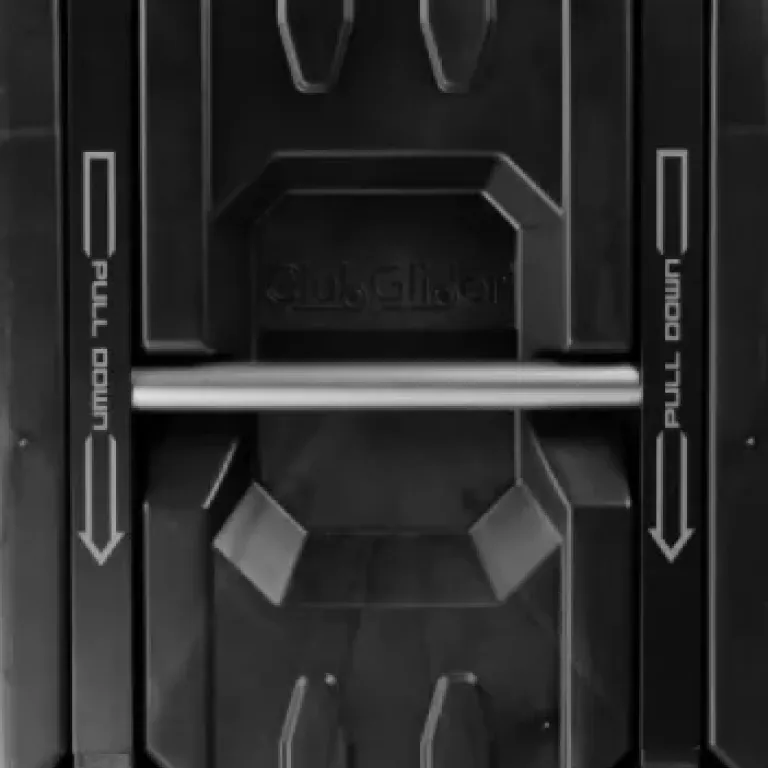
The key feature is the integrated leg set. You pull it out in one motion and suddenly the bag is standing on four wheels, with the legs taking basically all the weight. From there, you just push it with one hand instead of dragging it behind you. The caster wheels pivot, so you can turn it in tight spaces, weave around people in the airport, and roll it through car parks without fighting it. It honestly behaves more like a small trolley than a heavy golf bag.
What it’s not: it’s not a hard case, and it’s not the toughest travel cover on the market. The fabric is 1200D polyester, which is decent and feels thick enough, but you can see from some reviews (and I agree) that it shows scuff marks and wear spots after a few flights. So if you’re after something indestructible for constant weekly travel, this might not be your forever bag, but for a few trips a year it gets the job done nicely.
Pros
- Leg and wheel system makes it much easier to move through airports and car parks
- Rolls smoothly on four wheels with good maneuverability from the pivoting casters
- Solid zippers, decent padding, and internal cinch straps keep the bag and clubs stable
Cons
- Fabric shows scuffs and wear on corners after a few flights
- Heavier and bulkier than basic covers, especially when you have to lift it over curbs or stairs
Conclusion
Editor's rating
The Sun Mountain ClubGlider Journey is basically a travel cover designed to save your back and shoulders. The integrated leg and wheel system actually works: once the legs are extended, the bag supports its own weight and rolls smoothly on four wheels. In real use—airports, car parks, queues—it feels much easier to handle than a standard two-wheel cover you have to drag behind you. If you’ve ever cursed your clubs halfway to the terminal, you’ll notice the difference immediately.
Protection is good enough for normal travel, especially if you use a stiff arm and pack some towels or clothes around the heads. The 1200D polyester shell, solid zippers, and internal cinch straps do their job. It’s not a hard case, and the fabric will show wear on high-contact areas after a few trips, so it’s not the toughest thing on the market. But for a golfer doing one to a few trips a year, it hits a decent balance between durability, weight, and ease of use.
I’d recommend this to golfers who travel with their clubs at least once a year and are tired of dragging a heavy, awkward bag around. If you’ve got a bad back, or you’re just done with wrestling luggage through airports, it’s worth the money. If you rarely travel or you want maximum bombproof protection above all else, a cheaper basic cover or a full hard case might make more sense. For most regular golf travelers, though, this is a practical, comfortable upgrade that actually changes how annoying (or not) the airport part of the trip feels.