
Summary
Editor's rating
Value: where this club actually makes sense
Design: confidence at address, with some quirks
Comfort and feel: heavier but stable
Materials and build quality: decent, not premium
Durability after some use: holds up fine so far
Performance on the course: easy launch, honest distance
What you actually get out of the box
Pros
- Easy to launch thanks to the 16° loft and head design, especially off the fairway
- Forgiving enough that slight mishits stay in play and still carry reasonably well
- Good value for money compared to big-name fairway woods, with decent build quality
Cons
- Head feels a bit heavy compared to some higher-end, lighter fairway woods
- Basic grip and overall feel are not on the same level as premium brands

Specifications
View full product page →| Brand | COOLO |
A budget 3-wood that doesn’t feel like a toy
I picked up this COOLO 16° 3-wood mostly out of curiosity. Unknown brand, price well under the big names, and a design that claims to help average golfers launch it higher. I’m around a 15–18 handicap, weekend rounds, nothing fancy. My long game is very hit-or-miss, so I’m always looking for a fairway wood that I can actually get off the deck without feeling like I need a tour swing.
I’ve used it for a few range sessions and a couple of rounds. I rotated it against my older Callaway 3-wood and a 5-wood from a mid-range set. I wasn’t expecting much, to be honest. Most off-brand woods I’ve tried either feel dead, sound tinny, or the shaft feels like a noodle. This one sits somewhere in the middle: not premium, but not junk either.
My main takeaway: it’s pretty forgiving and launches the ball easily, especially off the fairway and light rough. Distance is decent, not crazy long, but the ball gets up in the air more consistently than with my old 3-wood. For me, that’s more useful than chasing 5 extra yards.
It’s not perfect. The head feels a bit on the heavy side, the sound is just okay, and obviously it doesn’t have the polished feel of a big-brand $300 fairway wood. But for the price, it actually holds up. If you’re an average golfer who mostly wants something reliable off the deck and tee on short par 4s, it’s worth a look. If you’re a low handicap gear nerd, you’ll probably nitpick it to death.
Value: where this club actually makes sense
For me, the main selling point of the COOLO 16° 3-wood is value for an average golfer who doesn’t want to drop big money on a fairway wood. It’s cheaper than the big-name options, but on the course it doesn’t feel miles behind. You lose some polish, some brand prestige, and a bit of that super-refined feel, but you still get a club that’s playable, forgiving, and reasonably well-built.
If you’re the kind of golfer who plays a few times a month and just wants something reliable for long shots without spending driver money, this makes sense. It’s especially good if your current 3-wood is an old box-set club or something from 10+ years ago. In that case, you’ll probably notice an upgrade in launch and forgiveness right away. You’re basically paying for function, not logo.
On the other hand, if you’re already gaming a fairly recent fairway wood from a big brand, I don’t think this is a clear upgrade. You might find it easier to launch because of the extra loft, but overall performance will be similar. In that scenario, your money is probably better spent on a fitting or lessons rather than swapping to this just because it’s cheap.
All in, I’d call the value pretty solid: you get a decent head, a workable shaft, and playable performance at a price that doesn’t hurt. It’s not the best club on the market, but it does its job without trying to be something it’s not. If you’re budget-conscious and realistic about your game, it’s a sensible purchase. If you’re chasing the latest tech and bragging rights, you’ll probably want to look elsewhere.
Design: confidence at address, with some quirks
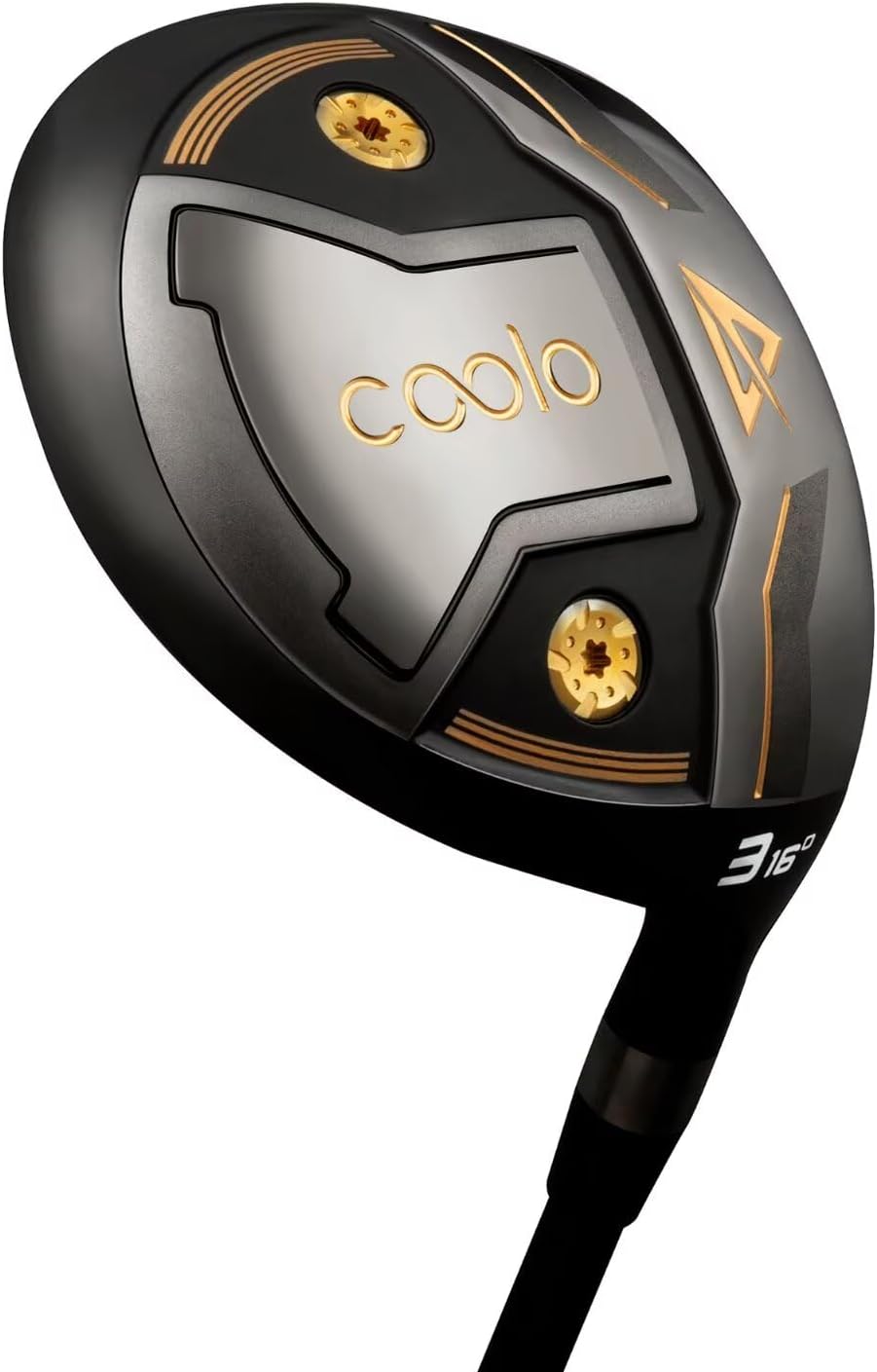
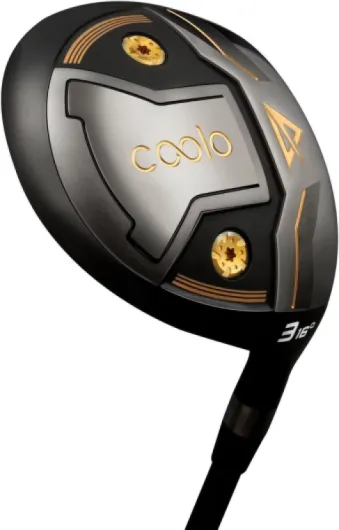
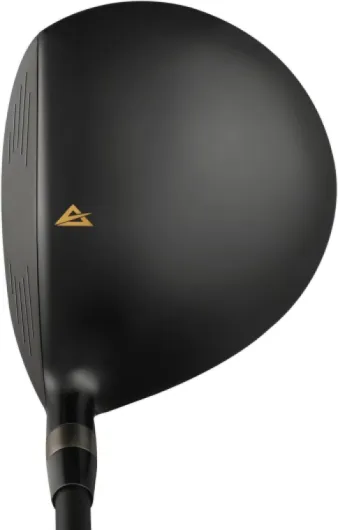
At address, the COOLO head looks pretty solid. The shape is modern, slightly compact but not intimidating. Behind the ball, it gives a decent amount of confidence, especially for someone who doesn’t love hitting fairway woods. The topline is clean, and the black finish helps frame the ball without distracting alignment gimmicks. It’s not the sleekest thing I’ve seen, but it doesn’t look clunky.
The clubhead has that weight screw low and forward, which they say is for low spin and strong launch. In practice, I noticed more that the ball flight was high but not ballooning. My shots tended to start on a medium trajectory and climb steadily, then carry nicely. Compared to my older 3-wood, I got slightly higher launch with similar or slightly less roll, which is honestly fine for me; I care more about predictable carry than rollout I can’t control.
The head does feel a bit on the heavy side. It’s not crazy, but if you’re used to very light, high-end fairway woods, you’ll notice it. On the flip side, that weight gave me a clearer sense of where the head was during the swing. For my tempo, that helped. I felt like I could swing smoothly instead of overswinging and losing control. Some players might call it a little "sledgehammer-ish," but I found it manageable after a bucket or two.
Visually, there’s nothing fancy: simple black, some basic graphics, and that’s it. No flashy carbon crown or wild colors. Personally, I like that. The design focus seems to be: modern shape, reasonable size, and a face that doesn’t scare off mid-handicappers. If you’re into clean, no-nonsense looks, this works. If you want something that screams tour-level tech, this will feel basic, but it does its job.
Comfort and feel: heavier but stable
From the first swings, the main thing I noticed was the club feels a bit heavier than some name-brand fairway woods, but in a way that actually helped my tempo. I tend to get quick at the top and yank the club down, which leads to all kinds of nonsense. With this COOLO, the slightly heavier head made me more aware of the swing path and kept me from over-swinging. If you like feather-light clubs, this might bug you. If you struggle with tempo like I do, you might actually find it helpful.
In terms of grip comfort, the standard rubber grip is fine. It’s not super soft, but it’s not rock-hard either. After a full bucket of balls, my hands weren’t destroyed, but I did feel more vibration on thin shots compared to my more expensive woods. Center hits feel solid and muted, mishits give you feedback without being painful. I’d say feel is on the firm side but not harsh. If you’re sensitive to vibration, a slightly thicker or softer grip could help.
On the course, the club length felt natural. I never felt like I was reaching or hunched over. Off the tee, it’s easy enough to set up behind the ball and commit to the swing. Off the fairway, the head shape and lie made it pretty simple to get into a comfortable stance without feeling like I had to manipulate the club. That matters a lot for average golfers – if you’re fighting the club before you even swing, it’s not going to end well.
Overall comfort: good but not luxurious. It’s a club I can play 18 holes with without thinking about it too much, which is basically what you want at this level. If you’re used to high-end shafts and cushy grips, you’ll notice the difference, but for a budget-friendly fairway wood aimed at average players, it’s more than acceptable.
Materials and build quality: decent, not premium
The specs say stainless steel head, graphite shaft, and a rubber grip. That’s pretty standard in this category. In hand, the build quality feels okay – not junk, not high-end. The face and sole finish look uniform, no weird gaps or sloppy paint, and the shaft feels securely attached. I didn’t see any obvious glue overflow or cheap shortcuts, which you sometimes get with low-cost clubs.
The graphite shaft is regular flex. Compared to the shaft on my mid-range Callaway fairway, this one feels slightly stiffer in the butt section but a bit softer in the tip. That’s not a scientific measurement, just how it feels when you waggle and swing it. On the course, it held up fine. I didn’t feel like it was twisting all over the place, even on mishits. For my swing speed (somewhere in the 90–95 mph driver range), it felt playable. If you swing very fast, you might find it a bit whippy.
The grip is a standard rubber grip. Texture is okay, grip is decent even with slightly sweaty hands, and I didn’t feel like I needed to regrip it immediately. That said, it doesn’t have the tacky, cushioned feel of a premium Lamkin or Golf Pride. After a couple of long range sessions, my hands felt a bit more tired than with my usual grips, but nothing crazy. I’d probably swap it out after a season or so, which I do with most clubs anyway.
Overall, the materials match the price point. You’re not getting tour-level shaft technology or fancy multi-material heads, but you’re also not getting something that feels like it will fall apart in a month. If you’re realistic about what you’re paying for, the build is perfectly acceptable. I’d call it solid enough for regular weekend play, with the understanding that the grip might be your first upgrade if you’re picky.
Durability after some use: holds up fine so far
I haven’t owned this for years, but after a few weeks of use – several range sessions and a couple of full rounds – it’s holding up just fine. No signs of the head loosening, no rattles inside, and the finish is still in good shape. The sole has the usual scuff marks you’d expect from hitting off mats and turf, but nothing out of the ordinary.
The face hasn’t shown any weird wear spots, and the paint around the topline hasn’t started chipping, which is something I’ve actually seen on cheap fairway woods before. I’ve accidentally tapped it against another club in the bag a couple of times, and the headcover did its job. The headcover itself is basic but hasn’t torn or stretched out yet.
The shaft still feels the same as day one – no strange creaks, no twisting sensation. I’ve thrown it in and out of the trunk with the rest of my bag, and it’s handled the usual abuse of a weekend golfer’s life. The grip is also holding up. No peeling, no rapid smoothing out. Long term, I’d expect to regrip it like any club after a season or two, but that’s normal maintenance, not a flaw.
Overall, durability seems on par with mid-range clubs, which is better than I expected for an unknown brand at this price. Obviously, I can’t speak for multi-year heavy use yet, but nothing about it makes me think it’s going to fall apart quickly. If you play once a week or so and take basic care of your gear, I don’t see durability being a big concern here.
Performance on the course: easy launch, honest distance
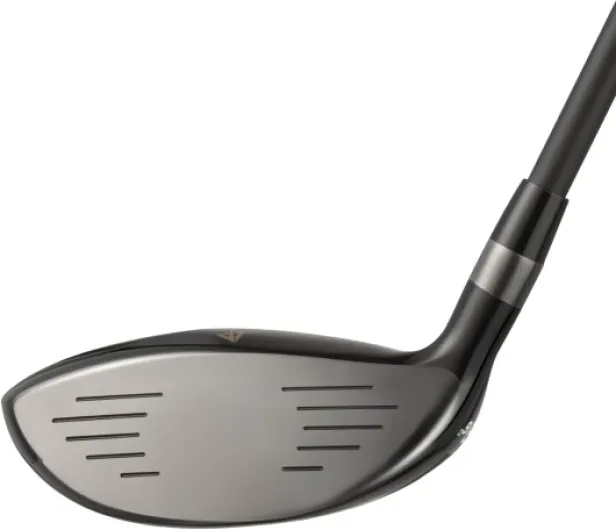
Performance-wise, I focused on three things: launch, forgiveness, and distance. For me, the standout is how easy it is to get the ball in the air, especially off the fairway. That 16° loft plus the head design really does help. With my old 15° 3-wood, I’d hit a lot of low burners if I caught it a bit thin. With this COOLO, even slight mishits still got up to a playable height. At the range, my good shots carried about the same as my older 3-wood, but my average shot was better – more consistent carry and less wild curvature.
Forgiveness is decent. Heel and toe strikes lost distance, sure, but they stayed in play more often than not. I had a couple of shots that felt off the heel that still ended up just short of the green instead of being 40 yards right and dead. You still know when you’ve mishit it, but you’re not punished as brutally as with some smaller, players-style fairway woods. For an average golfer, that’s a fair trade-off.
Distance is honest. Don’t expect it to magically add 20 yards to your game. On the launch monitor at my local shop (using range balls, so take it with a grain of salt), I was seeing similar ball speeds to my Callaway, maybe a touch lower, but with slightly higher launch. On the course, I’d say it played like a strong 4-wood: reliable 200–215 yards for me off the deck, a bit more off the tee. That’s enough for long par 4 approaches and shorter par 5 layups, which is exactly what I want it for.
Trajectory was generally mid-high, not ballooning. The weight screws probably help keep spin in check, but I didn’t mess with them much. If you’re looking for a fairway wood that’s easy to launch, reasonably forgiving, and doesn’t do anything weird with the ball flight, this fits. If you’re a low handicap chasing specific spin numbers and shaping every shot, you’ll probably outgrow it quickly, but that’s not really who this club is aimed at.
What you actually get out of the box
Out of the box, the COOLO 3-wood looks fairly straightforward: black head, graphite shaft, standard rubber grip, and a basic headcover. Nothing screams premium, but nothing looks cheap or toy-like either. The headcover is functional – it’s not fancy, but it protects the club in the bag and doesn’t feel like it will rip immediately.
The club I used is the right-handed, regular flex, 16° version. That 16° is worth noting: it’s technically labeled as a 3-wood, but the loft is closer to a strong 4-wood. In practice, that means it’s a bit easier to launch than a traditional 15° 3-wood, which matches what I saw. Off the fairway, I was getting more consistent carry than my old 15° 3-wood, even if peak distance was about the same.
There are two adjustable 4 g weights in the head. In reality, most average golfers (me included) are not spending hours on a launch monitor moving weights around. I left them as they came and just focused on how it felt. Still, it’s nice that they exist if you want to tweak feel slightly. The screw in the bottom also makes the club look a bit more modern, like something closer to current big-brand designs.
Overall, the presentation is simple and functional. You’re clearly not unboxing a high-end TaylorMade or Callaway, but you also don’t get that "random Amazon club" vibe. For the price bracket it sits in, I’d call the presentation decent: it looks like a real club you can actually put in the bag without being embarrassed, even if you play with people who have nicer gear.
Pros
- Easy to launch thanks to the 16° loft and head design, especially off the fairway
- Forgiving enough that slight mishits stay in play and still carry reasonably well
- Good value for money compared to big-name fairway woods, with decent build quality
Cons
- Head feels a bit heavy compared to some higher-end, lighter fairway woods
- Basic grip and overall feel are not on the same level as premium brands
Conclusion
Editor's rating
After a few weeks with the COOLO 16° 3-wood, my opinion is pretty straightforward: it’s a solid, budget-friendly fairway wood that suits the average golfer who just wants the ball up in the air and somewhere near the target. It launches easily, feels stable through the swing, and offers enough forgiveness that your slight mishits are still playable. It doesn’t feel cheap in the hand, and on the course it behaves like a "real" club, not a random bargain-bin experiment.
It’s not flawless. The head feels a bit heavy, the grip is basic, and it doesn’t have the refined feel or sound of the big-brand models. Distance is good but not eye-opening – you’re not suddenly hitting par 5s in two just because you bought this. But for the price, the trade-offs are reasonable. You get consistency and usability more than flash.
I’d recommend this to mid- to high-handicap golfers who want a forgiving 3-wood / mini driver for tee shots on tight holes and longer approaches, especially if they struggle to launch traditional 15° 3-woods. It’s also a decent option if you’re replacing an old box-set fairway wood and don’t want to overspend. I’d say skip it if you’re a low handicap already fit into a specific shaft, or if you’re picky about sound and feel and willing to pay a premium for those details. For the typical weekend player on a budget, though, it gets the job done and feels like fair value.