
Summary
Editor's rating
Is the SIM 2 Max worth the money?
Looks, shape, and feel at address
Feel in the hands and during the swing
Build quality and components
How it holds up after regular use
Distance, forgiveness, and real‑world results
What you actually get with the SIM 2 Max
Pros
- Very forgiving on heel and toe strikes, keeps more drives in play
- Easy launch and solid distance for mid‑speed swings
- Comfortable, balanced feel that’s easy to swing for 18 holes
Cons
- Price on Amazon can be higher than golf retailers for the same club
- Stock grip is average and may need replacing fairly soon

Specifications
View full product page →| Brand | TaylorMade |
A modern driver that actually helped my messy tee shots
I’ve been playing with the TaylorMade SIM 2 Max Driver (10.5°, Ventus Blue regular, right hand) for a few weeks now, and I’ll be straight: I’m not a scratch golfer, I’m a mid‑handicap who fights a slice and the occasional top. I picked this up because my old driver was a 10‑year‑old model with a stock stiff shaft that never really suited my slower swing. I wanted something more forgiving that didn’t punish every slight mishit with a lost ball.
First round on the course, I noticed two things right away: the club head feels stable through impact, and heel/toe strikes don’t feel like complete disasters. I’m not suddenly driving like a tour pro, but my worst drives are a bit less ugly and my decent swings are getting a few extra yards. That’s basically what I was hoping for when I bought a modern driver like this.
Compared to my previous driver, the SIM 2 Max gives me a higher launch and straighter ball flight when I put a normal swing on it. I’m still capable of sending a slice into the trees if I get lazy with my hands, but I’ve had more balls finish in the fairway or just in the first cut. On a typical par 4 where I was hitting 3‑wood after a bad drive, I’m now actually playing my second shot from somewhere reasonable more often.
It’s not perfect: the price is on the high side, and if you’re already a strong driver of the ball with a consistent swing, you might not see a night‑and‑day difference versus other modern drivers. But for an average golfer looking for a forgiving, modern club head with a decent stock shaft, this driver does its job and makes tee shots a bit less stressful.
Is the SIM 2 Max worth the money?
Value is where opinions will probably split. Performance‑wise, the SIM 2 Max is solid for an everyday golfer: good forgiveness, decent distance gains, and a confidence‑boosting look at address. The problem is the price you often see online, especially on Amazon. One of the Amazon reviews points out you can find it for around £250 new from golf retailers, while Amazon listings can be higher. I agree with that criticism – if you pay top Amazon prices, the value feels a bit stretched.
If you can snag it closer to that £250 mark (or the equivalent in your currency), I’d call the value pretty solid for a big‑brand driver with proven tech. You’re getting a modern head design that’s still relevant, a decent stock shaft, and a club that can realistically help mid and high handicaps keep more drives in play. Compared to buying the latest release at full retail, this older generation model makes more sense to me for most casual players.
Where it becomes less attractive is if you’re upgrading from a fairly recent driver (last 3–4 years) that already has similar forgiveness and distance. In that case, the performance jump might not justify the cost, and you might be better off spending money on lessons or a proper fitting. Also, if you’re a low handicapper who already hits driver well, you may not see enough improvement versus other options in the same price bracket to feel like you got a bargain.
Overall, I’d say the SIM 2 Max offers good value if: you’re coming from an older driver, you can find it at or below the lower end of current prices, and you’re a mid/high handicap looking for forgiveness. If you’re paying premium money at the top of the price range, or you’re already dialed in with a modern driver, the value becomes more "decent but nothing special" rather than a clear win.
Looks, shape, and feel at address
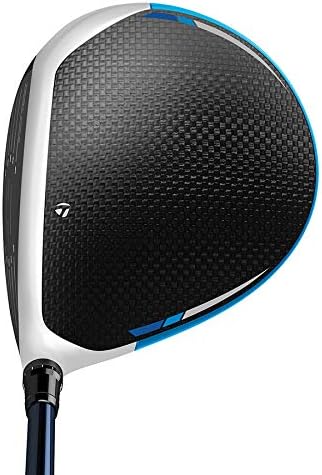
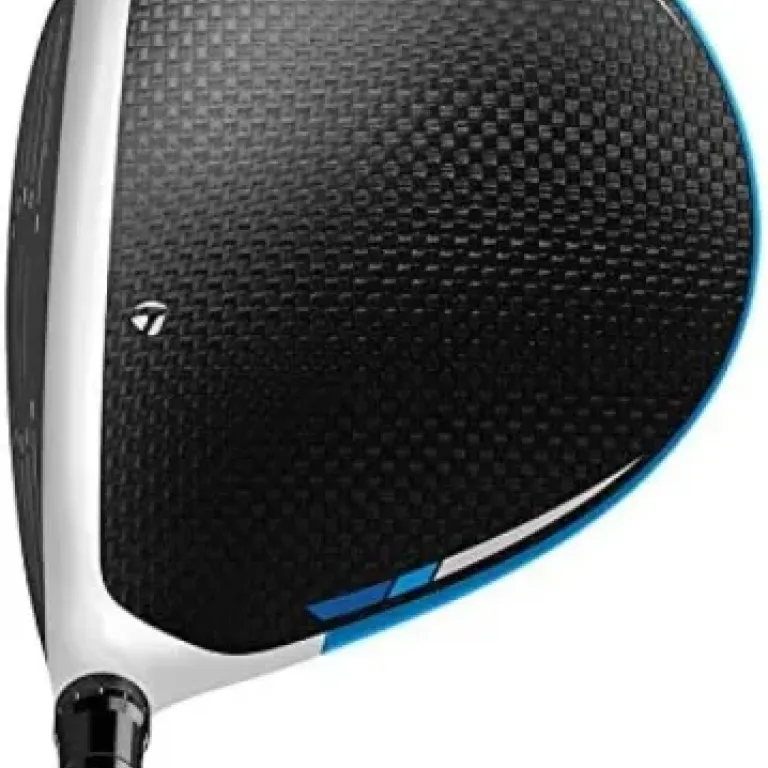
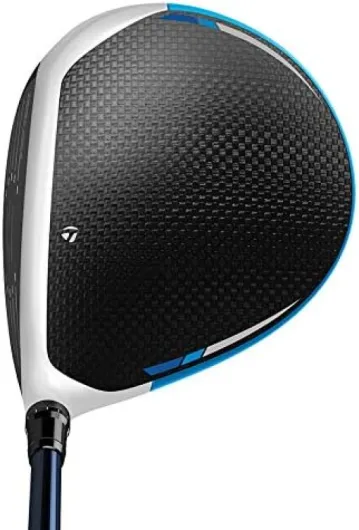
Design‑wise, the SIM 2 Max looks like a modern TaylorMade: a mix of black, light grey, and some blue accents. Behind the ball, the head shape is slightly stretched back, which to me screams "forgiveness". I actually like that. It doesn’t look tiny or intimidating; it looks like it’s going to help you out a bit on off‑center hits. The top line is clean, and the carbon crown has that matte look that cuts glare in the sun, which I appreciated on bright days.
At address, the club sits neutral for me. I didn’t get the feeling it was heavily closed or open. That’s good if you don’t want the club to fight your natural shape too aggressively. There’s a small alignment aid on the crown which is handy but not distracting. Compared to my old driver, which had a shiny crown and more offset, this one looks more modern and gives me more confidence to aim properly. I didn’t feel like I had to fiddle with the setup every time.
The sound and feel at impact are also part of the design story. When you catch it near the middle, you get a solid "thwack" – not too loud, not dead either. Off‑center hits feel a bit duller, but they’re not harsh. I’ve hit drivers where a toe strike feels like you hit a rock; this is more muted but still gives you enough feedback to know you missed the sweet spot. It’s helpful for learning without punishing your hands and ears.
Visually, it looks like a premium driver, but if you hate busy color schemes, the blue and branding might feel a bit much. Personally, I got used to it after a couple of rounds and stopped noticing the graphics. The main thing is that behind the ball it inspires a decent level of confidence, and the footprint is friendly for mid and high handicaps. It’s not a tiny tour head that scares you; it’s a forgiving shape that invites a freer swing.
Feel in the hands and during the swing
In terms of comfort, the SIM 2 Max is pretty user‑friendly. The overall swing weight feels balanced: there’s enough head weight so you always know where the club is during the swing, but it doesn’t feel like a sledgehammer. On longer rounds, I never felt tired swinging it, even when I went to the range after playing nine holes. For a regular flex setup, it suits a relaxed, repeatable motion rather than trying to swing out of your shoes.
The regular Ventus Blue shaft feels smooth. During the transition from backswing to downswing, it doesn’t feel too soft or too rigid. I’ve tried some stock shafts that felt boardy and harsh; this one is more comfortable and a bit more forgiving on timing. If I rushed the transition, I could feel the shaft lagging a touch, which actually reminded me to slow down and swing more rhythmically. That alone probably saved me from a few wild drives.
The standard rubber grip is okay. I played a round in humid conditions and another in light drizzle, and I didn’t have serious slipping issues, but it’s not super tacky. If you sweat a lot or play in rain often, I’d think about swapping to a grippier option. The grip size is standard, and for my medium‑sized hands it felt normal – no need for extra wraps or adjustments, at least for now.
Impact feel is also part of comfort. When you hit it well, it feels solid but not harsh. Off‑center hits feel a bit duller, but they don’t sting. That’s important if you’re a newer player or someone who doesn’t always find the center; you can practice and play without your hands feeling beaten up. Overall, I found it easy to swing for 18 holes without fatigue, and it didn’t punish my joints or hands, which is what I want from a driver I’ll use a lot.
Build quality and components
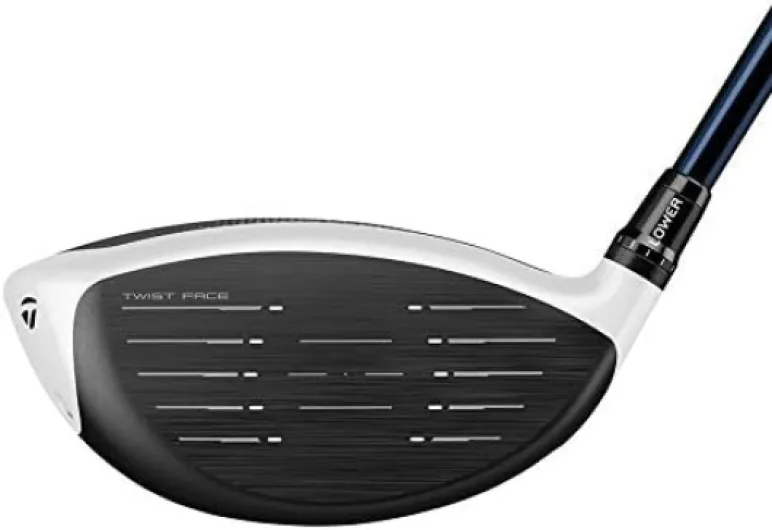
The SIM 2 Max uses a mix of titanium, carbon, and aluminum, which is pretty standard for current drivers at this price point. The face is titanium, the crown and parts of the sole are carbon, and there’s that forged aluminum ring around the back. In practice, it feels like a single solid piece. I never had any rattles, loose sounds, or anything that made me worry about build quality. After several range sessions and a handful of rounds, the head still feels tight.
The face finish shows ball marks pretty clearly, which I actually like because it tells you where you’re striking it. After a couple of buckets, you can see a pattern of where you tend to miss, and adjust your setup. The crown holds up well; I didn’t see any paint chipping, just the usual light scuffs you get from taking it in and out of the bag. The sole will scratch if you hit off mats or sandy turf, but that’s normal wear, nothing alarming.
The Ventus Blue regular shaft here is the made‑for version, not the expensive aftermarket one, so don’t expect miracles. That said, for an average golfer it’s fine. It feels consistent, not too whippy, and I didn’t get the sense that the shaft was doing anything weird through impact. If you swing above 100 mph, you might find this regular flex too soft and would probably want a stiffer option, but for my speed it matched up well.
The standard rubber grip is basic but usable. It’s not the tackiest grip I’ve ever held, but it didn’t slip in my hands, even in light drizzle. If you’re picky about grips, you’ll probably change it out anyway, but as stock grips go, it’s decent. Overall, the materials feel in line with a modern branded driver: solid, functional, and built to last a few seasons if you don’t abuse it.
How it holds up after regular use
I haven’t had this driver for years, but after several range sessions and multiple rounds, I can at least comment on short‑term durability. So far, the head has held up well. The carbon crown shows no cracks or weird marks, just some light surface swirls you only see in certain light. The sole has the usual scratches from turf and range mats, but nothing more than cosmetic wear. The face has picked up ball marks, which is normal, and they clean off easily with a damp towel.
The shaft still feels exactly the same as day one – no twisting, no creaks, no strange noises. I always use the headcover when it’s in the bag, which helps avoid bag chatter and dings from other clubs. The paint on the edges and around the ring hasn’t chipped yet, and I’m not especially gentle with my gear, just normal care. If you’re someone who throws clubs or slams them, obviously all bets are off, but for normal use it looks robust.
The grip is the only part I expect to replace fairly soon. After a stretch of range sessions, it’s still usable, but I can feel it getting a bit smoother. That’s pretty standard for stock grips, so I wouldn’t say it’s a weakness of this specific model, just something to plan for. A grip change is a cheap upgrade anyway, and if you play a lot, you’ll do it on any club.
Given the construction – titanium face, carbon crown, forged aluminum ring – I don’t see any obvious weak point as long as you’re not slamming the club into the ground or tossing it around. Modern drivers aren’t indestructible, but the SIM 2 Max feels like it should easily last several seasons of regular play for a typical golfer. If anything goes first, it will be the grip, not the head or shaft.
Distance, forgiveness, and real‑world results
Performance is where this driver actually earned its place in my bag. My swing speed is around 90–95 mph, and with my old driver I was averaging maybe 210–220 yards carry on decent hits, with some ugly low heel shots that barely got airborne. With the SIM 2 Max 10.5° in regular flex, my carry numbers crept closer to 225–235 on the launch monitor, and on the course I’m seeing a few drives end up a club closer to the green than before. It’s not a massive jump, but it’s noticeable over a few rounds.
The big thing for me is forgiveness. The "Speed Injected Twist Face" and all that marketing talk basically means mishits don’t die as badly. My toe strikes used to lose a ton of distance and curve hard; now they still curve, but they stay more in play and don’t drop out of the sky as fast. Same with low face strikes – I’ve hit a couple where I felt the impact low, expected a worm burner, and still got something that carried enough to be usable.
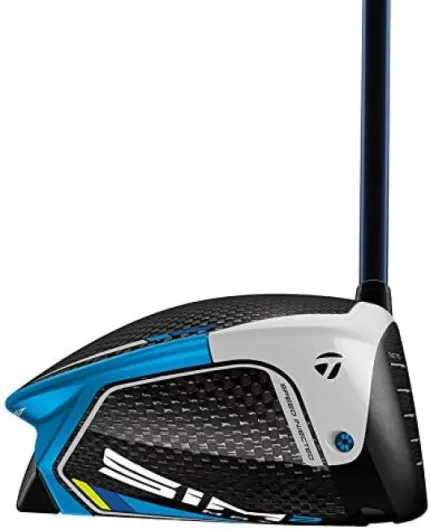
Ball flight is generally mid‑high for me with this setup. On a normal swing, I get a gentle fade. If I really hang the face open, it will still slice, so it’s not magic. But compared to my older driver, the shape is straighter overall, and I’m seeing more fairways. The Thru‑Slot Speed Pocket supposedly helps with low strikes, and based on a few thin hits that still got out there, I’d say there’s something to that. You still feel you missed it, but the punishment is less brutal.
Where it’s less impressive is if you’re already a good driver. I let a better player in my group (around 5 handicap, higher swing speed) try it. He called it "easy" and "high launching", but he didn’t see much more distance than his current driver. For him, it was just another solid modern driver. So, I’d say the SIM 2 Max shines more for mid and high handicaps who need forgiveness and consistency rather than squeezing out the last 5 yards for a low handicapper.
What you actually get with the SIM 2 Max
The version I have is the TaylorMade SIM 2 Max 10.5° with a Ventus Blue regular graphite shaft and standard rubber grip. Out of the box, you get the driver head, the shaft already assembled, and a headcover. No fancy extras, no wrench for massive adjustability sessions, just a straightforward driver ready to play. For most everyday golfers, that’s enough. The build looks clean, and it feels like a proper modern club, not some bargain bin experiment.
The club is built around a titanium face with a carbon crown and sole, plus that big rear weight you can clearly see. TaylorMade talks about things like "Forged Ring Construction" and "SIM Inertia Generator". In practice, what that meant for me is the head feels light enough to swing without strain but still has some heft at the back, which helps with stability. I never felt like I was swinging a toy; it has a solid presence at address and through impact.
The 10.5° loft with a regular flex shaft is clearly aimed at the average swing speed player. If you’re a slower swinger or a newer golfer, that combination makes sense: higher launch, more carry, and less need to muscle the ball. I’m around 90–95 mph with driver, and this setup suited me much better than the stiff shaft I was using before. Ball flight is higher, and I don’t feel I have to go after it to get the ball up.
One thing to flag: the Amazon price some people mention in the reviews is on the steep side, especially when you know you can sometimes find this model cheaper at golf retailers or second‑hand. So presentation‑wise, it feels like a quality driver in the hand, but you do pay for the TaylorMade name and the tech. If you’re on a tight budget, it’s worth checking other shops before hitting the buy button online.
Pros
- Very forgiving on heel and toe strikes, keeps more drives in play
- Easy launch and solid distance for mid‑speed swings
- Comfortable, balanced feel that’s easy to swing for 18 holes
Cons
- Price on Amazon can be higher than golf retailers for the same club
- Stock grip is average and may need replacing fairly soon
Conclusion
Editor's rating
After living with the TaylorMade SIM 2 Max 10.5° Ventus Blue regular for a while, my take is straightforward: it’s a forgiving, easy‑to‑swing driver that suits the average golfer more than the elite player. I gained a bit of distance over my old driver, but the bigger win was consistency. Mishits stayed more in play, my decent swings flew a bit farther, and I felt more relaxed on the tee knowing that a slight heel or toe contact wouldn’t be an automatic reload.
It’s not without downsides. The price can be high depending on where you buy it, and if you already own a fairly modern driver, the improvement might be marginal. The stock grip is just okay, and serious players with higher swing speeds might outgrow the regular shaft quickly. Still, for mid and high handicaps coming from older gear, it’s a pretty solid upgrade that makes the long game less of a headache.
If you’re a casual or improving golfer who wants a driver that feels stable, launches the ball easily, and forgives your common mishits, the SIM 2 Max is worth a serious look – especially if you find it at a good price from a golf retailer. If you’re a low handicap chasing tiny performance gains, or you’re on a very tight budget, I’d either look at a fitting with multiple heads or consider a cheaper, slightly older model instead.