
Summary
Editor's rating
Value: solid performer, but you pay the Callaway tax
Design: modern look, big head, and a sound you’ll either like or hate
Comfort and feel: easy to swing, but not for everyone
Materials and build: light graphite setup that favors swing speed over heft
Durability: holds up fine so far, but protect the finish
Performance: more fairways and higher launch, not a distance miracle
What you actually get when you buy this Paradym driver
Pros
- Very easy to launch with the 12° loft and light 50g shaft, great for moderate swing speeds
- Forgiving on off-center hits, with straighter and more playable misses
- Lightweight build reduces fatigue and makes it easier to keep a smooth swing tempo
Cons
- Premium price, especially if you’re coming from a fairly recent driver already
- Loud impact sound and crown finish that can scratch if you don’t use the headcover

Specifications
View full product page →| Brand | Callaway |
A modern driver that actually forgives your mishits (most of the time)
I’ve been playing mid-handicap golf for a while now, and I picked up the Callaway 2023 Paradym Driver in 12° loft, regular flex, with the Hzrdus Silver 50G shaft because I wanted something a bit more forgiving than my older driver. I’m not a big hitter, swing speed is around 90–95 mph, so I was looking for launch and fairways, not chasing 300-yard bombs. I’ve used it over several rounds and a couple of range sessions, so I’ve had time to see how it behaves on good days and bad days.
The first thing I noticed is that it’s a very light setup. The 50g shaft, standard grip, and the overall head design make the club feel easy to swing, especially if you’re not a gym guy. It doesn’t feel like you’re fighting the club to get it through the ball. That’s good if you tend to get tired on the back nine or you’re not super athletic. On the other hand, players who like to feel more weight might find it a bit whippy.
On course, the biggest change for me compared to my older driver was the higher launch and straighter misses. With 12° loft and a regular flex shaft, the ball gets up in the air quickly, and my usual slice turned into more of a gentle fade most of the time. When I really mess up the swing, it still goes right, but it’s more playable than before. I’m not suddenly 30 yards longer, but I’ve definitely gained some carry distance simply because the ball is staying in the air longer and I’m hitting more fairways.
It’s not a miracle club. If your swing is all over the place, this won’t magically fix it. Also, the price is clearly in the "premium" bracket, and there are cheaper drivers that do a decent job. But after using it, I’d say it’s pretty solid for mid-handicappers who want help with launch and forgiveness, especially if your swing speed is on the moderate side. Just don’t expect it to completely rewrite your game; it’s more of a reliable upgrade than some magic wand.
Value: solid performer, but you pay the Callaway tax
On the value for money side, this is where you need to be honest with yourself. The 2023 Paradym driver sits in the premium price range, and you can absolutely find cheaper drivers that perform decently. You’re paying partly for the Callaway name, the latest tech, and the fact that it’s a current generation model. For some people, that’s fine; for others, it will feel steep for what is essentially a tool to hit tee shots.
In terms of what you actually get for the price, you’re getting a driver that is easy to launch, forgiving, and light, especially suited to moderate swing speeds. If that fits your profile and you’re upgrading from a driver that’s 5–10 years old, you’ll probably feel the difference on the course: more carry, more fairways, and a generally easier time off the tee. In that case, the money is easier to justify because you actually see a benefit in your scores and stress level.
However, if you’re already playing a fairly recent driver from any big brand, the jump might be less noticeable. It’s better, but not night-and-day. In that scenario, the value feels a bit more questionable unless you really like the particular feel and look of this club. Also, the stock configuration (12°, regular, 50g shaft) is clearly aimed at a certain type of player; if you don’t match that profile, you might end up paying a premium and then still needing to tweak shaft or loft.
Overall, I’d rate the value as good but not outstanding. The club performs well, feels modern, and should last several seasons, so you’re not throwing money away. But you’re not getting a bargain either. If you find it on sale or second-hand in good shape, it becomes a much more attractive deal. At full retail, it’s for golfers who are willing to pay for a known brand and a solid, user-friendly driver rather than hunting for the cheapest option.
Design: modern look, big head, and a sound you’ll either like or hate
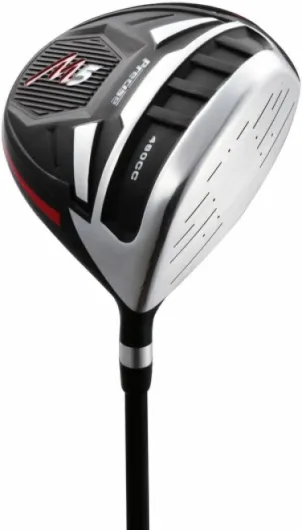
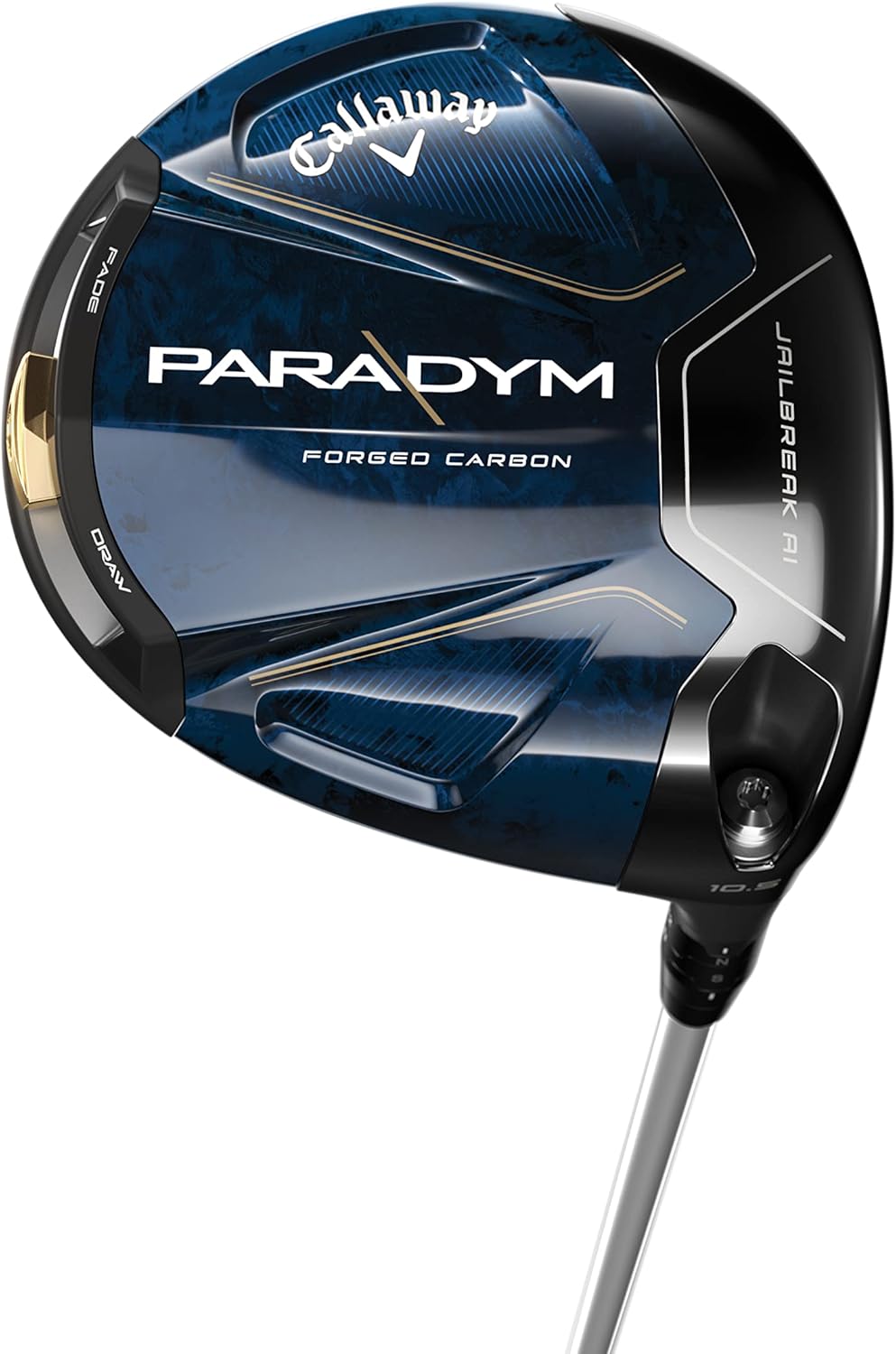
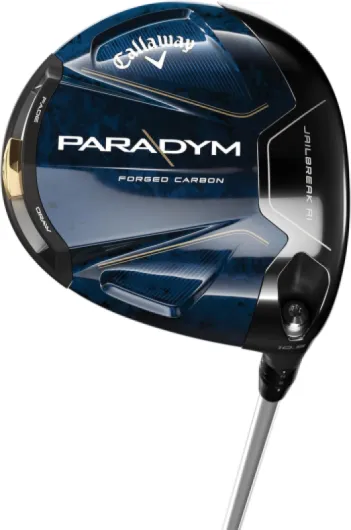
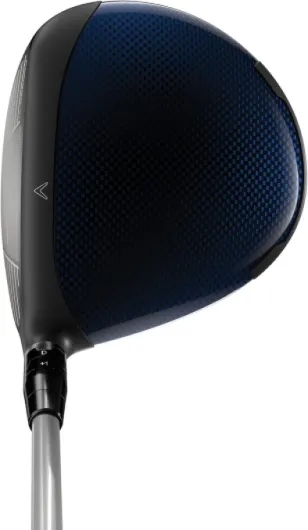
The design of the 2023 Paradym driver is very much in line with current drivers: big footprint at address, carbon-heavy look, and a fairly bold color scheme. This particular version comes in black and silver, with a clean top line when you set it behind the ball. At address, it inspires some confidence because you feel like you’ve got a lot of clubhead behind the ball, which is good if you tend to get nervous on tight fairways. It definitely doesn’t look small or intimidating.
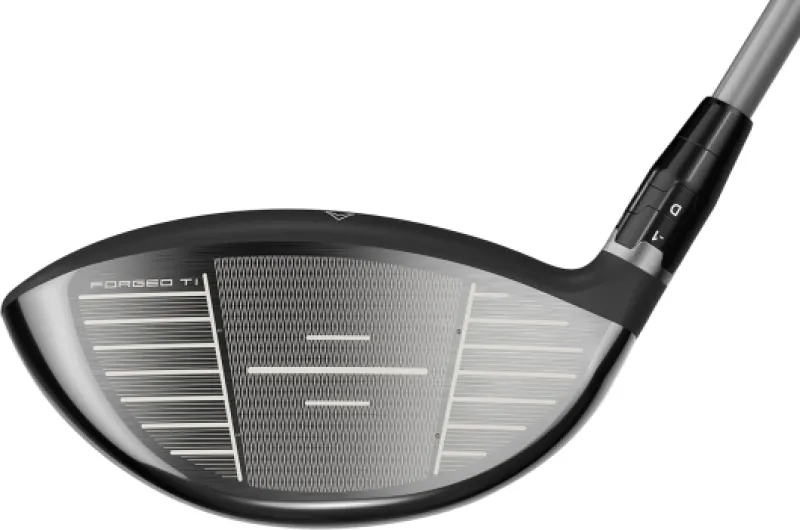
One design detail I appreciated is that the face sits fairly neutral. It doesn’t look aggressively closed or open, which is nice if you already fight a slice or hook and don’t want the club to visually mess with your alignment. I found it pretty easy to square the club at setup. The alignment aid on the crown is minimal but enough to give you a reference point. Compared to some older Callaway models I’ve tried, this one feels a bit cleaner and less busy on top, which I liked.
Where opinions may differ is on the sound and feel. When you hit it in the center, it has a fairly loud, metallic "crack". Not obnoxious, but you definitely know you’ve hit a driver, not a fairway wood. On mishits towards the toe or heel, the sound gets a bit more hollow, and you feel more vibration in the hands. It’s useful feedback, but if you’re sensitive to harsh feel, you might find it a bit firm. Personally, I don’t mind it; it lets me know immediately if I’ve missed the sweet spot.
Overall, the design is modern and confidence-inspiring, but not flashy in a fancy way. It looks like a serious club aimed at regular golfers, not a toy. The only downside for me is the slightly loud sound on the range, which can be a bit tiring after a bucket of balls. If you prefer a muted "thud", this won’t give you that. But if you like clear feedback and a head that looks big and stable behind the ball, the design does its job well.
Comfort and feel: easy to swing, but not for everyone
Comfort-wise, this Paradym setup is clearly built for players who want an easy, low-effort swing. The first round I played with it, I noticed that my shoulders and forearms felt less tired than with my old, heavier driver. The 50g shaft and overall light build let you keep a smooth tempo without feeling like you’re dragging a sledgehammer. If you’re not super fit or you play 27 holes in a day, that lighter feel is honestly pretty nice.
The balance of the club is slightly towards the head but not extreme. You can feel where the head is during the swing, which I like, but it doesn’t feel head-heavy. On the course, that made it easier for me to keep my rhythm, especially on the back nine when I usually start rushing. The regular flex also helps: it gives a bit of kick without feeling unstable. When I really tried to step on it, I could feel the shaft flex a bit more than I’d like, but for my normal swing it felt controlled.
Impact feel is on the firmer side. Center strikes feel solid and satisfying, but mishits, especially low on the face, can feel a bit harsh. Not painful, just a clear "you messed that up" signal. Personally, I like that feedback, but if you want a super soft, muted driver feel, this isn’t it. The grip comfort is fine: standard thickness, decent tack, no weird pressure points. I used it with and without a glove and had no slipping issues.
One thing to be aware of: if you’re used to heavier drivers, there might be a short adjustment period. My first range session, I was early to impact because the club was getting there faster than my brain expected. After a bucket or so, I adjusted my timing and started hitting it more consistently. So in terms of comfort, I’d say it’s very user-friendly once you get used to the lighter feel, especially for moderate swing speeds. Big hitters or very aggressive swingers might find it a bit too light and whippy for their taste.
Materials and build: light graphite setup that favors swing speed over heft
On the materials side, this driver is very much what you’d expect from a modern premium club: graphite everywhere and lightweight components. The shaft is a Hzrdus Silver 50G, which, as the name suggests, sits around 50 grams. That’s on the lighter end, especially if you’re coming from an older steel or heavier graphite shaft. The head uses a mix of metal and carbon (Callaway’s usual tech approach), and the grip is a standard synthetic rubber. Nothing fancy, but it grips fine and doesn’t feel cheap.
In practice, the light shaft and head combo make the club feel very easy to swing. I noticed I didn’t have to force it to get clubhead speed. For my roughly 90–95 mph driver swing, it felt like a good match. The regular flex on this shaft feels true to label: there’s enough kick to help launch the ball, but it doesn’t feel like a noodle. If you swing a lot faster than that, though, I could see the shaft feeling a bit too soft and making your dispersion worse.
The synthetic rubber grip is standard size and has a decent tacky feel, even after a few sweaty rounds. I didn’t feel the need to change it immediately, which I often do with stock grips. Over time, I’d probably swap it for something I know and like, but out of the box it’s totally fine. For a driver in this price range, I might have liked a slightly more premium grip, but that’s nitpicking. It’s functional and comfortable enough.
Overall, the build quality feels solid. Nothing rattling, no weird glue marks, and the finish on the head has held up okay so far, just normal tee marks on the face. If you’re rough with your clubs, you’ll still want to use the headcover, because the crown finish can scratch like any modern driver. But in terms of materials and assembly, it feels like a proper Callaway product: light, modern, and clearly focused on helping average golfers get the club moving faster through the ball.
Durability: holds up fine so far, but protect the finish
Durability-wise, after several rounds and a bunch of range sessions, the Paradym driver has held up pretty well. The face shows the usual ball and tee marks, nothing unexpected, and they clean off easily with a damp cloth. No signs of cracks, dents, or any structural issues. The shaft still feels exactly the same as day one, with no odd creaks or looseness around the hosel.
The crown finish is where you need to be a bit careful, like with most modern drivers. If you’re lazy with putting the headcover on or you let it bang around in the bag, you’ll start to see little scuffs and scratches. I already have a couple of minor marks from a clumsy club drop on the cart path, which is my fault, but it shows that the finish isn’t bulletproof. That’s normal, but if you care about looks, use the headcover religiously.
The synthetic rubber grip has held up okay so far. No peeling or weird wear spots yet, even with some humid rounds. I’d expect to change it after a season or so, like any stock grip, but nothing indicates premature wear. The overall build—glue, ferrule, and alignment—has stayed solid, with no twisting or loosening. I’ve thrown it in and out of the bag, used it on mats and grass, and it still feels tight.
So in terms of durability, I’d say it’s reliable for normal use. It’s not a tank; if you slam it on the ground or treat it like junk, it will show it. But if you treat it like a normal golfer treats a driver—headcover on, don’t smash it in anger—it should easily last you several seasons without any major issues. The only real downside is the cosmetic vulnerability of the crown, which is pretty standard for this type of finish.
Performance: more fairways and higher launch, not a distance miracle
Performance is where this driver actually earns its keep, at least for my level. On average, I saw a small bump in carry distance compared to my older driver, mainly because the 12° loft and the shaft help get the ball higher. My usual low-ish drives turned into more medium-high flights that stayed in the air longer. I’m not suddenly hitting it 280, but I’d say I gained roughly 5–10 yards of carry on well-struck shots, which is decent and realistic.
The bigger difference was in forgiveness and dispersion. My typical miss is a fade/slice, and with this Paradym, those misses stayed a bit straighter and lost less distance. I still miss right when I make a bad swing, but instead of a ball that’s dead in the trees, I’m often just in the right rough. Toe hits still go left, but they stay in play more often. On the launch monitor at the range, my worst strikes lost a lot less ball speed than with my older driver, which matches what I saw on the course.
Launch and spin seem well suited to moderate swing speeds. The 12° loft helps you get the ball up without having to swing out of your shoes, and the regular flex shaft doesn’t force you to be a hero. If you already hit the ball very high, this setup might be too floaty, but for me, it was in a good window: high enough to carry but not ballooning in normal conditions. In the wind, I did notice some higher balls getting knocked down a bit, but that’s more about the loft than the club itself.
Overall, I’d say the performance is solid but realistic. You get a bit more carry, more forgiveness, and easier launch. It doesn’t magically fix a terrible swing, and if you’re a low handicap with a fast swing, you’ll probably want a stiffer shaft and lower loft. But for mid-handicappers or improving players with moderate speed, it does what you’d hope: more playable drives and fewer disasters off the tee.
What you actually get when you buy this Paradym driver
Out of the box, the Callaway 2023 Paradym Driver package is pretty simple: you get the driver itself and a headcover, and that’s it. No fancy extras, no extra weights, no adjustment tools in my case. It’s clearly meant to be a straightforward men’s driver setup: right-handed, 12° loft, regular flex, 48-inch length, graphite shaft (Hzrdus Silver 50G), and a standard synthetic rubber grip. The club is marketed as a driver for players who want distance and forgiveness, but the box doesn’t oversell anything. The weight on the spec sheet (around 0.11 pounds for the club head itself) tells you it’s on the lighter side.
In hand, it feels like a modern, oversized driver head with a fairly deep face, and the shaft is clearly designed to be light and easy to swing. The configuration is pretty much plug-and-play for a typical amateur: 12° loft gives you a nice high launch, regular flex suits most mid-speed swings, and the standard grip size will work for most people unless you have very small or very large hands. It’s not some super niche tour setup; it’s more of a mainstream, user-friendly spec.
One thing to note is that this model is clearly positioned as a premium product in terms of price, even if the packaging itself is pretty basic. No big hard case, no fancy booklet, just the essentials. That doesn’t bother me personally; I care more about how it performs than what the box looks like. But if you expect a luxury unboxing experience for the money, you won’t find it here. It’s very "here’s your club, go play".
Overall, in terms of presentation, it’s simple but clear: a lightweight, right-handed men’s driver, focused on easy launch and moderate swing speeds. If you know your specs and you order the right one, you pretty much get exactly what’s written on the label. No surprises, good or bad, on that front.
Pros
- Very easy to launch with the 12° loft and light 50g shaft, great for moderate swing speeds
- Forgiving on off-center hits, with straighter and more playable misses
- Lightweight build reduces fatigue and makes it easier to keep a smooth swing tempo
Cons
- Premium price, especially if you’re coming from a fairly recent driver already
- Loud impact sound and crown finish that can scratch if you don’t use the headcover
Conclusion
Editor's rating
After using the Callaway 2023 Paradym Driver (12°, regular flex, Hzrdus Silver 50G) for several rounds and range sessions, I’d sum it up as a very solid, easy-to-hit driver for moderate swing speeds, with a price that reflects the brand and the tech. The main strengths are how light and manageable it feels, how easily it launches the ball, and how it keeps your mishits more playable. For a mid-handicap golfer like me who isn’t chasing tour-level speed, it genuinely made tee shots a bit less stressful and slightly more rewarding.
It’s not perfect. The sound is a bit loud, the crown finish needs care, and the stock setup won’t suit very fast swingers. The value is good but not cheap; you’re clearly paying a premium. I’d recommend it to golfers who are in the mid-handicap range with moderate swing speed and who want a forgiving, high-launch driver that doesn’t feel heavy. If you’re a beginner on a tight budget, there are more affordable options that will do the job. If you’re a low handicap with a strong swing, you’ll probably want a different shaft and maybe less loft. But if you fit the target profile and can handle the price, this Paradym is a reliable, user-friendly choice that can genuinely tidy up your driving game.