
Summary
Editor's rating
Value: good performer, but you pay the TaylorMade tax
Design: confidence at address but not the prettiest thing ever
Comfort and feel: easy to swing, but tempo matters
Materials and build: light, modern, but not premium-luxury
Durability and wear: holds up fine so far
Performance: consistent launch and forgiveness, not a distance rocket
What this Qi35 Max Rescue actually is (and who it’s for)
Pros
- Very forgiving on off-center hits with easy, high launch
- Light Fujikura AirSpeeder 25 shaft makes it easy to swing for moderate speeds
- Confidence-inspiring head shape and matte crown that looks good at address
Cons
- Price is on the high side compared to older or lesser-known hybrids
- Regular AirSpeeder shaft can feel too soft for aggressive or faster swings

Specifications
View full product page →| Brand | TaylorMade |
A hybrid that actually helped my long game
I’ve been messing around with hybrids for a while, mostly because my long irons are unreliable at best. I picked up this left-handed TaylorMade Qi35 Max Rescue 20° with the Fujikura AirSpeeder 25 regular shaft to see if it could replace my 3 or 4 iron. I’m a mid‑high handicap, swing speed is not huge, and I play maybe once a week when life allows, so I’m pretty much the target user for something labeled “Max” and “Rescue”. I used it over three rounds and a couple of range sessions before giving this opinion.
From the first range session, the main thing that stood out was how easy it was to launch the ball compared to my old 3 iron and an older hybrid I have from Callaway. I didn’t suddenly gain 30 meters, but I was getting more consistent carry and, most importantly, fewer ugly low bullets. Even when I caught it slightly off the toe, the ball still got up in the air and went somewhere near the target. That’s really what I care about for this type of club.
On the course, I used it mainly for second shots on par 5s and longer par 4s, plus a couple of tee shots on tight holes. It’s not magic, I still hit a few bad ones, but overall my dispersion was clearly tighter than with my 3 iron. I had more greenside chances instead of hacking out of rough 60 meters short. That alone already makes it a useful club in my bag. It feels built for people like me who need help, not something only low handicaps can handle.
Overall, my first impression after a few rounds is: pretty solid hybrid, very forgiving, not the longest rocket launcher out there but reliable. If you already hit your long irons well, you might not gain much. But if you’re fighting with 3 and 4 irons and you’re left‑handed, this is a realistic option that just makes those shots less stressful. Not perfect, a bit pricey, but it does what it’s supposed to do.
Value: good performer, but you pay the TaylorMade tax
On value, this Qi35 Max Rescue sits in the mid-to-high price range for hybrids, especially with the TaylorMade badge. You’re paying for a well-known brand and their latest tech, and you can feel that in the price. Compared to cheaper brands or older models on sale, it’s definitely not the bargain option. If budget is tight, you can probably find older TaylorMade hybrids or other brands that cost less and still do a decent job.
That said, in terms of what you actually get for the money, it’s pretty solid: modern tech, forgiving head, light quality shaft, and a design that clearly helps average golfers. I noticed a real difference in consistency versus my old 3 iron and even versus my older hybrid. Fewer disasters, more playable shots, and less stress on long approaches. For me, that has value, because it directly impacts my score and my mood on the course. It’s not just a cosmetic upgrade.
Where I think the value could be questioned is if you’re already playing a relatively recent hybrid from any big brand (TaylorMade, Callaway, Ping, etc.). In that case, the jump might not be huge, and you might not see enough improvement to justify full retail price. But if you’re coming from no hybrid, or from a really old one, the upgrade in forgiveness and ease of use is noticeable. Also, being left-handed, the choice is often more limited, and in that context this club becomes more interesting.
So, is it worth it? In my opinion: yes, for the typical mid‑high handicap who wants a forgiving, easy-to-hit 20° hybrid and is okay paying for a big brand. It’s not a steal, but it’s not a rip-off either. It sits in that “good value if you actually use it a lot” category. If you’re just curious and not sure hybrids are for you, maybe try a used one first. If you already know you like hybrids and want something modern and forgiving, this one justifies its price reasonably well.
Design: confidence at address but not the prettiest thing ever
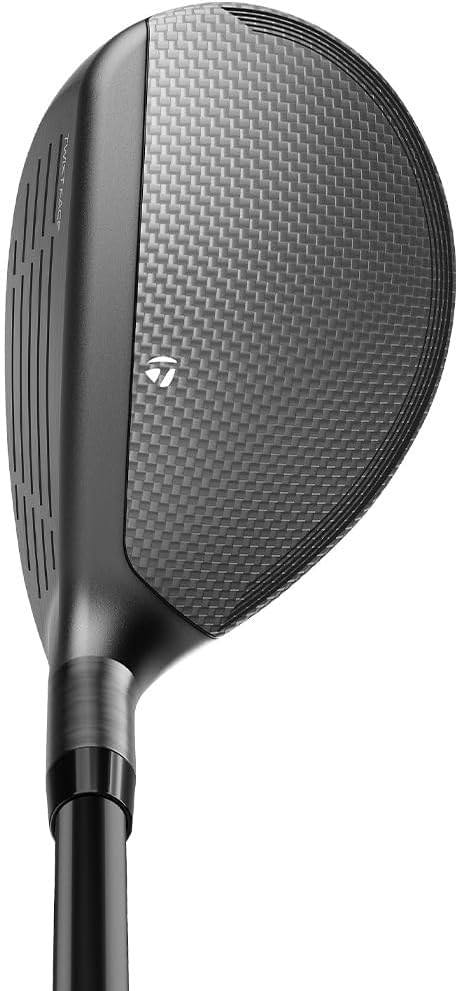
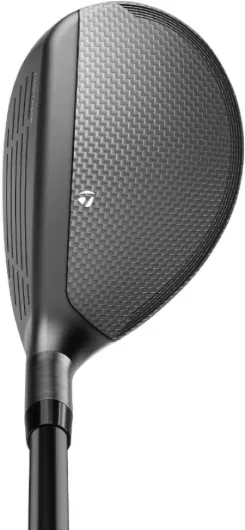
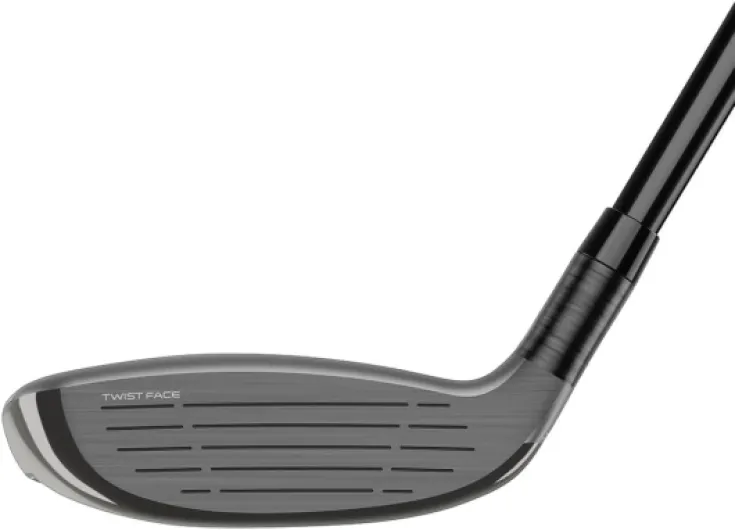
Design-wise, the head is on the larger side, which for me is a plus in a hybrid. At address, the matte grey crown with the carbon pattern gives it a modern look, and the shape inspires confidence. It sits square behind the ball, no obvious closed face, which I liked because I hate the feeling of a club trying to force a hook. The footprint is big enough that you don’t feel like you’re hitting a tiny long iron, but it’s not cartoonishly oversized either.
The Infinity Carbon crown and the matte finish are practical: there’s no glare in the sun, and you don’t see every fingerprint. The contrast between the face and the crown makes it pretty easy to line up. If you’re used to classic black heads, the matte grey is a small change, but after a couple of holes I didn’t think about it anymore. It looks modern and functional, not flashy. Some might find it a bit plain, but honestly, on the course that’s not what I care about.
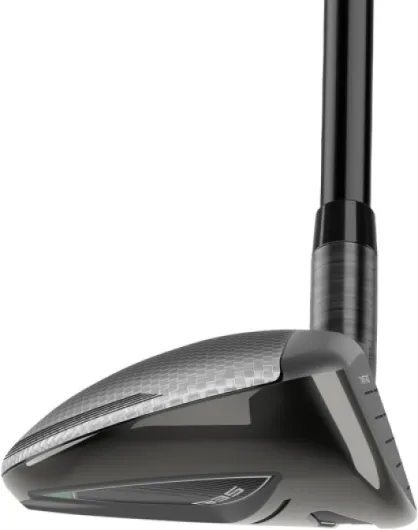
The sole has the usual TaylorMade touches: the Speed Pocket is visible, the TSS weight screw is there, and the branding is present but not too loud. It glides through light rough decently; I didn’t feel it digging too much, even on slightly fat contact. The mid-sized head type makes it versatile enough off the tee and fairway. Out of heavier rough, like wet stuff, it still struggles a bit, but that’s kind of normal for a 20° hybrid – this is not a 7 iron replacement.
One detail: the club sits nicely behind the ball both off a tee and from the fairway. I didn’t feel like I had to manipulate my setup to make it look right. The main design win for me is the confidence it gives at address. It looks forgiving, which mentally helps when you’re standing at 190+ meters and you need something that won’t punish a slight miss. If you’re super picky about traditional, compact shapes, you might think it’s a bit bulky, but as a regular golfer I was fine with it.
Comfort and feel: easy to swing, but tempo matters
In terms of comfort, the first thing I noticed is how light the whole club feels. Coming from heavier steel-shafted irons, this hybrid almost felt like swinging air at first. After a few balls, though, I got used to it and appreciated the fact that I could make a full swing without feeling like I was working too hard. For longer rounds, that’s nice – you don’t feel worn out after a series of long shots, especially if you’re not exactly in peak athletic shape.
The regular flex AirSpeeder 25 shaft is very forgiving if your tempo is smooth. When I kept my rhythm under control, contact felt solid and the ball flight was predictable. When I rushed from the top, I could feel the shaft lag and then kick, and sometimes that led to pulls or bigger draws. So it kind of forces you to be honest with your swing. I wouldn’t call that a flaw, but if you’re very aggressive, you might find it too soft. For my mid-speed swing, it was mostly fine, just a reminder not to overswing.
The feel at impact is more on the muted side. It doesn’t have that sharp metallic “ping” some older hybrids have. It’s more of a soft “thwack”, which I personally like. Center strikes feel firm and reassuring, mishits feel a bit duller but not harsh. You can tell when you’ve missed the center, but it doesn’t sting your hands. On cold mornings, that’s appreciated. The sound is not loud, more controlled, so you’re not going to draw attention on the range with a cannon blast noise.
Overall, comfort is a strong point: light, easy to swing, not tiring, pleasant feel. The only catch is that the light shaft and head combination demand a bit of discipline in your tempo. If you’re smooth, the club works with you. If you’re jerky and violent, it can punish you with left shots. For the average player who’s trying to swing within themselves, it’s a pretty friendly club to use over 18 holes.
Materials and build: light, modern, but not premium-luxury
The club uses a multi-material construction: carbon crown, steel body, and aluminum weight. On paper, that’s to move weight low and back and keep the head stable. In hand, the head feels light but not toy-like. Swinging it, the balance is clearly more toward the head than a long iron, which helped me feel the clubhead through the swing. The finish on the matte grey crown is decent – after a few rounds and some range time, I didn’t see any obvious chips or marks, just normal ball scuffs on the face.
The shaft is a Fujikura AirSpeeder 25, which is a very light graphite shaft. If you’re used to heavier steel or stiff graphite, this will feel noticeably lighter. For me, it made it easier to generate clubhead speed without forcing it. The downside is, if you get too aggressive, you can feel it flex and sometimes the face closes a bit. I had a couple of overcooked draws when I tried to smash it. If you already swing fast, I’d seriously consider a stiffer option; this one feels clearly aimed at moderate swing speed players.
The grip is a standard rubber grip, nothing fancy, just functional. It’s not the tackiest grip I’ve tried, but it didn’t slip even in slightly humid conditions. After a few sessions, it still felt fine. If you’re picky about grips, you’ll probably swap it for your favorite model, but out of the box it’s usable. The overall build quality feels solid for a mainstream brand like TaylorMade – no weird glue rattles, no misaligned graphics on my unit.
In short, the materials and build are modern and practical, not luxury-level but clearly not cheap. The combo of carbon crown and light shaft makes the club easy to swing, especially for someone who doesn’t hit the gym. There are probably more premium-feeling shafts out there, and the grip is basic, but for a stock setup this is decent. You’re paying mainly for the head tech and forgiveness, not for fancy finishes or boutique components.
Durability and wear: holds up fine so far
I’ve only had it for a few weeks, so I can’t talk about multi-year durability, but I did put it through a decent amount of use: three full rounds, two long range sessions, and some practice out of light rough and fairway bunkers. The head finish is holding up well. The matte grey crown still looks clean, no obvious chips or scratches, just the usual light smudges that wipe off. The face shows normal ball marks, but nothing unusual – no weird discoloration or dents.
The sole has a few scuffs from sandy turf and bunker shots, which is totally normal. The paint and markings are still visible, and the Speed Pocket area doesn’t show any signs of cracking or damage. I didn’t baby it: I hit from mats, grass, and some not‑so‑perfect lies. It took it without any drama. I’ve had cheaper hybrids in the past where the finish on the sole started to peel quickly; that’s not the case here so far.
The shaft and grip also feel solid. The shaft hasn’t shown any strange noises or twisting, and I didn’t notice any loosening at the hosel. The grip still has decent tack; no signs of early wear or smoothing out, even though I tend to hold on pretty tight when I get nervous. Obviously, any stock grip will need changing after a season or so if you play a lot, but for now it’s holding up as expected.
Overall, in terms of durability, I’d say it feels like a typical TaylorMade product: well-built and ready for regular play. I can’t promise it will look new after two seasons, but based on the first weeks, I don’t see any red flags. If you’re someone who plays every weekend and practices midweek, you’ll probably just see normal wear, nothing catastrophic. It’s not fragile, and the materials seem ready for regular use, not just showroom display.
Performance: consistent launch and forgiveness, not a distance rocket
On performance, I tested this Qi35 Max Rescue mostly against my old 3 iron and an older 19° Callaway hybrid. I’m not using a launch monitor, just on-course distances and range markers. With the 20° loft, I was averaging around 180–190 meters carry on decent strikes, sometimes pushing 195 when I caught it really clean. That’s roughly similar to my old hybrid, but the big difference was how often I got that distance. With the 3 iron, my spread was huge; with this hybrid, my bad shots still went a usable distance instead of dying at 150 with a low worm burner.
Launch is high and easy. Even on slightly heavy contact, the ball still got up. The Speed Pocket clearly helps on low-face hits; I had a couple where I knew I caught it thin, and the ball still carried enough to stay in play. Off the tee on tight par 4s, it was reliable: not as long as driver obviously, but straight enough that I felt confident pulling it when I just needed to find the fairway. Off the deck, it was even more useful, especially on second shots into par 5s where I just wanted to get close without risking a big miss.
In terms of forgiveness, I’d rate it pretty high. Toe and heel strikes lost some distance but usually stayed within a reasonable corridor. My typical miss is a low-left hook, and while this didn’t “fix” my swing, the Twist Face seemed to reduce the worst curve. I still hit some left, but fewer absolute disasters. Compared to my older hybrid, the dispersion left-right was noticeably tighter. You can still hit a bad shot, but you have to really mess up.
It’s not the longest hybrid I’ve ever tried, and if you’re chasing pure distance, there might be hotter faces out there. But for me, the combo of predictable distance, easy launch, and forgiveness matters more. I’d rather have a 185‑meter shot that I can hit 7 times out of 10 than a 200‑meter rocket that I only catch properly once in a while. On that front, this club does its job well. It turned a scary yardage into something I can attack more often instead of just laying up.
What this Qi35 Max Rescue actually is (and who it’s for)
This specific model is the TaylorMade Qi35 Max Rescue, 20° loft, left-handed, regular flex, with a Fujikura AirSpeeder 25 graphite shaft. So we’re talking about a hybrid that basically replaces a 3 iron (or a strong 4 iron depending on your setup). It’s clearly designed for players who need help getting the ball up and want forgiveness across the face, not some compact players’ hybrid. The "Max" tag and the big head shape pretty much confirm that.
On paper, it packs the usual TaylorMade tech: Twist Face, through-slot Speed Pocket, Infinity Carbon crown, and some TSS weighting to adjust the balance. In practice, what that means is: they’ve shoved weight low and deep to help launch, the face is shaped to reduce the worst hooks/slices, and the sole is made to keep ball speed when you hit low on the face. I can’t verify every tech claim, but out on the course, I did feel that low strikes and slight mishits were less punished than with my older hybrid.
This club is built with a very light shaft (Fujikura AirSpeeder 25). That’s good if your swing speed is on the moderate side or if you’re not exactly hitting the gym every day. If you swing super hard or are close to scratch, you might find it a bit whippy. For me, as a mid‑high handicap with average speed, it felt manageable, though I had to keep my tempo smooth. If I went after it too hard, I could feel the head lag a bit and the ball sometimes went left.
So, who is this for? In my opinion: left‑handed golfers, roughly 15–30 handicap, who struggle with long irons and want a hybrid that’s easy to launch, forgiving, and not too heavy. If you’re already playing something like a SIM or M-series hybrid from TaylorMade, this is more of an upgrade in forgiveness and feel than a revolution. If you’re coming from no hybrid at all or a very old one, it will probably make long approaches a bit less of a coin toss.
Pros
- Very forgiving on off-center hits with easy, high launch
- Light Fujikura AirSpeeder 25 shaft makes it easy to swing for moderate speeds
- Confidence-inspiring head shape and matte crown that looks good at address
Cons
- Price is on the high side compared to older or lesser-known hybrids
- Regular AirSpeeder shaft can feel too soft for aggressive or faster swings
Conclusion
Editor's rating
After a few rounds and range sessions with the TaylorMade Qi35 Max Rescue 20° (left-handed, regular flex), my conclusion is pretty straightforward: it’s a forgiving, easy-to-launch hybrid that does exactly what most everyday golfers want. It didn’t suddenly turn me into a long‑game specialist, but it clearly reduced the number of really bad shots from 180–190 meters. The large, confidence‑inspiring head, light Fujikura AirSpeeder shaft, and modern tech (Twist Face, Speed Pocket, carbon crown) all come together to make long approaches less stressful.
It’s not perfect. The light regular shaft can feel a bit soft if you swing aggressively, and the price is on the higher side compared to older models or less known brands. It’s also not the longest hybrid on the planet – the gain is more in consistency and forgiveness than in raw distance. But for a mid‑high handicap left‑hander who fights with long irons, this club is a realistic and practical upgrade. If you already own a fairly recent hybrid and hit it well, you might not see a huge jump, and you could probably skip it or wait for a deal.
In short: good, reliable tool for average golfers, not a miracle stick. It gets the job done, makes long shots less scary, and feels solid in the bag. If that’s what you’re after and you’re okay paying a bit of a TaylorMade premium, it’s a sensible choice.