
Summary
Editor's rating
Is it worth the money for an everyday golfer?
Looks, shape, and how it sits behind the ball
Swing feel, balance, and how tiring it is to use
Carbon, titanium, and what it actually feels like
Build quality and how it holds up after some use
Distance, forgiveness, and what happens on real swings
What you actually get with this Rogue ST Max
Pros
- Very forgiving on toe and heel strikes, keeps more drives in play
- Light 50 g shaft makes it easy to swing for a full round without getting tired
- Clean, confidence-inspiring head shape with an adjustable hosel for basic tuning
Cons
- Stock 50 g stiff shaft may feel too light or unstable for very fast or aggressive swings
- 9° loft isn’t ideal for slower swing speeds without adjusting the hosel or changing setup

Specifications
View full product page →| Brand | Callaway |
A modern driver for people who just want the ball in play
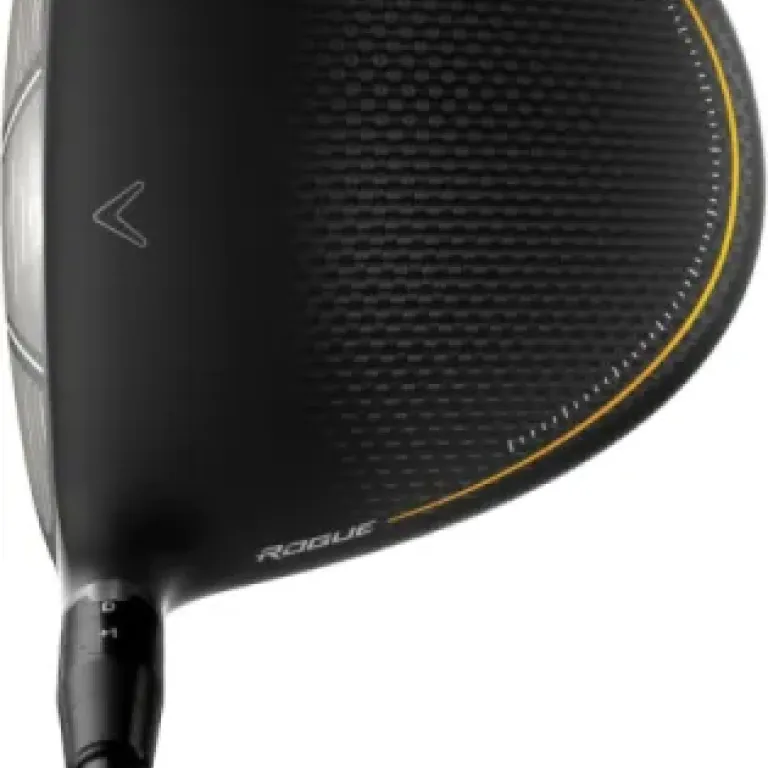
I’ve been playing this Callaway 2024 Rogue ST Max Driver (9°, stiff, 50 g shaft, right-handed) for a few rounds now, plus a couple of range sessions. I’m a pretty average golfer, mid-teens handicap, swing speed around 95–100 mph with the driver. So I’m not the guy bombing it 300+ every time, more the guy who just wants the ball to stay somewhere near the fairway and not lose three sleeves of balls per round.
Before this, I was using an older TaylorMade driver from a few years back, also 9° stiff. The face was getting tired and the shaft felt a bit heavy. I picked this Rogue ST Max mainly because it’s supposed to be forgiving and easy to hit, with that carbon crown and high MOI stuff Callaway talks about. I didn’t buy it to chase every last yard – more to tighten dispersion and make my bad swings less painful.
Right away, what stood out is that it feels like a modern, lightweight driver that’s built for straight shots first, distance second. It’s not magic, it won’t fix a horrible slice overnight, but it clearly helps reduce the punishment on mishits compared to my old driver. I noticed fewer balls leaking hard right and more ending up somewhere playable.
It’s not perfect though. The stock 50 g shaft won’t suit everyone, and the 9° loft with a stiff flex is clearly aimed at people with at least moderate swing speed. If you’re slower or need help getting the ball up, you might struggle unless you tweak the hosel. But if you’re like me – decent swing, inconsistent contact – it’s a pretty solid upgrade that focuses on forgiveness and ease of use more than fancy feel or tour-level tweaking.
Is it worth the money for an everyday golfer?
From a value perspective, this 2024 Rogue ST Max sits in the usual big-brand driver price range. It’s not cheap, but it’s also not some ultra-limited, tour-only toy. For the money, you’re basically paying for a modern, forgiving head with an adjustable hosel and a decent stock shaft and grip. There’s no obvious corner-cutting, but also nothing that screams luxury or boutique.
What you actually get for the price is forgiveness and ease of use. If you’re a mid-handicap or improving golfer who struggles with consistency off the tee, the extra stability on mishits and the tighter dispersion can realistically save you strokes. In that sense, the value is good: fewer lost balls, fewer penalty shots, and less frustration. That’s worth quite a bit to me, honestly.
On the other hand, if you’re already playing a recent driver from the last couple of years and you’re hitting it well, I don’t think this is a huge leap forward. You might see small gains, but not enough to justify a full-price upgrade unless you just like new gear. Also, if you’re a slower swing speed player or need more launch, you might have to tweak the loft or even swap the shaft – which adds cost if you go through a fitter.
So for me, I’d say the value is pretty solid but not mind-blowing. It makes the most sense for: people coming from older drivers (5+ years old), mid-handicaps wanting more forgiveness, and players who like a lighter shaft. If you fall in that group, the price is easier to justify. If you’re a low handicap with a fitted driver already, or on a tight budget, you might be better off looking for a previous-year model on sale or getting fitted into something that matches you perfectly.
Looks, shape, and how it sits behind the ball
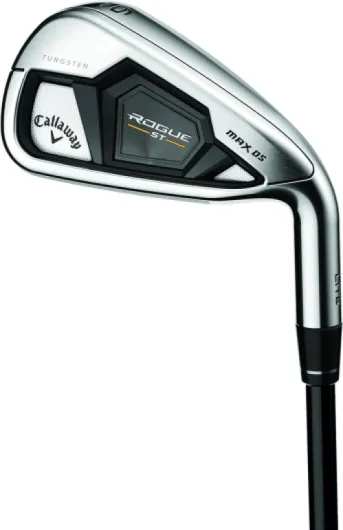
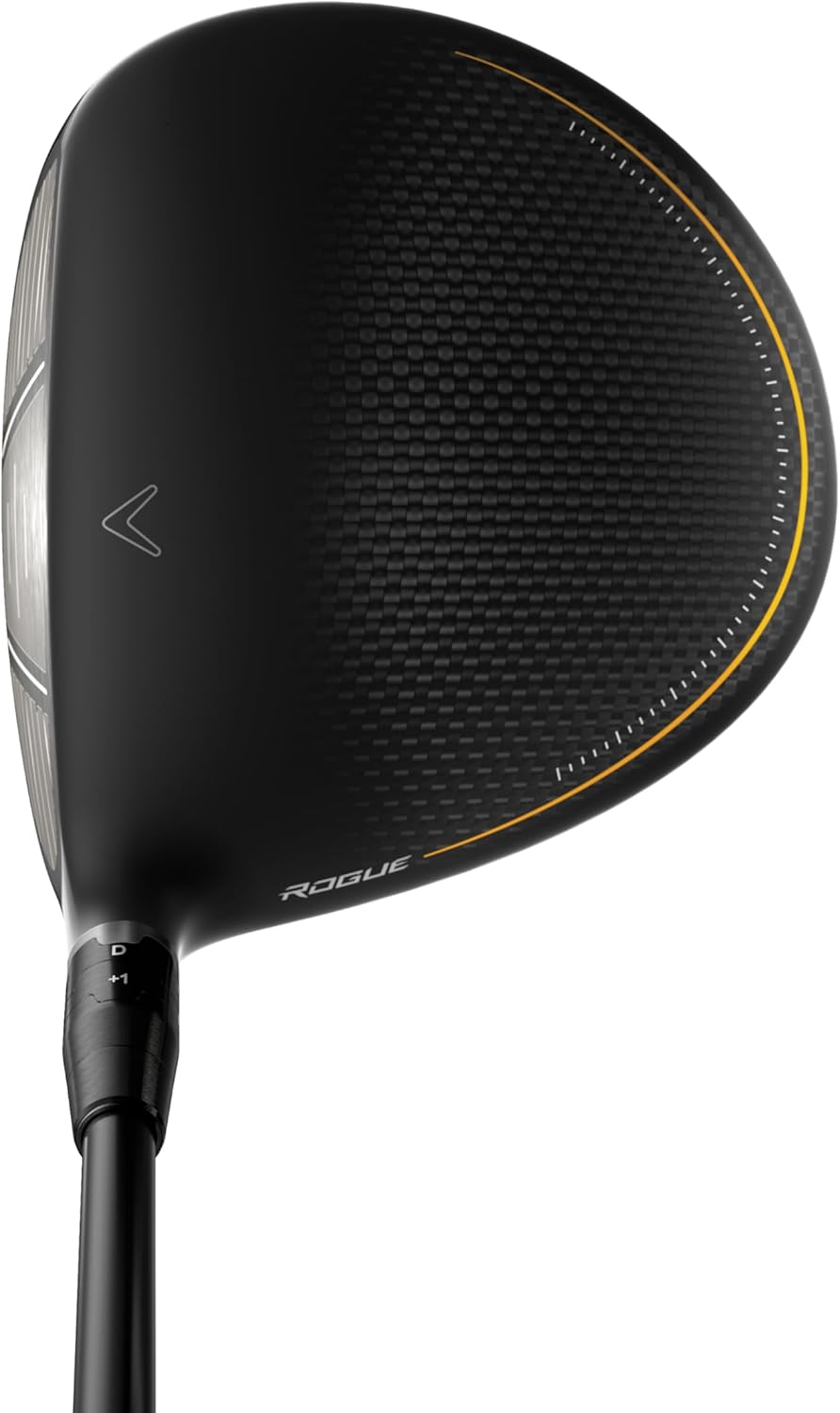
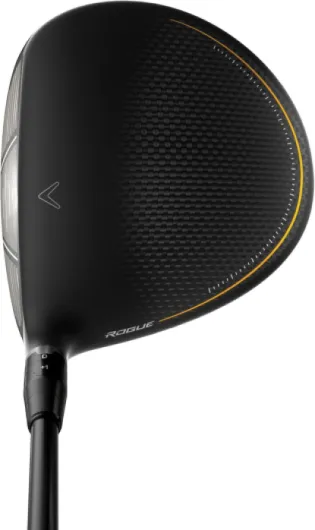
From a design point of view, this Rogue ST Max is pretty clean and modern. The color is mostly black with some subtle accents. Nothing flashy, which I like. At address, the crown is dark and simple – no crazy graphics that distract you when you’re standing over the ball. The carbon crown is visible if you look closely, but on the course you basically just see a dark, slightly matte top that frames the ball nicely.
The head shape leans toward a slightly larger, confidence-inspiring footprint. It doesn’t look compact or "players only". When you set it down, you immediately get the feeling that there’s a lot of clubhead behind the ball. For me, that’s reassuring. If you’re a low handicapper who likes a more compact, pear-shaped head, this might look a bit bulky. But if you’re average or still working on your consistency, the size is comforting.
One thing I noticed is that it tends to sit fairly square to slightly closed at address in the default setting. For someone who fights a slice, that’s a plus. I felt like I didn’t have to force it to close the face – it just naturally wanted to sit in a way that encouraged a straighter shot. The alignment aid on the crown is subtle but useful; it helps center the ball without screaming for attention.
Sound and feel also tie into design. Impact sound is more muted and solid than my older driver, which had a higher-pitched metallic "ping". This one is more of a thud/clack that feels controlled. Some might find it a bit dull, but I liked that it didn’t sound hollow. Overall, the design is not flashy or showy – it’s more practical and confidence-based. You look down at it and think: "Okay, this looks forgiving, I can swing at this." That’s exactly what I want from a max-forgiveness style driver.
Swing feel, balance, and how tiring it is to use
In terms of comfort, the first thing I noticed was the overall light feel thanks to the 50 g shaft. I could hit a full large bucket at the range without feeling like my shoulders were cooked. Compared to my older heavier-shafted driver, this one is definitely easier on the body over 18 holes. If you play a lot or don’t have the strongest upper body, the lighter setup is a real plus.
The balance is slightly head-heavy, but in a good way. I always knew where the head was during the swing, which helped with rhythm. On days when I was swinging smooth, it felt very natural – backswing, transition, and follow-through all flowed without much effort. On days when I tried to overswing and smash it, I could feel the shaft getting a little unstable, but that’s more on me than the club. Staying within myself gave me the best results.
The standard grip size suited my medium hands. I didn’t get any hotspots or blisters, even after hitting a lot of balls in one session. The grip texture is average: not super sticky, but not slippery either. If you play in the rain or very humid conditions, you’ll want a towel or maybe upgrade the grip, but for normal play it’s fine. The club doesn’t twist out of your hands on mishits, which is important for confidence.
Overall, comfort is one of the strong points. It’s an easy driver to swing for a full round without feeling beat up. I never felt like I had to "muscle" it to get decent distance. If anything, it rewards a relaxed swing. For someone who wants a driver that feels light, forgiving, and not too demanding physically, this setup works well. Just keep in mind: if you’re very strong or have a super fast, violent swing, you may want a heavier or stiffer shaft to feel fully in control.
Carbon, titanium, and what it actually feels like
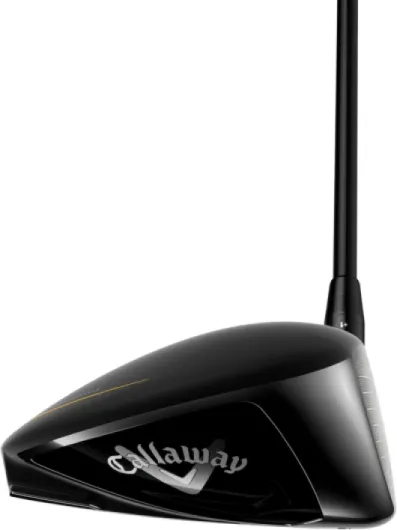
The club uses a mix of titanium for the body and face, and carbon for the crown. On the course, the big advantage of that combo is weight distribution. The head feels light enough to swing easily, but not so light that you lose track of it during the swing. I could feel where the head was at the top and through impact, which helped me keep tempo under control.
The 50 gram graphite shaft is on the lighter side for a stiff flex. Coming from a slightly heavier shaft, I immediately noticed I could generate a bit more clubhead speed without feeling like I was working harder. That said, because it’s lighter, any tempo issues are more noticeable. When I got quick at the top, the shaft felt a bit whippy and I lost some control. When I stayed smooth, it felt stable enough. So if you already have a fast, aggressive transition, you might prefer a heavier or different profile shaft.
The synthetic rubber grip is basic but fine. It’s not the most premium feeling grip, but it doesn’t feel cheap either. After a couple of range sessions and a few sweaty rounds, it held up okay and didn’t start slipping. Long term, I’d probably swap it for something a bit tackier, but out of the box it’s perfectly usable for most players.
Overall, the materials feel solid and geared toward forgiveness and consistency rather than ultra-premium feel. The titanium face gives decent feedback – you can tell center strikes from toe or heel hits – but it doesn’t punish your hands with harsh vibration. If you’re the type who loves super soft, "buttery" feedback, this isn’t that. It’s more practical: you get enough information to know where you hit it, but it’s also friendly on mishits, which fits the whole max-forgiveness idea.
Build quality and how it holds up after some use
I haven’t had this driver for years, obviously, but after several rounds and multiple range sessions, the build quality seems solid. The face shows the usual ball mark wear, but nothing that looks worrying – no strange scratches or chipping. The finish on the crown has held up well so far; no peeling or obvious scuffs, even though I’m not babying it. I do use a headcover between shots, which I’d recommend with any modern driver.
The connection between the shaft and head feels tight. The adjustable hosel hasn’t loosened up or started to rattle, even after I changed settings a couple of times just to test. That’s important because some adjustable drivers can start to feel a bit loose or develop a tiny click if you mess with them too much. Here, everything still feels snug and solid.
The synthetic rubber grip so far is holding its shape and texture. No early peeling or weird wear spots. I’d expect to change it after a season or so just because grips wear out in general, not because this one is poor. The shaft finish is also fine – no fading or weird marks from going in and out of the bag.
Overall, durability feels in line with other modern big-brand drivers. It’s not built like a tank – it’s still a lightweight driver with a carbon crown, so you shouldn’t toss it around or slam it on the cart – but for normal use, it seems to handle things well. If you treat your clubs reasonably, I don’t see any obvious red flags that it would wear out faster than others in the same category.
Distance, forgiveness, and what happens on real swings
Performance-wise, I’ll be straight: I didn’t suddenly gain 20 yards. For me, the biggest change was consistency, not raw distance. My good swings went about the same distance as with my old driver – maybe a touch more carry because of the lighter shaft – but my average distance improved because my mishits weren’t punished as badly. Fewer balls were way off-line, and more ended up somewhere playable.
On center strikes, the ball flight was a medium-high trajectory with a slight draw bias when I swung normally. With the 9° loft and stiff shaft, the flight is not super balloon-y. It’s a strong flight that still gets decent carry. When I moved the hosel to add a degree of loft, I got a bit more height and forgiveness, which I think many mid-handicappers will prefer. If you’re a natural low-ball hitter, you’ll probably want to bump the loft setting up a notch.
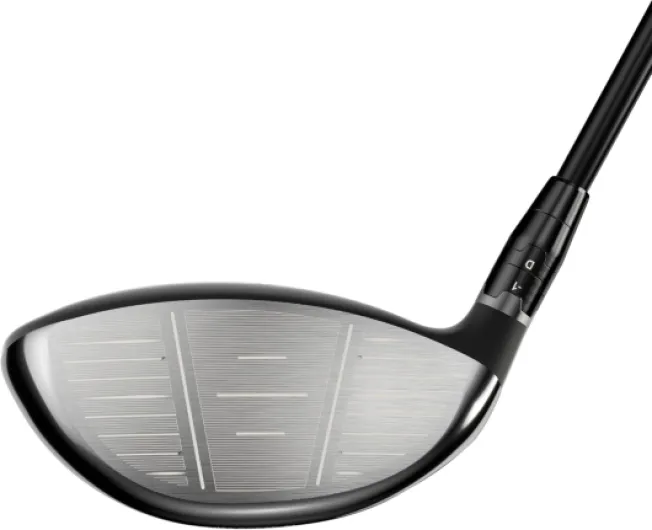
Forgiveness is where this club actually stands out. Toe strikes that used to slice hard right now ended up as a gentle fade or just right of target, losing some distance but still in play. Heel strikes were similar – not great, but not disaster-level. The high MOI and carbon crown/titanium body combo do what they’re supposed to: keep the head stable and reduce the punishment on off-center hits. My dispersion tightened, especially horizontally. That translated directly into better scoring chances because I was hitting from the rough or first cut instead of re-teeing.
Distance-wise, it’s solid but not mind-blowing. If you’re already optimized with another modern driver, don’t expect a huge jump. But if you’re coming from an older model, you’ll likely see a mix of slightly more carry and, more importantly, many more usable drives. On windy days, I liked the penetrating flight with the 9° loft. It didn’t balloon into the wind as much as my previous club. Overall, for a normal golfer who values fairways and playable misses, the performance is very good. It’s not magic, but it definitely helps clean up the worst swings.
What you actually get with this Rogue ST Max
On paper, this driver is pretty straightforward: 9° loft, stiff flex, 50 gram graphite shaft, standard grip, right-handed. The head is a typical modern 460 cc-style driver head with a carbon crown and titanium body. The hosel is adjustable, so you can tweak loft and lie to help dial in your ball flight a bit, which is handy if you’re fighting a slice or need a touch more launch.
Callaway lists a bunch of tech terms (carbon crown, titanium unibody construction, powerful titanium face, high MOI). In practice, what that means is the club feels light but not flimsy, and it’s clearly built to keep the head stable on off-center hits. The face looks slightly deeper than my old driver, and the sweet spot feels a bit bigger – I didn’t get that harsh punishment feel on slight toe or heel strikes.
The stock grip is a standard-size synthetic rubber grip. Nothing fancy, but it does the job. I have medium-sized hands and didn’t feel the need to swap it right away. It’s not super tacky, but it’s fine in dry conditions and with a glove. If you’re picky about grips, you’ll probably replace it after a few rounds anyway, like most golfers do.
In the box, you basically get the driver and that’s it – no extra shafts or gadgets. It’s a simple setup: one club, adjustable hosel, ready to go. I actually like that there isn’t a ton of overcomplicated stuff. If you’re expecting a full custom-fitted experience out of the box, this is not it. It’s more of a solid, ready-to-play driver that you can tweak a bit at the hosel and then just hit. For most regular golfers, that’s plenty.
Pros
- Very forgiving on toe and heel strikes, keeps more drives in play
- Light 50 g shaft makes it easy to swing for a full round without getting tired
- Clean, confidence-inspiring head shape with an adjustable hosel for basic tuning
Cons
- Stock 50 g stiff shaft may feel too light or unstable for very fast or aggressive swings
- 9° loft isn’t ideal for slower swing speeds without adjusting the hosel or changing setup
Conclusion
Editor's rating
Overall, the Callaway 2024 Rogue ST Max Driver in 9° stiff with the 50 g shaft is a very solid choice for everyday golfers who care more about fairways and forgiveness than chasing every last yard. It’s easy to swing, fairly light, and the head shape inspires confidence at address. The carbon crown and titanium construction do what they’re supposed to do: keep the head stable on mishits and make bad swings a bit less punishing. You don’t suddenly become a bomber, but your average drive gets better because more of them stay in play.
It’s not perfect. The stock shaft won’t suit everyone, especially very fast or very aggressive swingers, and the 9° loft is clearly aimed at players who already launch the ball reasonably well. If you’re slower swing speed or struggle to get height, you’ll need to tweak the hosel or maybe look at a higher loft. Also, if you already own a recent driver that fits you well, this isn’t a big performance jump – more of a sidegrade with a slightly different feel.
I’d recommend this driver mainly to mid-handicappers and improving players who want something forgiving, modern, and not too demanding physically. It’s also a good option if you’re upgrading from an older driver and want a straightforward, user-friendly club. If you’re a low handicap chasing very specific launch and spin numbers, or you’re on a tight budget, you might get more value from a properly fitted used or previous-year model. But for the typical weekend golfer who wants to hit more fairways and stop dreading the first tee shot, this Rogue ST Max does the job well.