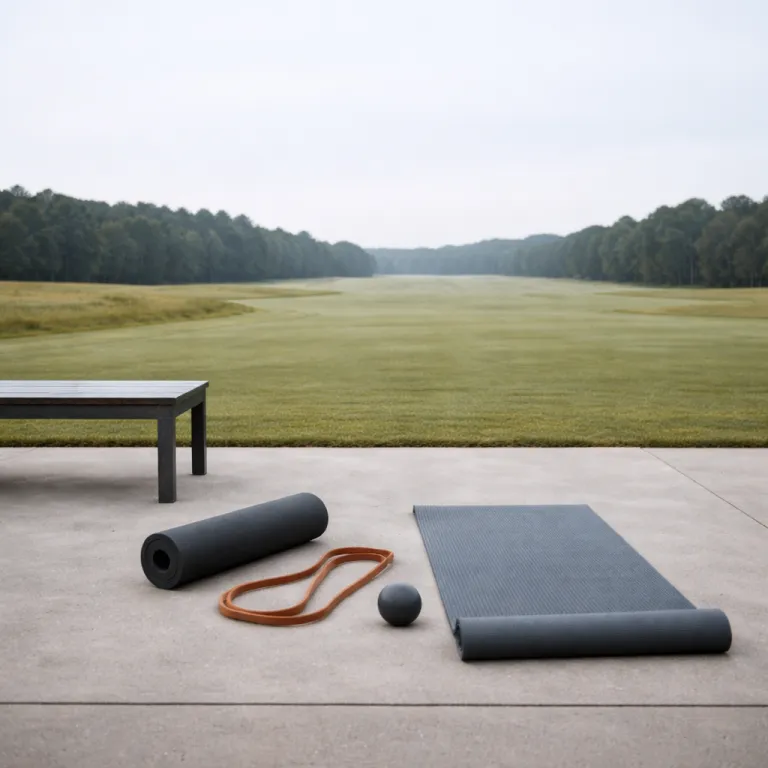
Why a luxury player needs a golf pre round warmup mobility plan
Most golfers at private clubs arrive, feel vaguely warm, then head straight to the driving range. A tour player treats golf pre round warmup mobility as non negotiable, because they know the first three holes often decide whether the round golf feels effortless or like hard labour. If you want your golf swing to match your equipment budget, you need a structured warm routine that respects how the body actually moves.
The research is blunt ; TPI Golf data shows that most amateur injuries start from inadequate warmup rather than from a flawed golf swing alone. That means your shoulders, hips and spine shoulders are often asked to rotate at full speed before any meaningful stretching, which spikes tension in every small stabilising muscle. For the affluent golfer over forty, this is the quiet tax you pay on ignoring mobility, paid in lost range motion, nagging pain and a scorecard that never quite reflects the quality of your golf club collection.
Think about your last rushed pre round ; you probably hit a few wedges, a couple of drivers, then walked to the first tee hoping the body would cooperate. That casual approach to golf warm preparation is the opposite of what your lower back, upper body and left shoulder need if you want to improve consistency. A deliberate round warm sequence, built around controlled lunge twist patterns and resistance band activation, will help you feel connected from front foot to trail hip before the starter calls your name.
The seated trunk rotation test and what it reveals about your swing
Before you overhaul your golf pre round warmup mobility routine, you need a simple diagnostic. The seated trunk rotation test tells you in thirty seconds whether your spine shoulders and upper body can rotate independently of your lower half. Sit on a bench with your knees and feet shoulder width apart, hold a golf club across your chest, then rotate as far as you can to the right and left without letting the knees move.
If you cannot reach at least forty five degrees of twist on each side, your thoracic mobility is limiting your golf swing more than any shaft choice. That lack of range motion forces the body to steal movement from the lower back and left shoulder, which is why so many golfers feel a sharp stretch or pinch instead of a smooth coil. When you then add speed at the driving range without addressing this, the tension builds quietly until a single heavy round golf or awkward lie turns into a strain.
This is where a targeted warm routine earns its keep, especially when paired with smart tools such as the premium swing trainers reviewed in this guide to top golf swing trainers. Use the test as your starting position every week, then track how consistent stretching, band work and controlled lunge twist drills improve your symmetry. Over time, you will feel the shoulders glide rather than grind, and the body will help the club shallow naturally instead of forcing a late, handsy correction.
The 10 minute tour style warm routine built for private club golfers
A proper golf pre round warmup mobility plan does not require a gym, only intention and sequence. Think of it as three focused blocks ; wake the muscles, open the joints, then pattern the golf swing with tempo rather than force. Done correctly, this ten minute warm routine will help you arrive on the first tee feeling like you already played three relaxed holes.
Start standing tall with your feet shoulder width apart and perform twenty slow arm circles to prime the shoulders and upper body, then add gentle neck and spine shoulders rolls to release baseline tension. Move into dynamic stretching with ten bodyweight reverse lunge steps on each leg, adding a controlled twist over the front foot to create a lunge twist that links hips, torso and shoulder. Follow this with a resistance band pull apart series, keeping the band at chest height to strengthen the upper back muscles that stabilise the golf club at the top.
Next, use that same resistance band for diagonal chops, starting position high on the right and pulling down across the body to the left hip, then reversing ; this mimics the sequence of a powerful golf swing without impact stress. Finish with ten slow practice swings, alternating between mid iron and wedge, focusing on smooth range motion rather than speed, and let the body feel how the lower half initiates while the shoulders stay supple. If you want a more tech driven option, integrate a purpose built device such as the premium unit reviewed in this detailed test of a golf warmup device, which can quantify how your warm routine changes clubhead speed without adding strain.
Why most range stretching fails and how to warm up like a pro
Watch the putting green at any high end club and you will see the same pattern ; a few toe touches, a token shoulder stretch, then straight to full swings. Those static stretching habits might feel virtuous, but they do little to prepare the body for the dynamic demands of a modern golf swing. Luxury equipment cannot compensate when the lower chain and spine shoulders are still half asleep.
Static holds before a round warm can actually reduce short term power, because they relax the very muscle fibres you need to fire explosively. A better approach is dynamic stretching that moves joints through golf specific range motion, such as walking lunge patterns, controlled reverse lunge steps with rotation and band resisted torso twists. These drills warm the muscles, lubricate the joints and teach the shoulders, hips and front foot to share load instead of dumping everything into the lower back.
Think of your pre round as choreography rather than chaos ; every movement should echo a piece of the golf swing you want to improve. Use a light resistance band to activate the upper body and shoulder girdle, then add lunge twist combinations to sync the lower and upper halves of the body. By the time you reach the driving range, you should already feel warm, with tension reduced and the left side of the body ready to accept load instead of bracing against it.
Fuel, hydration and long term mobility for playing well into your seventies
Golf pre round warmup mobility is not only about joints ; it is also about what you put into the body before you tee off. Aim to finish a light meal rich in protein and slow carbohydrates about ninety minutes before your round, then top up with a small snack and water in the final thirty minutes. That timing keeps blood flow available for the muscles and spine shoulders instead of pooling in the stomach when you start your golf swing.
Hydration is equally strategic ; sip water steadily from the moment you arrive at the club, and add electrolytes on hotter days or during a second round golf in the afternoon. Avoid heavy sugars and alcohol pre round, because they spike and crash energy, tighten muscles and quietly increase tension in the shoulders and lower back. Think of your warm routine, nutrition and hydration as a single system that will help you maintain mobility and power not just today, but for decades of post round stories in the clubhouse.
For long term play, mobility work matters more than raw strength if you want to be the seventy year old who still walks eighteen without complaint. Prioritise daily stretching for the hips, thoracic spine and left shoulder, sprinkle in resistance band work for the upper body and keep a simple reverse lunge habit to protect the knees. If you pair that with smarter on course decisions, such as the strategies outlined in this guide to course management for dropping strokes, you will find that the real luxury is not the locker room but how freely your body moves from first tee to last green.
FAQ
How long should a proper golf pre round warmup mobility routine take ?
A focused golf pre round warmup mobility routine should take about eight to twelve minutes. That window is enough to warm the muscles, open key joints and pattern the golf swing without feeling rushed. Anything shorter usually skips the hips or shoulders, which are the areas most likely to limit range motion and increase tension.
What are the most important areas to target before a round of golf ?
The priority areas are the hips, thoracic spine and shoulders, especially the lead or left shoulder for right handed players. Dynamic stretching such as walking lunge variations, lunge twist drills and resistance band rotations will help these regions share load more efficiently. When those segments move well, the lower back and smaller muscle groups are spared from compensating on every swing.
Is static stretching bad before playing golf ?
Static stretching is not inherently bad, but long holds before a round can temporarily reduce power and stability. For golf warm preparation, short dynamic movements that mimic the golf swing are more effective than holding a hamstring stretch for thirty seconds. Save longer static stretching for post round recovery, when the goal is to relax the body rather than prime it.
Do I still need a warm routine if I go straight to the driving range ?
Yes, hitting balls cold at the driving range does not replace a structured warm routine. Without prior mobility work, the first twenty swings simply act as a risky way to warm the muscles and joints. A brief sequence of band work, reverse lunge patterns and torso rotations will help you arrive at the range already prepared, so every shot contributes to feel rather than just temperature.
How can I maintain mobility for golf as I age ?
Consistency beats intensity when it comes to long term mobility for golf. Aim for a short daily routine that includes hip openers, thoracic spine rotations and shoulder stretches, supported by light resistance band exercises for the upper body. Combined with sensible nutrition, hydration and regular post round recovery work, this approach keeps you playing comfortably well into later decades.