Royal Birkdale’s Leaner Defense for The Open Championship 2026
Royal birkdale’s leaner defense for the open championship
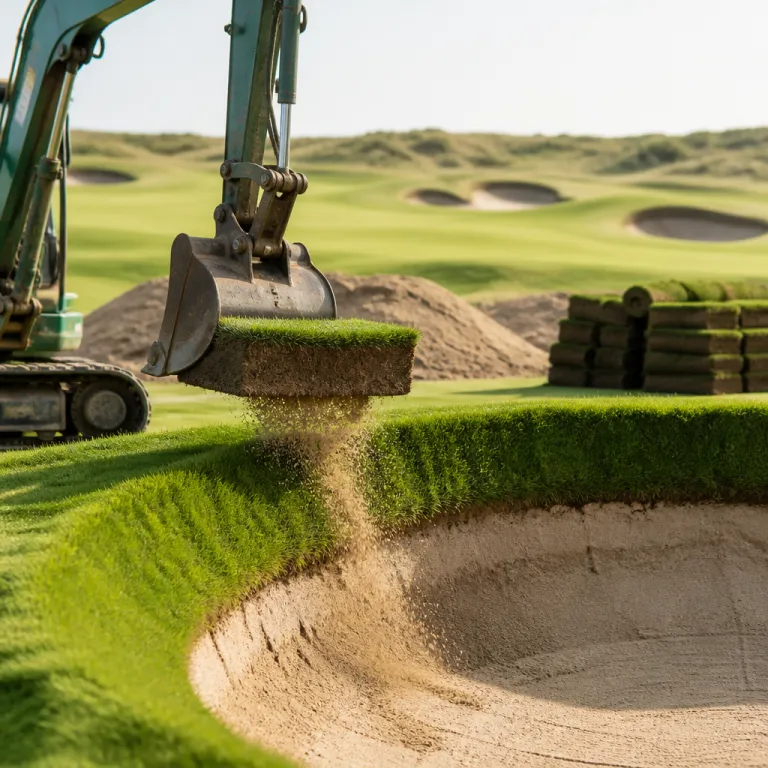
The Royal Birkdale Open Championship 2026 will be the first time this storied links shows its redesigned teeth in a major championship setting. The golf course has moved from an estimated 123 bunkers down to approximately 108 after the latest phase of work by Mackenzie & Ebert, a shift that turns The Open into a study in position rather than punishment and that every club golfer should view as a masterclass in restraint. For players used to the previous Royal Birkdale layout, the new championship routing will feel familiar in outline yet far more exacting in how each shot must now thread the course.
This updated Open layout keeps the same par 70 and broad corridors, but Mackenzie & Ebert have reweighted the strategy so that fewer hazards ask harder questions. Where the golf club once relied on sheer bunker volume, the architects have concentrated sand in the true line of play, meaning that a single trap can now decide whether a British Open contender has effectively won or lost a hole. As Martin Ebert has noted in similar projects, the goal is to “remove the irrelevant and highlight the meaningful,” a message affluent club golfers who study venue setups at places like Royal Liverpool or Royal Portrush should take to heart: a championship course does not need more hazards, it needs hazards that matter.
The Open Championship at Royal Birkdale will also be the first hosted Open on this site since the last round of incremental tweaks, yet this is the first holistic rethink of the back nine in years. That makes the 2026 edition a rare championship where no player in the field has previously competed on the exact same golf course, a subtle equalizer that rewards fast learners and precise yardage work. For club players planning luxury tours on England’s royal links, this British Open setup offers a template for how top courses can evolve without losing the royal character that made them iconic.
Strategic bunkering and what club golfers can learn
The decision to remove a significant number of bunkers from the Royal Birkdale golf course is not cosmetic; it is philosophical. Each remaining bunker now frames a line, a carry or a layup zone that will punish the slightly offline Open golf shot rather than the wildly errant one, which is exactly how modern championship setups at Royal Troon or Royal Liverpool tend to play. For the serious club golfer, the 2026 configuration becomes a live case study in how to prioritize angles over brute distance when you next map out your own home courses.
On several holes, fairway bunkers that once sat in no man’s land have been removed so that a single, well-placed trap now guards the preferred side of the fairway and shapes the view into the green. That means the Open Championship field will face more half-pars, where a bold line over sand can set up a birdie while a safer line leaves a semi-blind approach that feels more like a cup defense than an attack. If you are considering which long irons or driving hybrids belong in a refined modern bag for links tours, this is exactly the kind of setup that should guide how you choose the best golf clubs for a modern bag.
For luxury-minded golfers who travel on bespoke tours across England, Scotland and South Africa, the Royal Birkdale redesign underlines a broader trend: elite venue operators now favor contour, firmness and wind over sheer hazard count. The best golf experiences at a club-hosted major championship, whether at Royal Portrush or Birkdale, come from asking you to pick a side and live with it rather than simply avoiding a minefield of sand. In that sense, Royal Birkdale joins a small group of top British courses where the architecture will quietly separate those who can shape shots from those who only hit one stock trajectory.
Luxury product choices respond to this shift too, because a golf club designed for links control must now handle more nuanced trajectories into firm, wind-exposed greens. When the Open rota venues list includes Royal Troon, Royal Portrush and Royal Liverpool, equipment makers know that tee times at these courses will be used to test low-spin drivers, penetrating fairway woods and versatile wedges. The 2026 championship at Birkdale will therefore influence not only how the week’s narrative unfolds, but also how discerning players specify shafts, grinds and ball models for their next season of tours.
For spectators and hospitality guests, the streamlined bunkering also improves the view corridors along key holes, making it easier to follow the ball flight and appreciate the ground game. That matters when you are investing in premium experiences at a British Open, where the quality of your vantage point can be as important as the quality of your seat at any other cup event. Expect the Royal Birkdale Golf Club to leverage this cleaner visual presentation in future tour packages aimed at high-end visitors from England, Europe and South Africa.
Even away from The Open spotlight, club committees across England’s royal links will study how Birkdale has balanced member play with major test requirements. Many of these courses, from Birkdale’s neighbors to inland championship venues, will view this project as proof that you can make a golf course tougher for elite fields while keeping it playable for everyday foursomes. For the affluent golfer who sits on a club board, the 2026 setup offers a practical blueprint for the next renovation debate in the committee room.
In terms of pure architecture, the reduced bunker count also places more emphasis on wind, firmness and subtle contour as the primary defense of the golf course. That aligns Royal Birkdale with the best of the British links tradition, where the Open golf challenge comes as much from the ground as from the air. The championship will therefore feel less like a penal exam and more like a nuanced conversation between player, club and landscape.
For players who have previously won at other Open venues, the adjustment will be mental as much as technical. They will need to trust that a conservative line away from a single, perfectly positioned bunker can sometimes be the percentage play, even when the cup is on the line and the wind is helping. That is the kind of decision-making that separates top contenders from the rest of the field, and it is exactly what this renovation was designed to test.
From a luxury travel perspective, the 2026 championship will likely elevate demand for tee times at this golf club and its peers across England’s royal links. Golfers planning multi-stop tours that include Royal Liverpool, Royal Troon and Royal Portrush will now see Birkdale as a must-play anchor, especially those who value architecture as much as score. The course will reward those who arrive with a clear strategy, a well-curated bag and a willingness to embrace the full spectrum of links experiences.
Even the practice rounds will carry unusual weight, because no one in the Open Championship field has competitive memories on this exact routing. That levels the playing field between veterans who have previously lifted the Claret Jug at other venues and younger players who only know Royal Birkdale from television. For club golfers watching from home, it is a reminder that fresh eyes and disciplined preparation can sometimes neutralize decades of local knowledge.
As the 2026 Open at Royal Birkdale approaches, expect every shot tracer and on-course graphic to highlight how often players challenge or bail away from the new bunkering. Those patterns will tell you more about the psychology of the contenders than any driving-distance statistic. In the end, the story of this British Open may be written less in sand and more in the narrow ribbons of fairway that the best in the world will dare to attack.
Royal Birkdale 2026: Key Design Changes (Provisional)
| Feature | Previous Setup* | 2026 Open Setup* |
|---|---|---|
| Total bunkers | c. 123 | c. 108 |
| Course par | 70 | 70 |
| Back-nine par 3s | One (14th) | One new (15th) |
| Former 15th hole | Par 5 | Recast as par-4 14th |
| Par-3 yardage range | Similar lengths, one direction | Approx. 150–240 yards, four directions |
*Figures based on publicly available commentary on Mackenzie & Ebert’s work at Royal Birkdale and comparable Open Championship venue updates. Final numbers remain subject to confirmation by the R&A and Royal Birkdale Golf Club.
The new back nine rhythm and the par 3 that changes everything
The most radical change for the Royal Birkdale Open Championship 2026 sits on the back nine, where the former par-3 fourteenth has been removed and the old par-5 fifteenth has shifted forward to become a new par-4 fourteenth. That reconfiguration clears space for a brand-new downwind par-3 fifteenth that rides the natural dune topography, a hole that will likely define how the Open Championship narrative swings on Saturday and Sunday. For golfers who obsess over golf course architecture, this stretch shows how a single new hole can recalibrate the entire championship rhythm without altering the overall par.
The new fifteenth at Royal Birkdale is expected to play in the 165–185 yard range to a long, narrow green set on a dune shelf, with wind exposure that will vary dramatically between calm mornings and gusty July afternoons. In the 2026 championship, that means a short iron that feels routine in practice rounds can become a nervy, semi-blind shot when the British wind turns quartering and the cup is cut on a tight tongue. Expect the Open field to treat this as a pivot hole, where a slight misjudgment in yardage or trajectory can turn a birdie chance into a double bogey that derails a run.
For luxury spectators and hospitality guests, the new fifteenth also offers one of the best view platforms on the golf course, with sightlines back toward the fourteenth fairway and forward to the sixteenth tee. That makes it a prime location for premium experiences, where you can watch how different players and different clubs handle the same wind on consecutive days. In the context of the Royal Birkdale Open Championship 2026, this single vantage point will tell you more about who truly controls their ball flight than any driving-range session.
Four par 3s, four directions, one architectural lesson
The reworked Royal Birkdale routing now features four par 3s that span roughly 150 to 240 yards and, crucially, play in different directions. That is a deliberate contrast to the previous setup, where three par 3s of similar length all played the same way and offered a relatively narrow examination of the Open Championship field’s skills. In the 2026 edition, the short holes will instead function as a rotating test of trajectory, spin and club selection that every serious club golfer should study.
On one day, a player might face a downwind mid-iron to a front pin, while the next round could demand a held-up long iron into a cross breeze that makes the cup feel half its size. That variety is what separates top Open venues like Royal Portrush, Royal Troon and Royal Liverpool from more one-dimensional courses that rely on length alone. For golfers who care about luxury equipment choices, it reinforces why a well-gapped set of irons and wedges matters more than chasing a single distance number on a launch monitor.
If you are building a travel schedule that includes tee times at Royal Birkdale, Royal Liverpool and other British Open venues, pay attention to how the best in the world manage their trajectories on these par 3s. Their club selection patterns will offer a live tutorial in how to structure your own bag for links tours, especially if you value feel and control over raw speed. For deeper context on how major championship setups have historically shaped equipment trends, the analysis of Arnold Palmer’s era in this look at luxury products around the Bay Hill tournament remains surprisingly relevant.
The back nine changes also alter how momentum flows into the closing stretch, which matters greatly in an Open Championship where wind and nerves often peak late. With the new par-4 fourteenth and par-3 fifteenth, Royal Birkdale now asks players to hit two precise approach shots in quick succession before facing the demanding finishing holes that have already hosted Open drama for decades. In the 2026 championship, that sequence will likely separate those who have truly mastered their golf club distances from those relying on adrenaline and guesswork.
For club golfers, this is a reminder that a great golf course does not simply alternate long and short holes; it builds emotional pacing. The best British courses, from Birkdale to Royal Troon, understand that a well-timed par 3 can either offer a breather or tighten the screws depending on where it sits in the card. When you evaluate your own home course or consider a renovation, think less about yardage totals and more about how the routing makes you feel on the walk from tee to tee.
The Royal Birkdale Open Championship 2026 will also highlight how modern players use technology to decode these new demands, from detailed wind mapping to precise carry numbers for every club. Yet even with all that data, the final decision on the fifteenth tee will still come down to feel, confidence and the willingness to commit to a line over the dune. That blend of science and instinct is exactly what makes the Open golf experience at Royal Birkdale so compelling for both competitors and connoisseurs.
For those planning luxury tours that include multiple championship venue stops, the reimagined back nine at Royal Birkdale offers a fresh contrast to the finishing stretches at Royal Portrush and Royal Liverpool. Each of these England and Ireland venues now presents a distinct late-round personality, which is part of the appeal when you curate a high-end itinerary around the British Open rota. The 2026 championship will likely cement Birkdale as the thinking player’s favorite, especially among those who value architectural nuance over sheer spectacle.
From a product perspective, expect the new par-3 fifteenth to influence how brands talk about wind stability, spin windows and trajectory control in their better-player irons. When the world’s best struggle to hold that long, narrow green in a July crosswind, the conversation about what makes a true championship iron will shift from marketing slogans to on-course evidence. For the discerning golfer, that is exactly the kind of real-world testing that should guide your next investment in a premium set.
Even the hospitality design around the back nine reflects this new rhythm, with viewing areas and club-hosted experiences positioned to capture the drama around the fourteenth and fifteenth. That is a subtle but telling sign that the Royal Birkdale Golf Club understands how architecture, spectator flow and commercial realities now intersect at the top level of the game. The 2026 Open will therefore be as much a case study in event staging as in pure golf course design.
For players and fans alike, the reworked back nine underscores a simple truth about links golf: the wind writes the script, but the routing sets the stage. At Royal Birkdale, Mackenzie & Ebert have given the wind more opportunities to influence the Open Championship without resorting to artificial difficulty. That is why this Birkdale Open will be watched closely by architects, club committees and serious golfers from England to South Africa.
Modern links philosophy and what club golfers should take home
The Royal Birkdale Open Championship 2026 is more than a single event; it is a manifesto for modern links architecture. By reducing bunkers, reshaping greens and rebalancing the back nine, the Royal Birkdale golf course shows how an Open venue can become tougher for elite fields while remaining playable for members. For the affluent club golfer who cares about both luxury experiences and architectural integrity, this British Open setup offers a rare chance to see theory translated into shot-by-shot reality.
One key principle on display is that firmness, contour and wind should be the primary defenses of a top links, with bunkers used sparingly to highlight strategic choices. That philosophy aligns Royal Birkdale with the best of the Open rota, from Royal Portrush to Royal Troon, where the golf club is asked to work with the ground rather than against it. In the 2026 championship, you will see players use the same club to hit three different trajectories into similar yardages, a level of nuance that every serious golfer can learn from.
Another lesson is that great courses evolve in phases, not in one dramatic overhaul, which is exactly how Mackenzie & Ebert have approached this project. Phase one focused on new greens at the fifth, seventh, fourteenth and fifteenth, while phase two refined fairway lines and rebuilt tees to match the intended strategy for The Open Championship. That incremental approach allowed the Royal Birkdale Golf Club to test member play, adjust maintenance practices and ensure that the final 2026 setup reflects both championship needs and everyday enjoyment.
How this shapes luxury golf choices and travel
For golfers who invest in premium equipment, the Royal Birkdale Open Championship 2026 will serve as a live testing ground for products designed around control rather than pure distance. When you watch the Open field flight wedges under the wind or hold long irons into firm greens, you are effectively seeing the highest-level validation of the same technologies marketed to you in the pro shop. That is why serious players increasingly align their buying decisions with how clubs perform on championship venue setups rather than in isolated launch-monitor sessions.
If you are curating a modern, refined bag for links tours across England’s royal venues, the demands of Royal Birkdale should sit at the center of your thinking. You need a driver that can find narrow fairways when the wind quarters, fairway woods that launch low enough to chase yet high enough to stop, and wedges with versatile grinds for tight, sandy turf. For a deeper dive into how major championship setups have historically influenced luxury product design, the analysis of Palmer’s era in this exploration of Arnold Palmer’s major championship legacy remains instructive.
Travel-wise, the Royal Birkdale Open Championship 2026 will likely accelerate demand for bespoke tours that link Birkdale with Royal Liverpool, Royal Troon and Royal Portrush in a single itinerary. These tours allow you to experience how different Open Championship venues interpret the same core principles of links golf, from bunker placement to green contouring. For many affluent golfers, the true luxury is not just the five-star hotel but the ability to compare how each golf course asks you to shape shots, manage wind and think your way toward the cup.
As you plan such trips, pay attention to how tee times are structured around prevailing winds and daylight, especially in July when the British Open typically occupies the prime window of the season. The Royal Birkdale Golf Club, like other top venue operators, will use this knowledge to stage both the championship and member play in ways that maximize the architectural experience. That is part of what you are paying for when you book a high-end package: not just access, but access at the right time of day, in the right conditions.
For club committees and boards, the Royal Birkdale Open Championship 2026 offers a persuasive argument that less can be more when it comes to hazards. Removing bunkers, if done with strategic clarity, can actually sharpen the test for better players while improving playability and maintenance for the membership. The key is to understand how each bunker, contour and mowing line influences the choices a golfer makes with a particular club in hand.
Even the global context matters, because players from South Africa, the United States and across Europe will bring different styles and equipment setups to this British Open. Watching how those styles fare on the Royal Birkdale golf course will give you a broader view of what truly travels well in links conditions, from ball models to wedge grinds. In that sense, the 2026 championship becomes a global product test wrapped inside a major narrative.
For the individual golfer, the most practical takeaway is to think of your own course, and your own bag, the way Mackenzie & Ebert thought about Royal Birkdale. Ask which hazards actually influence decisions, which clubs you trust under pressure and which parts of your game rely too heavily on one-dimensional shots. The Open Championship may crown a single player who has won the week, but the deeper value for you lies in how this Birkdale Open sharpens your understanding of what great golf architecture and great equipment choices really look like.
In the end, the Royal Birkdale Open Championship 2026 will be remembered less for the number of bunkers removed and more for how those changes altered the questions asked of every shot. That is the essence of modern links philosophy: not the handicap, but how the fairway felt at dawn.