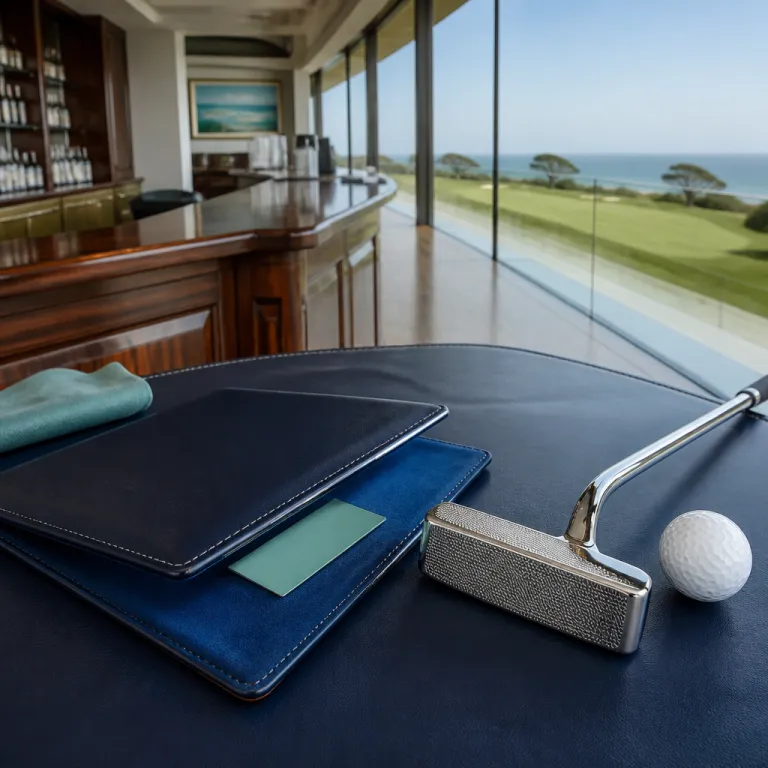
The new anatomy of an exclusive golf clubs membership
Private golf club memberships in 2026 are no longer just about a pristine golf course and a quiet locker room. An exclusive golf club membership now wraps golf, wellness, family life and business networking into one tightly curated club membership that must justify a rising membership cost. For a serious golfer, the question is not whether a club is expensive, but whether the full golfing experience and lifestyle ecosystem match the initiation fee and ongoing dues.
At the top end, a private club positions itself as a country club for your entire week, not only your weekend tee times. The best country clubs blend a championship level golf course with resort calibre pools, spa suites, co working lounges and coaching studios that feel closer to a national training centre than a sleepy suburban club founded decades ago. When you evaluate any exclusive golf club membership, you are really judging how well the club offers a coherent experience from the first initiation meeting to the last putt you roll under the clubhouse lights.
Think of the initiation fee as a capital contribution into the club’s future rather than a simple ticket to play golf courses behind a gate. At a well run private golf club, that membership initiation payment should be ring fenced for course renovations, practice facility upgrades and long term infrastructure, while annual fees and monthly dues cover operating costs. When a club blurs that line, members often face surprise assessments later, which is why understanding how your initiation fees are allocated is as important as the view from the 18th green.
What your initiation fee really funds at modern country clubs
When you wire a six figure initiation fee to a private golf club, you are buying into a balance sheet as much as a golf course. At leading country clubs in Austin, Scottsdale or the Surrey Hills, that initiation is typically split between a non refundable capital contribution and, in some cases, a refundable bond that may return a portion of your membership cost when you resign. The ratio between those two elements tells you how confident the club is in its long term demand and how seriously it treats each member as a stakeholder.
Look closely at how the club explains its initiation fees during the membership initiation process. Some private clubs allocate nearly all initiation fee revenue to a capital reserve that funds bunker renovations, new irrigation lakes, indoor performance studios and even on site lodging for a more immersive golfing experience. Others quietly use initiation fees to plug operating deficits, which often leads to tired locker rooms, dated dining spaces and practice areas that lag behind the best premium nine hole golf courses highlighted in this guide to premium nine hole golf. Case studies published by club consulting firms between 2019 and 2023 show that clubs which consistently direct initiation income to capital reserves tend to report higher member satisfaction scores and fewer emergency assessments.
To make this concrete, imagine a 100,000 US dollar initiation fee at a healthy country club: 70,000 dollars might be booked as a non refundable capital contribution, 20,000 dollars as a refundable bond repaid when you leave, and 10,000 dollars earmarked for reducing bank debt on prior course work. Ask for the last decade of capital projects and how much of each was funded by initiation fees versus special assessments or bank debt. A transparent country club will show you how the club offers a clear pipeline of course work, from greens resurfacing to new short game areas, all underpinned by disciplined use of initiation fee income. When a private club hesitates to share these figures, or cannot explain why expensive projects keep appearing without a plan, that exclusive label starts to look more like a marketing term than a guarantee of quality.
Membership tiers, dues and the real cost of being a member
Once you understand the initiation fee, the next layer of an exclusive golf club membership is the web of dues, fees and tiers that define your daily access. Most private golf clubs now offer a menu of club memberships, from full golf membership to social, corporate and junior executive categories, each with its own membership cost and privileges. The art is matching your actual golfing experience to the right tier so you are not overpaying for access you never use.
Full golf membership at a top tier country club usually carries the highest monthly dues but unlocks unrestricted access to the championship course, priority tee times and full practice facilities. Social or lifestyle club membership often reduces golf access to a limited number of rounds on the main golf course or on secondary golf courses, while focusing on dining, fitness and pool amenities that appeal to non golfing family members. Corporate club memberships can be powerful if you host clients regularly, but they can also be the most expensive option once you factor in guest fees, cart charges and minimums across multiple private clubs in a regional network.
At the ultra exclusive end, such as Augusta National or invitation only enclaves like Trout National – The Reserve in New Jersey, there may be only one tier of membership but a culture that treats every member as a steward of the golf club. In these environments, dues are often modest relative to the wealth of the membership, while the initiation fee and strict selection process preserve the private golf ethos. If you are weighing an exclusive golf club membership at this level, study how the club offers value beyond status, perhaps through immaculate course conditioning, subtle service and a golfing experience that feels closer to the world described in this inside look at Augusta National members.
Evaluating golf courses, practice grounds and on course privileges
For a serious player, the heart of any exclusive golf club membership is still the golf course and its supporting practice ecosystem. A private club that charges a high initiation fee but offers a bland parkland layout and a cramped range is asking you to pay for the parking lot, not the fairways. You should walk the entire course, hit balls on the range and spend time around the short game areas before you even think about signing a membership initiation form.
Look for a championship calibre routing that challenges but does not punish, with multiple teeing options that keep the golfing experience fresh across seasons. Clubs like Barton Creek in Austin, with its Fazio Foothills and Canyons courses tumbling through the hills above the lake, show how multiple golf courses within one country club can create variety for every member. When a club founded on a single golf course has since added a second or even a third layout, ask how they manage tee sheet priority between different membership tiers and whether private golf access is ever compromised by outside events.
Practice facilities are where modern private golf clubs quietly separate themselves. A serious exclusive golf club membership should include access to a full length range with quality balls, a dedicated short game complex, indoor simulators for winter work and, ideally, a separate teaching tee for the coaching team. Study how the club offers reciprocal play at other private clubs or national networks, and read this analysis of course management lessons from elite players in Rory’s Masters defence and club golfers to gauge whether the architecture will actually help you sharpen your strategic thinking.
Lifestyle amenities, family value and the rise of the all day club
The biggest shift in private golf club culture is the move from golf only sanctuaries to full spectrum lifestyle hubs. An exclusive golf club membership now competes with luxury gyms, boutique hotels and co working spaces, which means your initiation fee is increasingly funding far more than a golf course. For many members, the real return on investment comes from how often their family uses the club outside of pure golf.
When you tour a country club, pay attention to the flow between the golf club side and the broader campus. Are the fitness centre, spa, racket courts and resort style pools integrated in a way that feels natural, or bolted on as afterthoughts to justify expensive initiation fees. A well designed private club will let you finish a morning round, grab a quick lunch on the terrace with a lake view, then meet your partner and children at the pool or in a casual dining space without ever feeling you have left the same cohesive environment.
Family programming is now a core part of the value proposition for many country clubs, especially in growing markets like Austin and the surrounding hills communities. Junior golf academies, summer camps, wine dinners and live music nights all help spread the membership cost across more hours and more users, turning a private golf club into a genuine second home. When a club offers thoughtful programming and flexible spaces, your exclusive golf club membership becomes less about the number of rounds you play and more about how often you choose the club over other leisure options.
Due diligence: questions to ask before you sign for an exclusive golf clubs membership
Before you commit to any private golf club membership, you should approach the process with the same rigour you would apply to a major investment. Start with hard data such as attrition rates, wait list length, assessment history and the ratio between initiation fee income and bank debt on recent projects. A stable country club with healthy demand and transparent finances is far more valuable than a flashier club that hides its numbers behind marketing gloss.
Ask the general manager to walk you through the last three capital plans and how each was funded, including any special fees levied on the membership. Clarify whether your initiation fee is refundable, partially refundable or entirely non refundable, and under what conditions a departing member actually receives any repayment. You should also understand how dues have trended over the past decade, whether the club offers different club membership options for changing life stages and how often private events close the golf course or key amenities.
Finally, compare the value of a full private golf membership against high end semi private or resort based club memberships, especially if your schedule limits you to one or two rounds per week. In some destinations, a resort based golf club with strong public play can deliver a championship level golfing experience, lake or ocean views and excellent practice facilities at a lower membership cost, albeit with less exclusivity. The right choice is rarely about the lowest fees, but about how well the club, the courses and the culture fit the way you actually live and play, because in the end it is not the handicap, but how the fairway felt at dawn.
Key figures behind private golf club economics
- According to industry surveys from the National Golf Foundation, average initiation fees at top tier private clubs in major metropolitan areas commonly ranged between 30,000 and 100,000 US dollars as of 2023, with ultra exclusive enclaves charging significantly more for a single club membership. Exact figures vary by region and market conditions.
- Data published by Club Benchmarking in 2022 indicates that healthy country clubs typically allocate at least 8 to 10 percent of annual dues revenue to capital reserves, while treating initiation fee income as a separate source for long term projects on the golf course and clubhouse.
- Reports from private club consultants between 2020 and 2023 show that more than 70 percent of new or renovated clubs now include expanded fitness, spa and family amenities, reflecting the shift from golf only models to broader lifestyle focused club memberships.
- Industry analyses suggest that private golf clubs with multiple golf courses can support 20 to 30 percent more members without degrading tee time access, provided they manage course rotations and event scheduling with clear priority rules.
- Surveys of affluent golfers conducted since 2021 indicate that over half of prospective members rank practice facilities and coaching resources as equal in importance to the main championship course when evaluating an exclusive golf club membership.
FAQ: private golf club memberships and initiation fees
How is a typical initiation fee used at a private golf club ?
Most private clubs split initiation fee income between capital reserves for long term projects and, in some cases, repayment of existing debt. Well run country clubs avoid using initiation fees to cover routine operating expenses, relying instead on dues and other fees for day to day costs. When you review an exclusive golf club membership, ask for a clear breakdown of how initiation funds have been used over the past decade.
What is the difference between full golf membership and social membership ?
Full golf membership usually provides unrestricted access to the main golf course, full practice facilities and priority tee times, often at the highest level of dues. Social membership focuses on clubhouse, dining, fitness and pool access, with limited or pay per play access to the golf courses. Choosing between them depends on how many rounds you expect to play and how much you value the broader lifestyle side of the club.
Are semi private or resort clubs better value than fully private clubs ?
Semi private and resort based golf clubs can offer strong value if you play fewer rounds or prefer flexibility over exclusivity. These clubs often combine a high quality golfing experience with lower initiation fees or even no initiation fee, but you will share the golf course with public play and outside guests. A fully private club typically offers more consistent access and a tighter community, at the cost of higher membership initiation and ongoing dues.
What questions should I ask before joining an exclusive golf clubs membership ?
You should ask about initiation fee structure, refund policies, assessment history, attrition rates and how dues have changed over time. It is also important to understand tee time policies, guest rules, reciprocal arrangements with other private clubs and the long term capital plan for the golf course and facilities. A transparent country club will provide detailed answers and written documentation rather than vague assurances.
How do I evaluate whether a club’s golf courses justify the cost ?
Play at least one full round, spend time on the practice grounds and observe course conditioning at different times of day. Look for a championship calibre layout with multiple tee options, well maintained greens and a routing that remains engaging over repeated play. If the golf courses feel ordinary or crowded despite an expensive initiation fee, the exclusive golf club membership may not deliver the value you expect.