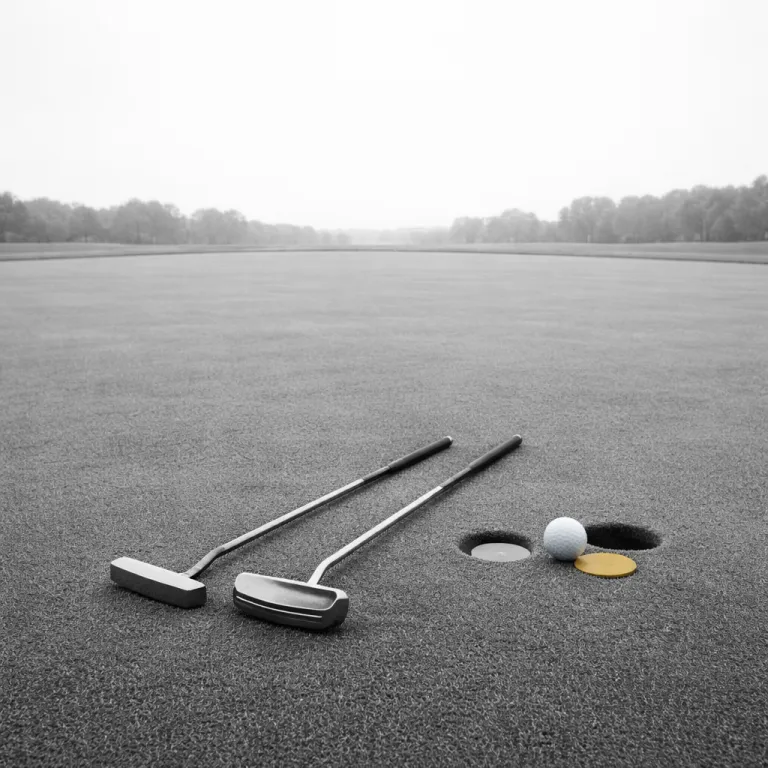
Start with your miss: the real question behind the best luxury putter blade vs mallet
Your search for the best luxury putter blade vs mallet should begin with a brutally honest look at your miss pattern. Before comparing a blade putter to a mallet putter, stand on a flat practice green and roll ten balls from 3 metres, then note whether your putting stroke sends the ball consistently left, right or short. That simple test tells you more about which putter head and shaft configuration you need than any marketing claim about a new studio style finish or exotic stainless steel milling.
If your golf ball regularly starts left, you probably deliver too much face rotation and a traditional blade can exaggerate that, especially a best blade model with heavy toe hang. Players who miss right often leave the putter face open, so a face balanced mallet putter with a high moment of inertia and clear alignment lines can help square the face at impact. When your dispersion is equal on both sides, you have more freedom to choose between blade putters and mallet putters based on feel, style and the price you are willing to pay for premium craftsmanship.
Luxury brands such as Scotty Cameron, Toulon Golf and PXG Battle Ready all build both blade and mallet options, but each assumes a different stroke shape and lie angle. A classic Scotty Cameron blade putter like the style Newport rewards an arcing stroke with a subtle forward press, while a Taylormade Spider Tour or Spider Tour X mallet is tuned for a straighter back and through motion. The best luxury putter blade vs mallet decision is therefore not about what you see on a PGA Tour broadcast, but about how your own stroke, toe rotation and center gravity preferences interact with the putter head.
Toe hang, face balance and why luxury blades feel different from mallets
Once you know your miss, the next layer in choosing the best luxury putter blade vs mallet is understanding toe hang and face balance. Lay any putter across your fingers under the shaft and watch whether the toe points down or the face points to the sky, because that simple test reveals how the center gravity is positioned relative to the shaft axis. A blade putter with significant toe hang suits a player whose putting stroke traces a gentle arc, while a face balanced mallet putter resists rotation and favours a straighter path.
High end blade putters from Scotty Cameron, Toulon Golf or Bettinardi often use milled stainless steel to deliver a crisp, connected feel off the face, especially on fast tour style greens. Many of these blades, including the style Newport and several studio style models, feature medium toe hang in the 30 to 45 degree range that encourages natural release without punishing a slight over rotation of the toe. In contrast, a Taylormade Spider or Spider Tour mallet uses perimeter weighting, a multi material head and sometimes a soft face insert to keep the ball online when contact drifts towards the heel or toe.
Luxury mallet putters such as the PXG Battle Ready series or certain Cobra King mallet designs push mass to the extremes of the head to maximise stability on off centre strikes. Typical head weights run from about 340 to 365 grams, with high moment of inertia figures that help the face resist twisting when you miss the centre. When you compare the best blade options to these modern mallet shapes, remember that toe hang, lie angle and shaft offset matter more to your stroke than any cosmetic style flourish or limited edition price tag.
For players already gaming premium irons with a satin steel shaft, such as those reviewed in this detailed test of a satin steel iron set, matching the putter’s shaft feel and balance can also create a more coherent overall set.
Luxury models that earn their price: from Scotty Cameron to PXG Battle Ready
When you narrow the best luxury putter blade vs mallet shortlist, a few families genuinely justify their premium price through performance and build quality. Scotty Cameron remains the reference for a traditional blade putter, with the style Newport line offering a compact head, precise toe hang options and a milled stainless steel face that transmits every nuance of the stroke. These blade putters are not the most forgiving, but on smooth golf club greens they reward a confident forward press and a repeatable arc with exquisite distance control.
On the mallet side, the Taylormade Spider and Spider Tour series have become modern classics, blending high stability with a surprisingly soft roll thanks to their face insert technology. PXG Battle Ready mallet putters push the concept further, using adjustable sole weights to fine tune head mass and center gravity, which lets a fitter dial in your preferred stroke tempo and lie angle. Cobra offers both compact blade styles and larger mallet shapes, often at a slightly more approachable price while still delivering tour level alignment aids and consistent ball speed across the face.
Toulon Golf, now under the Odyssey umbrella, occupies a refined middle ground with both blade and mallet designs that feature deep milled faces and elegant studio style finishes. Their San Diego blade and Memphis mallet, for example, give ambitious newcomers a choice between classic and high tech silhouettes without sacrificing feel or feedback. If you are assembling a full premium golf set and already rely on a forgiving hybrid and fairway configuration, such as those evaluated in this comprehensive hybrid and clubs set review, it often makes sense to pair that forgiveness with a slightly more traditional blade putter to keep your short game finely tuned.
Why a putter fitting beats any spec sheet for the best luxury putter blade vs mallet
No matter how much you read about the best luxury putter blade vs mallet, a proper fitting session will reveal truths you cannot see on a screen. A good fitter will film your putting stroke from face on and down the line, then measure your natural forward press, impact loft, lie angle and stroke arc before recommending a blade or mallet configuration. That process often uncovers a grip style preference, such as a thicker pistol grip on a mallet putter or a slimmer traditional grip on a blade putter, which many golfers never realise they have.
During a fitting, you will test multiple putters with different shaft lengths, head weights and toe hang profiles while tracking start line and roll data. Luxury studios frequently use high speed cameras and launch monitors to show how the ball leaves the face, whether the face insert helps your roll and how consistent your stroke is across several head shapes. Those sessions routinely confirm that mallet putters tend to offer better start line retention on mishits for many amateurs, while the best blade designs provide superior feedback that can accelerate your learning curve.
A fitter can also adjust the lie angle and loft of both blade putters and mallet putters to match your posture, which is critical if you stand taller or closer to the ball than average. They will check whether a center shafted mallet or a heel shafted blade better matches your eye line and alignment tendencies, then fine tune the center gravity and swing weight to your preferred tempo. Compared with guessing online, paying for one thorough fitting is often the max value investment in your entire golf equipment journey, especially when you are already investing in premium style pieces such as those highlighted in this quiet luxury golf style guide.
The specs that matter most: length, alignment and feel on real greens
Among all the specifications in the best luxury putter blade vs mallet debate, length is the one most ambitious newcomers get wrong. Many golfers default to a 34 inch or 35 inch putter because that is what sits on the rack, yet a quick check of your wrist to floor measurement and posture often reveals you need something shorter to let your arms hang naturally. When the putter is too long, the toe tends to sit up, the lie angle becomes too upright and both blade and mallet heads will twist through impact.
Alignment is the next non negotiable, and here mallet putters usually hold the advantage with bold lines, contrasting colours and extended rear wings that frame the ball. Blade putters rely more on a single top line or subtle flange line, which can be perfect if your eyes prefer simplicity and you already aim well. On fast, contoured greens such as those at Sunningdale or Kingsbarns, I often see better players choose a compact blade putter for delicate pace control, while higher handicaps gravitate towards a Taylormade Spider Tour or similar mallet for its reassuring stability.
Feel remains deeply personal, but you should test both stainless steel milled faces and softer face insert designs on the same practice green to understand your preference. Some golfers love the crisp click of a studio style blade, where every slight mishit on the toe or heel is obvious, while others putt best when the sound and vibration of a mallet head are muted. In the end, the right putter is not the one that looks the most expensive in the bag, but the one that makes a three foot putt on a windy day feel as inevitable as sunrise over a quiet fairway.
As a quick buying checklist, confirm your preferred head shape (blade or mallet), toe hang or face balance, length, lie angle, grip size and alignment style, then test those specs on real greens before committing.
FAQ
Is a blade or mallet better for a beginner who plays luxury golf equipment ?
For most newer golfers, a mallet putter is usually more forgiving than a blade putter because the larger head and higher moment of inertia keep the face squarer on mishits. If you already have a reasonably consistent stroke and value feel above all, a compact blade can work, but the best luxury putter blade vs mallet choice for beginners tends to be a stable mallet with clear alignment lines. As your putting improves, you can always transition to a best blade design if you crave more feedback and precision.
How do I know if I need toe hang or a face balanced putter ?
Watch your stroke on video or ask a fitter to assess whether your putter travels on a strong arc or a straighter path. If the putter head moves significantly inside the line on the backstroke and through impact, a blade putter with noticeable toe hang will usually match that motion better. Golfers with a straighter stroke often perform best with a face balanced mallet putter, such as a Taylormade Spider or PXG Battle Ready model, because the face resists twisting.
What putter length should I choose for the best control ?
Stand in your natural putting posture and let your arms hang, then measure from your wrist to the floor to get a starting point for length. Many players between 1,70 m and 1,85 m end up in the 33 to 34 inch range, which is shorter than the standard 35 inch putter often sold off the rack. A professional fitting can fine tune length, lie angle and grip size so both blade putters and mallet putters sit perfectly flat at address.
Are luxury putters like Scotty Cameron or Toulon Golf really worth the price ?
Premium brands such as Scotty Cameron, Toulon Golf and PXG Battle Ready justify their higher price through tighter manufacturing tolerances, superior materials and more consistent feel across the face. You are paying for milled stainless steel heads, carefully tuned center gravity locations and refined shapes that have been validated on the PGA Tour. If you combine that quality with a proper fitting and a stroke that suits the chosen head style, the investment can pay off in fewer three putts and more confidence under pressure.
Can I switch between a blade and a mallet during the same golf season ?
You can switch between a blade putter and a mallet putter within a season, but frequent changes can disrupt your distance control and alignment habits. If you do alternate, try to keep key specs such as length, lie angle, grip size and overall head weight similar between the two putters. Many serious golfers keep a best blade model for fast, firm greens and a forgiving mallet for slower resort courses, rotating them thoughtfully rather than impulsively.