
Summary
Editor's rating
Is it good value for money?
Modern trainer style with a few quirks
Comfort: great cushioning, but narrow fit and sizing quirks
Synthetic build, waterproof overlays, and what that means in real life
How they hold up after several rounds
On-course performance: grip, stability, and waterproofing
What you actually get when you unbox them
Pros
- Very comfortable cushioning with BOOST and supportive insole for walking 18 holes
- Reliable waterproofing that kept feet dry in dew and light rain
- Strong grip and stability for a spikeless shoe, even on slightly damp ground
Cons
- Narrow fit and slightly short length; many people will need to size up
- Light colourways stain and look dirty fairly quickly
- Breathability is only average due to waterproof synthetic upper, can feel warm on hot days

Specifications
View full product page →| Brand | adidas |
Spikeless golf shoes that feel more like trainers
I’ve been playing in these adidas CodeChaos spikeless golf shoes for a few weeks now, mainly weekend rounds and a couple of late-afternoon nine holes. I’m not sponsored, I paid for them myself, and I’m comparing them to the usual suspects: older adidas golf shoes and a pair of FootJoy spiked shoes I’ve had for years. My main goals were simple: something comfy enough to walk 18 without sore feet, actually waterproof, and with enough grip that I don’t feel like I’m swinging on ice.
On paper, these tick a lot of boxes: BOOST midsole, waterproof upper, spikeless outsole with that Chaos Traxion pattern, and they’re pretty light. The Amazon reviews are mostly positive, and I can see why, but there are a few details you only notice after a few rounds, especially around sizing and width. If you’re thinking of buying them online without trying them on, those details matter more than the marketing buzzwords.
I’ve used them in mixed conditions: one dry firm day, one slightly damp morning with dew everywhere, and one round that turned into proper drizzle for about an hour. That gave me a decent feel for comfort, grip, and waterproofing rather than just walking around the living room. I also wore them driving to the course and in the clubhouse to see if they feel like you can keep them on all day, not just on the tee box.
Bottom line before diving into details: they’re pretty solid all-round golf shoes if you get the sizing right and you don’t have very wide feet. They’re comfy, they grip well for a spikeless shoe, and they kept my feet dry. But they’re not perfect, and there are a couple of things that annoyed me enough that I’d tell a mate to think twice depending on their foot shape and how often they play in mud.
Is it good value for money?
Looking at the price these usually go for online, they sit in that mid-range bracket for golf shoes: not bargain-basement, but not top-end luxury either. For that money, you’re getting solid comfort, real waterproofing, and good grip in a modern spikeless package. Compared to some cheaper no-name or entry-level golf shoes, the cushioning and support are clearly better. After walking 18 holes, the difference in how your feet and legs feel is noticeable.
Where the value question gets a bit tricky is with the sizing and width. If you have to play the size-up, size-down game, or if you have wide feet and they end up not working for you, it becomes an annoying purchase. A couple of Amazon reviewers mention going up a full size, others say true to size works because they know how adidas fits them. In my case, I had to size up, which is fine now, but it’s something I’d warn anyone about before they click buy. If you’re ordering online, I’d say plan for at least half a size up, maybe more if you’re between sizes.
Against other brands, like FootJoy or Puma, these hold their own on comfort and grip. FootJoy leather shoes often feel more traditional and can last longer cosmetically, but they’re usually heavier and sometimes less cushioned. The CodeChaos feels more like a trainer you can actually play golf in. If that’s what you’re after, the price feels fair. If you barely play and just need something basic for the odd corporate round, this might be more shoe than you really need.
Overall, I’d call the value good but not mind-blowing. You get what you pay for: a well-cushioned, waterproof, spikeless shoe from a big brand, with decent build quality. Just be aware of the narrow fit and potential staining on lighter colours. If those two things don’t bother you, the price makes sense. If they do, you might want to look at a different model or a darker colourway before pulling the trigger.
Modern trainer style with a few quirks
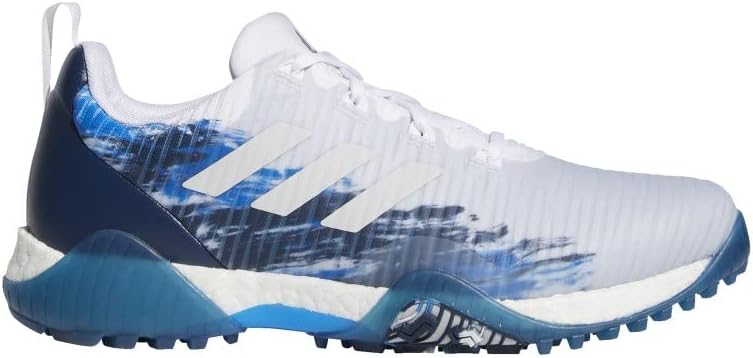
Design-wise, the CodeChaos are clearly built for the golfer who doesn’t care about the old-school saddle shoe look. They sit low on the ankle, have a round toe, and the overall shape is more like a running shoe than a traditional golf shoe. On the course, they look fine with both shorts and slim golf trousers. With baggier trousers or a more formal outfit, they can look a bit out of place because of the sporty vibe and the busy outsole pattern.
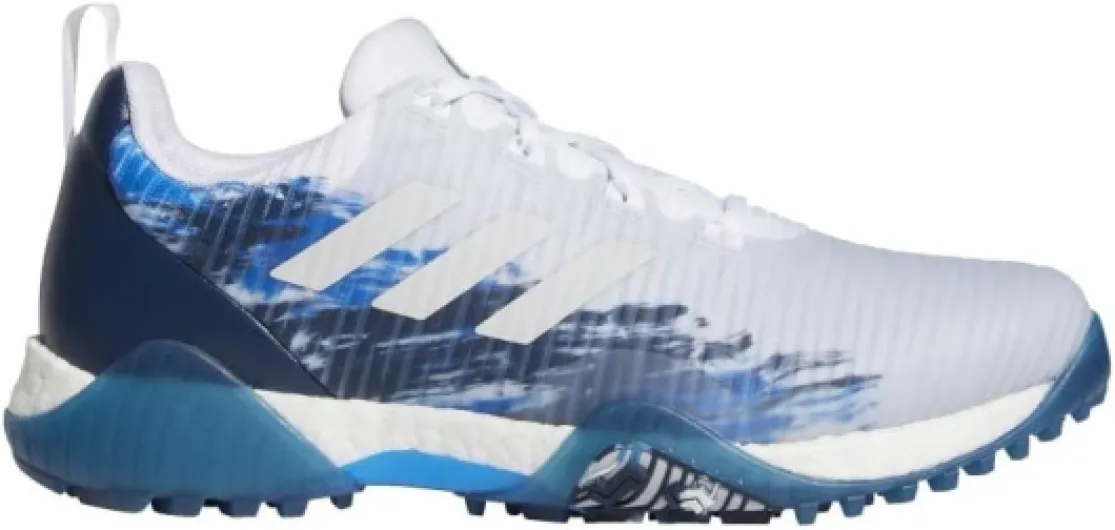
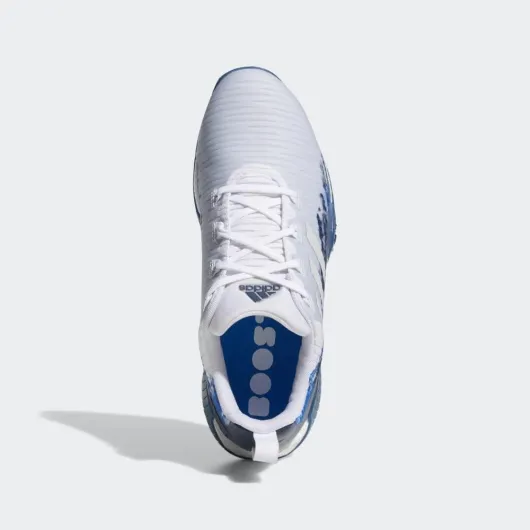
The colourway I tried (Footwear White / Grey One / Crew Navy) looks clean out of the box, but you can already guess it’s going to show dirt quickly, especially around the toe and sides. One of the Amazon reviewers mentioned the lighter grey version staining easily and not cleaning up well, and I can see that happening with this white-heavy version too. After a couple of damp rounds, some light marks were already visible, especially near the flex points. You can wipe them down, but they never go back to “box fresh” white.
From a functional design point of view, there are some things I liked. The heel tab makes them easy to pull on, and the tongue stays mostly in place once you lace them up. The lacing system is straightforward—no fancy BOA dial here—so you can adjust tension the way you like. The low profile around the ankle gives good freedom of movement, but if you like a higher, more supportive collar, these might feel a bit too low and trainer-like for you.
One thing that might bother some people: the outsole is quite loud visually. The mix of patterns, shapes, and colours on the bottom looks a bit over-designed. You don’t see it much while wearing them, but when you take them off or look down at address, it’s there. It doesn’t affect performance, but if you prefer a clean, simple look, this might feel a bit much. In short, the design is modern, sporty, and practical, but not exactly subtle or classic.
Comfort: great cushioning, but narrow fit and sizing quirks
Comfort is where these shoes mostly do well, with a couple of caveats. Underfoot, they feel really cushioned. The BOOST midsole and Fitfoam/INSITE combo give you a soft landing when you walk, and after 18 holes my feet were far less tired than in my older, stiffer leather shoes. I get sore feet quite easily, and these definitely helped with that. One of the Amazon reviewers mentioned the memory foam-style cushioning being good for sore feet, and I’d agree with that. You feel the support under the arch and heel more than in a basic flat insole.
The main issue is the fit. These run narrow and a bit short. I’m normally a UK 9 in most trainers and many golf shoes. With these, the 9 felt tight in the toe box and snug on the sides, especially around the forefoot. I could wear them, but after a couple of holes I could feel my little toes getting squeezed. I ended up going up half a size, and that felt much better length-wise, but still on the narrow side. Some Amazon reviewers went a full size up, and I can see why, especially if you like thicker socks.
If you have wide feet, I’d be cautious. The upper does give a little over time, but it doesn’t suddenly become a wide shoe. One reviewer even said “if you need wide fit, do not buy,” and that’s pretty accurate. If you have regular or slightly narrow feet, and you size up half a size, you’re likely fine. Just don’t expect a relaxed, roomy fit. Around the heel, the lockdown is good. My heel didn’t slip, and the low collar didn’t rub or cause blisters, even on the first round, which is a big plus.
Ventilation-wise, they’re okay but not great. On cooler days and in wet conditions, no problem. On a warmer afternoon, my feet felt a bit hot by the end of the round, but nothing crazy. Overall, I’d rate comfort as very good if you get the sizing right and don’t have wide feet, but potentially frustrating if you order your usual size blind and expect them to feel like roomy trainers.
Synthetic build, waterproof overlays, and what that means in real life
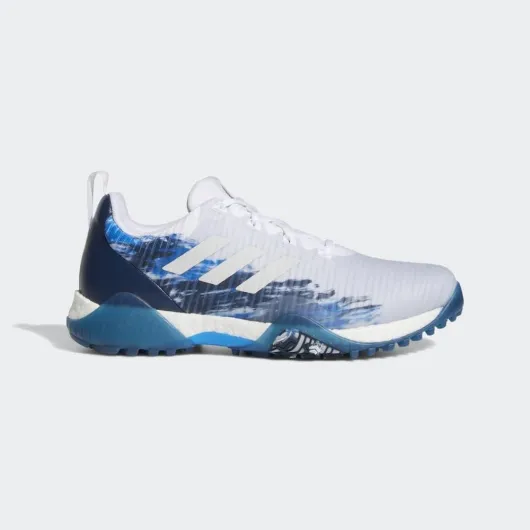
The upper is fully synthetic textile with seamless waterproof overlays, so there’s no traditional leather here. In practice, that gives you a shoe that feels lighter and more flexible straight away, with no real break-in period. On the flip side, it also means it has that slightly plasticky look and feel, especially when you touch the surface. It doesn’t feel cheap, but if you’re used to nice leather uppers, this is clearly more “technical fabric” than “premium material.”
Inside, you get an INSITE insole and Fitfoam cushioning, plus the BOOST midsole that adidas pushes on a lot of their shoes. The insole has a bit of shape to it—more arch and heel support than a flat foam insert. Combined with the BOOST, it gives a soft but not mushy feel underfoot. Compared to my old FootJoy leather shoes, these feel more like sports trainers, with more bounce when you walk. The outsole is full rubber with that Chaos Traxion and Twist Grip pattern, and the rubber feels reasonably firm, not that soft stuff that wears out after a few months.
The waterproofing comes from those seamless overlays and the synthetic upper, not from any heavy leather treatment. I walked through wet grass and light drizzle for about an hour, and my feet stayed completely dry. No damp socks, no water seeping in at the tongue. That’s a good sign. The flipside is breathability. Because it’s a waterproof synthetic, it doesn’t breathe like mesh trainers. On a warmer day, my feet felt a bit warm by the back nine—not horrible, but definitely warmer than in non-waterproof shoes.
In terms of overall build quality, the stitching and glue lines looked clean on my pair. No loose threads or obvious defects. The materials feel like they’ll hold up for a decent amount of rounds, but I wouldn’t expect them to age nicely like leather. They’ll probably do that typical synthetic thing: perform fine for a few seasons, then eventually the upper creases and looks tired. So from a material perspective, it’s very performance-focused, low-maintenance, but not the kind of shoe that’s going to look better with age.
How they hold up after several rounds
Durability is always hard to judge long-term, but after a handful of rounds and some practice sessions, I can at least comment on early wear. The outsole lugs show minimal wear so far, even on the high-pressure areas under the ball of the foot and heel. The rubber feels firm enough that I don’t expect them to bald out quickly unless you walk a lot on concrete or use them as everyday shoes, which they’re not really meant for.
The upper has held its shape pretty well. The synthetic material creases a bit where your toes bend, which is normal, but nothing alarming. No peeling overlays or split seams yet. Where I do see some early “aging” is in the colour. The white and light grey areas start to look slightly dingy after a few damp rounds. You can clean them, but as one reviewer said, once they stain, they don’t go fully back to new. If you’re picky about looks and want them to stay pristine, I’d strongly consider a darker colourway. My first light-grey pair (similar story) ended up looking a bit tired faster than I’d hoped, which is why I switched to a darker version later.
Inside, the insole hasn’t flattened out much yet, and the heel padding still feels supportive. Sometimes cheaper shoes lose that plush feel quickly, but these seem to be holding up fine. No obvious compression marks in the BOOST midsole so far either. Of course, if you play several times a week, you’ll see wear faster, but for a weekend golfer, they look like they’ll last a couple of seasons without falling apart.
So, in terms of durability, I’d say structurally solid, cosmetically average. They should hold together and stay comfortable, but the lighter colours will show dirt and stains faster than you might like. If you treat them as tools and don’t care too much about perfect looks, you’ll be happy. If you want your shoes to look fresh for ages, go darker or be ready to clean them often and accept some staining.
On-course performance: grip, stability, and waterproofing
On the course, the CodeChaos do the main job: they grip the ground and keep you stable through the swing. For a spikeless shoe, traction is solid. I tested them on slightly damp fairways and in the rough, and I never felt like I was going to slip during a normal swing. The Chaos Traxion and Twist Grip outsole pattern looks a bit over the top, but it works. You can feel the lugs biting into the turf when you rotate. Compared to my spiked shoes, the grip is maybe a touch less on very wet or muddy lies, but for typical conditions, I was fully confident swinging hard.
Walking comfort is also good. The BOOST midsole takes the edge off walking on harder paths and compacted fairways. Over 18 holes, my legs felt less beaten up compared to a stiffer, flatter golf shoe. The shoe also feels stable laterally. That Torsion X sway bar isn’t something you notice directly, but when you make a swing, your foot doesn’t roll around inside the shoe. There’s enough structure in the midfoot to keep you from feeling wobbly during a big drive.
Waterproofing performance was genuinely decent. I walked through wet rough and heavy morning dew, and later played through light rain. My socks stayed dry the whole time. No leaks around the tongue or seams. That’s a big deal for me because there’s nothing more annoying than soggy feet by the 7th hole. The trade-off, as mentioned earlier, is slightly warmer feet on hot days, but I’d rather have that than wet socks.
Off the course, the spikeless sole is fine for driving and walking around the clubhouse. It doesn’t feel slippery on tiles, and you’re not clicking around like you do with metal spikes. I wouldn’t use them as everyday trainers though; the outsole is still quite aggressive and feels a bit overkill for casual wear. In short, performance is strong where it matters: grip, stability, and waterproofing are all good for a spikeless option, with only very muddy conditions being a situation where I’d still prefer proper spikes.
What you actually get when you unbox them
Out of the box, the CodeChaos look more like sporty trainers than classic golf shoes. The colour I had is the White / Grey One / Crew Navy combo. So basically white with some grey and navy accents. If you’re used to plain black leather golf shoes, these feel much more modern and casual. There’s no fancy packaging, just a standard adidas shoe box, some paper stuffing inside, and that’s it. No extra laces, no shoe bag, nothing special. It’s fine, but don’t expect any premium unboxing experience.
The first thing that stood out is how light they feel in hand. They’re not featherweight like running shoes, but for golf shoes with a decent sole, they’re on the lighter side. The upper is synthetic textile with seamless overlays, and you can tell straight away it’s built more for performance than for looking classy in the clubhouse. If you like the trainer look, you’ll probably like these. If you prefer leather and something that looks smart with trousers, you might find them a bit too sporty or even a bit plasticky from certain angles.
One detail I noticed right away: the outsole pattern looks busy. There’s this hybrid spikeless Chaos Traxion and Twist Grip setup, so the bottom is full of different shaped lugs and textures. It doesn’t look like traditional soft spikes, but you can tell it’s meant to grab the turf. Also, the BOOST midsole is visible along the sides, so if you’ve worn adidas running shoes with Boost, this will look familiar. The insole is marked INSITE and feels a bit more structured than a basic foam insole you get in cheap shoes.
Overall, the presentation is functional and sporty. It doesn’t scream premium, but it doesn’t feel cheap either. It’s very much “these are here to be used, not admired on a shelf.” If you’re expecting something you can wear from the office straight to the course, I’d say these lean more towards pure sports gear than lifestyle crossover. For a golf shoe that’s meant to get dirty and take some abuse, that’s not a big issue, but it’s worth knowing before you buy.
Pros
- Very comfortable cushioning with BOOST and supportive insole for walking 18 holes
- Reliable waterproofing that kept feet dry in dew and light rain
- Strong grip and stability for a spikeless shoe, even on slightly damp ground
Cons
- Narrow fit and slightly short length; many people will need to size up
- Light colourways stain and look dirty fairly quickly
- Breathability is only average due to waterproof synthetic upper, can feel warm on hot days
Conclusion
Editor's rating
After a decent amount of time in these adidas CodeChaos spikeless golf shoes, my overall feeling is positive, with a few clear warnings. They’re comfortable underfoot, they grip the turf well for a spikeless shoe, and the waterproofing actually works in real-world wet conditions. If you like the idea of a golf shoe that feels closer to a cushioned trainer than a stiff leather brick, these fit that brief nicely.
The main downsides are the narrow fit and sizing quirks, plus the fact that lighter colourways pick up dirt and stains quite quickly. If you have wide feet or you hate guessing your size, that’s something to take seriously. For regular-width feet, going up half a size (or even a full size if you’re on the edge) seems to be the safe move. Once you dial that in, they’re genuinely comfortable for walking 18 holes.
I’d recommend these for golfers who play fairly often, want a modern-looking, spikeless, waterproof shoe, and value comfort and grip over a classic leather look. They’re good for spring and summer, and still fine in damp conditions as long as you’re not wading through mud every round. If you’ve got very wide feet, prefer a traditional style, or want a shoe that stays looking clean and sharp for ages, I’d say look at a different model or at least a darker colour. For most average-footed players, though, the CodeChaos are a pretty solid, practical choice that gets the job done without any drama.