
Summary
Editor's rating
Value: cheap way to test single-length without big-brand prices
Design focused on forgiveness and one simple setup
Comfort and feel: grips are thin but the swing is easy to repeat
Stainless heads and steel shafts: basic but reliable
Durability after a few rounds and range sessions
On-course performance: consistency over raw distance
What you actually get in the box
Pros
- Single-length design genuinely helps with a consistent setup and swing across the set
- Forgiving cavity-back heads with slight offset make long irons easier to hit
- Good price for a full 4–GW steel set, ideal for trying single-length without big-brand cost
Cons
- Stock grips are thin and feel cheap, likely need replacing soon
- Feel and finesse are limited compared to higher-end irons, especially for better players

Specifications
View full product page →| Brand | Forgan |
Single-length irons without blowing your whole golf budget
I’ve been curious about single-length irons for a while but didn’t feel like dropping four figures on a big brand set just to see if the concept actually helped my game. When I saw this Of St Andrews / Forgan OneSwing single length iron set at a much lower price, I figured it was a decent way to experiment. I’ve had them out on the course and at the range for a few rounds now, enough to get a feel for how they behave compared to my usual mixed-length cavity backs.
The basic idea is simple: every iron from 4 to gap wedge is the same length, same general setup, same swing. In theory that should make life easier if, like me, you’re not exactly a scratch golfer and your swing can get a bit messy when you switch between long irons and short irons. I went into it with realistic expectations: I wasn’t expecting miracles, just hoping for a bit more consistency and less thinking over the ball.
Right away, the first thing I noticed is how quickly I stopped overthinking club selection. With my old set, I’d stand over a 6-iron shot and immediately feel a bit tense compared to, say, a 9-iron. With these, mentally it really does feel like you’re just hitting the same club over and over, only with different lofts. That alone made the first couple of range sessions a bit more relaxed, which for me usually means better contact. I wouldn’t say my distance exploded or anything, but my contact pattern definitely tightened up.
They’re not perfect – there are some compromises and you can feel that this isn’t a premium set. The grips are on the thin side, the finish is decent but not fancy, and better players will probably spot the limitations pretty fast. But for an affordable way to test if single-length irons suit your swing, they get the job done. If you’re expecting tour-level feel and perfect distance gapping, you’re in the wrong price bracket; if you just want a straightforward, forgiving set that lets you groove one swing, they’re worth a look.
Value: cheap way to test single-length without big-brand prices
On value, this set makes sense if you’re curious about single-length irons but don’t want to burn a huge hole in your wallet. Compared to the big-name single-length options that can easily run into four figures, these are much more accessible. You’re obviously giving up some things – premium feel, fancy shafts, top-tier grips – but you’re paying a fraction of the price. For what you pay, you get 8 clubs that are perfectly playable, forgiving, and let you experience the single-length concept properly.
If you look at it as a long-term main set, the value is still decent, but you have to factor in a few extras. Realistically, many people will want to change the grips fairly soon, which adds cost. Also, if you’re a better player or very picky about feel, you may outgrow these or get frustrated by the lack of finesse. In that case, it might be smarter to save up for a higher-end set. But if you’re a mid to high handicap just trying to simplify your game and you don’t care too much about brand prestige, the cost-to-performance ratio is pretty solid.
Compared to a normal budget iron set (non single-length), you’re paying in roughly the same ballpark, but you’re getting the added benefit of the one-swing concept. Whether that’s worth it depends on your priorities. For me, the mental side alone – not juggling different setups – has value. I hit more confident shots with these than with some cheap traditional sets I’ve tried. If you absolutely don’t get on with the single-length idea, then obviously the value drops, but that’s kind of the risk you’re taking to experiment.
Overall, I’d rate the value as good for curious golfers and casual players. It’s not a miracle deal, but it’s a sensible price for a full 4–GW single-length setup that feels solid enough and performs respectably. If you expect tour-level performance for budget money, you’ll be disappointed. If you treat it as a cost-effective way to simplify your irons and maybe improve your consistency, the value is there.
Design focused on forgiveness and one simple setup
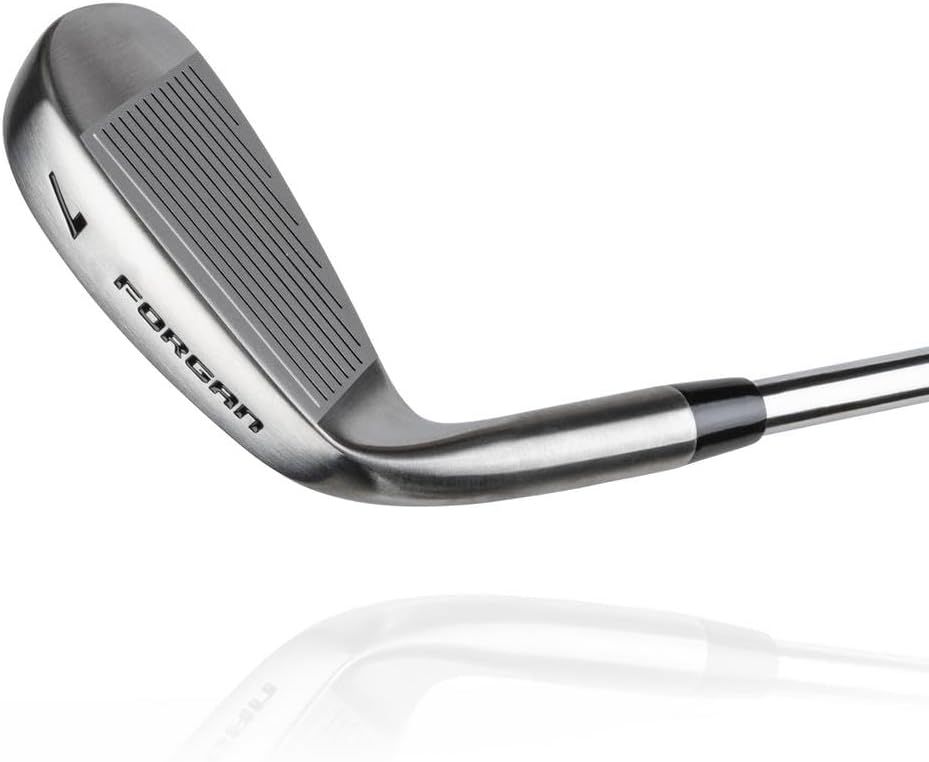
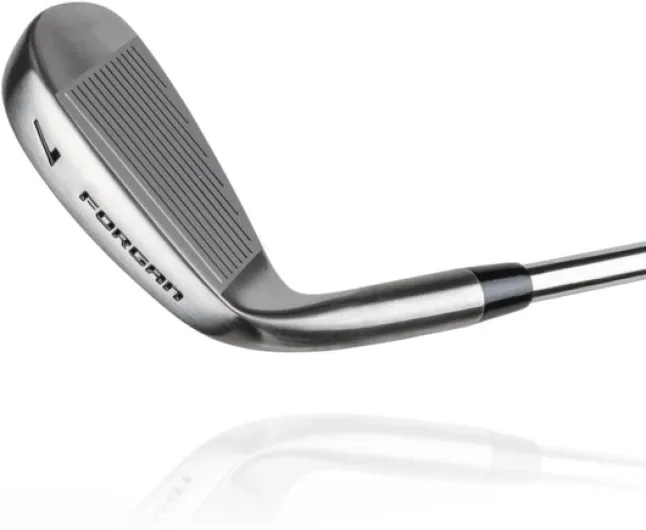
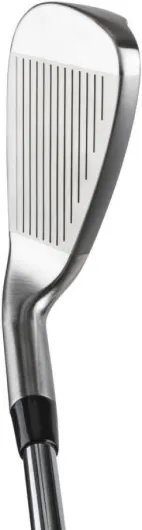
The design here is clearly aimed at mid to high handicappers who want something easy to hit. You’ve got a cavity-back head, a bit of offset, and a relatively thick top line. In practice, that means the club sits behind the ball with a decent amount of confidence – it doesn’t look like a thin blade that you’re going to knife across the green. The heads are all the same length shaft-wise, but the loft changes in normal steps, so the 4-iron still looks like a 4-iron in terms of face angle, just on a shorter shaft.
At address, the single-length thing kicks in. Once you’ve hit a few balls, it’s honestly quite nice not having to adjust your stance and posture constantly. I set up like I’m hitting a 7-iron, whether I’ve got the 4 or the 9 in my hands. The overall head size and shape are consistent through the set, so visually there’s not a huge jump between clubs either. That continuity is probably the main design win here: everything feels familiar from one club to the next, which is kind of the whole point.
The downside is that these are clearly biased towards forgiveness, not shot shaping. If you like working the ball, or you want a compact head, this design isn’t for you. The offset helps people who fight a fade or slice, but if you naturally draw the ball, you might end up overcooking a few shots. I noticed my usual slight fade straightened out, which is nice, but I also felt like I had less fine control over trajectory and curve. That’s not a huge issue at this price and target level, but it’s worth knowing.
Aesthetically, they’re fine but nothing special. The finish is clean enough, the branding is low-key, and they don’t scream budget from a distance. Up close, you can see that the polish and detailing aren’t on the same level as big-name premium irons, but that’s expected. I’d call the design practical and sensible. If you want something that looks like a tour player’s blade, this isn’t it. If you just want a forgiving head that helps you hit straighter shots with one setup, the design gets the job done.
Comfort and feel: grips are thin but the swing is easy to repeat
Comfort with these is a mix of two things: how they feel in the hands, and how easy they are to swing repeatedly. Let’s start with the obvious downside: the grips. They’re standard rubber but quite thin. First time I picked them up, I immediately noticed they felt narrower than my usual midsize grips. After a couple of buckets, my hands felt a bit more worked than usual, especially on cooler days. If you’re used to standard slim grips, you might be fine, but for me they bordered on too skinny. It’s playable, but it’s clearly where they saved a bit of money.
Once you get past the grips, the actual swing comfort is where this set makes more sense. Having the same length across 4–GW means my posture and ball position felt very natural very quickly. I didn’t have that awkward “this 4-iron feels like a spear” sensation. Everything feels like a 7-iron in terms of stance, which for an average golfer is usually a comfortable club. I noticed less tension over longer shots because I wasn’t subconsciously worried about the longer shaft. That alone made my contact more consistent and my back a bit happier by the end of the round.
Impact feel is okay. Center strikes feel solid, not soft like forged blades, but not harsh either. Off-center hits give you enough feedback to learn from them, but they don’t sting badly unless you really catch it on the toe in cold weather. I’ve hit cheaper irons where mishits send a shock up your arms; these are better than that, though still clearly on the firm side compared to pricier sets. The cavity design and slightly higher launch help shots get in the air without feeling like you have to swing out of your shoes.
In terms of overall comfort, I’d summarise it like this: the swing itself is easy and confidence-building, the posture is consistent and relaxed, but the stock grips let the set down a bit. If you’re willing to regrip, you can turn this into a very comfortable setup for casual golf. If you stick with the factory grips, it’s usable, but not ideal for long practice sessions or if you have larger hands or any wrist issues.
Stainless heads and steel shafts: basic but reliable
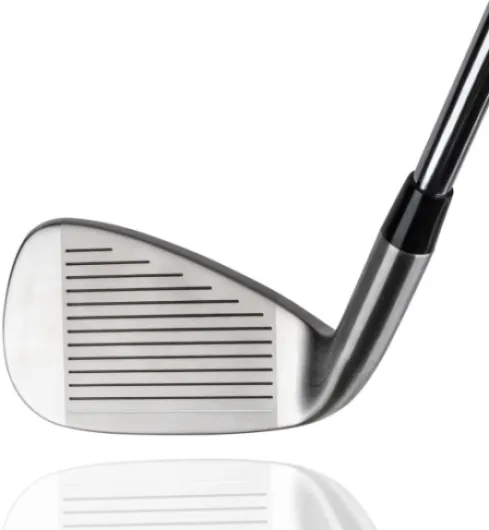
Material-wise, this set is pretty straightforward: stainless steel heads, steel shafts, and standard rubber grips. No exotic alloys, no fancy inserts, no multi-material tech. The heads feel solid enough. When you catch the ball in the middle, you get a firm but not harsh feedback. On mishits, you definitely know you’ve missed it, but the vibration is not brutal like some cheap cast irons I’ve tried. I’d put the feel as “decent for the price” – not soft and buttery, but not rock-hard either.
The regular flex steel shafts are on the lighter side compared to some older steel sets I’ve used, but they still feel stable. I didn’t notice any weird whippiness or inconsistency. If you’re a slower to moderate swing speed player, they should be fine. If you’re swinging pretty fast or you’re used to stiff or extra stiff, you might find them a bit soft, but this set isn’t really aimed at that crowd anyway. The shafts do match the whole concept: average golfer, simple setup, predictable feel.
The grips are where the cost-cutting is more obvious. Several reviewers mentioned they’re thin, and I agree. Out of the box, they’re playable, but they feel a bit narrow and basic. After a couple of rounds, I already knew I’d probably regrip them if I kept the set long term. If you have bigger hands or you like a more cushioned grip, plan on either using extra tape or just swapping them out. It’s not a deal-breaker, but it’s something to factor into the total cost.
Overall, the materials are what you’d expect at this price: functional, no frills. The stainless heads should hold up well in terms of durability, the steel shafts are standard and trustworthy, and the grips are the weak link but easy to upgrade. You’re not paying for premium metallurgy here; you’re paying for the single-length idea wrapped in basic but serviceable materials. For a test set or for casual golf, that’s acceptable in my book.
Durability after a few rounds and range sessions
Durability is always a concern with budget gear, so I paid attention to how these held up after a few weeks. After several buckets at the range and a handful of rounds, the faces show the usual wear marks, but nothing out of the ordinary. The stainless steel heads are doing what they’re supposed to do: get a bit scratched and marked where you strike the ball, but no signs of dents, caving, or weird damage. The finish on the sole and back has some scuffing from turf and bag chatter, but again, that’s normal. They don’t feel fragile in any way.
The steel shafts have been fine so far. No bending, no odd vibrations developing, no rust or flaking. I’ve tossed the bag around a bit, driven with them rattling in the trunk, and they’ve shrugged it off. For a set made in China at this price point, they seem correctly put together. I didn’t spot any loose ferrules or glue issues on my set. Obviously, long-term we’re talking months and years, but based on early use, they seem stable.
The weak spot, again, is the grips. They’re already showing slight signs of wear and smoothing where my hands sit most of the time. They’re still usable, but I can see them getting shiny fairly quickly if you play a lot. This doesn’t mean the whole set is poorly built; it’s just the classic budget move: cheaper stock grips. If you see this as a test set or a starter set, you may not care too much, but if you plan to keep them as your main irons, I’d budget for a regrip after a season, maybe sooner if you play weekly.
Overall, I’d say the durability is reassuring for the price. The heads and shafts feel like they’ll last many seasons for the average weekend golfer. You’re not getting premium forged metal that ages in a fancy way, but you’re also not getting something that falls apart after a couple of months. As long as you’re okay with the idea of upgrading grips down the line, the rest of the construction seems solid enough for regular use.
On-course performance: consistency over raw distance
Performance-wise, these irons lean more towards consistency and forgiveness than raw distance or shot shaping. With my usual set, my 7-iron carry is around 145–150 yards. With these, after a few range sessions and two full rounds, I was seeing roughly the same distance when I struck them well, maybe a touch less on average (5 yards or so). Where I noticed more difference was in how often I hit a playable shot rather than a total mishit, especially with the longer irons. The 4 and 5 irons, in particular, felt much less intimidating, and I was getting more shots launched at a reasonable height instead of low scuffs.
The single-length concept did help my contact. Once I committed to using one ball position and one stance for everything, my strike pattern tightened up. I wasn’t suddenly hitting every green, but I had fewer fat and thin shots. My dispersion left-to-right also shrank a bit, probably helped by the slight offset and higher launch design. If you tend to fade or slice, you’ll likely appreciate that. I usually play a small fade, and with these it was closer to straight, sometimes even a gentle draw when I released the club properly.
Trajectory is medium to high. The heads are designed to launch the ball, and with the forward-ish center of gravity they talk about, you do get a fairly penetrating flight without loads of spin ballooning the ball. Into the wind, I had to knock a few shots down, and it’s not as easy to manipulate trajectory as with more “player” irons, but for a typical mid-handicap style swing, the stock flight is perfectly usable. Stopping power into greens is acceptable; the gap wedge and pitching wedge did their job and held greens fine on normal shots.
Where these lag behind more expensive sets is in finesse and feedback. If you’re trying to hit low punch shots, big hooks, or soft fades on demand, you’ll feel a bit limited. Also, the distance gapping felt mostly fine, but not laser precise – I had a couple of situations where the 4 and 5 iron felt a bit too close together in carry, which is partly my swing but also the nature of using the same length. Still, for the price and target golfer, I’d say the performance is pretty solid: good forgiveness, stable flight, and easier long irons, at the cost of some finesse and pure distance.
What you actually get in the box
This set is pretty simple: you get 8 irons – 4, 5, 6, 7, 8, 9, PW and GW – all in a single length, with steel shafts and standard rubber grips. No fancy extras, no headcovers, just the clubs wrapped and boxed. They’re right-hand only, regular flex, with stainless steel heads and a fairly standard cavity-back shape. The lofts are tweaked so you still get normal distance gaps between clubs, even though the shafts are all the same length. On paper it looks like a fairly classic game-improvement set, just with the single-length twist.
Out of the box, the first impression is that they look like mid-range irons you’d find in any golf shop. Silver finish, slightly chunky top line, a bit of offset, and a cavity that clearly aims at forgiveness rather than precision shaping. They’re not flashy, but they don’t look cheap in a toy-like way either. If you’re used to big-brand players’ irons, you’ll notice the difference in finish quality, but for this price range I’d say they’re pretty solid visually. They’ll sit fine in a bag next to a mid-range driver and wedges without looking out of place.
On the technical side, they’re built with swing weights around D0 to D1 as you move up the set, which is fairly standard for game-improvement irons. The idea is to keep the swing feel consistent, even with the single-length design. All the lie angles are adjusted to support the concept, so you don’t have to do any mental gymnastics with posture or ball position from club to club. If you’re used to standard irons, the only real adjustment is getting your head around the fact that your 4-iron is as short as your 9-iron.
Overall, the presentation matches the target: this is a practical, budget-friendly entry into single-length irons. No fancy packaging, no premium accessories, just a functional set of clubs. If you’re buying this, it’s probably for the concept and the price, not to show off logos. On that front, it delivers what it says: 8 single-length irons, ready to go, nothing more, nothing less.
Pros
- Single-length design genuinely helps with a consistent setup and swing across the set
- Forgiving cavity-back heads with slight offset make long irons easier to hit
- Good price for a full 4–GW steel set, ideal for trying single-length without big-brand cost
Cons
- Stock grips are thin and feel cheap, likely need replacing soon
- Feel and finesse are limited compared to higher-end irons, especially for better players
Conclusion
Editor's rating
After using the Of St Andrews / Forgan OneSwing single length irons for a bit, my overall feeling is that they’re a pretty solid budget entry into the single-length world. They do what they promise: give you one setup and one swing across 4–GW, with forgiving heads and straightforward performance. My contact got a bit more consistent, especially with the longer irons, and I spent less time over the ball second-guessing my stance. Distances were roughly in line with my usual irons, maybe slightly shorter on average, but the trade-off was more playable misses and fewer complete duffs.
They’re not perfect. The grips are too thin and feel cheap, and better players will probably find the feel a bit dull and the control limited. The finish and materials are clearly in the mid to low price range, and you’ll likely want to regrip if you keep them long term. But for the money, and considering the target golfer, they hold up well. They’re forgiving, simple to use, and a low-risk way to find out if single-length irons match your swing and your brain.
I’d recommend these to mid and high handicappers who want to simplify their iron game, people coming back to golf after a break, or anyone who’s single-length curious and doesn’t want to commit to an expensive set right away. If you’re a low handicap, very picky about feel, or you like to shape a lot of shots, I’d skip these and look at more advanced options. For the rest of us average golfers who just want something consistent and affordable, this set is decent value and gets the job done.