
Summary
Editor's rating
Value: worth the money or just another golf gimmick?
Design: looks like a normal club, swings like a fishing rod
Materials and build: decent quality, nothing fancy
Durability: will it survive real practice?
On-range performance: ball flight, distance, and feel
What this weird blue 7‑iron actually is
Effectiveness: does it actually help your swing?
Pros
- Very clear feedback on tempo, transition, and sequencing – bad swings get punished instantly
- Real 7‑iron head so practice transfers well to your normal clubs
- Gentle on wrists and joints compared to regular irons on mishits
Cons
- Pricey for what looks like a single flexible 7‑iron
- Requires consistent practice and some discipline to see real benefits
- Right‑handed only for this model, and not very useful if your main issues are outside full‑swing mechanics

Specifications
View full product page →| Brand | GForce Golf |
A bendy 7‑iron that exposes your swing
I’ve been messing around with training aids for years, and most of them end up in a corner of the garage after a week. With the GForce 7 Iron, I went in pretty skeptical: it’s basically a 7‑iron with a super flexible shaft that’s supposed to fix tempo, transition and sequencing. I used it over a few range sessions and some backyard swings, swapping back and forth with my regular 7‑iron to see if anything actually stuck.
The first honest impression: this thing feels weird. The shaft is so soft that your normal swing makes it feel like you’re swinging a rubber hose. My first few balls were all over the place – a couple of nasty high rights and some low hooks. But that’s kind of the point: if your transition is quick or you yank from the top, the club punishes you straight away. You don’t need a coach to tell you it was bad; the flight tells you.
After about 20–30 swings, I started to get a feel for what it wanted: smoother takeaway, slower transition, and more body rotation instead of just smashing it with my arms. When I then picked up my normal 7‑iron, it felt like an X‑stiff rod and I instantly noticed I was swinging more in balance. Contact was cleaner, and I was hitting more ball‑then‑turf instead of fatting or thinning everything. Not perfect, but clearly different from before using it.
So my starting point for this review is simple: it’s not a magic wand, but it does give very clear feedback on your swing. If you’re willing to grind a bit and you understand that it’s about feel, not distance, there’s something useful here. If you’re hoping to just buy 20 extra yards without changing anything, this isn’t that product.
Value: worth the money or just another golf gimmick?
Price-wise, the GForce 7 Iron sits above the super cheap training gadgets but below the really pricey tech stuff like launch monitors. Some people will look at it and say, "It’s just a bendy 7‑iron, why is it that expensive?" That’s fair. If you’re on a tight budget, this will feel like a luxury. You could also argue that a good lesson with a pro might give you more for the same money. One Amazon reviewer flat-out called it "another expensive golf gimmick" and said it had some value but not much.
For me, the value depends on how you use it and where you are in your golf journey. If you’re a mid‑ to high‑handicapper who struggles with tempo, slices, and fat shots, and you’re willing to actually practice with it regularly, it’s decent value. It gives you instant feedback, works indoors or outdoors, and you can keep coming back to it when your swing gets out of whack. You also get free training videos via the QR code, which help you understand what to work on instead of just randomly swinging it.
Compared to other trainers I’ve used (weighted clubs, Orange Whip style trainers, plastic gizmos), this one has more direct transfer to real shots because you’re hitting balls with an actual iron head. That matters. I’ve bought cheaper aids that ended up in a drawer because the feel just didn’t translate. This one, I actually kept using because I could see a difference when I swapped back to my normal clubs. So even if it costs more than a basic swing stick, it felt like money better spent.
That said, it’s not a miracle solution. If you’re already a low handicap with decent tempo, you might get less out of it. And if you’re the type who buys gadgets instead of practicing, save your cash – this will just become one more thing in the garage. Overall, I’d call the value "pretty solid but not cheap": it’s worth it for golfers serious about fixing tempo and sequencing, but there are definitely cheaper ways to work on your swing if you’re disciplined and have access to a good coach.
Design: looks like a normal club, swings like a fishing rod
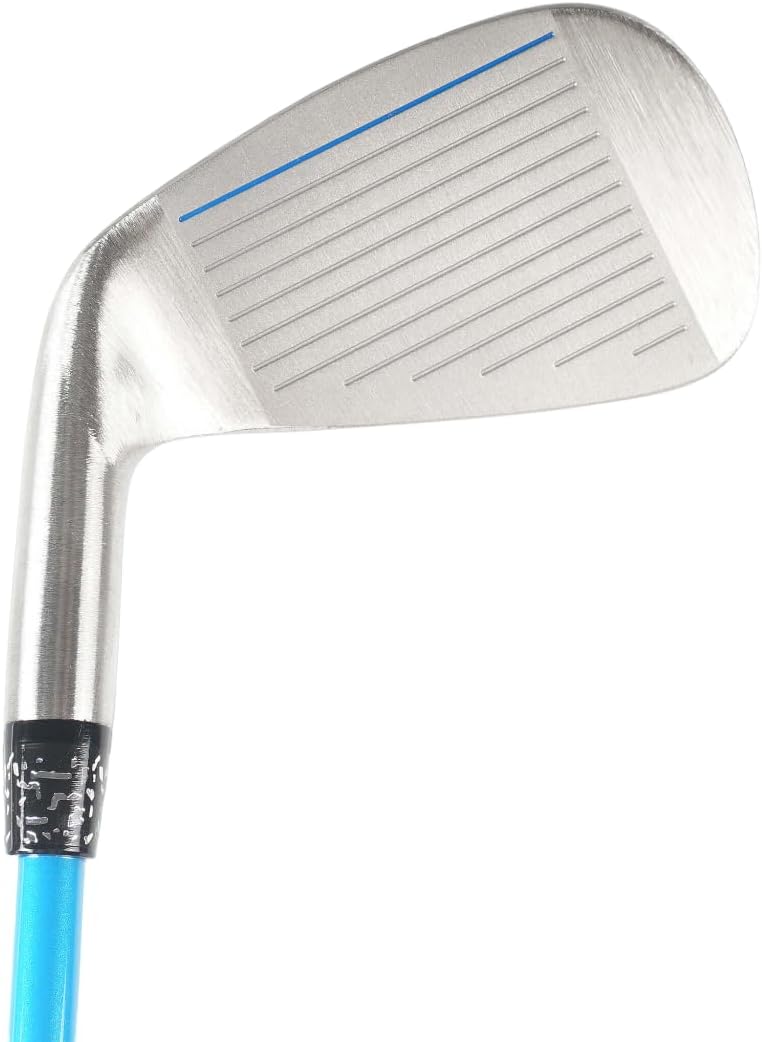
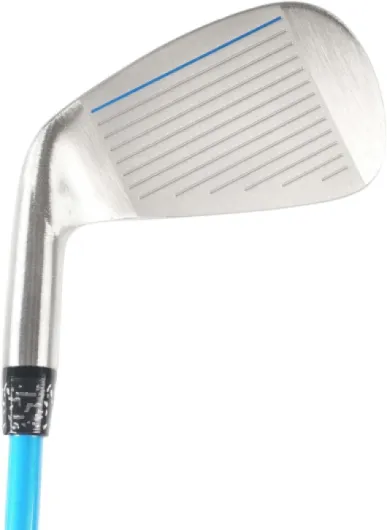
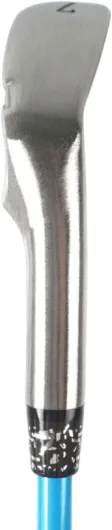
Visually, the GForce 7 Iron is pretty normal apart from the blue shaft. The head looks like a basic cavity‑back 7‑iron, nothing fancy, and the grip is a standard black rubber grip. If you put it down behind the ball, it doesn’t scream "training aid". The only giveaway is the slightly chunkier look of the shaft and the color. On the rack, it could pass for a regular game‑improvement iron if you don’t touch it.
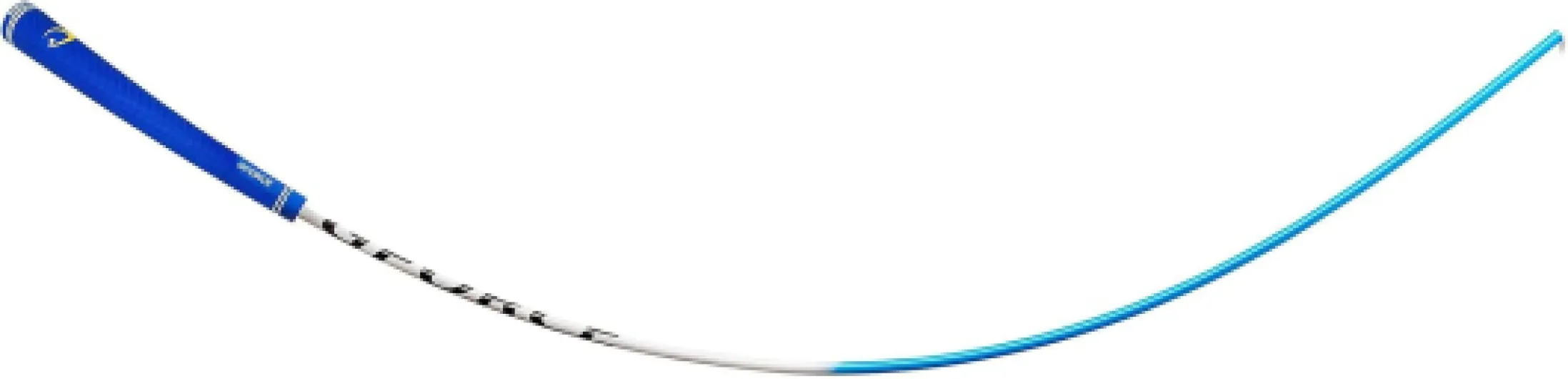
The big design story is obviously the super flexible shaft. The first waggle is a bit of a shock: it bends like a senior flex on steroids. On fast swings, you can actually see the shaft lag behind and then whip through. That sounds silly, but that visual feedback is useful. When I tried to hit it like my normal 7‑iron, the clubhead felt like it was all over the place. When I smoothed out the tempo, the wobble calmed down and the swing felt more like a pendulum.
One thing I liked is that they kept the clubhead weight and general proportions close to a real club. Some trainers are so heavy or oddly balanced that the feel doesn’t transfer at all. Here, once you get past the flex, the weight of the head feels roughly like a normal iron. I could switch between this and my own 7‑iron without feeling like I’d gone from a sledgehammer to a feather. It still felt like a golf club, not a gym tool.
If I had to nitpick the design, I’d say the blue/white look is a bit loud, and left‑handers are out of luck with this specific model. Also, the head shape is pretty generic – don’t expect a fancy forged look. But for a training club, the design gets the job done: normal head, clear visual cue on the shaft, and a build that makes it usable both for dry swings at home and proper range sessions.
Materials and build: decent quality, nothing fancy
The club uses a carbon fibre shaft with extreme flex, a standard rubber grip, and a cast iron head. Nothing exotic here, but it feels reasonably solid in the hands. The shaft is obviously the star: it’s not just a whippy steel shaft; the carbon gives it a smooth bend without feeling like it’s going to snap. I took some pretty hard swings (on purpose) to see if it felt fragile, and while it flexes like crazy, there was no creaking or scary noises.
The grip is basic but fine. It’s a standard size rubber grip, no fancy texture, but it doesn’t feel cheap or slippery. I used it in light rain once and with slightly sweaty hands, and it held up okay. If you’re picky about grips, you could easily re‑grip it with your usual brand. Personally I’d probably swap it if I were using it long term, just to match the feel of my main set, but out of the box it’s perfectly usable.
The clubhead is pretty standard cast metal. Finish is okay – not premium, but there were no ugly casting marks or rough spots on mine. After a few range sessions, the face showed normal wear from balls and range mats, nothing unusual. The paint and blue finish on the shaft held up too; no chips or big scratches despite me being less careful than I’d be with my main irons. It’s clearly built to be used, not just waved around in the living room.
Overall, for a training aid made in China with a 1‑year warranty, the materials feel fair for the price. It’s not built like a top‑end forged iron, but that’s not the point. You’re paying for the flex shaft behavior and the training concept, not for fancy metals. On that front, the materials are good enough and don’t give the impression it’s going to fall apart after a month.
Durability: will it survive real practice?
Durability was one of my first concerns. A super flexible carbon shaft that you’re supposed to hit range balls with sounds like something that might break if you get too aggressive. So I didn’t baby it: I used it on mats, off grass, and even hit a few obvious fat shots just to see how it handled the abuse. After those sessions, the shaft was still straight, no cracks, no weird noises, and the head was firmly attached.
The finish on the shaft held up better than I expected. The blue paint didn’t chip or peel, even when I accidentally knocked it against another club in the bag. The clubhead showed normal face wear from hitting balls, and the sole had some scuff marks from mats, but nothing that affects performance. The grip didn’t start peeling or twisting, which is common on cheaper training aids after a while. If you’re practicing a couple of times a week, I don’t see it dying quickly.
There’s a 1‑year manufacturer warranty, which is comforting given the unusual flex. It’s not a lifetime guarantee, but at least you’re covered if it snaps early. Based on my use and what I’ve seen in reviews, most people don’t seem to have breakage issues unless they really abuse it. It’s still a golf club, not a crowbar – if you slam it into the ground on purpose, you’ll probably manage to kill it.
Long term, I’d expect the grip to be the first thing to go, like on any club. That’s cheap and easy to replace. The shaft is obviously the critical part, and so far it feels more solid than it looks. So while it’s not bulletproof, I’d say the durability is pretty solid for a training aid in this price range. Treat it like a normal club and it should last.
On-range performance: ball flight, distance, and feel
Let’s be clear: this is a training club, not a distance machine. That said, I was curious about what the ball actually does. When I swung it properly, I was getting a carry roughly similar to my regular 7‑iron, maybe a bit shorter on average because I wasn’t trying to smash it. One user mentioned hitting it 185 yards carry on a perfect strike; I didn’t see that kind of number, but I was comfortably in my normal 7‑iron range when I caught it solid.
The main performance feedback comes from the shot shape and strike. When I rushed the transition, I’d either hit a big push right or a wipey fade. When I overswung, the shaft went all over the place, and I’d lose contact. Once I shortened the backswing, stayed more centered, and kept the tempo smooth, the ball started coming out much more solid with a straighter flight. You basically get punished for bad sequencing and rewarded for staying in balance and letting the club do the work.
Another thing I noticed: it’s much easier on the joints than my regular irons on mishits. Because the shaft is so soft, it absorbs a lot of shock on fat shots. That lines up with the review from the guy whose wrists were hurting – I could pound range mats with this and not feel that harsh jolt I usually get on chunky shots. For long practice sessions, that’s a nice bonus. You can work on technique without beating yourself up physically.
In terms of consistency, once I got used to it, I could hit 10–15 pretty repeatable shots in a row with the GForce. Then, when I swapped to my normal 7‑iron, the first 2–3 balls were a bit off (because the shaft feels so stiff in comparison), but then it clicked and I was hitting straighter, more penetrating shots than before using the trainer. So in practice, the performance benefit is less about what the GForce itself does and more about how it cleans up your swing so your regular clubs behave better.
What this weird blue 7‑iron actually is
On paper, the GForce 7 Iron is a standard‑length 7‑iron (around 37 inches) with a super flexible carbon fibre shaft, standard rubber grip, and 32° loft. It’s right‑handed only in this version, blue and white color scheme, and weighs about 440 g. It’s a real club, not a plastic toy: you can hit real balls on the range or course, and it’s USGA legal if you’re crazy enough to play it in a round. In the box, you also get some tees and a poker‑chip ball marker with a QR code that links to training videos.
The idea is simple: the ultra‑soft shaft exaggerates your faults. If you snatch it back, rush transition, or cast from the top, the shaft wobbles and the clubhead gets out of position. The result is usually a big push, a wipey slice, or some ugly contact. If you sequence things better – legs and hips first, then torso, then arms and club – the shaft loads and unloads in sync with your body and you get a much straighter, more solid shot. It basically forces you to swing with rhythm instead of brute force.
Compared to other swing trainers I’ve tried (Orange Whip, weighted clubs, etc.), the big difference is that this one is actually a 7‑iron. You can hit full shots at the range and see ball flight, not just feel a practice swing. For me that matters: it’s easier to translate feels into real shots when you see the ball reacting. You can also do short swings, half swings, and little punch shots to work on different parts of the motion.
Overall, in terms of concept and what’s actually delivered, it’s pretty straightforward: it’s a bendy 7‑iron built to expose your swing issues and force you into better tempo and sequencing. No gadgets, no electronics, just a flexible shaft and some decent online coaching behind it.
Effectiveness: does it actually help your swing?
This is the real question: does this bendy 7‑iron do more than just feel weird? In my case, yes, it helped, but only once I used it the right way. The key is to alternate between this and your normal 7‑iron. I’d hit 10–15 balls with the GForce, focusing on smooth tempo and staying in balance, then switch to my own club for 5–10 shots. Every time I did that, my normal iron swings were calmer, and my contact improved. I started hitting more consistent ball‑then‑turf shots instead of fatting behind it.
The biggest gain for me was tempo and transition. I tend to snatch the club back and then lunge from the top. With this thing, that move just doesn’t work: the shaft lags, the clubhead gets stuck, and the ball goes miles right or comes out weak. When I forced myself to start the downswing from the ground up and let the club drop instead of yanking it, the ball flight straightened up quickly. You feel when the shaft loads and unloads in sync with your body, and that feel carried over pretty well to my normal clubs.
As for specific faults: if you slice because you come over the top, this trainer makes that move very obvious. I hit some ugly across‑the‑ball swings early on, and the ball started left and cut hard. Once I focused on sequencing – legs, hips, torso, then arms – the path felt more from the inside, and the ball flight changed. It doesn’t "fix" your slice by itself, but it gives you very clear feedback when you do it right versus wrong. The same goes for release: if you hold the club off and never let it release, you’ll get weak shots; when you release properly through impact, you see and feel the difference.
However, it’s not magic. If you’re the type who swings it 10 times, shrugs, and goes back to your old habits, you won’t get much out of it. You need to actually watch the videos or at least think about what you’re doing. Also, if your main issue is alignment, grip, or putting, this won’t help much. It’s focused on full‑swing rhythm, sequencing, and path. Used for that, it’s pretty effective. Used as a toy, it’s just a bendy club that feels odd.
Pros
- Very clear feedback on tempo, transition, and sequencing – bad swings get punished instantly
- Real 7‑iron head so practice transfers well to your normal clubs
- Gentle on wrists and joints compared to regular irons on mishits
Cons
- Pricey for what looks like a single flexible 7‑iron
- Requires consistent practice and some discipline to see real benefits
- Right‑handed only for this model, and not very useful if your main issues are outside full‑swing mechanics
Conclusion
Editor's rating
The GForce 7 Iron Golf Swing Trainer is basically a brutally honest mirror for your swing. The super flexible shaft makes it very clear when you rush the takeaway, yank from the top, or come over the top. Used properly – meaning regular practice and swapping back and forth with your normal 7‑iron – it genuinely helped me smooth out my tempo, improve my transition, and strike the ball more solidly. I also liked that it’s easier on the joints, which makes longer practice sessions less punishing.
It’s not perfect. The price is on the higher side for what looks like a bendy 7‑iron, and if you’re expecting instant miracles, you’ll be disappointed. You need to actually pay attention, maybe watch the training videos, and put in the reps. If you already have a coach and a decent swing, the gains might be pretty marginal. And if your main problems are things like grip, alignment, or short game, this won’t fix those.
Overall, I’d recommend it to mid‑ and high‑handicap golfers who struggle with tempo, sequencing, and slices, and who like to practice on the range or at home. It’s a practical, no‑nonsense tool that gives clear feedback and carries over to your real clubs. If you hate training aids or are on a tight budget, you might be better off spending the money on a couple of lessons instead. But if you’re the kind of player who actually uses their practice gear, this one earns its spot in the bag.