
Summary
Editor's rating
Value for money: where these irons actually make sense
Chunky, modern look with a hollow body vibe
Swing feel, weight, and how tiring they are over 18 holes
Steel, foam, and grips that don’t feel cheap
How they hold up after rounds and range abuse
Distance and forgiveness first, precision second
What you actually get in the set
Pros
- Good distance and forgiveness thanks to hollow, thin-face design
- Decent feel and sound for the price due to foam-filled heads
- Quality components (KBS Max shafts, Lamkin Crossline grips) at a budget-friendly price
Cons
- Chunky heads with noticeable offset won’t appeal to low-handicap or feel-focused players
- Limited specs (right-hand, stiff steel only) and weaker resale value compared to big brands

Specifications
View full product page →| Brand | MACGREGOR |
Budget irons that actually feel decent
I’ve been playing these MacGregor MACSPD irons (5–PW, stiff steel) for a few weeks now, and I’ll be blunt: I bought them because I didn’t want to drop a fortune on the big brands. My old irons were a mixed second-hand set from years ago, so I wanted something more modern without paying “tour player” money. These popped up with the foam-filled heads and hollow construction, which you usually see on pricier clubs, so I gave them a shot.
On the course, the first thing I noticed was the sound and feel. They’re hollow and foam-filled, so you don’t get that harsh “clang” you sometimes get with cheap cast irons. The contact feels pretty solid, especially on decent strikes. It’s not buttery, but for this price range, the feel is more than acceptable. I was expecting something dead or clicky, and it’s actually quite playable.
Distance-wise, they’re clearly designed to help the average golfer. The lofts are on the stronger side (23° 5-iron, 44° PW), so the ball comes out pretty hot and goes a club longer than my old set. I had to adjust my yardages after a couple of rounds, but once I did, it was consistent enough. They forgive a lot of mishits low on the face, which I do more often than I’d like to admit.
They’re not perfect. The heads are a bit chunky, and you can feel the weight. Also, if you’re a low handicap chasing very precise feedback, these are probably not going to make you smile. But if you’re a mid-to-high handicap looking for cheap distance and forgiveness with a decent feel, they get the job done without feeling like a toy.
Value for money: where these irons actually make sense
This is where the MACSPD irons make the most sense: price versus performance. You’re getting hollow, foam-filled heads, KBS Max steel shafts, and Lamkin Crossline grips—features you usually see on more expensive sets—for a relatively modest price. You’re not paying for a big logo, but you still get modern tech: thin face, low center of gravity, and decent components.
In practice, that means you get more distance and forgiveness than an old second-hand set, without having to spend what you’d spend on the latest from TaylorMade, Callaway, or Titleist. Are those big brands better overall? Yeah, in many cases they have nicer finishing, more refined feel, and a bigger range of fitting options. But if you’re a casual golfer playing once a week or less, the performance gap might not justify the extra cash. These MacGregors slot nicely into that “good enough and actually modern” category.
On the downside, resale value won’t be great. If you like to change clubs every year, these won’t hold value like a big-name set. Also, you’re limited in specs: right-hand, stiff steel, standard length. If you need custom lies, different shafts, or left-handed, you’re out of luck here and you’ll have to pay more elsewhere. So the value is best for someone who fits into the “average male golfer” template and doesn’t need customization.
Overall, I’d call the value strong for mid- to high-handicappers on a budget. You get modern game-improvement irons with decent feel and build quality, at a price that leaves money for lessons or green fees. If you’re extremely picky about feel or need custom specs, you’ll probably want to invest in a fitted set. But if you just want a modern, forgiving set that hits the ball farther than your old gear without emptying your wallet, these are a pretty solid deal.
Chunky, modern look with a hollow body vibe
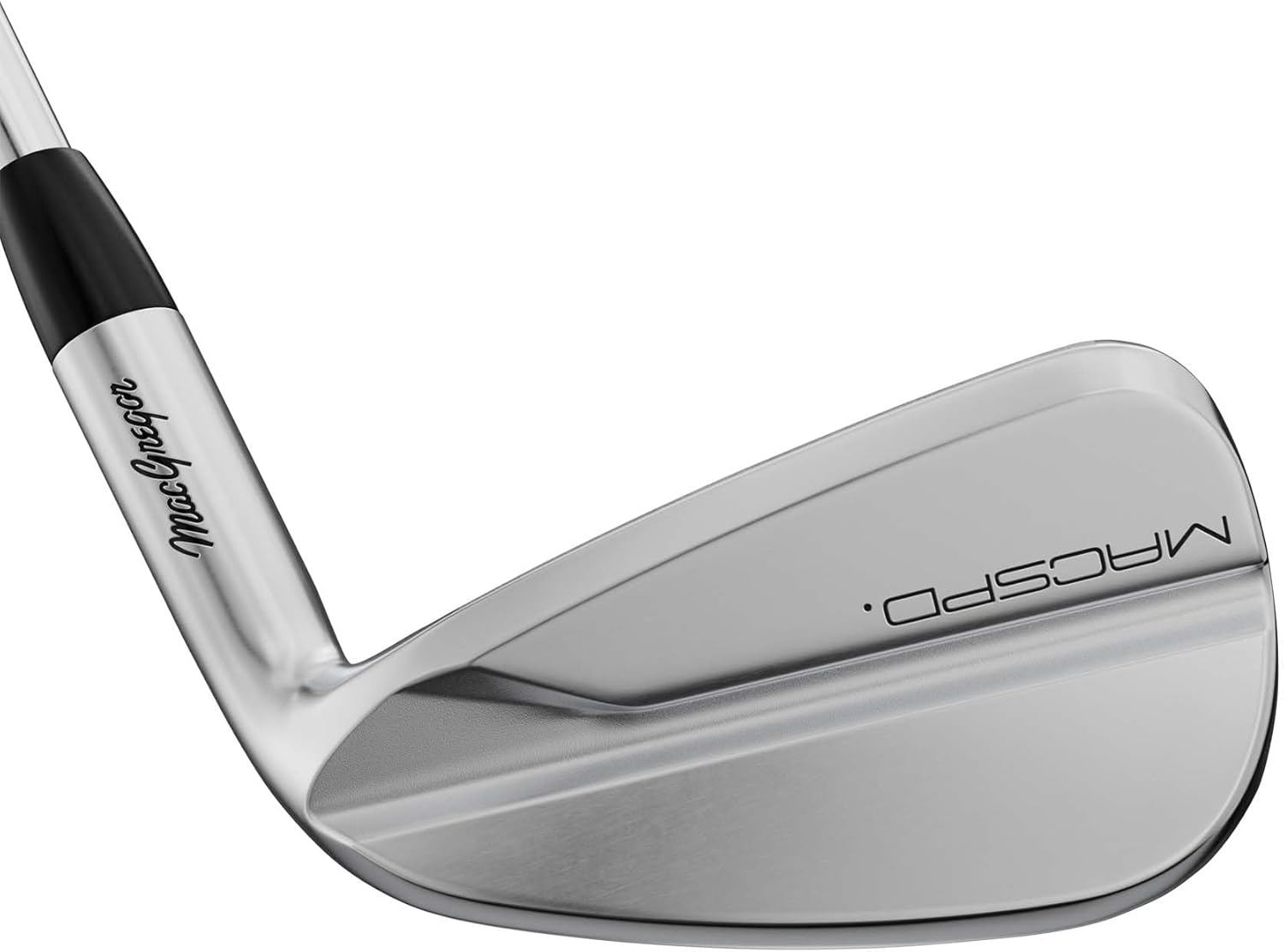
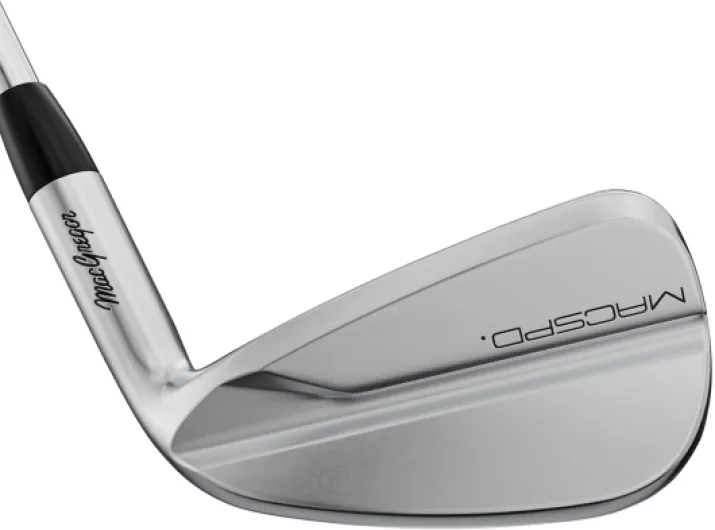
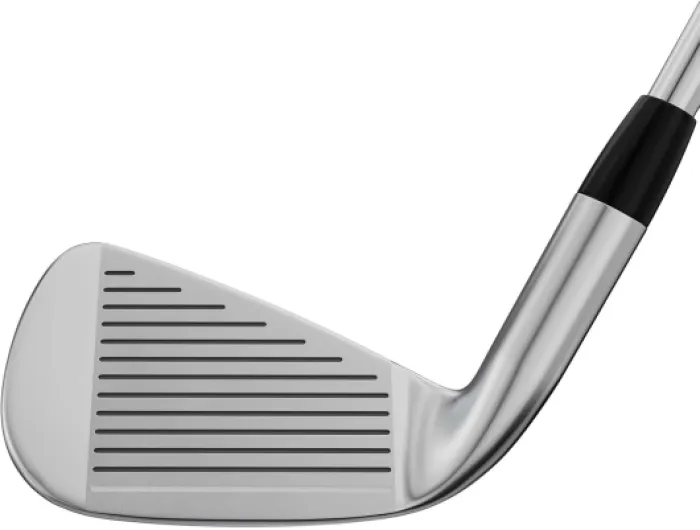
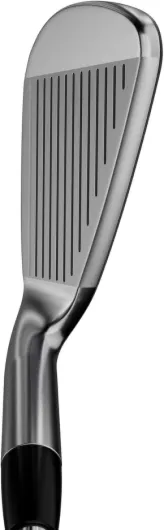
Design-wise, these MACSPD irons are clearly game-improvement. The heads are hollow, foam-filled, and you can see that in the size. There’s a decent amount of offset, especially in the longer irons (6.25 mm in the 5-iron down to 2.25 mm in the PW). At address, the 5 and 6 look a bit chunky with a noticeable top line and some offset, but not cartoonish. If you’re used to slim blades, you’ll think these look big. If you’re used to typical cavity backs, they’ll look pretty normal.
The finish is a satin style, which I liked. It cuts down on glare in the sun and doesn’t scream “cheap chrome.” After several rounds and a few range sessions off mats, the faces show normal wear marks, but nothing unusual—no flaking, no weird discoloration yet. The back of the club has a simple, slightly industrial look. It doesn’t look premium, but it doesn’t look like a toy either. Just a straightforward, modern cavity/hollow design.
One thing I noticed: the blade length is the same across the set (around 81 mm), so at address they all look similar in footprint, which I actually found reassuring. The PW doesn’t suddenly look tiny compared to the 7-iron. This helps confidence, especially in the mid and long irons. The sole is fairly wide, which helps prevent digging, but if you play on very tight, firm lies, it can feel a bit clunky through the turf. On softer fairways, the wide sole is more of a help than a problem.
Overall, the design is all about forgiveness and confidence, not finesse. If you like clean, compact heads with minimal offset, this will probably annoy you. If you’re a 15–25 handicap looking down at the ball and wanting to feel like the club is going to help you out, the shape and size are actually pretty reassuring. It’s not pretty, but it’s practical.
Swing feel, weight, and how tiring they are over 18 holes
In terms of comfort, I’d say these irons are easy enough to live with, but they’re not super light. You can feel the clubhead, especially in the mid and long irons. Personally, I like feeling the head in the swing, so that was a plus for me. Over 18 holes, they didn’t feel tiring, but if you’re used to very light graphite shafts, these KBS Max steel shafts will feel heavier and might wear you out a bit more by the end of the round.
The swing weight feels consistent through the set. I didn’t have that weird jump where one club suddenly feels heavier or lighter than the rest. That helped my confidence switching between, say, the 7-iron and the PW. The foam-filled heads also help with comfort at impact. Mishits don’t sting as much as with some older, full-cast irons. On cold mornings, that’s actually a big plus—less vibration in the hands, less punishment for being slightly off.
The Lamkin Crossline grips are comfortable right out of the box. Medium size, good texture, and not too firm. I didn’t feel the need to wear two gloves or squeeze the club to hold on, which makes the whole experience more relaxed. For someone with normal-sized hands, these grips are fine. If you have very large hands, you might eventually go to midsize, but that’s true of most stock grips.
Overall, the comfort level is good for a steel-shafted game-improvement set. They’re not featherweights, but they’re not bricks either. If you have joint issues or very slow swing speed, you might want graphite shafts instead. But for the average male golfer with a moderate swing speed, these feel stable, manageable, and not punishing over a full round.
Steel, foam, and grips that don’t feel cheap
Materials are fairly standard for this type of iron, but that’s not a bad thing. The heads are stainless steel, hollow, and filled with a proprietary foam. You don’t see the foam, obviously, but you can feel the effect in the sound and the way vibrations are dampened. Compared to my old one-piece cast irons, the MACSPD heads feel less harsh, especially on shots a bit off the toe or low on the face. You still know you mishit it, but it doesn’t buzz your hands.
The shafts are KBS Max steel, which is a known brand, not some generic no-name shaft. That’s a plus at this price. They’re designed to help launch the ball higher, and in practice, I did notice a slightly higher flight compared to my old True Temper regular flex shafts, even though these are stiff. If you tend to hit very low bullets, that can help. If you already hit moon balls, you might find them a bit too floaty, especially into the wind.
The grips are Lamkin Crossline, which is a solid, classic grip. Medium size, synthetic rubber, good traction, even when slightly damp. I played one round in light drizzle and they didn’t feel slippery. For a budget set, this is one of the nice surprises: you don’t immediately feel the need to regrip them. Over time, sure, you’ll probably change them like any other grip, but out of the box they’re very playable.
In terms of overall build quality, I checked the clubs when they arrived: ferrules were flush, no obvious glue residue, faces were clean, and the shafts all seemed aligned correctly. Are they finished like high-end forged irons? No. But nothing looked sloppy. For the price range we’re talking about, the materials and build are pretty solid and don’t scream cost-cutting in the key areas (shafts and grips). If you’re worried they’ll feel like a supermarket set, that’s not the case here.
How they hold up after rounds and range abuse
I haven’t had them for years, obviously, but after several rounds and a decent number of range balls, the durability so far looks fine. The satin finish on the faces shows normal wear patterns—ball marks, a bit of scuffing—but nothing out of the ordinary. No rust spots, no weird discoloration, and the grooves still look sharp. I did hit a few shots off hard mats and they didn’t chew up the soles more than I’d expect.
The shafts haven’t shown any signs of loosening or bending. I checked the hosel area on each club after a couple of range sessions; everything still feels tight, no rattling, no movement. The hollow heads with foam can sometimes be a concern if you’re worried about internal rattles, but so far I’ve had zero issues. No strange sounds, no pieces shaking around inside, which is something I’ve seen on older hollow designs from other brands.
The Lamkin Crossline grips are holding up well, but that’s expected. They’re known for good durability. After sweaty practice sessions and a bit of light rain, they haven’t gone slick or started to crumble. Over a season or two, you’ll probably regrip them like any other club, but there’s nothing that screams “cheap rubber” here.
Given the brand and the price point, I was half-expecting some corner-cutting, but honestly, from what I can see, the durability is decent. The heads don’t feel fragile, the finish isn’t peeling, and the hardware is holding together. Long term, who knows, but they come with a 12-month warranty, which at least gives a bit of backup. For a budget-friendly iron set, I’d rate the durability as “solid, nothing fancy, but no red flags.”
Distance and forgiveness first, precision second
On-course performance is where these irons make the most sense. They’re clearly tuned for distance and forgiveness. The thin face and hollow, foam-filled design give you a lively feel off the face. My carry distances went up roughly half a club compared to my old set. For example, my 7-iron used to be a 145–150 yards club; with the MACSPD 7-iron, I’m getting closer to 155–160 on decent strikes. Part of that is the stronger loft, part of it is the hot face.
Forgiveness is pretty good. When I hit it slightly towards the toe or low on the face, I lost some distance, but the ball still flew relatively straight and usable. Shanks and total disasters are still on me, obviously, but normal mishits stayed in play more often. The hollow construction with weight low and wide definitely helps launch the ball and keep it from falling out of the sky on slight mishits. For a mid-handicap like me, that’s where the value is: fewer “chunked” feeling shots and more okay outcomes from average swings.
Where they’re weaker is precision and shaping. If you like to hit controlled fades and draws, or flight the ball down into the wind, these irons feel a bit one-dimensional. They want to go high and straight. I could work the ball a little, but not with the same control as a more compact, players-style iron. Also, into a strong wind, the higher flight can hurt you. I had a couple of shots that ballooned a bit more than I’d like, especially with the 8 and 9 irons.
Consistency across the set is decent. Gapping from club to club felt logical once I adjusted to the new distances. The 5-iron is playable, but for me it’s close to the limit of what I can hit confidently; I’d still rather hit a hybrid above that. Overall, performance is tailored for the average golfer: more distance, more help on mishits, less finesse. If that’s what you need, they do the job well. If you’re a single-digit handicap, you’ll probably find them a bit blunt.
What you actually get in the set
The set is pretty straightforward: 5-iron through pitching wedge (5, 6, 7, 8, 9, PW), all in stiff flex, right-hand, with KBS Max steel shafts and Lamkin Crossline grips. No 4-iron, no gap wedge, just the core irons. For most casual golfers, that’s enough, but you’ll likely want a hybrid or fairway wood above the 5-iron and maybe a gap wedge below the PW because the lofts are quite strong (PW at 44°).
The loft and lie specs are in line with modern “distance” irons: 23° on the 5-iron, 26° on the 6, 30° on the 7, 34° on the 8, 39° on the 9, and 44° on the PW. In practice, that means the 7-iron plays more like a 6-iron from older sets. During my rounds, I noticed I was hitting the 7-iron where I’d normally hit a 6 with my previous clubs. If you’re coming from older blades or classic cavity backs, expect your yardages to jump a bit.
The whole set weighs in around 7.7 kg according to the listing, and you feel that in the bag, but on the course it didn’t bother me. Shafts are KBS Max steel, which are known to launch the ball a bit higher and are often used in game-improvement irons. They don’t feel whippy in stiff flex, but they’re not telephone poles either. For my swing (around 90–92 mph with a 7-iron on a monitor), they felt stable enough without being tiring.
Out of the box, there’s nothing fancy: just the irons, no headcovers, no extras. Honestly, that’s fine. The grips came on straight, ferrules were seated properly, and I didn’t see any glaring build issues like loose heads or misaligned shafts. It’s a no-nonsense set: you open the box, throw them in the bag, and you’re ready to hit the range. If you like getting lost in custom options, this is not that. If you just want clubs you can swing this weekend, they tick that box.
Pros
- Good distance and forgiveness thanks to hollow, thin-face design
- Decent feel and sound for the price due to foam-filled heads
- Quality components (KBS Max shafts, Lamkin Crossline grips) at a budget-friendly price
Cons
- Chunky heads with noticeable offset won’t appeal to low-handicap or feel-focused players
- Limited specs (right-hand, stiff steel only) and weaker resale value compared to big brands
Conclusion
Editor's rating
After a decent amount of time on the range and the course with the MacGregor MACSPD irons, my conclusion is pretty straightforward: they do what most average golfers need—more distance, more forgiveness, and a decent feel—without costing a fortune. The hollow, foam-filled design and strong lofts give you longer shots and help on mishits, and the KBS Max shafts plus Lamkin grips keep the set from feeling cheap. They’re not flashy, but they’re functional.
They’re best suited for mid- to high-handicap players who just want a simple, modern iron set that’s easy to hit. If you’re upgrading from an old mixed set or a bargain starter kit, you’ll likely see a clear improvement in distance and consistency. If you’re a lower handicap or very picky about feedback and shaping shots, you’ll probably find them a bit too chunky and one-dimensional. Also, if you need custom specs or play left-handed, this specific configuration won’t work for you.
So, if you’re honest with yourself and you just need reliable, forgiving irons at a fair price, these make sense. They’re not going to magically fix your swing, but they will cut down the punishment on average strikes and give you a bit more yardage. For the money, that’s a pretty fair trade.