
Summary
Editor's rating
Good value if you need draw help, less so if you already hit it straight
Chunky, confidence-boosting look with a clear draw bias
Easy to swing and confidence-boosting, but sound is a bit muted
Tech-heavy head, stock shaft that’s fine but not premium
High launch, straighter flight, and decent distance for mid-handicaps
What you actually get with this Rogue ST MAX D 5 wood
Pros
- Genuine draw bias that noticeably reduces right misses for slicers
- High, easy launch with good forgiveness across the face
- Comfortable stock setup (Ventus 60G regular and standard grip) that suits most mid-handicap swings
Cons
- Muted sound and chunky head shape won’t suit everyone
- Draw bias can be too strong for players who already hit a straight ball or draw

Specifications
View full product page →| Brand | Callaway |
A 5 wood built for people who fight a slice
I picked up the Callaway Rogue ST MAX D 5 wood (Ventus 60G regular, right-handed) because I’ve been fighting a slice with my fairway woods for years. My old 5 wood was a TaylorMade M4 with a stiff shaft, and on a bad day I could send it 30 yards right without even trying. So I wanted something clearly draw-biased, easier to launch, and a bit more confidence-inspiring off the deck. The MAX D is sold as their dedicated draw model, so I figured why not.
I’ve had it on the course and range for roughly a month, around 6 full rounds and a bunch of range sessions. Handicap-wise I hover between 14–16, swing speed with driver around 95–98 mph, so I’m not a bomber and I’m definitely not a pro-level ball striker. I mainly use a 5 wood for second shots on par 5s and long par 4s when I don’t trust my 3 wood, plus the occasional tee shot on tight holes.
From the first range session, the main thing that stood out was how easy it was to get the ball up compared to my old 5 wood. Even on slightly fat shots, the ball still carried reasonably well. I also noticed my usual big right miss turned into more of a straight ball or a tiny draw. Not magic, but clearly different from what I’m used to. It felt like the club was doing some of the work for me.
It’s not perfect though. The head feels a bit chunky behind the ball, and the sound is more muted than I personally like. Also, if you already have a natural draw or hook, this is probably not the club for you. But if you’re a mid-handicap player who chronically leaks fairway woods to the right, this thing actually helps in a noticeable way.
Good value if you need draw help, less so if you already hit it straight
Price-wise, this Rogue ST MAX D 5 wood sits in the usual range for a big-brand fairway wood. It’s not cheap, but it’s not the most expensive thing out there either. For what you get – a modern head with current Callaway tech, a decent shaft, and proper draw bias – I’d say the value is pretty solid if you actually need what it offers. If you’re a chronic slicer and this keeps you in play more often, that alone can justify the cost over a season of golf.
Compared to older models or cheaper brands, you’re paying for the extra forgiveness and the tuned draw bias. I’ve hit budget fairways that go about the same distance on perfect strikes, but the difference shows up on the mishits and in dispersion. With this Rogue, my bad shots were less punishing, and that matters more to me than pure distance. So if you’re deciding between this and a no-name or very old used model, the extra money can make sense if you’re trying to lower scores, not just hit the occasional bomb.
However, if you already hit a pretty neutral or slight draw with your woods, the value drops a bit. You’re basically paying for a feature – the draw bias – that you don’t really need and might even fight against. In that case, you’d be better off with a more neutral fairway, maybe even from the same Rogue ST line but not the MAX D version. Also, the stock Ventus shaft is fine, but if you’re the type who’s going to immediately swap shafts, then the overall package becomes less attractive because you’re kind of wasting part of what you paid for.
Overall, I’d rate the value as good for mid-handicappers who slice, average for everyone else. It’s not a bargain, but it’s not overpriced either when you consider the forgiveness, build quality, and how much it can help keep the ball in play. If you buy it for the right reasons – mainly to reduce that right miss and gain confidence off the deck – you’ll likely feel you got your money’s worth.
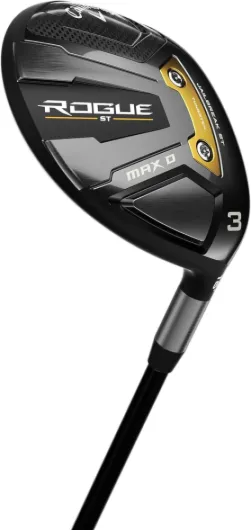
Chunky, confidence-boosting look with a clear draw bias
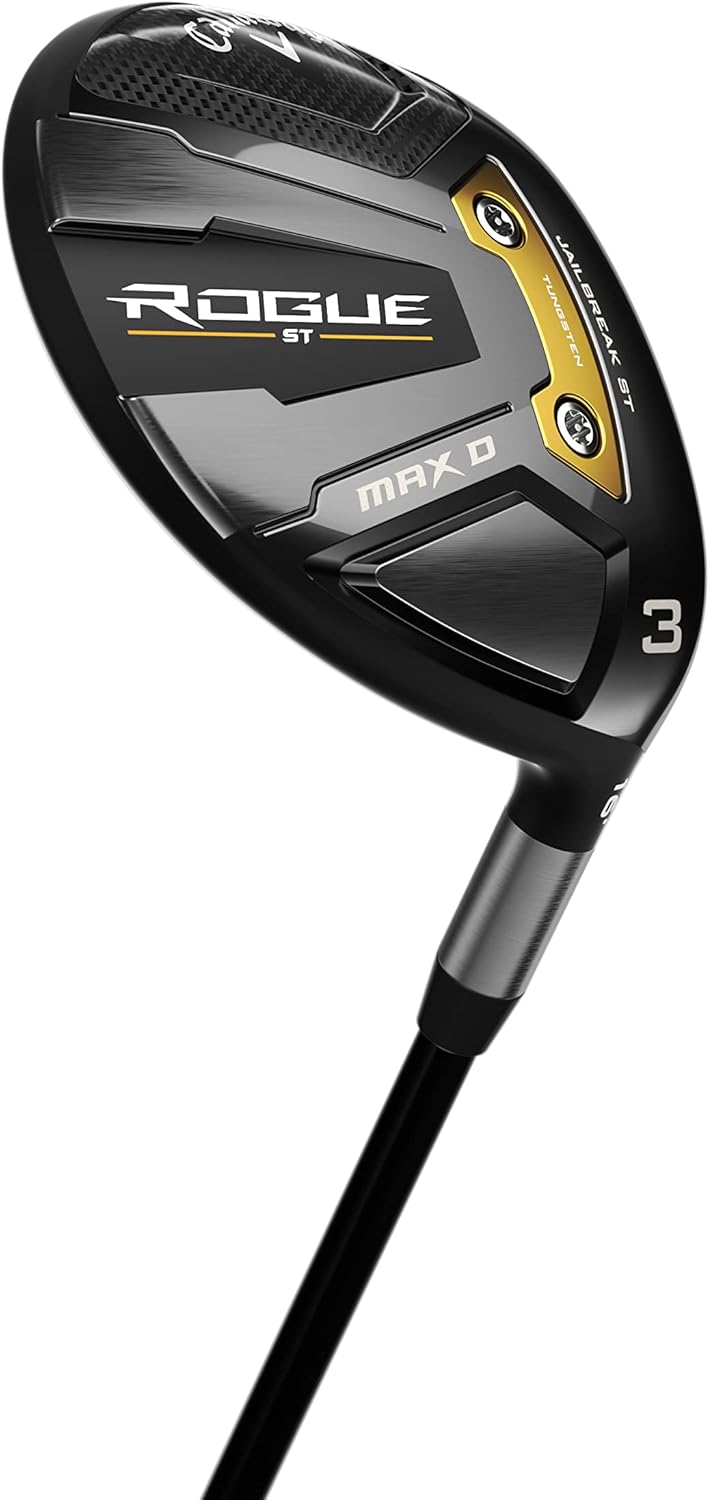
Design-wise, this 5 wood sits in that “modern, slightly chunky” category. The head is on the larger side for a 5 wood, with a deep face and a footprint that fills up the ball nicely at address. For me, that gave a confidence boost off the fairway because it doesn’t feel like you’re trying to hit a tiny blade. If you prefer super compact, traditional fairway heads, you might find it a bit bulky, but as a mid-handicapper I actually liked the size.
The face sets up a bit closed at address. It’s not absurd, but you can see it. Combined with the slightly more upright lie, it clearly wants to help you turn the ball over. On the tee, I noticed that if I made my normal swing, shots started closer to the target line instead of peeling off right. If I really tried to cut it, I still could, but I had to exaggerate it more than usual. So the design does what it says: it leans left for the typical slicer.
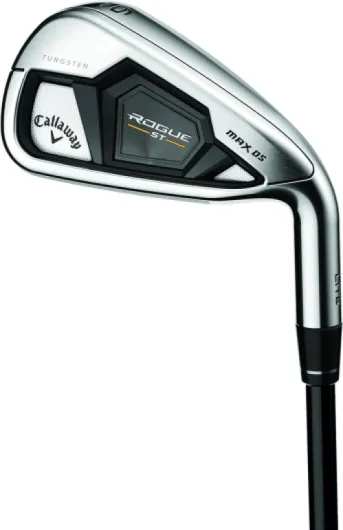
The crown has a clean black/carbon look with the usual Callaway alignment aid near the face. It’s not flashy or weird, just a simple visual guide to center the ball. I did appreciate that the top isn’t overly busy with graphics. The sole, on the other hand, has all the Rogue branding, the Tungsten Speed Cartridge badge, and the Jailbreak callout. You don’t see that at address, but in the bag it looks modern and on the pricier side, which is fine if you like your gear to look current.
One thing I noticed: because of the draw-bias design and upright lie, if I set the club down lightly without gripping it, the face almost wants to point a bit left on its own. Once you get used to how it sits, it’s fine, but the first couple of sessions I had to remind myself not to “correct” it by twisting the face open at address, or I’d fight what the club is trying to do. Overall, the design is clearly aimed at forgiveness and draw help, not at purists who want a super neutral, compact head.
Easy to swing and confidence-boosting, but sound is a bit muted
In terms of comfort, the club is easy to swing. The overall weight with the Ventus 60G regular feels balanced, not too heavy, not too light. I could go through 60–70 balls on the range without feeling like my hands or forearms were cooked. The swing weight feels about right; you can feel the head, but it doesn’t drag you around. For someone around my size and strength (average, not a gym rat), it’s a comfortable setup.
The grip is standard and feels okay, no hot spots or weird tapering that bothered me. I didn’t feel like I had to death-grip the club to keep it secure. Even in slightly humid conditions, it stayed grippy enough. Over time I might switch to a grip I prefer, but that’s more personal taste than a problem with what’s on there. Out of the box, it’s perfectly usable for most players.
One thing I didn’t love is the sound and feel at impact. It’s on the more muted, dull side. Some people like that because it feels more “solid,” but personally I like a bit more crack or pop in my fairways. On center strikes, you get a soft, firm feel, which is fine, but on mishits it can feel a little dead. It doesn’t hurt the hands or anything, it just doesn’t give super lively feedback. If you’re coming from older steel fairways that have a louder sound, this will feel more restrained.
Visually, the larger head and the draw-biased setup give a lot of confidence at address if you struggle with fairway woods. You look down and you feel like there’s enough clubface to actually make contact, and knowing it’s helping you avoid that big right miss takes some mental pressure off. After a couple of rounds, I found myself pulling this instead of my hybrid in more situations just because I trusted it more. So even if the sound isn’t my favorite, the overall comfort and confidence factor is definitely a plus.
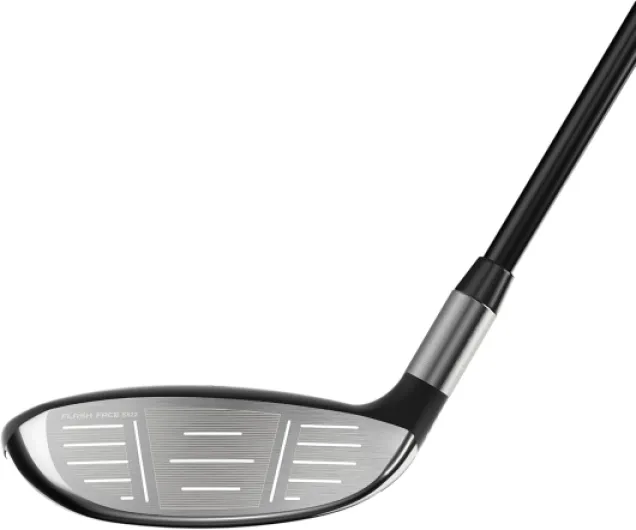
Tech-heavy head, stock shaft that’s fine but not premium
The head uses C300 maraging steel for the face, which is a strong, flexible metal. In real use, what this means is that mishits don’t feel like you’re hitting a rock, and you still get decent ball speed. When I caught shots toward the toe or a bit low, the distance drop-off wasn’t huge. You’ll still know you didn’t pure it, but the club forgives you more than older fairways I’ve played. The Flash Face Cup design also wraps around the face, which is probably part of why low-face strikes still get airborne instead of just skimming the grass.
Inside the head they’ve got the Jailbreak batwings pushed to the perimeter and a Tungsten Speed Cartridge low and forward. I obviously can’t see that while swinging, but the feel backs it up. The head feels stable through impact, not twisty, and the launch is fairly high with moderate spin. I was seeing a nice high flight that landed soft enough to hold greens, which is exactly why I carry a 5 wood instead of just another hybrid.
The shaft, the Ventus 60G regular, is decent. It’s graphite, mid-weight, and feels fairly smooth. It’s not the expensive aftermarket Ventus you see on tour, so don’t expect that. But for a stock option, it’s perfectly serviceable. I didn’t feel like it was too soft for my tempo, and it didn’t feel like a noodle at the top. If you’re super aggressive from the top, you might want to try a stiffer or heavier shaft, but for average swings it’s okay. The balance between head and shaft felt natural; the club doesn’t feel head-heavy or weirdly light.
The grip is synthetic rubber, standard size, and it’s fine out of the box. Nothing special, just a normal grip that doesn’t feel cheap. After a month of use in mixed weather, it’s still tacky enough, no obvious wear yet. If you’re picky about grips, you’ll probably swap it eventually, but you don’t have to do it on day one. Overall, the materials feel solid and durable, but the only thing that really stands out is the forgiving face and stable head. The shaft and grip are more in the “good enough” category rather than something that blows you away.
High launch, straighter flight, and decent distance for mid-handicaps
On the performance side, this 5 wood does what I hoped: it helps straighten out a slice and makes it easier to launch the ball. On my launch monitor sessions, my old 5 wood averaged around 195–200 yards carry with a big dispersion right. With the Rogue ST MAX D, I was seeing more like 200–205 carry, but the main difference wasn’t the extra 5 yards, it was the tighter dispersion. My misses shifted from big right blocks to more manageable pushes or slight draws. On the course, that means I’m hitting more fairways and staying out of the trees on the right.
Ball flight is medium-high for me. With a decent swing, the ball climbs nicely and comes down soft. On par 5s, I was actually holding more greens with this than with my old 5 wood, just because the descent angle was steeper. When I hit it thin, it still got up enough to be usable, instead of being a low runner that ends up short of everything. That’s where the low-and-forward tungsten and the face tech seem to help: mishits are usable, not automatic lay-ups.
Distance-wise, it’s solid but not some crazy cannon. Don’t expect it to suddenly give you 20 extra yards. It’s more about consistent numbers. My good ones were around 210–215 total, average closer to 200–205, which for a regular flex 5 wood at my speed is totally fine. If I really went after it, I could push it a bit further, but then I’d start losing that straight flight and bring the right miss back into play. The club seems to reward a smooth swing more than a violent one.
The only downside in performance is if you already draw the ball or if you have a hook tendency. In that case, this club can go too far left on you. I tried a couple of deliberate draw swings and ended up with some heavy hooks that would be trouble on the course. So the draw bias is real, and that’s good if you need it, but it can be too much if you don’t. Also, into a strong headwind, the higher flight can float a bit, so you might need to choke down or knock it down to keep it under the wind. Overall, though, for an average golfer who fights a slice, the performance is very solid.
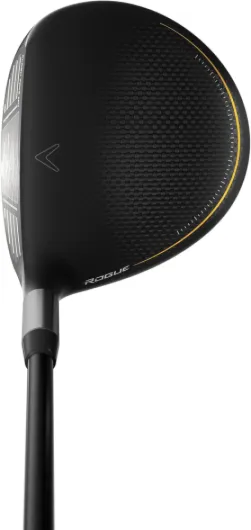
What you actually get with this Rogue ST MAX D 5 wood
On paper, this is a 19° 5 wood with a regular flex Ventus 60G graphite shaft and a standard synthetic rubber grip. It comes with a headcover in the box, nothing fancy, just the club and cover. The head is the Rogue ST MAX D model, which is their draw-biased version, meaning slightly closed face, more upright lie, and extra weight in the heel. That’s all meant to help the face square up or close a bit more at impact if you tend to leave it open.
Callaway talks a lot about the tech: C300 maraging steel face, Flash Face Cup, A.I.-designed face, Jailbreak batwings, Tungsten Speed Cartridge. In practice, what I noticed is: the ball speed is decent even when you miss the center, and the launch stays fairly consistent. On shots I hit low on the face, I still got enough height to carry a hazard, which with my old club usually meant a low bullet that died quickly. So while the buzzwords are marketing, the forgiveness across the face is real enough for an average golfer.
The shaft is labeled Ventus 60G regular, but just to be clear, this is the Callaway stock Ventus, not the high-end aftermarket one with the fancy price tag. It feels medium in weight, not too whippy, not a board either. For my swing speed, it felt pretty well matched. If you swing your driver 105+ mph, you may find it a bit soft and might want stiff, but for the typical mid-handicap speed, regular is fine.
Out of the box, the club was ready to go, grip size was standard and felt comfortable with no need to regrip immediately. There’s no adjustability (no hosel sleeve or movable weights), so what you see is what you get. If you like tinkering with loft and lie, this won’t scratch that itch. But if you just want a plug-and-play 5 wood that leans left for a slicer, the whole package is straightforward and easy to live with.
Pros
- Genuine draw bias that noticeably reduces right misses for slicers
- High, easy launch with good forgiveness across the face
- Comfortable stock setup (Ventus 60G regular and standard grip) that suits most mid-handicap swings
Cons
- Muted sound and chunky head shape won’t suit everyone
- Draw bias can be too strong for players who already hit a straight ball or draw
Conclusion
Editor's rating
After a month with the Callaway Rogue ST MAX D 5 wood, I’d sum it up like this: it’s a very forgiving, draw-biased fairway that actually helps average golfers who slice. It launches the ball easily, keeps mishits usable, and shifts your big miss from wild right to something much more manageable. Distance is solid but not crazy; the real win is consistency and dispersion. The head feels stable, the regular Ventus 60G shaft is comfortable for typical mid-handicap swing speeds, and the overall package is easy to just pull from the bag and trust.
It’s not perfect. The sound is a bit muted if you like a louder crack, the head looks a bit chunky if you prefer compact shapes, and the draw bias can be too much for players who already turn the ball over. Also, if you’re into tweaking loft and lie, the lack of adjustability might bother you. But for the golfer this is aimed at – someone around 12–25 handicap who fights a slice with fairway woods and wants something simple that just works – it gets the job done very well.
If you’re a slicer looking for a reliable 5 wood off the deck and tee, this is worth the money and should be on your shortlist. If you’re a low handicap, already hit a controlled draw, or love a super neutral look and feel, you’re better off with a different model in the Rogue lineup or another brand entirely.