
Summary
Editor's rating
Value for money: good for the right golfer, but not a no‑brainer
Design & looks: modern enough, but nothing jaw‑dropping
Comfort & feel: easy enough to swing, but the feedback is just okay
Materials & build: feels mid‑range, with some concerns
Durability & warranty: the weak point, especially via Amazon
Performance: does it actually fix the slice?
What this driver actually is (beyond the hype)
Pros
- Noticeably reduces slice for typical right‑handed slicers, turning big misses into more playable shots
- Easy to swing with built‑in draw bias and 12° loft that help launch and face closure
- Priced below most big‑brand flagship drivers, decent value if you specifically need slice help
Cons
- Feel and sound are average at best, not as solid or satisfying as major brand drivers
- Questionable warranty support when purchased through Amazon despite advertised 365‑day coverage
- Draw bias can send shots left if you already hook the ball or overcorrect your swing

Specifications
View full product page →| Brand | Performance Golf |
A driver that promises to fix your slice for you… does it really?
I picked up the Performance Golf SF1 driver for one simple reason: my tee shots with the driver are usually a weak slice that bleeds right and loses a ton of distance. I’m not a teaching pro, I’m a mid‑handicap weekend player who just wants the ball somewhere near the fairway without aiming 30 yards left. The ads for this thing are everywhere, and the message is basically: "you slice, this club fixes it for you." So I wanted to see if that holds up on an actual course, not just in a launch monitor video.
Over a few weeks, I used the SF1 as my main driver: range sessions, a couple of 9‑hole twilight rounds, and three full 18‑hole rounds. I rotated it against my usual driver (a more traditional 10.5° from a big brand with a regular shaft) so I could compare back‑to‑back on the same day. I’m around 90–95 mph clubhead speed, so pretty typical for a regular flex, and my miss is almost always a high right shot.
From the start, I tried to swing the same way I normally do. No special setup, no big grip changes, just my usual flawed swing. I wanted to see if this “square face” and draw bias actually did something or if it was just marketing. I also paid attention to feel, sound, and whether the club was doing anything weird like forcing the ball left too much.
Overall, it does help with the slice, but it’s not magic and it’s not perfect. You can still hit a bad one if your swing is really open, and there are a few trade‑offs you notice after a couple of rounds – especially on feel, forgiveness on toe/heel strikes, and the whole warranty situation if you bought it on Amazon. I’ll break down what worked for me, what didn’t, and who I think this driver is actually suited for.
Value for money: good for the right golfer, but not a no‑brainer
Price‑wise, the SF1 usually sits under the big‑name flagship drivers, often under the $200 mark when on sale. For a dedicated slice‑fixing driver, that’s not bad, especially if you compare it to paying for a brand‑new premium driver plus lessons. If it truly helps you keep more tee shots in play, that alone can make a casual golfer feel like they got their money’s worth.
In terms of performance per dollar, I’d say it’s good value specifically for chronic slicers who don’t want to mess with fittings and just want something that fights their usual miss. If you’re a mid‑handicap or higher who loses two or three balls a round to a right miss, even a modest improvement is worth some money. Compared to my regular driver, I wasn’t suddenly shooting career rounds, but I did notice fewer unplayable tee shots, which matters more than a few yards of extra distance.
Where the value takes a hit is everything around the club: the slightly cheapish feel and sound, the mid‑tier finish, and most importantly the warranty drama when bought through Amazon. Knowing that the manufacturer might not honor their 365‑day promise if you don’t buy directly makes the purchase feel a bit riskier. Also, if you’re already a decent driver of the ball or your miss is left, then this club doesn’t really offer you much – in that case, the money is better spent on a fitting or a more neutral driver from a major brand.
So overall, I’d call the value situational. For a right‑handed golfer who slices a lot, plays mostly casual rounds, and wants a plug‑and‑play solution, the SF1 can be a pretty solid buy at its price. For more serious players, or anyone picky about feel, brand support, and long‑term durability, it’s more of a gamble and not the obvious choice.
Design & looks: modern enough, but nothing jaw‑dropping
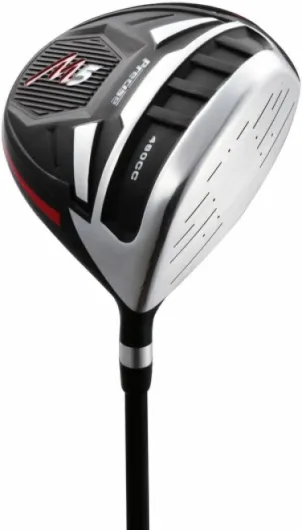
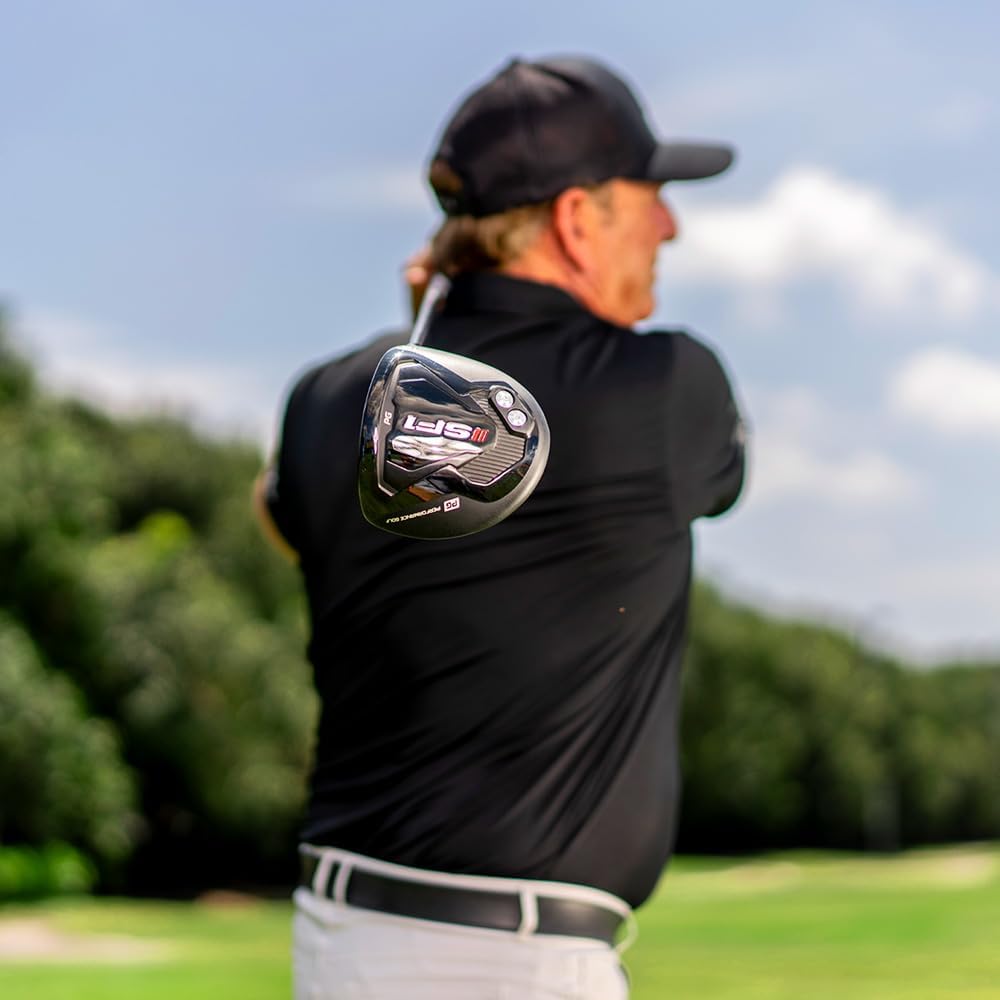
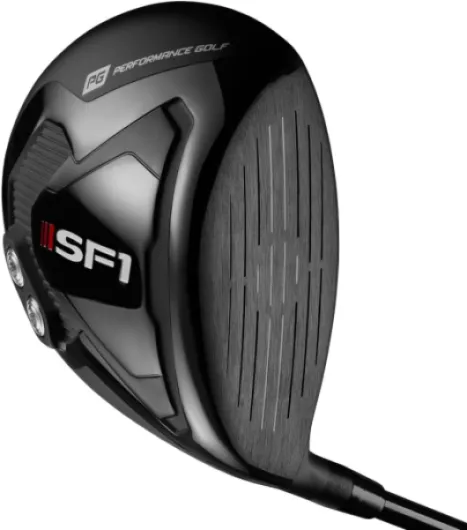
Visually, the SF1 is pretty clean. It’s mostly black, with a modern‑looking crown and a shape that sits somewhere between traditional pear‑shaped and slightly square at the back. At address, the 12° loft and the draw‑biased setup make the face look a touch closed if you’re used to a neutral driver. For someone who slices, that’s actually comforting: it feels like the club is already trying to help you turn it over.
The brand talks about "AeroSquare Crown" and race‑car inspired tech. On the course, it just looks like a slightly boxier back edge with some shaping to supposedly help aerodynamics. I can’t say I felt any special speed boost from the crown shape alone. If anything, it just looks like a typical modern game‑improvement driver – not ugly, not beautiful, just decent. You won’t be embarrassed pulling it out, but nobody is going to crowd around the tee to admire it either.
One thing I noticed is the alignment at address: because of the built‑in draw bias and face angle, if you set the club down naturally, it wants to aim a hair left (for a right‑handed player). For me, that was actually helpful, because I tend to aim a bit right to compensate for my slice. With this, I could set up more square and trust that the ball wasn’t going to peel off into the trees. But if you already aim straight, you might need a round or two to get used to what “square” looks like with this head.
Overall, the design is practical more than sexy. It looks like a mid‑priced driver trying to solve a specific problem. If you’re used to top‑tier brand finishes and super polished detailing, this will feel a bit more basic. But if you just care that it looks modern and not like a cheap toy, it passes that test. It’s fine, just not something you’ll rave about looks‑wise.
Comfort & feel: easy enough to swing, but the feedback is just okay
From a comfort point of view, the SF1 is pretty easy to swing. The counterbalanced shaft and draw bias make the head feel like it wants to rotate through impact without you having to force it. For a chronic slicer, that’s actually nice: you don’t feel like you’re fighting to square the face every swing. After a couple of range sessions, I felt like I could make a relaxed swing and still see the ball starting more on line instead of bleeding right immediately.
The grip is standard size and basic rubber. If you have medium‑sized hands, it’s fine. I didn’t get any hotspots or blisters, even after banging out a bunch of balls at the range. That said, it doesn’t have the same tacky, cushioned feel you get from something like a Tour Velvet or a more premium grip. If you’re picky about grips, you’ll probably want to swap it out, but for a lot of casual players it will be totally acceptable out of the box.
Where I was a bit underwhelmed is the feel and sound at impact. It has that louder, slightly hollow metallic sound that some people like and some hate. To me, it sounded and felt a bit cheap compared to my usual driver. Center strikes feel decent – you can tell when you’ve hit it well – but off‑center hits don’t give super clear feedback on where you missed. It’s more of a general “meh” feeling rather than a precise “that was off the toe” or “that was low on the face.”
Overall, on comfort and feel, I’d say it’s easy to live with and not fatiguing to swing, but it doesn’t feel particularly refined or satisfying. If all you care about is that it doesn’t hurt your hands and you can swing it for 18 holes without feeling like you’re wrestling the club, it does the job. If you’re more sensitive to feel and sound, you’ll notice it’s a step down from the major brands’ better drivers.
Materials & build: feels mid‑range, with some concerns
On paper, the materials are pretty standard for this type of club: carbon fibre head, alloy steel shaft, and synthetic rubber grip. The head feels reasonably light, and the shaft feels like a normal regular flex – not whippy, not boardy. The grip is a basic standard‑size rubber grip. It’s not as tacky or cushioned as some premium grips, but it’s serviceable and I didn’t feel a need to swap it immediately.
In hand, the club doesn’t scream premium, but it also doesn’t feel like a bargain‑bin special. The paint and finish on the head look okay, though after a few rounds I did see some light scuffing on the sole and minor marks on the crown from bag chatter. That’s normal for most drivers, but compared to my big‑brand driver, the finish on the SF1 seems to mark up a bit faster. Not a deal‑breaker, just something you notice after throwing it in and out of the bag.
The bigger concern is durability based on user reviews. There’s at least one verified review mentioning the head breaking off after about three months and the manufacturer refusing to honor the 365‑day warranty because it was bought through Amazon. I didn’t have anything that dramatic happen during my test period, but I obviously didn’t put months and months of heavy use on it. If multiple people are reporting head or shaft issues over time, that’s something to keep in mind if you’re planning to make this your main driver for a whole season or more.
So in terms of materials and build, I’d call it mid‑range quality with a question mark on long‑term durability and warranty support. It feels fine in the hands and on the course, but you don’t get that rock‑solid confidence you get from the top OEMs. If you treat your clubs decently and don’t swing out of your shoes, you’ll probably be okay. But the combination of a mid‑tier build and a sketchy warranty situation through Amazon drags the score down for me.
Durability & warranty: the weak point, especially via Amazon
In my own testing window, I didn’t have any catastrophic issues: no loose head, no cracked face, no shaft problems. Just normal wear – some scuffs on the sole and a few light marks on the crown from use. That said, my use was over weeks, not an entire season, and I don’t swing at tour‑level speed. So I can only speak to short‑term durability, which seemed okay but not bulletproof.
The bigger red flag comes from user reviews and the warranty story. One verified buyer mentioned the head breaking off after about three months, and when they contacted Performance Golf, they were basically told the 365‑day warranty doesn’t apply if you bought the club through Amazon. That’s pretty frustrating when the listing says it’s sold by Performance Golf, just shipped by Amazon. Most people reasonably assume the manufacturer will still stand behind their product if it’s a legit listing.
From a buyer’s perspective, that means two things: first, you’re mostly covered by Amazon’s typical return window (around 30–90 days depending on the situation), and after that you’re kind of on your own if Performance Golf refuses to help. Second, if you plan to use this as your primary driver for a whole year or more, you’re taking a bit of a gamble on how well it will hold up and whether you’ll have any support if something fails.
So while short‑term durability feels acceptable, the combination of mid‑tier build quality and a shaky warranty stance through Amazon makes me cautious. If you can buy it directly from the manufacturer and actually get the full warranty in writing, that might ease some concerns. But based on the Amazon experience, I’d say: don’t expect the same level of support you’d get from the big golf brands if something goes wrong down the line.
Performance: does it actually fix the slice?
This is the big question. For me, yes, it reduced my slice noticeably, but it did not completely erase it or turn every drive into a draw. On my usual driver, a typical bad swing is a high slice that ends 20–30 yards right of where I aimed. With the SF1, that same swing pattern tended to produce more of a gentle fade that finished maybe 5–15 yards right instead of in the trees. That’s a real, practical difference on the course.
On my better swings, I actually saw some straight shots and the occasional small draw, which I almost never get with my normal setup. That lines up with some of the positive reviews where people say they "almost never slice" with it. I wouldn’t go that far, but I’d say my really ugly slices dropped a lot in frequency. If I had to put numbers on it: maybe 60–70% of my usual bad slices turned into playable fades, and only the worst swings still produced the big wipey shot.
Distance‑wise, I was pretty similar to my regular driver, maybe a touch shorter on pure carry but more often in play. A straight or slight fade that’s 5 yards shorter is still better than a bomb that’s 30 yards into the rough. On center strikes, I didn’t feel like the SF1 was any hotter than my usual driver, but it wasn’t a noodle either. Ball speed felt fine for a mid‑handicap player – you’re not losing massive distance unless you’re a very high swing‑speed player who needs a stiffer shaft.
The downside is that this thing really wants to go left if you already fight a hook or if you overcorrect. On a couple of swings where I tried to "help" it turn over, I hit some pretty nasty left‑starting shots that stayed left. So if your miss is already left, this club is the wrong tool. And it’s not a substitute for fixing a really bad swing path. If you’re coming massively over the top with the face wide open, it can only do so much. But for a typical weekend slicer, it does help bring the ball back into a playable window more often.
What this driver actually is (beyond the hype)
The SF1 driver is sold as a "slice fixer" more than a general‑purpose driver. That’s important to understand up front. It’s a 12° loft, right‑handed, regular flex driver with a carbon fibre head, alloy steel shaft, and a standard synthetic rubber grip. So on paper, it’s a pretty standard game‑improvement driver, but everything is tuned to make the face close easier and promote a draw or at least a straighter ball flight.
The brand talks a lot about "Square Face Technology," "Draw Calibrated Face Angle," and "Counter‑Slice Weights." In normal language, that just means the face is slightly closed at address, the weight is biased towards the heel, and the shape of the crown is designed to help the club rotate through impact. If you’ve used other draw‑biased drivers from big brands, conceptually it’s similar: it’s trying to help you turn the ball over and reduce that open‑face impact that creates a slice.
Out of the box, you don’t get a bunch of adjustability like movable weights or an adjustable hosel with 10 settings. What you see is what you get. For some people, that’s nice: you just pull it out, tee it up, and swing. For gear nerds who like to tweak loft and lie, this will feel pretty basic. The included components are minimal: just the club, no fancy extras or elaborate headcover experience. It’s very much "here’s the driver, go hit it."
In practice, the overall concept is pretty simple: this is a driver built for chronic slicers who don’t want to mess with swing mechanics too much. If you already hit a draw or straight ball, this is probably not for you. If you’re used to big‑name drivers that chase maximum distance first and forgiveness second, this feels a bit more like a tool for a specific problem rather than a do‑everything flagship club.
Pros
- Noticeably reduces slice for typical right‑handed slicers, turning big misses into more playable shots
- Easy to swing with built‑in draw bias and 12° loft that help launch and face closure
- Priced below most big‑brand flagship drivers, decent value if you specifically need slice help
Cons
- Feel and sound are average at best, not as solid or satisfying as major brand drivers
- Questionable warranty support when purchased through Amazon despite advertised 365‑day coverage
- Draw bias can send shots left if you already hook the ball or overcorrect your swing
Conclusion
Editor's rating
For what it’s built to do – help a right‑handed golfer reduce a persistent slice – the Performance Golf SF1 driver actually delivers to a reasonable degree. In my rounds, the big banana balls turned into more playable fades, and I even saw the occasional straight shot or small draw, which is rare for me. It’s easy to swing, the draw bias is noticeable without being insane, and for a lot of weekend players that alone will make golf a bit less frustrating off the tee.
But it’s not a miracle club. You can still hit bad shots, and if your swing is really off, the SF1 can’t fix everything. The feel and sound are just okay, not great, and the build quality feels mid‑range rather than premium. The biggest downside for me is the warranty situation when buying through Amazon – knowing that the manufacturer may not back the 365‑day warranty in that case is a real negative, especially when there are reports of heads breaking after a few months.
I’d recommend this driver mainly to right‑handed golfers who slice a lot, don’t want to spend big money on a top‑tier brand, and are fine with a club that’s a specialized tool rather than a perfect all‑rounder. If you already hit it straight or fight a hook, or if you care a lot about feel, long‑term durability, and strong brand support, I’d skip this and look at a more traditional driver from a major manufacturer, maybe combined with a lesson or two.