
Summary
Editor's rating
Is it worth the money versus big-name drivers?
Big, friendly head built to calm your nerves on the tee
How it feels to swing for a full round
Titanium, carbon and tungsten – modern tech but on a budget
Build quality after a few weeks of abuse
Forgiveness and distance where it matters
What you actually get out of the box
Pros
- Very forgiving head with high‑MOI design that keeps mishits more playable
- Heel and rear tungsten weight options plus adjustable loft help reduce slices and fine‑tune launch
- Good value for money compared to new big‑brand drivers with similar modern features
Cons
- Sound and feel are a bit tinny and harsh compared to premium drivers
- Stock Lite shaft and basic rubber grip feel budget and may not suit stronger players

Specifications
View full product page →| Brand | BENROSS |
A budget driver for people who just want the ball in play
I’ve been gaming the Benross RS MAX Driver (10.5°, Lite flex, right-handed) for a few rounds now, plus a couple of range sessions. I’m very much a mid‑to‑high handicap weekend golfer, not some scratch player, so I’m judging this from a regular golfer’s point of view: does it help keep the ball in play and give decent distance without costing a fortune?
Before this, I was using an older Callaway driver from about 2016 with a regular flex shaft. My main issues: big wipey slices when I got lazy, and a low, spinny flight that just dropped out of the sky. When I saw this RS MAX was meant to be “max forgiveness” with heel‑biased weighting and a Lite shaft, I figured it might help smooth things out.
I took it to the range first, then onto my usual course over three 18‑hole rounds. I paid attention to how it felt on center strikes, how much it punished mishits, and whether it actually helped my usual right‑miss. I also messed around with the adjustable loft sleeve and the tungsten weights to see if they made a noticeable difference or if it was just marketing talk.
Overall, it’s not magic, but it does what it says in a pretty honest way: it makes bad swings a bit less painful and gives you a friendly, confidence‑boosting look behind the ball. There are definitely some compromises, especially on feel and sound compared to big brands, but for the price range it sits in, it’s a pretty solid option for the average golfer who just wants easier tee shots.
Is it worth the money versus big-name drivers?
Value is where this driver makes the most sense. It usually sits well below the price of current‑year drivers from TaylorMade, Callaway, Titleist, etc. You’re not getting the latest fancy tech from the tour trucks, but you’re also not paying top‑shelf prices. For that lower price, you still get a high‑MOI head, carbon crown, adjustable loft, and tungsten weighting. That’s a lot of modern features for a budget‑friendly club.
In terms of performance per pound (or dollar), I’d say it’s pretty solid for mid‑to‑high handicappers. If you’re coming from a driver that’s 5–10 years old, you’ll likely see a bit more forgiveness and a slightly higher, friendlier ball flight. Is it as good as the latest big‑brand driver if you hit both perfectly? Probably not. But the gap isn’t huge for the typical golfer, and the price difference is. That’s where the value shows: you save money but still get a driver that makes tee shots easier.
Where you do feel the cheaper price is in the little things: the sound is more metallic, the grip is basic, and the overall finish isn’t as polished. If those details matter a lot to you and you’ve got the budget, you might be happier stretching for a big‑name model, especially if you’re already a decent ball striker. But if your main goal is "more fairways and less slice" rather than "maximum feel and prestige", this does the job without draining your wallet.
So, compared to a used big‑brand driver from a couple of years ago, it’s a bit of a toss‑up. A used premium driver might feel nicer but be less forgiving if it’s not the right model for you. The RS MAX, on the other hand, is clearly built to be forgiving first. For a beginner or improving player who wants something new, with a warranty and modern forgiveness, I’d say the value is good. Not mind‑blowing, but sensible and fair for what you get.
Big, friendly head built to calm your nerves on the tee
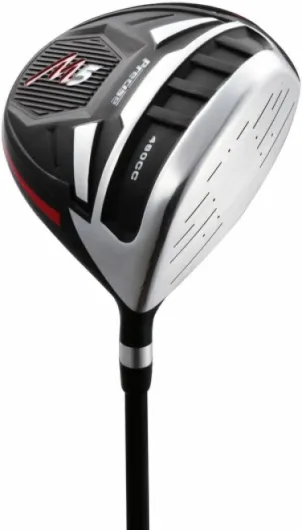
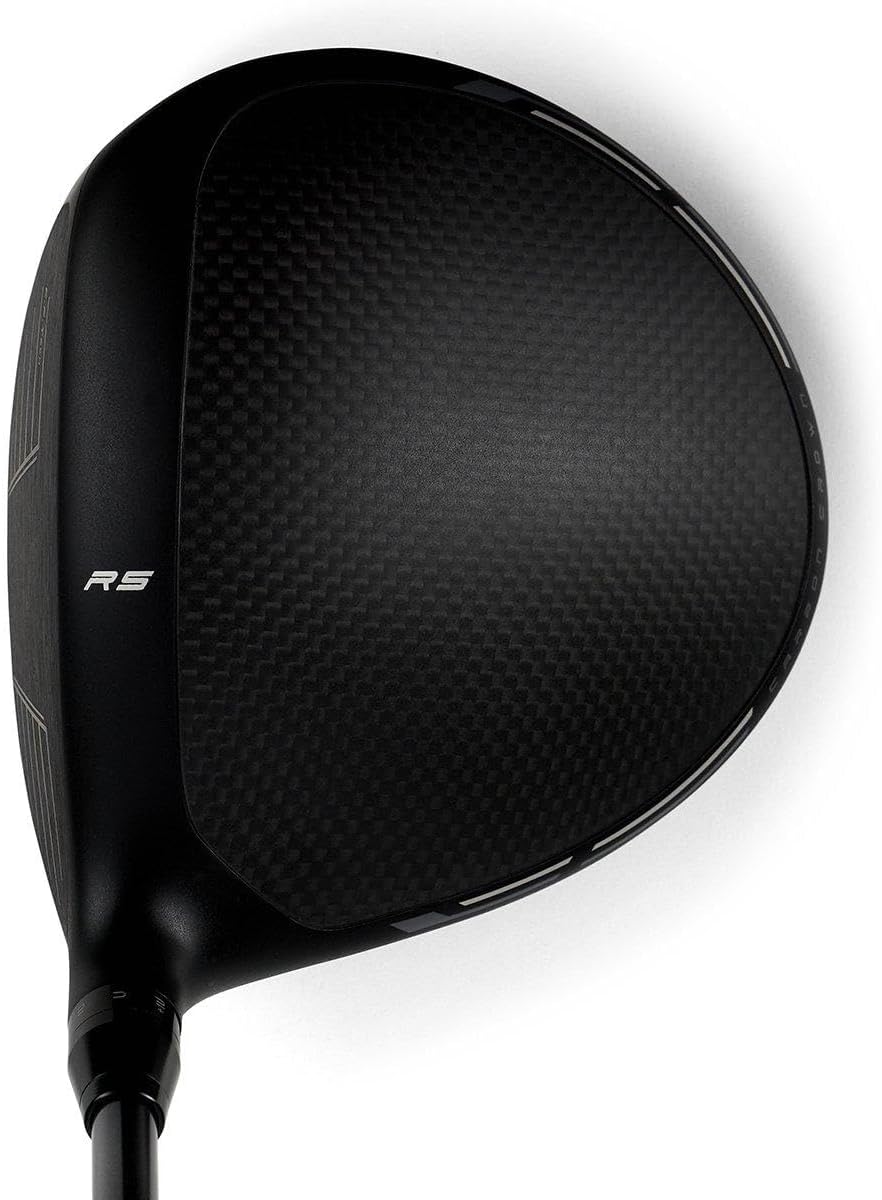
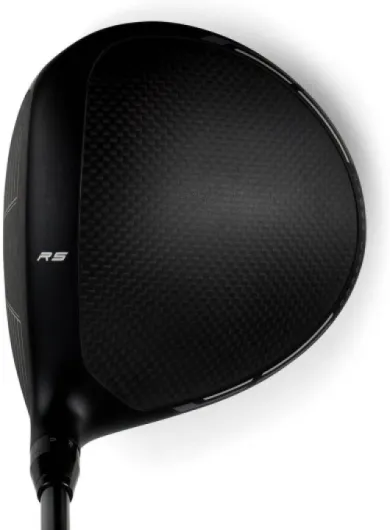
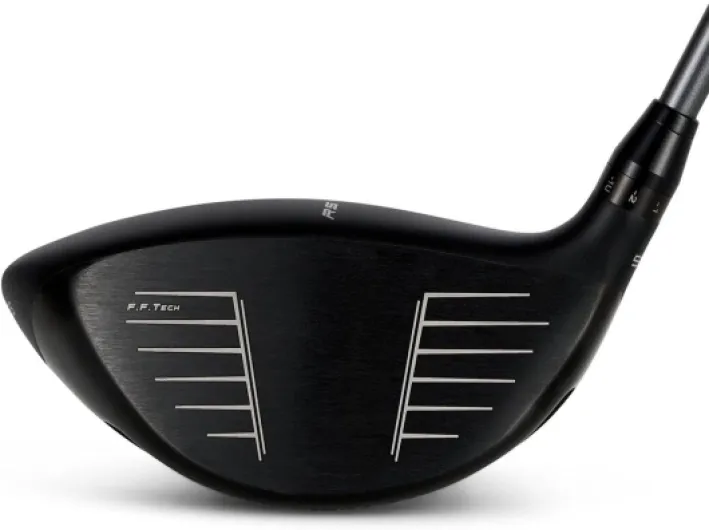
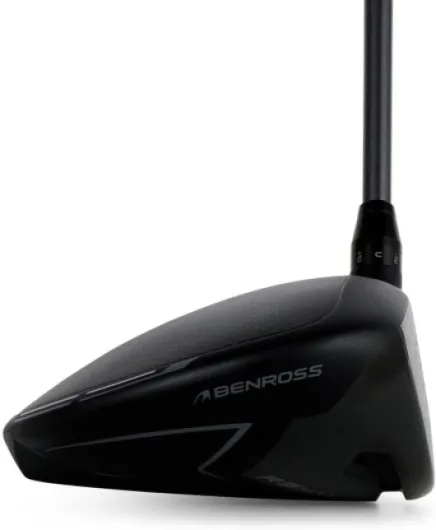
The design of the RS MAX is clearly aimed at golfers who want confidence at address more than anything else. The head is large and has that "big footprint" look when you put it behind the ball. For me, that instantly made me feel a bit more relaxed, because it looks like there’s a lot of face to hit. The profile is more rounded and stretched back, which fits with the whole high‑MOI, maximum forgiveness idea.
From above, the carbon crown is visible but not flashy. It’s mostly a matte/dark finish, which I appreciated because it cuts glare. There are some simple alignment cues that help set up square without overthinking it. I’m not into busy graphics on the crown, so this cleaner look worked for me. At address, the club sits fairly neutral, but with the heel‑biased weighting and the adjustable hosel, you can make it look a touch more closed if you want extra help against a slice.
One design choice that stands out is the tungsten weighting: you get an 18 g and a 2 g weight that you can swap between the rear and heel positions. Out of the box, mine came with the heavier one in the back, which is the safer, more forgiving setup. I tried switching the 18 g into the heel just to see, and it definitely made it easier to turn the ball over, but it also made the head feel slightly more unstable on mishits. So design‑wise, you can tune it a bit depending on whether you want pure forgiveness or more draw bias.
The only downside in design for me is the sound and feel, which tie into how the head is built. It has that slightly hollow, metallic "ping" that screams budget driver, especially on thin shots. It’s not painful, just not as muted or solid as some premium drivers I’ve hit. If you’re not too fussy about acoustics, you’ll live with it, but if you’re picky about sound and feel, you’ll notice that this is where Benross clearly isn’t competing with the top‑tier stuff.
How it feels to swing for a full round
Comfort for a driver is mostly about swing weight, shaft feel, and how tiring it is to hit it 14 times a round. Over three full rounds plus range time, I didn’t feel any fatigue issues with the Benross RS MAX. The Lite graphite shaft and the head weighting combine to give a club that feels easy to get moving, especially if your swing speed isn’t high. I’m not exactly a gym rat, and even at the end of a long round it still felt manageable.
The balance with the 18 g weight in the back is quite friendly. You can feel the head, but it doesn’t feel like you’re swinging a sledgehammer. For smoother tempos, that’s nice because it encourages you not to lunge at it. When I tried the heavier weight in the heel, I noticed the head felt a bit more "tippy" during the transition, which took me a few shots to adjust to. If you’re sensitive to swing weight changes, you’ll probably stick with the heavy weight in the rear for comfort and stability.
The grip is where comfort drops a bit. It’s standard rubber and not particularly tacky. In dry conditions it’s fine, but on a slightly sweaty day I did feel my hands move a bit more than I’d like. I ended up wearing a glove on both hands during one range session just to see the difference, and that helped a lot. So comfort‑wise, the stock grip is usable, but it’s not something I’d want to keep for years. It’s one of those "it works, but you can do better for cheap" situations.
In terms of feel at impact, comfort is mixed. Center strikes feel decent, with a bit of spring off the face, but mishits (especially low on the face) can feel harsh and a bit tinny. It’s not painful, just not very soft or muted. If you’re used to higher‑end drivers that feel buttery when you catch them right, this will feel more basic. Still, for the typical player looking at this price range, the overall comfort is acceptable: easy to swing, not too heavy, and only let down slightly by the stock grip and the slightly harsh feel on bad strikes.
Titanium, carbon and tungsten – modern tech but on a budget
On paper, the RS MAX uses the same kind of materials you see on more expensive drivers: a titanium body, a lightweight carbon crown, and tungsten weights in the sole. In practice, that combination is there mainly to shift weight low and back to help with launch and forgiveness. The carbon crown does feel light when you swing it, and you can tell they’ve tried to pull mass away from the top of the head so they can stick it down low.
The titanium face has what they call FFT (Fast Face Technology), basically variable face thickness. I can’t see that with my eyes, obviously, but on the range I could feel that toe and heel strikes didn’t die as badly as with my old driver. Ball speed still drops if you miss it badly, but for slight mishits, the material and face design do a decent job of keeping the shot usable. It’s not magic, but it’s better than older, simpler faces I’ve used.
The shaft is a Lite graphite, and it feels like a true light flex – a bit softer and easier to load than a regular flex. For my swing (somewhere in the 80–90 mph driver speed range), it actually matched up pretty well. If you’re a stronger player, I think this shaft will feel too soft and you might fight a left miss. The grip is plain rubber, standard size, and honestly just okay. It works, but it feels a bit cheap and I’d probably swap it for something grippier after a season or even sooner if you play a lot in the rain.
Overall, the materials are modern enough to justify the design claims (high MOI, low/deep CG, etc.), but you can feel that they’re not as refined as the big‑brand premium offerings. The face and head materials get the job done for distance and forgiveness, but the shaft and grip are more "good enough" than "nice". For the price bracket this driver usually sits in, that trade‑off is reasonable, but if you’re picky about components, you’ll probably want to budget for a grip change and maybe a different shaft down the line.
Build quality after a few weeks of abuse
Durability is always tricky to judge long‑term, but after a few weeks of use I can at least comment on the early signs. I’ve hit a couple of hundred balls on the range with it and played three full rounds. The head shows the usual face ball marks, but nothing unusual: no dents, no weird paint chipping around the edges, and the carbon crown still looks intact with no cracks or bubbling.
The sole does pick up scratches quite quickly, especially if your range mats are a bit rough or you accidentally clip some gravel near the tee boxes. The black finish on the sole shows wear more than a raw metal finish would. It’s purely cosmetic, but if you like your clubs looking pristine, this will annoy you a bit. Personally, I don’t care much once I’ve teed off, but it’s worth mentioning.
The shaft has held up fine. No signs of twisting, no odd noises, and the connection at the adjustable hosel still feels tight. I removed and reinstalled the weights a few times to test the draw and rear setups, and the screw threads held up without stripping or feeling loose. Just use a proper torque wrench and don’t go full gorilla on it. The grip, as I said earlier, feels cheapish, and I can already see it getting shiny in the usual spots. It’s not falling apart, but I wouldn’t expect it to last more than a season or so if you play a lot.
Given that it’s made in China and priced lower than the big names, I didn’t expect top‑tier finishing. What I got was a club that feels structurally sound, with normal cosmetic wear and a grip that’s just okay. If you treat your gear reasonably and don’t throw the club around after bad shots, I don’t see any immediate red flags on durability. Just be ready for the sole to look used quite fast and plan on a grip change at some point.
Forgiveness and distance where it matters
Performance is where this driver actually makes sense. I’m not chasing tour‑level ball speeds; I just want more fairways and a playable second shot. Compared to my older Callaway driver, the Benross RS MAX gave me a higher launch and slightly more carry on average. My usual low, spinny drives turned into a more mid‑high flight that landed softer and rolled a bit less, but overall distance was a touch better, especially on my average swings.
The big win for me was forgiveness. With my old driver, a toe strike could easily bleed 30+ yards right and lose a ton of distance. With the RS MAX, those same swings still leaked right, but they stayed in or near the rough instead of going into the trees. The high MOI design and the rear weighting do seem to keep the face more stable. The FFT face also helps – toe and heel strikes still feel off, but the ball doesn’t come off dead. It’s more like you lose 10–15% instead of 30% distance on those minor mishits.
The heel‑biased tungsten option is useful if you fight a slice. When I swapped the 18 g weight into the heel and set the loft sleeve slightly higher (which also closes the face a touch), I saw my usual right‑miss turn into more of a gentle fade or even a straight ball. The trade‑off was that my left‑miss got worse if I really flipped my hands, so you need to know your tendencies. But for someone who is constantly bailing out right, that setup could be a big help.
In raw numbers (based on range launch monitor, so not super scientific), my clubhead speed stayed about the same, but my ball speed on average went up a bit because my strikes were more consistent. Carry distance went up by around 5–10 yards on average, and my dispersion left‑to‑right tightened noticeably. It’s not night‑and‑day, but it’s enough to matter on the course. If you already hit the middle of the face a lot with a modern driver, you might not see a big gain. But if you’re a mid‑handicap who sprays it a bit, the RS MAX does a solid job of turning bad drives into okay ones.
What you actually get out of the box
Out of the box, the Benross RS MAX looks like a modern driver with all the buzzwords: carbon crown, titanium body, adjustable hosel, interchangeable tungsten weights. In practice, you’re getting a 10.5° head that you can tweak ±2°, a Lite graphite shaft, a standard rubber grip, and a headcover. That’s it, no fancy extras, but it covers the basics. The club I had was the black version, 10.5 Lite, made in China, with a one‑year guarantee.
The headcover is decent but nothing special. It’s padded enough to protect the head, but the material feels a bit cheap compared to what you get from bigger brands. It slips on and off without a fight though, and after a few rounds it didn’t show much wear, so functionally it’s fine. Just don’t expect anything flashy. The branding is pretty low key, which I actually liked – it doesn’t scream for attention in the bag.
The first thing I noticed when I picked it up is the overall weight and balance. With the heavy 18 g weight in the back, it feels slightly head‑heavy, but not in a tiring way. For my swing speed (on the slower side), the Lite shaft and that head weight made it easy to feel the clubhead during the swing. If you’re used to stiffer or heavier setups, it might feel a bit whippy, but if you’re a slower swinger, it actually makes sense.
On the info side, the loft and flex labels are clear, and the adjustable hosel markings are easy enough to understand. You don’t get a fancy tool in the box (I used a generic torque wrench I already had), so keep that in mind. Overall, the presentation is straightforward: no frills, but it gives you a modern‑looking driver with the key adjustability options without adding clutter or gimmicks.
Pros
- Very forgiving head with high‑MOI design that keeps mishits more playable
- Heel and rear tungsten weight options plus adjustable loft help reduce slices and fine‑tune launch
- Good value for money compared to new big‑brand drivers with similar modern features
Cons
- Sound and feel are a bit tinny and harsh compared to premium drivers
- Stock Lite shaft and basic rubber grip feel budget and may not suit stronger players
Conclusion
Editor's rating
After a few weeks with the Benross RS MAX Driver, my overall feeling is that it’s a practical choice for mid‑to‑high handicappers who want an easier life off the tee without paying premium prices. The main strengths are the forgiving head shape, the high‑launch flight, and the helpful weighting options for anyone who fights a slice. It doesn’t suddenly turn you into a bomber, but it does make your average and slightly off‑center hits more playable, which is what most of us actually need.
It’s not perfect. The sound is a bit tinny, the stock grip is just okay, and feel on mishits is on the harsher side compared to top‑tier drivers. Better players with higher swing speeds will probably find the Lite shaft too soft and might want more precise feedback. But for slower to moderate swing speeds and people who mainly care about keeping the ball in play, it gets the job done in a sensible way.
If you’re a beginner, a casual golfer, or a mid‑handicapper on a budget, this driver is worth a serious look. If you’re already consistent, care a lot about feel and sound, or you like tinkering with high‑end shafts, you’re probably better off with a big‑brand head and a custom setup. For the rest of us who just want to stand on the tee, see a big friendly head, and know that a slightly off swing won’t ruin the hole, the RS MAX is a solid, no‑nonsense option.