
Summary
Editor's rating
Is it worth the money versus a normal driver and 3‑wood?
Head shape, sole, and how it sets up behind the ball
Feel in the hands and swing comfort for slower speeds
Stainless head and graphite shaft: decent but not premium-feeling
How it holds up after regular use
Distance, launch, and forgiveness on the course
What this TEELESS driver actually is (and isn’t)
Pros
- Very easy to launch thanks to 13° loft and forgiving sole
- Usable off the tee and off the deck, even from light rough and scruffy lies
- Lightweight senior flex shaft is comfortable for slower swings and older players
Cons
- Not as long as a modern, well‑fit driver for stronger players
- Muted feel and basic grip; materials don’t feel premium
- Value is only decent if it truly replaces both your driver and 3‑wood

Specifications
View full product page →| Brand | TEELESS |
A driver for people who hate their driver
I picked up the TEELESS (T)Less Driver out of frustration more than anything. My normal driver has a mind of its own, and hitting a 3‑wood off the deck is hit-or-miss for me. The idea of one club I could hit off a tee or straight from the fairway or rough sounded pretty appealing, especially with that 13° loft and the promise that you "can’t chunk it". I went in pretty skeptical, because that kind of claim usually ends in disappointment on the course.
Over about three weeks, I used this club every round, plus a couple of range sessions. I’m a mid‑handicap, swing speed is not what it used to be, so I went with the senior flex, right‑handed version. I swapped it in for my driver and my 3‑wood to see if it could really replace both. I tested it off the tee with and without a tee, from fairway lies, light rough, heavier rough, and a couple of sandy, scruffy spots where I’d never even think about hitting my normal driver.
My main takeaway: this club is built to give you easy launch and decent forgiveness, not to squeeze every last yard like a modern name‑brand driver. When you swing smooth and don’t overswing, it behaves pretty nicely. When you get greedy and start going after it like a regular driver, you feel its limits pretty quickly. It’s more of a control and confidence club than a pure bomber.
So if you expect it to magically add 30 yards, you’ll be disappointed. But if you’re tired of topping 3‑woods and skulling drivers, it actually brings some value. It’s not perfect, and there are things that annoyed me, but it did enough right that I kept it in the bag for certain courses and tight tee shots.
Is it worth the money versus a normal driver and 3‑wood?
Value is where you really have to be honest with yourself about your game. The TEELESS Driver sits in that awkward middle ground: it’s not as cheap as a bargain‑bin club, and it’s not as pricey as the latest big‑brand driver. For the price, you’re basically paying for the concept: one club that can replace your driver and 3‑wood if you’re a certain type of player. If you actually use it that way, the value is decent. If you end up keeping your driver and 3‑wood in the bag anyway, it becomes an extra club you didn’t really need.
Compared to a used big‑brand driver and 3‑wood combo, you can probably build a more versatile setup for similar money if you shop smart. On the other hand, if you’re a senior or higher handicap who just wants something simple that launches the ball and gives you confidence, the convenience of this club has real value. I know a couple of older players who would happily pay this price just to stop fearing their tee shots and long fairway shots.
For me personally, the value felt pretty solid but not outstanding. It didn’t replace my main driver, but it did earn a spot as a backup or as my go‑to club on tight courses or windy days where control mattered more than max distance. If the price were a bit lower, I’d be more enthusiastic. At its current level, I’d say it’s worth it if you clearly fit the target profile; otherwise, you’re better off investing in fitting and a used name‑brand driver or 3‑wood.
In short: good value for the right golfer (slower swing, struggles with driver/3‑wood, wants simplicity). Just average value for everyone else, especially if you already own decent woods and are just curious. It’s not a rip‑off, but it’s not a crazy bargain either.
Head shape, sole, and how it sets up behind the ball
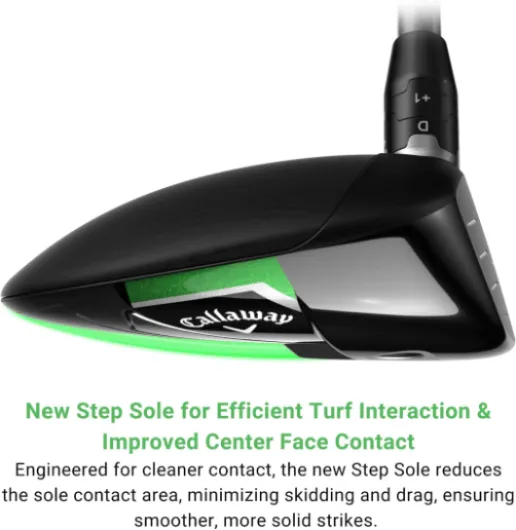
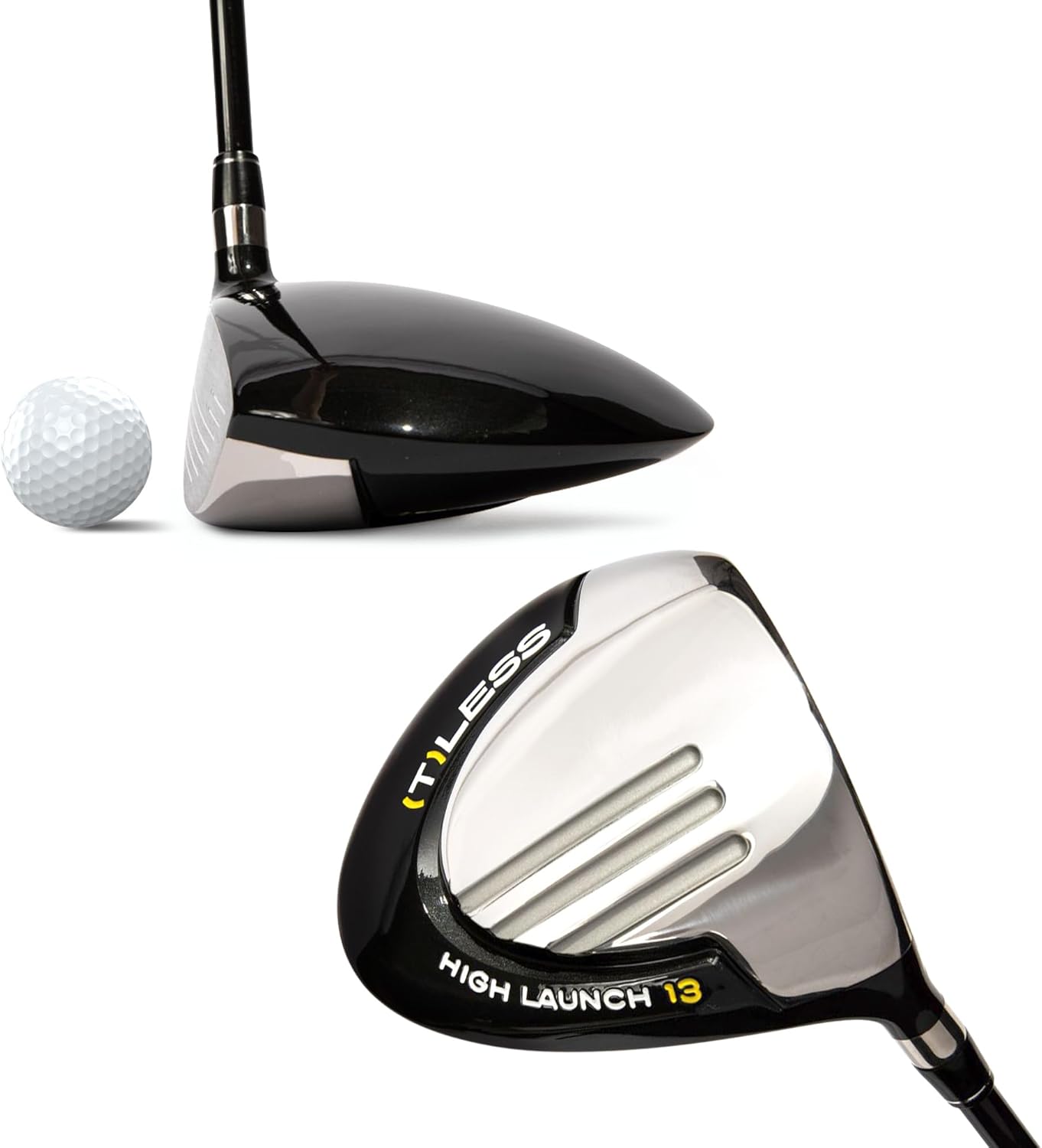
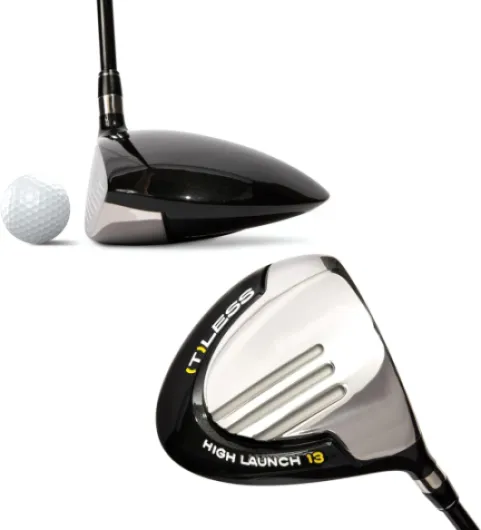
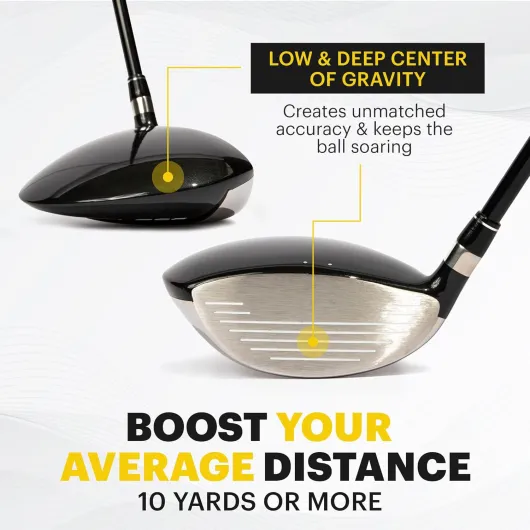
The design is pretty straightforward: a compact, black stainless steel head with a slightly deeper face than a 3‑wood and a sole that has a noticeable curvature. They clearly tried to make the sole glide rather than dig. On the course, that shape actually helps. When I hit from light rough and even from an old divot, the club tended to slide through instead of sticking in the ground. I wouldn’t say you “can’t chunk it”, but it’s definitely more forgiving on fat contact than my usual 3‑wood.
At address, it sits square and doesn’t look closed or overly offset, which I appreciated. Some game‑improvement woods look like they’re trying too hard to fix your slice and end up looking awkward. This one just looks normal. The all‑black finish is simple and functional. It’s not flashy, but it doesn’t look cheap either. Alignment is easy enough thanks to the head shape, even without fancy alignment graphics.
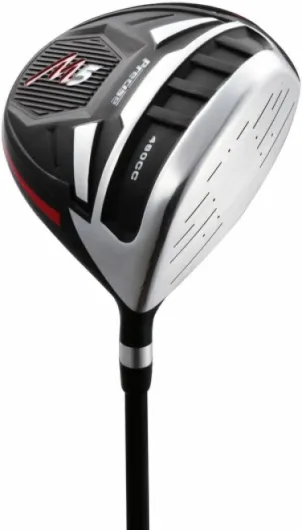
The head size is a big part of the feel. Compared to my 460cc driver, it feels more compact and controllable. That gave me more confidence to swing within myself and focus on center contact. However, if you’re used to a big driver forgiving your toe and heel strikes, you’ll notice mishits more here. The sweet spot is bigger than a 3‑wood’s in my experience, but not as big as a max‑forgiveness driver from the big brands.
One thing I didn’t love is that the sound at impact is a bit dull and muted, more like an older fairway wood than a modern driver. Some people will like that; I prefer a crisper sound to tell me how I struck it. Overall, the design does what it says: it’s built to be easy to launch and not dig into the turf. It’s not pretty or fancy, but it’s practical and functional for the golfer it’s aimed at.
Feel in the hands and swing comfort for slower speeds
Comfort is actually one of this club’s stronger points if you’re in the right swing‑speed range. The lightweight graphite shaft and senior flex make it easy to swing without feeling like you’re fighting the club. On longer rounds, it’s noticeably less tiring than repeatedly swinging a heavier driver and then a 3‑wood. I could feel the head, but it didn’t feel head‑heavy or awkward; the balance is decent for a club in this category.
At impact, there’s a soft, slightly muted feel. Center strikes feel pretty good, nothing special but satisfying enough. Off‑center hits let you know you missed, but they don’t sting or shock your hands. That’s important for seniors or anyone with wrist or elbow issues. Compared to my regular driver, mishits with this club were less punishing on my joints, even if the ball flight wasn’t perfect.
Where comfort takes a slight hit is with feedback. Because the face and head feel a bit muted, it’s not always obvious exactly where on the face you struck it, especially on smaller mishits. You know you didn’t pure it, but you don’t always get clear feedback like you do with some titanium drivers or higher‑end fairway woods. If you’re trying to work on your swing and want detailed feel, this might not be ideal. If you just want a club that doesn’t feel harsh, it’s fine.
In terms of confidence, I found it easier to stand over the ball with this club than with my driver on tight holes. The combination of smaller head, extra loft, and lighter shaft just felt more manageable. I wasn’t thinking about slicing it into the trees as much. For me, that mental comfort was a bigger factor than pure feel. So, comfort score: pretty good for senior and slower‑swing players, just average if you’re a stronger hitter looking for precise feedback.
Stainless head and graphite shaft: decent but not premium-feeling
Materials-wise, you get a stainless steel head, a graphite shaft in senior flex, and a synthetic rubber grip. Nothing exotic here, and honestly that’s fine for the target golfer. The head feels solid enough; I never worried about durability, even after a few shots from sketchy lies and some range abuse. It doesn’t have that super‑light, high‑tech titanium feel that you get from the top drivers, but it also doesn’t feel like a toy.
The shaft is where I paid more attention. The senior flex is clearly on the softer side, which is what it should be. For my moderate swing speed, it felt pretty comfortable. When I swung smooth and let the club do the work, the shaft loaded and unloaded nicely and produced a consistent, high launch. When I tried to step on it and swing harder, the shaft felt a bit whippy and timing became tricky. So if you’re a stronger player or on the edge between regular and stiff, the senior flex version might feel too soft.
The grip is basic synthetic rubber. It’s grippy enough in normal conditions, but in humid weather I found myself wiping it down more often. It’s not terrible, but it’s also not on the same level as the better stock grips from big brands. If you end up liking the club, I’d consider re‑gripping it with something you trust, especially if you play in heat or rain.
Overall, the materials are pretty solid for the price point, but don’t expect the same tech and finish as a $500 driver. This feels like a functional, mid‑range club that’s more about concept than cutting‑edge construction. For an older or budget‑conscious player, that’s acceptable. For gear snobs or players chasing every bit of tech, this will feel a bit basic.
How it holds up after regular use
Durability was actually better than I expected for a non‑big‑brand club. The stainless steel head took range mats, turf, and a few sketchy lies without any structural issues. After a few weeks, I saw the usual minor face marking and some light scuffs on the sole, but nothing alarming. The black finish on the crown held up reasonably well; I didn’t get sky marks, but I also didn’t sky one badly enough to really test that. Normal bag chatter left a few small marks, but nothing you wouldn’t see on any club that isn’t wrapped in cotton wool.
The shaft stayed straight and felt the same from day one to the last round I played with it. No strange vibrations, no loosening at the hosel, nothing like that. I always check the connection between shaft and head on cheaper clubs, and this one didn’t show any signs of weakness. As long as you’re not slamming it into the ground or using it to dig balls out of roots, I don’t see a durability problem.
The grip is the weak spot over time. It’s fine out of the box, but after several sweaty rounds it started to feel a bit slick. Not unplayable, but clearly cheaper rubber than what I’m used to. That’s not a dealbreaker, because grips are easy and cheap to replace, but it’s something to plan for if you keep the club long term.
Overall, I’d say durability is pretty solid for casual and senior golfers who play once or twice a week. If you’re a heavy range user who beats balls every day, you might see cosmetic wear faster, but structurally it feels sound. It doesn’t feel fragile or poorly built, just not premium in terms of finish and grip quality.
Distance, launch, and forgiveness on the course
Performance-wise, the big question is: does it really give you longer, straighter, easier shots than your driver and 3‑wood? For me, the answer was: it’s more consistent, but not longer. Off the tee with a tee, my best drives with this club were about 10–15 yards shorter than my best drives with my regular driver. But my average distance was closer, because my bad swings with this club weren’t punished as hard. So for total scoring, that trade‑off wasn’t terrible.
Launch is where it shines. The 13° loft and head design make it easy to get the ball up. On the fairway, I had way more success launching this than my 3‑wood. Shots that I would usually top or hit thin with a 3‑wood ended up getting up in the air, even if contact wasn’t perfect. In light rough and from slightly scruffy lies, it was surprisingly usable. From heavier rough, it’s still a long club, so don’t expect miracles, but it didn’t dig as much as I expected.
Forgiveness is decent. The sweet spot feels a bit larger than a typical 3‑wood, and toe/heel strikes lost distance but stayed reasonably straight. Extreme mishits will still punish you; this is not magic. But if your main problem is slightly fat or slightly thin contact, the sole and loft help a lot. I also liked that I could hit it off a short tee or even off the ground on short par 4s and feel like I had control. That’s not something I say about my normal driver.
One thing to be clear about: if you already hit a modern driver and 3‑wood well, you probably won’t gain anything here. My lower‑handicap buddy tried it and immediately said, “Feels fine, but my driver and 3‑wood beat this.” On the other hand, a senior in our group who struggles with both driver and fairway woods found it much easier to launch and keep in play. So performance is very user‑dependent. It gets the job done for struggling or slower‑swing players; for better players, it’s more of a niche backup club at best.
What this TEELESS driver actually is (and isn’t)
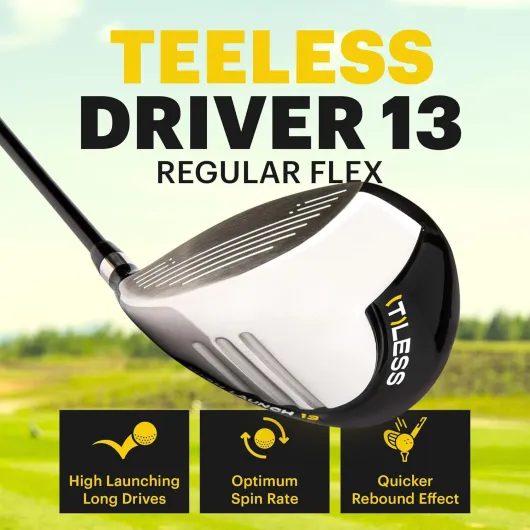
On paper, the TEELESS Driver is a kind of hybrid between a high‑lofted driver and a strong 3‑wood. It has 13° of loft, a stainless steel head, and a premium graphite shaft in senior flex. The idea is simple: more loft for easier launch, plus a sole that’s supposed to glide through the turf so you can hit it off the ground without fear of chunking. The brand markets it as a club you can hit off a tee or off the deck, from fairway, rough, divots, even sand.
In practice, it sits somewhere between a 2‑wood and a chunky 3‑wood. The head is bigger than a typical 3‑wood but smaller than a modern 460cc driver. When you put it behind the ball, it doesn’t feel intimidating, which is nice if you’re used to looking down at a giant driver head and thinking about your last slice. The face is tall enough that you don’t feel like you’ll sky it instantly, but it’s clearly more compact than a full driver.
The main promise is versatility and forgiveness, not maximum distance. So you’re trading some raw yardage for consistency. That’s how I ended up using it: as a reliable option when I didn’t trust my driver, or when I had to hit something long from the fairway or light rough. It’s also aimed at people who struggle with clubhead speed, which is why the senior flex and lightweight graphite shaft make sense.
Important point: this is not going to replace a modern big‑brand driver for a low handicapper with a fast swing. If you already hit your driver well, this will probably feel like a step backwards in distance and feedback. But if you’re a higher handicap or an older player looking for an easier life off the tee and fairway, the way this club is built and marketed actually lines up with how it plays on the course.
Pros
- Very easy to launch thanks to 13° loft and forgiving sole
- Usable off the tee and off the deck, even from light rough and scruffy lies
- Lightweight senior flex shaft is comfortable for slower swings and older players
Cons
- Not as long as a modern, well‑fit driver for stronger players
- Muted feel and basic grip; materials don’t feel premium
- Value is only decent if it truly replaces both your driver and 3‑wood
Conclusion
Editor's rating
After using the TEELESS (T)Less Driver for several rounds, my honest take is that it’s a confidence club for specific golfers, not a miracle stick for everyone. If you’re a senior or higher handicap with a slower swing who dreads hitting driver or 3‑wood, this thing makes life simpler. It’s easy to launch, handles fairway and light rough better than a typical driver, and feels manageable at address. You probably won’t hit it farther than a properly fit modern driver, but your average shot may be straighter and more predictable.
On the flip side, if you already hit your driver and 3‑wood reasonably well, this won’t bring anything special. You’ll likely lose some distance, the feel is a bit muted, and the materials and grip are decent but nothing special. For better players, a properly fit driver and fairway wood setup from a big brand will beat this in distance, feedback, and overall performance.
So, who should consider it? Seniors, slower‑swing players, and frustrated high handicaps who want one long club they can trust from tee and turf. Who should skip it? Mid‑ and low‑handicaps, stronger swingers, and anyone already happy with their current woods. It’s a pretty solid, practical option in the right hands, but it’s not magic and it’s not the best value for every golfer.