Summary
Analysis score
Average of the criteria rated below
Value for money: budget-friendly upgrade or stick with stock?
Design: profile, flex profile and intended ball flight
Materials and build: 40-ton carbon and what that really means
Durability and reliability for a lightweight Senior shaft
On-course performance: what reviews suggest you can expect
What this Supernova shaft actually offers
Pros
- Lightweight (57 g) Senior flex design well-suited to slower swing speeds
- Mid-launch / mid-spin profile with 4.0° torque for a balanced mix of distance and control
- Compatible 0.335" tip fits many TaylorMade, Callaway, Ping, Titleist and Cobra heads
- High modulus 40-ton carbon construction at a generally budget-friendly component price
Cons
- Ships without adapter or grip, so professional installation or DIY skills are required
- Brand lacks the prestige and extensive fitting data of top-tier shaft manufacturers
- Limited number of published reviews, so long-term performance feedback is still relatively sparse

Specifications
View full product page →| Brand | SK Fiber |
A lightweight shaft aimed at senior swing speeds
The Supernova Graphite Driver/Fairway Wood shaft in 50 gram Senior flex is clearly aimed at golfers with slower or aging swing speeds who still want decent distance and control. On paper, it sits in the lightweight category at an advertised 57 grams, with a mid-launch, mid-spin profile and a relatively soft "A" or Senior flex. It comes in a single raw length of 46 inches and is designed for modern driver and fairway wood heads that accept a 0.335" tip, which covers most big brands like TaylorMade, Callaway, Ping, Titleist and Cobra.
The brand behind the shaft is SK Fiber, distributed by Hireko Golf. This is not a mainstream retail name like Fujikura or Mitsubishi, but more of a value-oriented component brand that club builders often know. Despite that, the published customer rating is strong: 4.8 out of 5 stars, with a small base of seven reviews. That is not a huge sample, but it suggests that the people who did buy it are mostly satisfied with what they got in terms of performance and build quality.
According to the description, the big selling point is the use of 40-ton high modulus aerospace-grade carbon fiber and a proprietary layup meant to tighten dispersion and boost ball speed. In plain language, the manufacturer is promising a shaft that is light, reasonably stable, and not too loose for a Senior flex. The target ball flight is mid-launch and mid-spin, so this is not pitched as a super high-launch noodle nor as a low-spin, tour-style telephone pole.
In my opinion, this shaft positions itself as a practical upgrade for seniors or smooth-swinging players who want a modern graphite option without paying premium-brand prices. It is not marketed as a tour shaft, and nothing in the spec sheet suggests cutting-edge tech beyond the typical carbon fiber buzzwords, but the combination of light weight, standard dimensions, and compatible tip size makes it a realistic option for many amateur golfers looking to refresh an older driver or fairway wood.
Value for money: budget-friendly upgrade or stick with stock?
From a value standpoint, the Supernova 50 g Senior shaft lands in the component upgrade category: not a super-cheap no-name replacement, but also not priced like high-end tour-level shafts. The brand, SK Fiber (under Hireko Golf), is known more in club-building circles than in big-box retail, which usually means better pricing for the performance level. Combined with the 4.8/5 user rating, this positions the shaft as a solid value for golfers who are willing to go the component route instead of buying a new driver off the rack.
On paper, you get several things for your money: lightweight construction at 57 g, a modern mid-launch/mid-spin profile, high modulus carbon, and compatibility with major OEM heads via a 0.335" tip. Compared to staying with an old, heavy stock shaft, many senior golfers could see gains in comfort and possibly distance after a proper fitting. The main hidden cost is installation: you either need to pay a club builder to install an adapter and grip, or you need tools, supplies, and some know-how to do it yourself. That can eat into the value if you are only changing one club.
Where the Supernova shines in value is for golfers who already work with a builder or who like to tinker. For them, the shaft offers a modern spec sheet without the markup of big-name brands. The lack of included adapter and grip keeps the base price lower and gives flexibility to choose specific components. For a senior golfer who wants to refresh both a driver and a fairway wood, buying a couple of these and having them built to spec can be cheaper than replacing both clubs with new ones.
In my opinion, the value is good to very good for the right buyer: someone who understands that this is a component shaft, not a plug-and-play solution. If you are not comfortable dealing with adapters, trimming, and grips, the cost of professional installation might narrow the gap between this and just buying a mid-range driver with a decent stock senior shaft. But if you like your current head and simply need a lighter, more suitable shaft, the Supernova offers a sensible, budget-friendly path without sacrificing too much in terms of materials or performance.

Design: profile, flex profile and intended ball flight
From a design perspective, the Supernova series is built around a mid-launch, mid-spin profile with what the brand calls a "unique balance between stability and feel." That is vague marketing language, but combined with the concrete specs—4.0° torque, Senior flex, sub-60 g weight—it paints a picture of a shaft that is neither ultra-soft nor ultra-stiff. For a Senior flex shaft, 4.0° of torque is actually on the moderate side, which on paper should help keep the club from feeling overly loose while still offering some feedback.
The shaft length of 46 inches is typical for driver builds, meaning the design is intended to be versatile for both drivers and fairway woods, with tipping adjustments done during assembly. Because it is designed to fit 0.335" tips, it lines up with a big chunk of OEM driver and fairway heads from TaylorMade, Callaway, Ping, Titleist and Cobra. That flexibility is part of the design intent: one shaft line that can be slotted into many heads, rather than a head-specific, proprietary piece.
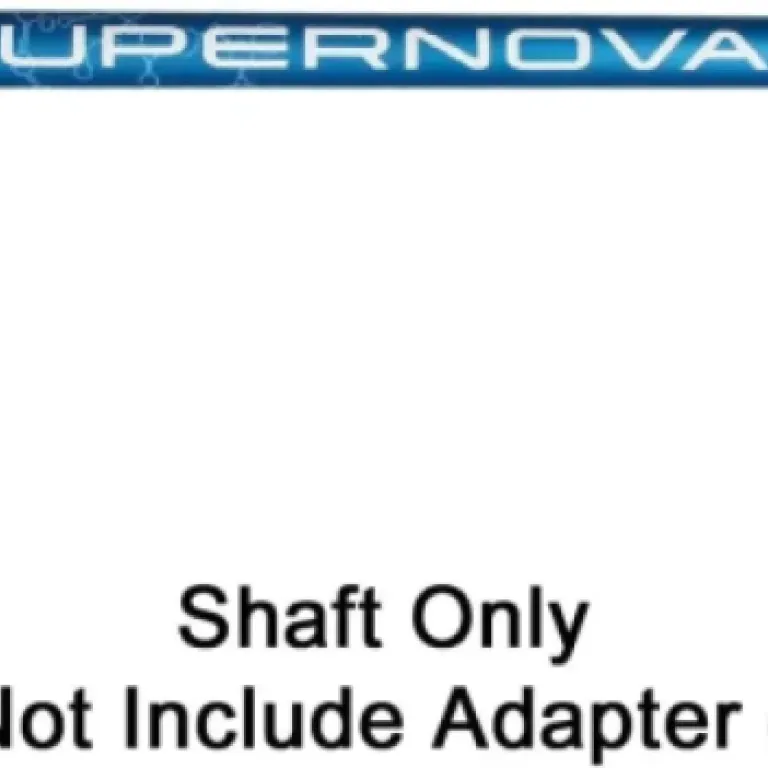
Visually, the colour is described as Satin Blue. While the reviews do not go into cosmetic detail, that color choice suggests the shaft will stand out more than a plain black option without being overly loud. For some golfers, matching shaft color to the head or grip is part of the appeal; for others, it is irrelevant. Either way, there is no indication of flashy graphics or overly busy artwork; the focus seems more on function, with the SK Fiber and Supernova branding doing the talking.
In my opinion, the design brief here is very straightforward: build a lightweight, reasonably stable Senior shaft that gives a mid flight and can be used in both drivers and fairways. There is no sign of extreme features like ultra-low torque, counterbalancing, or exotic tip sections that only work for very specific swing types. For most senior players or smooth swingers, that is actually a plus. It means fewer surprises and an easier time finding a playable build. The downside is that golfers looking for a very specific launch tweak—super high launch or very low spin—may find this design a bit generic compared to more specialized aftermarket options.
Materials and build: 40-ton carbon and what that really means
The headline material claim for the Supernova shaft is the use of 40-ton high modulus aerospace quality carbon fiber in a proprietary layup. In golf shaft marketing, "40-ton" refers to the stiffness of the carbon sheets rather than weight. Higher modulus material can allow engineers to achieve the same stiffness with less material, which can reduce weight or fine-tune the flex profile. On paper, using higher modulus carbon is a step above the cheapest entry-level graphite shafts that rely on lower-grade fibers.
However, the presence of high modulus carbon alone does not guarantee top-tier performance. The real difference comes from how the layers are oriented and how consistent the manufacturing process is. The term "proprietary layup" is common language in the industry and does not tell much about the exact structure. Still, for a shaft at this level, it is reasonable to assume a multi-layer construction that tries to balance tip stability, mid-section loading, and butt feel to hit that mid-launch, mid-spin target. The 4.0° torque suggests that the layup is not overly soft in the tip, which on paper should help with directional control.
Among the published customer reviews, the overall 4.8/5 rating and lack of complaints about breakage or defects suggest that, at least for the small sample of users, the materials and build quality are adequate. No one reports premature cracking, delamination, or obvious cosmetic flaws. For a lightweight Senior shaft, that is important because this category is sometimes associated with fragile or overly whippy products when corners are cut. Here, buyers seem to feel they are getting a solid component for the price.
In my opinion, the materials story is solid but not groundbreaking. The use of high modulus carbon is a positive sign, especially when combined with a realistic weight of 57 g instead of chasing ultra-light numbers at the expense of durability. At the same time, the brand does not have the same reputation as some premium shaft manufacturers for ultra-tight tolerances. For most amateur golfers, that probably does not matter as long as the shaft performs consistently and holds up over time. For club builders working on a budget-friendly custom build, the material spec is actually quite attractive for this segment.

Durability and reliability for a lightweight Senior shaft
Durability is often a concern when dealing with lightweight Senior-flex graphite shafts, because reducing weight can sometimes mean thinner walls and more risk of damage. Here, the Supernova shaft claims to use 40-ton high modulus aerospace carbon, which should, in theory, allow for strength without excessive bulk. The actual listed weight of 57 grams, rather than chasing ultra-light 40-something gram numbers, is also a positive sign from a durability standpoint. It suggests the manufacturer did not push the limits of wall thickness just to publish a lower weight figure.
Looking at the public rating, the shaft sits at 4.8 out of 5 stars with seven customer reviews and no visible pattern of structural issues. No buyer comments here report snapping, tip failures, or chronic loosening in the hosel. With golf shafts, if there is a systemic durability problem, it usually surfaces quickly in complaints about breakage during normal play or even during installation. The absence of such signals, even in a small sample, supports the idea that the build quality is adequate for typical amateur use when installed correctly.
Of course, as with any graphite shaft, proper installation is crucial. The product is sold without an adapter or grip, which means either a club builder or a reasonably skilled DIY golfer has to prep the tip, install the adapter (if needed), and set the correct length. Poor tip prep, cutting errors, or using the wrong epoxy can all lead to failures that are not the fault of the shaft itself. In that sense, the durability you experience will depend partly on who builds the club. The spec sheet does not mention any special tip reinforcement or anti-splinter tech, so there is no sign of unusual protection beyond the standard multi-layer construction.
In my opinion, for a shaft in this price and weight class, the durability picture is reassuring but not exceptional. You get a modern graphite construction with reasonable weight, a reputable component distributor (Hireko), and no red flags in the reviews. Heavy hitters or very aggressive swingers should not be in a Senior flex 50 g shaft anyway, so the typical user profile—senior golfers and smoother swings—should be well within what this shaft can handle over the medium to long term, provided the build and handling are sensible.
On-course performance: what reviews suggest you can expect
Performance-wise, the Supernova 50 g Senior shaft is positioned as a mid-launch, mid-spin option designed to help players with slower swing speeds get decent distance without losing too much control. The lightweight design (57 g) should, in theory, allow many senior golfers to swing a bit faster compared to heavier stock shafts, which can translate into a few extra yards if contact quality stays the same. The torque at 4.0° and the Senior flex should allow the shaft to load and unload smoothly for moderate tempos, rather than demanding an aggressive move at the top.
Although the individual Amazon reviews are not detailed in this data set, the overall 4.8/5 rating from seven buyers is a clear sign that most users feel the shaft performs as advertised. With golf shafts, negative feedback often appears quickly when there are glaring issues like wild dispersion, unpredictable ball flight, or a flex that feels totally off from the label. The absence of such complaints suggests that golfers who matched this shaft to their swing speed and head found it playable and, in many cases, an upgrade over their previous setup.
On paper, the mid-launch profile should help players who currently hit very low bullets with older, heavier shafts. It should also avoid the problem of extremely high, spinny shots that fall out of the sky, which can happen with very soft, high-torque senior shafts. This balanced profile, combined with high modulus carbon, is intended to keep dispersion reasonably tight while still offering some help getting the ball airborne. For fairway woods, the same profile can be useful off the deck, where too low a launch makes it hard to carry hazards.
In my opinion, the performance proposition is clear: this is not a miracle distance shaft, but a sensible, modern option for seniors or smooth swingers who want something lighter and more responsive than old steel or outdated graphite. Golfers with very quick, aggressive transitions will likely overpower this Senior flex and should look at stiffer options in the Supernova line or elsewhere. But for the intended audience—slower swing speeds looking for a bit more speed and a predictable mid-flight—the combination of specs and user satisfaction points to a shaft that gets the job done reliably.

What this Supernova shaft actually offers
The Supernova Graphite Driver/Fairway Wood shaft in this configuration is the 50 gram, Senior flex model, although the spec sheet lists the actual shaft weight at 57 grams. That kind of discrepancy is common in golf components: the "series" name (50 gram) is more of a category, while the real, measured weight is a bit higher. Still, under 60 grams is firmly in the lightweight territory for wood shafts, especially suited for seniors or anyone with a moderate tempo looking to pick up a bit of clubhead speed.
The raw length is 46 inches, which is standard for aftermarket driver shafts. That gives club builders enough room to trim for drivers or shorter fairway woods while still maintaining proper flex characteristics. The butt diameter is 0.600", which fits most standard grips, and the tip diameter is 0.335", the common size for many modern drivers and fairway woods. One important detail: the shaft ships as a bare shaft only. There is no adapter and no grip included, despite some confusing references to grip material and size in the generic spec block. So buyers need either to install an adapter themselves or have a club builder do it, and they will need a separate grip.
The advertised ball flight is mid-launch / mid-spin, which on paper should suit a wide range of senior golfers who do not want a ballooning, very high flight, but also do not want a low, penetrating flight that is hard to get airborne. Torque is listed at 4.0 degrees, which is moderate for this weight and flex. That usually suggests a balance between feel and stability, not super boardy and not super whippy. The flex is labeled Senior and also shown as "A Flex" in the configuration field, which are essentially the same category.
From a positioning standpoint, this shaft looks like a value component: it uses some higher-modulus carbon language in the description, but it is sold under SK Fiber rather than a high-end tour brand. In my opinion, that makes it appealing to golfers who want a sensible upgrade for an older driver or a custom build without sinking money into a premium aftermarket shaft. As long as someone understands they are buying a component that needs professional installation or at least some DIY skill, the spec sheet is coherent and practical for the intended audience.
Pros
- Lightweight (57 g) Senior flex design well-suited to slower swing speeds
- Mid-launch / mid-spin profile with 4.0° torque for a balanced mix of distance and control
- Compatible 0.335" tip fits many TaylorMade, Callaway, Ping, Titleist and Cobra heads
- High modulus 40-ton carbon construction at a generally budget-friendly component price
Cons
- Ships without adapter or grip, so professional installation or DIY skills are required
- Brand lacks the prestige and extensive fitting data of top-tier shaft manufacturers
- Limited number of published reviews, so long-term performance feedback is still relatively sparse
Conclusion
Analysis score
The Supernova Graphite Driver/Fairway Wood shaft in 50 gram Senior flex looks like a practical, no-nonsense option for senior golfers and smoother swingers who want a lighter, modern shaft without spending big money on a premium brand. The spec sheet is coherent: 57 g weight, 4.0° torque, mid-launch/mid-spin profile, and a 0.335" tip that fits most major driver and fairway heads. The use of 40-ton high modulus carbon and the 4.8/5 customer rating suggest that build quality and performance are solid for this category.
It is not a plug-and-play solution: there is no adapter or grip included, so installation requires either a club builder or some DIY experience. For golfers who already work with a fitter or who enjoy tinkering, that is not a big hurdle and actually adds flexibility. For those who just want to bolt something in and go, it is an extra layer of hassle and cost. Performance-wise, this is not a specialized low-spin bomber or a super-high-launch rescue; it is a balanced, mid-flight option that should suit a wide range of moderate swing speeds.
In my opinion, the Supernova 50 g Senior is well-suited to seniors, slower swingers, and budget-conscious golfers who like their current driver or fairway head but need a lighter, more responsive shaft. Golfers with aggressive transitions or higher swing speeds should skip this configuration and look for a heavier, stiffer option. Overall, as a component shaft, it offers good value, sensible specs, and a track record of satisfied buyers, making it a realistic upgrade path rather than a flashy marketing piece.