
Summary
Editor's rating
Worth it if you struggle with fairway woods, less so if you already hit them well
Chunky hybrid look that inspires more confidence than style points
Easy to swing, confidence-building, but not for power hitters
Light materials, decent feel… but durability is a question mark
So far so good, but the breakage review is hard to ignore
Real-world distance and forgiveness: good, not magic
What this club is actually trying to do
Pros
- Much easier to launch off the deck than a typical 3-wood
- Forgiving head and rails that help with cleaner contact from fairway and light rough
- Comfortable, light setup that suits moderate and slower swing speeds
Cons
- Not ideal for high swing speed or very aggressive players (shaft can feel soft)
- At least one report of breakage raises some durability concerns

Specifications
View full product page →| Brand | Performance Golf |
A fairway wood for people who hate fairway woods
I picked up the Performance Golf 357 Fairway Hybrid because my relationship with 3-woods is basically: one great shot, three chunks, and one topped dribbler. I wanted something that could give me 3-wood distance without needing a tour‑pro swing, and this club is exactly targeted at that kind of golfer. It promises the distance of a 3-wood, the ease of a 7-wood, and cleaner contact from sketchy lies. On paper, it sounds like the perfect safety blanket for mid‑ to high‑handicappers.
On the course, it didn’t suddenly turn me into a bomber, but I will say this: I was a lot more relaxed pulling this out than my normal 3-wood. The head shape and the way it sits behind the ball make it feel more like a chunky hybrid than a scary, low-profile fairway wood. That alone helped my swing. Instead of trying to “help” the ball up, I just swung, and the ball usually got in the air without drama.
I tested it over several rounds, mostly on par 5 second shots and on tight par 4s where I normally hit a 4-hybrid or a 5-wood. I also hit it from the light rough and a couple of sketchy lies in patchy fairways. I didn’t baby it; if I had 180–200 yards and a half-decent window, I pulled this club. The results weren’t perfect, but they were more predictable than my usual 3-wood attempts.
Overall first impression: it’s a confidence club, not a magic wand. If you already stripe a 3-wood, this probably won’t add much. But if you’re like me and tend to either thin or chunk your fairway woods, this thing does make life easier. Just be aware of some durability concerns and the fact it’s still a 21° club, not a miracle distance machine.
Worth it if you struggle with fairway woods, less so if you already hit them well
On value, you have to look at what this club is actually doing for your bag. It’s not from a big-name brand, but it sits pretty high in the hybrid/fairway category on Amazon and has a 4.3/5 rating from users, which lines up with my experience: generally positive, with some minor gripes. Compared to buying a premium 3-wood or 7-wood from a top brand, this will usually come in cheaper, especially if you catch it on promo. If it replaces both a hard-to-hit 3-wood and a redundant hybrid, that’s decent value in itself.
The key question: does it actually help your game enough to justify the cost? If you’re the classic 15–25 handicap who avoids hitting 3-wood off the deck and often ends up laying up when you don’t really want to, this club can pay for itself in better scoring chances. You won’t suddenly start hitting every par 5 in two, but you’ll give yourself more reasonable birdie looks and fewer blow-up holes from topped 3-woods. In that scenario, I’d say the value is pretty solid.
If, on the other hand, you already have a 5-wood or 7-wood you hit well, or a strong hybrid that you trust from 190–210 yards, this might be more of a lateral move. You might gain a bit of forgiveness, but probably not enough to justify the price unless you really like the shape and feel. And if you’re a low-handicap, high-swing-speed player, I don’t think this club is aimed at you at all—you’d be better off putting the money into a properly fit fairway wood from a major brand.
So in short, good value for the right golfer, average value for everyone else. It’s not overpriced for what it offers, but it’s also not some hidden bargain that outperforms everything twice its price. It’s a practical tool: if it solves a specific problem in your long game, it’s worth it. If not, save your money.
Chunky hybrid look that inspires more confidence than style points
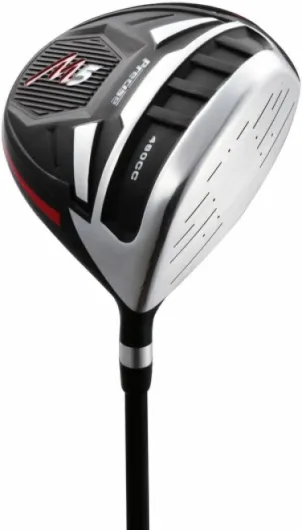
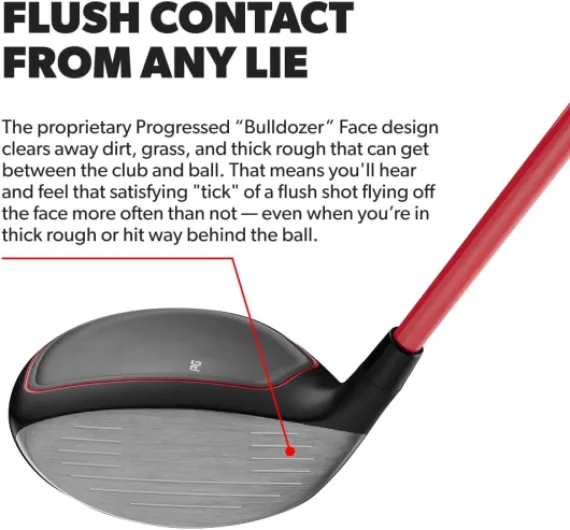
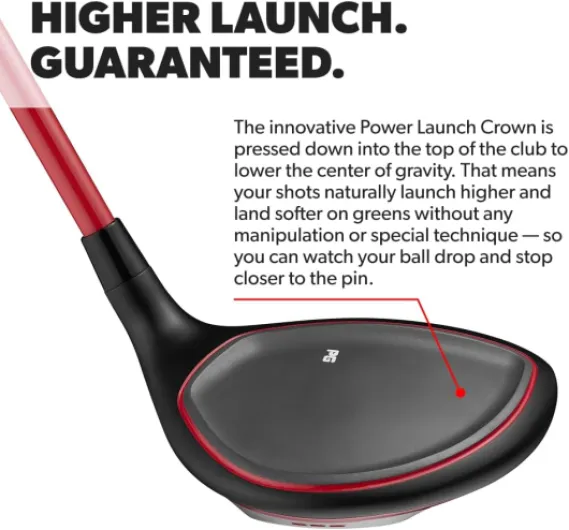
Design-wise, this thing sits somewhere between a small fairway wood and a big hybrid. At address, the head is fairly compact front to back, but it’s not razor-thin like some low-profile 3-woods that scare the hell out of mid-handicappers. The crown has that "Power Scoop" shape, which basically means it’s slightly raised and rounded, giving you the sense of a deeper clubface and lower center of gravity. It doesn’t look weird once it’s behind the ball, just a bit different from mainstream brands like Callaway or TaylorMade.
The color scheme is mostly red and black, with a slightly loud but not ridiculous look. If you’re used to classic, all-black fairway woods, this will feel a bit more "internet brand" than tour issue, but honestly after a few swings I didn’t think about it anymore. The alignment is straightforward: the face sits pretty square, and I didn’t feel like it wanted to point left or right. That’s important for someone who already fights a slice or a hook; you don’t want a club that looks closed or open at address.
The sole design is where you see the Dual Stability Rails. Think of them as two small ridges running along the bottom, similar in idea to what Cobra has done on some of their woods. On the course, these rails do help the club glide through the turf instead of digging. On fat shots, I still lost distance (no surprise), but the club didn’t bury itself as much as a flat‑soled fairway wood. Visually, it gives the club a more "techy" look, which some will like and some won’t care about at all.
Overall, the design is more about confidence and forgiveness than pure aesthetics. It’s not the prettiest club I own, but when I set it down behind the ball, I felt like I had a bit more margin for error. For me, that’s more important than having a sleek, tour-style head that I’m afraid to swing freely with.
Easy to swing, confidence-building, but not for power hitters
In terms of comfort, this club is easy to swing. The light graphite shaft and balanced head make it feel like a slightly bigger hybrid rather than a demanding fairway wood. For me, that meant I could make a smoother, more relaxed swing instead of trying to smash it. When I did that, contact was much more consistent. The regular flex feels tuned for moderate swing speeds; if you’re in that 80–95 mph driver range, it’ll probably feel right. Above that, it might start feeling a bit soft.
The grip is a standard synthetic rubber and feels fine out of the box. It’s not a premium multi-compound grip, but it’s not slick or uncomfortable either. In warm conditions, with a bit of sweat, I still felt in control. If you’re picky about grips, you’ll probably swap it anyway, but for most casual golfers it’s good enough to leave as is. The club sits nicely at address, and I never felt like I had to fight it to square the face.
One thing I noticed is that it’s much less intimidating to hit off the deck than a typical 3-wood. The shape and loft make you feel like you can actually get the ball up without needing to help it. Psychologically, that matters. I found myself pulling this club more often from 180–200 yards, where before I might chicken out and hit a soft 5-iron or just lay up. That doesn’t mean every shot was perfect, but I was at least willing to try, which is half the battle for a lot of amateurs.
That said, if you’re someone who really goes after the ball, the lightness and flex might work against you. I had one swing where I tried to step on it, and I could feel the shaft lag a bit more than I wanted, leading to a left miss. So comfort is high for smooth, controlled swings, but this is not built for violent transitions. For the average weekend player, though, it’s a pretty comfortable club to live with.
Light materials, decent feel… but durability is a question mark
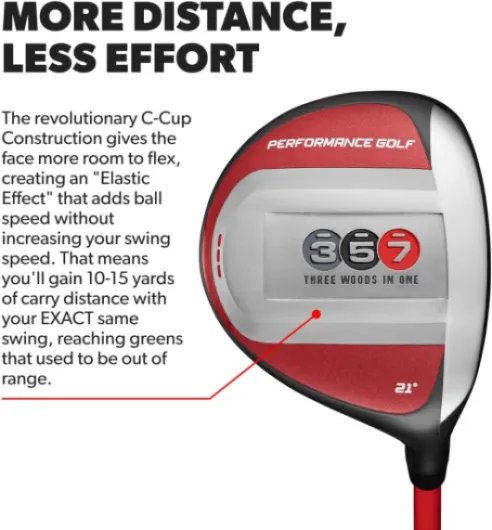
The club uses a graphite shaft with a regular flex and a carbon fiber head construction. Grip is standard synthetic rubber. So nothing exotic here, but that’s fine for the target golfer. The overall weight felt on the lighter side to me, which is good for slower swing speeds or older players who don’t want to fight a heavy fairway wood. I could swing it repeatedly without feeling like I was muscling it, and the shaft had a noticeable kick through impact without feeling like a noodle.
Feel at impact is pretty solid for this price range. When you catch it near the center, there’s a slightly springy sensation off the face, which lines up with their "Elastic Effect" marketing. It doesn’t feel dead or harsh. Off-center hits still give you feedback—there’s a bit of vibration—but nothing painful or jarring. The sound is a medium "crack", not overly loud or tinny. If you’re used to big-brand fairway woods, you’ll probably notice this doesn’t quite have that premium, dense feel, but it’s not cheap-feeling either. I’d call it acceptable and playable.
Where I do pause is durability. One of the Amazon reviews mentions the club breaking on day three, which is not something you want to read when you’ve just bought a new stick. Mine didn’t break, bend, or show any cracks during testing, but I also didn’t slam it or hit a ton of shots off hardpan or range mats. The shaft, being light and regular flex, feels fine in normal use, but I wouldn’t recommend this to someone with a very aggressive transition or someone who regularly swings 3-wood like a driver.
So, materials are: light, friendly for average swing speeds, and good enough in feel. But if you’re rough on your clubs or swing really hard, I’d keep that durability concern in mind. This feels built for recreational players, not for someone trying to hit 110 mph with a fairway every swing.
So far so good, but the breakage review is hard to ignore
Durability is where I’m a bit cautious. Personally, during my testing, I had no structural issues: no cracks, no shaft wobble, no loose head, and no unusual wear. I hit it off fairways, light rough, and a couple of not-so-nice lies where the ground was firmer than I’d like. The sole shows normal scuffing, the face has the usual ball marks, and the crown is still clean. So from my firsthand use, it held up exactly like you’d expect from a modern club.
However, one Amazon review saying the club broke on day three is a red flag you can’t just ignore. That could be a one-off defect, a shipping issue, or someone abusing the club, but it’s still there. When a club is marketed to recreational players with slower swing speeds, you don’t expect frequent breakage, and I didn’t see multiple reviews with the same complaint, which is reassuring. Still, if you’re heavy-handed or have a history of snapping lighter shafts, I’d think twice or at least keep your expectations in check.
The shaft itself feels light but not flimsy under a normal, smooth swing. If you stay within the intended use—no helicopter throws, no full drivers swings off concrete-like lies—it should last. The grip will probably be the first thing you’ll want to replace after a season or two, but that’s standard maintenance, not a flaw. The carbon fiber head doesn’t feel hollow or cheap, so I’m not worried about the face caving in under regular use.
So, my honest take: durability seems fine for typical weekend use, but it doesn’t give me the same long-term confidence as a big-name brand I’ve beaten up for years. If you’re gentle-ish with your gear and swing in the intended speed range, you’ll probably be okay. If you’re a range rat pounding 200 balls a day with full swings, I’d look for something a bit more robust.
Real-world distance and forgiveness: good, not magic
Let’s talk numbers and actual shots. On the course, my carry distance with this 21° 357 Fairway Hybrid was in the 185–205 yard range depending on strike and conditions. For reference, my 4-hybrid is usually around 185 carry, my 5-wood around 205–215 when I hit it well. So this club slotted nicely between those, leaning closer to my 5-wood on good strikes. I wouldn’t say it fully replaces a strong 3-wood, but if you struggle to launch a 3-wood, you might get more usable distance from this because you’ll actually get it in the air more often.
The launch is noticeably higher than a typical 3-wood. Even on slightly thin strikes, the ball got up and stayed in the air long enough to be useful. That matches the whole "7-wood ease" angle. Approach shots into par 5s were more controllable than trying to hammer a low-lofted fairway. I also liked it off the tee on tight par 4s; tee it low, make a smooth swing, and it produced a straight or slight fade flight most of the time. Not laser precise, but definitely straighter than my old 3-wood attempts.
On forgiveness, I’d rate it as better than a typical 3-wood, similar to a chunky hybrid. Toe and heel strikes lost some distance but stayed in play more often than not. Fat shots were still punished (this is golf, not cheating), but the rails seemed to reduce the digging. I had a couple of shots from light rough where I expected the face to twist, but the ball came out surprisingly straight. Not perfect, but playable. That lines up pretty well with the positive reviews saying they’re hitting more accurate shots.
Bottom line: performance is good but realistic. It won’t suddenly add 30 yards to your game, but it can give you a more repeatable option from 180–210 yards, especially off the deck. If you currently avoid your 3-wood, you’ll probably hit more useful shots with this. If you already crush a fairway wood, you might not see much improvement and could even lose a bit of top-end distance.
What this club is actually trying to do
The 357 Fairway Hybrid is basically a mashup between a 3-wood and a 7-wood. It’s got a 21-degree loft, which is roughly in the 7-wood / 3–4 hybrid range, but the head is closer in size to a compact fairway wood. The marketing pitch is simple: 3-wood distance with 7-wood launch and forgiveness. In practice, I’d say it sits somewhere between a strong hybrid and a very easy 5-wood. It’s not a pure 3-wood replacement for big hitters, but it definitely fills that weird gap between your driver and longest iron/hybrid.
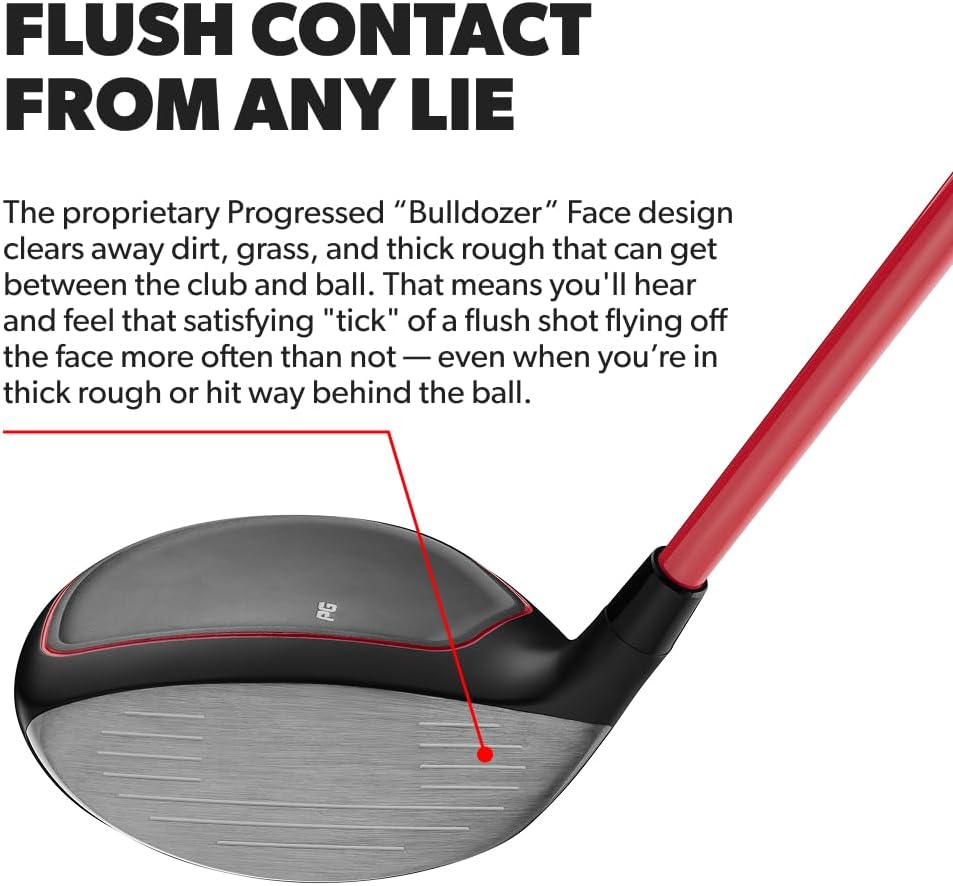
Performance Golf leans hard on the tech story: "Power Scoop Crown" to lower the center of gravity, "Fast Face Elastic Effect" for more ball speed, "Dual Stability Rails" on the sole, and what they call a "Bulldozer" style clubhead that’s supposed to plow through grass and debris. That sounds like a lot of buzzwords, but a couple of these things do show up in real use. The rails especially are noticeable when you look at the sole and when you feel the club glide a bit instead of digging.
Target golfer, in my opinion, is pretty clear: someone who struggles to launch a 3-wood off the deck, has a moderate or slower swing speed, and wants a go-to club from 170–210 yards without overthinking it. If you’re a 5‑handicap swinging driver at 110+ mph, this is probably not for you; you’ll likely overpower the regular flex and want something more traditional. But if you’re in the 15–25 handicap range and dread pulling your 3-wood on a tight fairway, this is more up your alley.
So in terms of concept, I think it’s pretty solid: one club to simplify that awkward long-game decision. It doesn’t feel like a gimmick, but it’s also not some miracle NASA-tech club. It’s a forgiving, high‑launching fairway hybrid that tries to make long shots less stressful. That’s the realistic picture.
Pros
- Much easier to launch off the deck than a typical 3-wood
- Forgiving head and rails that help with cleaner contact from fairway and light rough
- Comfortable, light setup that suits moderate and slower swing speeds
Cons
- Not ideal for high swing speed or very aggressive players (shaft can feel soft)
- At least one report of breakage raises some durability concerns
Conclusion
Editor's rating
Overall, the Performance Golf 357 Fairway Hybrid is a practical option for golfers who hate their 3-wood but still need something to cover that 180–210 yard gap. It’s easy to launch, forgiving enough on mishits, and much less intimidating to hit off the deck than a traditional low-lofted fairway wood. The head shape, higher loft, and turf interaction from the rails all work together to make long shots feel less like a gamble and more like a controlled swing. You won’t suddenly gain crazy distance, but you’ll likely get more consistent, playable results than with a 3-wood you don’t trust.
It’s not perfect. The feel and materials are good but not on the same level as the big premium brands, and that one durability complaint in the reviews is something to keep in the back of your mind, especially if you swing hard. It also isn’t a magic fix for low-handicap or high-speed players; if you already stripe a fairway wood, this probably won’t do much for you. But for the average weekend golfer with a moderate swing speed who just wants a dependable club from the fairway and light rough, it gets the job done in a pretty straightforward way.
I’d recommend this to mid‑ to high‑handicappers who struggle with 3-woods, prefer a smoother swing, and want a single club to simplify their long game. I’d skip it if you’re a fast-swinging player, a range grinder who beats clubs up, or someone already happy with their current 5/7-wood or hybrid setup. In the right hands, it’s a pretty solid confidence booster, not a miracle worker.