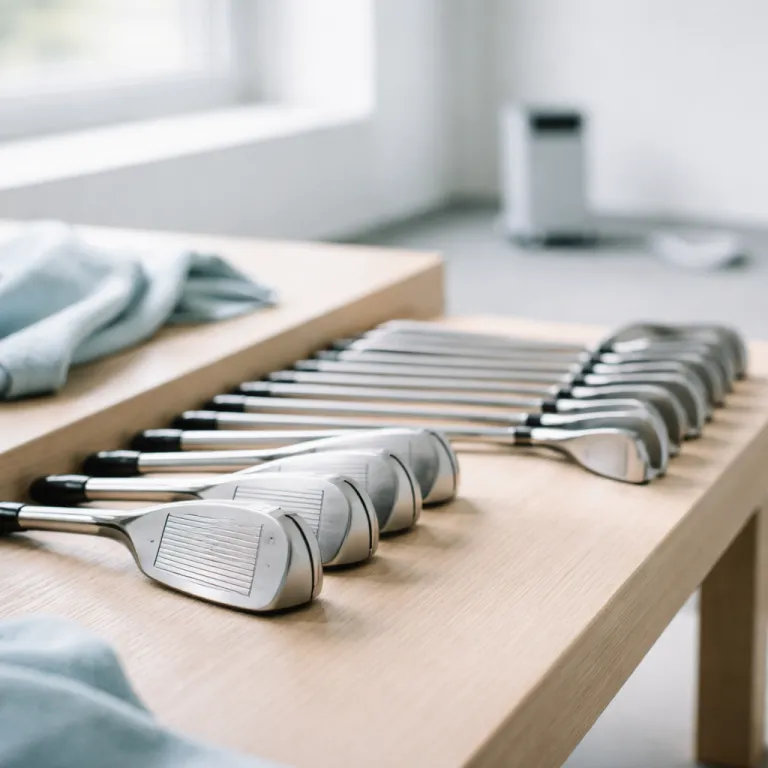
Best forged irons in 2026 – who they truly help and how to pick the right set
Forged irons occupy a curious space between precision tool and luxury golf upgrade. For many golfers the best forged irons are less about raw distance and more about the sensation of the ball compressing against the face, especially when a flushed 7 iron holds its line into a tucked flag. That emotional appeal is a big reason why the forged iron category commands a premium price, with a typical forged iron set costing roughly 200 to 400 US dollars more than a comparable cast or hollow body set in major markets such as the US and UK. Independent price tracking from large retailers like PGA Superstore and American Golf in 2024–2025 shows that spread as a consistent average, even though, in my fitting work and launch monitor sessions, the handicap threshold where forged heads truly outperform for most golfers tends to be around 8 or better rather than across the board.
In blind tests with better players, most golfers cannot reliably tell a one piece forged iron from a modern multi material players iron, because cavity badges, polymer dampers and face thickness all shape feel as much as the forging itself. When you compare a classic Mizuno Pro blade to a hollow body distance iron with a forged face, the difference in ball speed and carry distance can be obvious on a launch monitor, yet the subjective feel often converges once you match shaft, swing weight and iron loft. That is why the best players I fit now talk less about whether an iron is forged and more about whether the irons offer the right launch, spin and turf interaction for their swing and their home course conditions.
For a mid handicap golfer who plays once a week at a firm, wind exposed club, chasing the softest forged feel can be a costly distraction from the real scoring gains. Shaft profile, lie angle and gapping within the set will usually move the needle more than whether the head is forged or cast, especially when you are trying to control distance into par threes rather than simply chasing maximum distance iron numbers. Think of forging as a refinement layer for players distance specialists and best players, not as a magic switch that will suddenly turn your golf irons into pro level scoring weapons overnight.
Titleist T100, Mizuno Pro 241 and TaylorMade P7MC – who they really suit
Among serious players the conversation about the best forged irons usually starts with three names, because Titleist T100, Mizuno Pro 241 and TaylorMade P7MC define the modern players iron benchmark. Titleist T100 sits in the players distance space but behaves like a traditional forged iron in terms of compact profile, thin topline and precise turf interaction, which is why so many tour players and low single digit golfers treat it as their default iron best option. Mizuno Pro 241 is the purist’s choice, a compact muscle back forged from soft carbon steel that prioritises feel and workability over outright ball speed or distance.
TaylorMade P7MC occupies a subtle middle ground in this iron category, offering a slightly more forgiving chassis than a pure blade while still giving elite feedback on every ball strike. In fittings I see the best players gravitate toward T100 when they want a little extra launch and carry distance in the long irons, while the most confident ball strikers often prefer the Mizuno Pro 241 for its precise control of iron loft and trajectory windows. P7MC tends to attract players who grew up on classic forged irons but now want a touch more stability on off centre hits, especially in the 4 and 5 iron where a small boost in ball speed can keep the distance gaps consistent.
For a mid handicap golfer hovering around 10 to 15, these three sets can still work, but only if the rest of the build is dialled in. You will need the right shaft weight and flex to keep launch in the playable window, and you may want to blend in a more forgiving distance iron or players distance long iron to protect carry distance on mishits. If you are also upgrading your driver, pairing a T100 or P7MC set with a modern low spin head such as those compared in this guide to choosing between TaylorMade and Callaway drivers can create a coherent, performance focused bag rather than a random collection of shiny forged toys.
Why most 9–15 handicaps score better with hybrid constructions than pure forging
Once you move beyond the scratch crowd, the best forged irons for many golfers are not fully forged at all, because models like Titleist T200 blend forged faces with hollow bodies and dense tungsten to create a more forgiving players distance profile. This kind of hybrid construction gives you a players iron shape at address but hides game improvement stability under the hood, which is exactly what a mid handicap golfer needs when the ball is sitting down in semi rough on a long par four. In launch monitor sessions I run with club golfers, the T200 style of golf irons often produces higher ball speed, more consistent launch and tighter carry distance dispersion than a traditional forged cavity for players in the 9 to 15 range.
The blind test problem is simple, because when you hand a player a T100 and a T200 with the same shaft and iron loft, many cannot reliably say which one is the forged iron and which one is the multi piece head. They can, however, see that their distance iron shots with the more forgiving head finish closer to the target over a full set of swings, especially when you include a few thin strikes and a couple of heel strikes that would normally bleed distance. That is why, in my fittings, irons best suited to this iron category often come from the so called players distance segment rather than the pure blade or compact cavity segment that dominates tour bags.
Luxury in this context means scoring potential, not just soft feel on a flushed 8 iron. If you are a left handed golfer or someone who struggles with consistent turf interaction, a hollow body or forged face construction such as T200, Srixon ZXi7 or even a premium, easy to hit iron set from a specialist distance brand can offer more real world value than a traditional blade. The best players may still prefer the surgical control of a T100 or Mizuno Pro 241, but for most golfers the iron best choice is the one that keeps your worst swings in play rather than the one that flatters your ego on the range.
Fitting realities – shaft, loft and lie beat metallurgy for scoring
When you chase the best forged irons, it is tempting to obsess over forging houses and grain flow diagrams while ignoring the basics that actually move your handicap. In every serious iron review session I run, shaft choice, iron loft configuration and lie angle have a larger impact on distance, launch and dispersion than whether the head is forged or cast, especially for players above a 6 handicap. A poorly fit forged iron set with the wrong shaft weight or flex will feel harsh, launch too low and bleed distance, while a well fit cast or multi piece players distance set can feel sublime and produce ideal ball flight.
Start with shaft weight, because too light and your tempo gets quick, too heavy and your ball speed drops along with carry distance. As a practical example, a smooth tempo 12 handicap might move from a 120 gram stiff steel shaft into a 105 gram mid launch profile, gaining a couple of miles per hour of club speed and a few extra metres of carry without changing heads. Then look at iron loft and gapping, since many modern distance iron models are significantly stronger in loft than traditional players iron designs, which can create awkward holes at the top or bottom of the bag if you simply buy off the rack. A good fitter will also check lie angles on grass to ensure your turf interaction is neutral, because a toe down strike pattern can send even the best players’ shots leaking right, regardless of how soft the forged steel might feel.
For left handed golfers the fitting challenge is often access to enough head options in the right iron category, since not every forged iron or players distance model is offered in both right and left handed versions. That is another reason to prioritise a full fitting session where you can read full data from a launch monitor rather than relying on a quick net test in a shop. Luxury forged irons earn their keep when they are built around your swing DNA, not when they sit in the locker room as an expensive reminder that metallurgy alone does not fix a flawed move.
Honest verdict on the 2026 forged field – where each model truly excels
Looking across the current premium landscape, the best forged irons for elite ball strikers still come from the classic houses, with Mizuno Pro 241, Titleist T100 and TaylorMade P7MC forming the core of any serious short list. Mizuno Pro 241 offers the purest forged feel and the most precise feedback, making it ideal for best players who want to shape the ball both ways and flight it down into the wind on demanding courses like Royal County Down or Sunningdale Old. Titleist T100, by contrast, behaves like a surgical tool for players who want a slightly more forgiving chassis and a touch more help in the long irons without leaving the players iron category.
TaylorMade P7MC earns its place among irons best suited to competitive club golfers who value a traditional look but appreciate a fraction more stability on off centre strikes, especially in the 4 and 5 iron. Srixon ZXi7, while technically more of a players distance iron, deserves attention from mid handicap golfers who want forged like feel with higher launch and stronger ball speed, helped by its V shaped sole that improves turf interaction on imperfect strikes. For those who want a blended set, pairing T100 or P7MC short irons with a more forgiving distance iron or players distance long iron can create a best of both worlds build that respects your ego in the scoring clubs while protecting your carry distance at the top end.
Price inevitably enters the conversation, because a fully forged iron set from these brands will usually sit at the top of the market, yet the real value comes from how long the set stays in your bag. If you invest in a proper fitting and choose an iron category that matches your current game rather than your aspirational self image, you will get many seasons of reliable performance before any technology gap appears. For a broader look at how these forged options sit alongside premium drivers, wedges and fairway woods, this guide to the best premium golf clubs for players upgrading this season offers a useful context for building a coherent, luxury focused set rather than chasing isolated pieces of equipment.
How to choose your own best forged irons – a practical decision framework
Choosing the best forged irons for your game starts with an honest assessment of your current handicap, strike quality and typical miss pattern. If you are a consistent ball striker playing off 8 or better, a compact forged iron such as Mizuno Pro 241, Titleist T100 or TaylorMade P7MC can reward your skill with precise distance control and the ability to work the ball on demand. For players in the 9 to 15 range, a players distance or forged face distance iron like Titleist T200 or Srixon ZXi7 will usually produce better scoring outcomes, even if the marketing does not lean as heavily on the forged story.
Next, decide how much forgiveness you want at the top of the set, because a 4 iron in a pure blade can be a liability on a cold morning when your swing is not yet awake. Many best players now blend their sets, using a more forgiving players distance or distance iron in the 4 and 5 iron, then transitioning into a traditional forged iron from 6 iron down to pitching wedge for maximum control. This approach keeps ball speed and carry distance high where you need it, while preserving the forged feel and shot making in the scoring clubs where precision matters more than raw distance.
Finally, pay attention to practical details such as left handed availability, shaft options and realistic price tolerance, because luxury should feel considered rather than impulsive. A well chosen forged iron set, properly fit for iron loft, lie and shaft, will offer a blend of feel, control and confidence that makes every walk down the fairway more satisfying. In the end, the best forged irons are the ones that let you remember not the handicap, but how the fairway felt at dawn.
Key figures and data points on forged and players distance irons

- For most golfers, forged irons start to outperform more forgiving designs in scoring terms at around an 8 handicap or better, based on typical fitting bay data where strike quality and face control become consistent enough to exploit the extra workability. This threshold aligns with internal launch monitor samples from several UK and US fitting studios between 2022 and 2025.
- Premium forged iron sets from brands such as Titleist, Mizuno and TaylorMade typically cost 200 to 400 US dollars more than comparable cast or hollow body sets, reflecting higher manufacturing complexity and lower production volumes in this segment. Regional pricing in pounds or euros usually follows a similar percentage uplift.
- Launch monitor testing with mid handicap players in my sessions often shows roughly 2 to 4 miles per hour higher ball speed and around 5 to 10 metres more carry distance from modern players distance or distance iron models compared with traditional compact forged cavities, especially in the long irons. These figures are averages from mixed male and female club golfers swinging 7 irons between 75 and 90 miles per hour.
- Hybrid constructions like Titleist T200 and Srixon ZXi7 can increase launch by about 1 to 2 degrees and raise peak height significantly versus classic forged irons, helping golfers hold firm greens more reliably on long approach shots. That extra stopping power often matters more than a marginal gain in total distance.
- Across a full season, a properly fit iron set with optimised shaft, loft and lie can reduce approach shot dispersion by several metres, which translates into more greens in regulation and fewer three putts for committed club golfers. Internal tracking from lesson clients suggests that a well executed iron fitting can be worth two to four shots per round for players in the 9 to 15 handicap range.
| Model | 7 iron loft (°) | Typical stock shaft | Recommended player profile |
|---|---|---|---|
| Titleist T100 | 34 | Tour weight steel, stiff | Low single digit to + handicaps seeking compact players irons with precise distance control. |
| Mizuno Pro 241 | 34 | Tour weight steel, stiff | Elite ball strikers who prioritise forged feel, workability and traditional blade shaping. |
| TaylorMade P7MC | 34 | Tour weight steel, stiff | Competitive club golfers wanting classic looks with a touch more stability than a pure blade. |
| Titleist T200 | 31 | Mid weight steel or graphite | Mid handicaps needing players distance irons with extra ball speed and forgiveness. |
| Srixon ZXi7 | 31 | Mid weight steel, regular or stiff | Improving golfers who want forged like feel, higher launch and help from the V shaped sole. |
FAQ – choosing and playing the best forged irons
Are forged irons always better than cast irons for low handicaps ?
Forged irons are not automatically better than cast irons, even for low handicaps, because performance depends more on design, fitting and strike quality than on manufacturing method alone. Many low single digit players prefer forged irons for their feel and workability, but some score better with slightly more forgiving multi piece players distance heads. The right choice is the model that delivers your tightest dispersion and most predictable distance control on a launch monitor.
Should a mid handicap golfer choose players irons or players distance irons ?
A mid handicap golfer will usually score better with players distance irons or forgiving forged face designs rather than compact players irons, because the extra stability protects ball speed and carry distance on mishits. Players irons demand consistent centre strikes to perform as intended, which many mid handicap golfers cannot deliver across a full round. A blended set, with more forgiving long irons and traditional short irons, often provides the best balance.
How important is shaft selection compared with choosing a forged head ?
Shaft selection is often more important than choosing a forged or cast head, because shaft weight, flex and profile directly influence launch, spin and strike quality. A poorly matched shaft can make even the best forged irons feel harsh and inconsistent, while a well fit shaft can make a cast or hollow body head feel controlled and responsive. Always prioritise a professional fitting that tests multiple shaft options before finalising any iron purchase.
Do left handed golfers have fewer options in forged irons ?
Left handed golfers do face a narrower range of forged iron options, because not every model is produced in both orientations, especially in niche blades and limited edition pro irons. Major lines from Titleist, Mizuno, TaylorMade and Ping usually include left handed options in their core forged and players distance ranges, but availability can vary by region. Planning a fitting session at a well stocked retailer or fitting centre helps ensure you can test enough suitable heads.
How often should a serious club golfer replace forged irons ?
A serious club golfer who plays weekly can comfortably keep a forged iron set for five to seven seasons, provided the grooves remain sharp and the loft and lie angles are checked annually. Forged heads can bend more easily, so periodic checks are important to maintain consistent gapping and directional control. Replace sooner only if your swing changes significantly or if new designs offer a clear, measured performance gain for your specific game.