
Summary
Editor's rating
Value: good for steady players, less so if you love tinkering or chasing max distance
Design: classic Callaway look, built for confidence at address
Comfort and feel: easy to swing, but not for every swing speed
Materials and build: solid, modern, but not ultra‑premium everywhere
Durability: holding up well so far, with normal wear
Performance: not the longest, but very steady and forgiving
What you actually get with the ELYTE Driver 2025
Pros
- Very forgiving on off‑center hits, keeps more drives playable
- Project X Denali Charcoal 50 shaft feels stable and consistent for moderate swing speeds
- Comfortable midsize grip and easy‑to‑trust look at address
- Solid build quality and durability for regular play
Cons
- Limited adjustability compared to some competitors in the same price range
- Not the longest option on perfect strikes for high‑speed players
- Midsize grip might feel too large for players with smaller hands

Specifications
View full product page →| Brand | Callaway |
A new Callaway big stick that’s actually not just hype
I’ve been gaming mid-range Callaway and TaylorMade drivers for the last few years, and I’m not the type who changes clubs every season just because there’s a new paint job. I picked up the 2025 Callaway ELYTE Driver (10.5°, stiff Denali Charcoal 50 shaft) mainly because my old driver face was getting tired and I wanted something a bit more forgiving without going full “super game‑improvement.” I’ve had it on the course and range for a few weeks now, roughly 8 rounds and 4 range sessions.
Right away, the main thing I noticed is that this driver is built to be stable and forgiving first, and then long. It’s not the longest thing I’ve ever hit in my life, but my average drive distance went up because I’m simply keeping more balls in play. My bad swings aren’t magically fixed, but the big slices that used to be unplayable are now more like a push fade that I can still find.
I’m around an 11 handicap, swing speed with driver is roughly in the 100–103 mph range. With that context, the stiff Denali CHARCOAL50 feels like a pretty good match for me. Someone with a slower tempo or under 90 mph might find it a bit too boardy, but for a moderate to slightly aggressive swing, it feels solid. If you’re a high-speed hitter, you might actually want something heavier or an X flex, because this is still a 50‑gram class shaft.
Overall, my first impression: this is a practical, forgiving driver that suits the average decent golfer who wants predictability more than bragging‑rights distance. It’s not perfect, it’s not cheap, and there are definitely other drivers that feel more explosive, but this one gives a good mix of control and distance that actually shows up in the scorecard, not just on the launch monitor.
Value: good for steady players, less so if you love tinkering or chasing max distance
Value is where things get a bit more personal. This ELYTE sits in that mid‑to‑upper price range for drivers. It’s not bargain basement, but it’s also not the priciest flagship out there. Considering what you get—a known brand head, a legit Project X Denali shaft, midsize grip, and solid build—I’d say the value is pretty good if you care about forgiveness and consistency more than fancy tech and adjustability.
Compared to some other drivers I’ve hit recently (like current TaylorMade and Cobra options), the ELYTE doesn’t necessarily give you more raw distance. Where it earns its price is in how playable it is. If you’re the type of player who just wants to pull the driver out and trust that your stock swing will produce a decent result most of the time, this club makes sense. You’re paying for fewer disasters, not for hero shots. Over a season, that probably matters more to your handicap than an extra 3 yards on your best strike.
On the downside, if you love adjustability (moveable weights, multiple loft and lie settings, etc.), this model feels a bit basic. It’s basically what you see is what you get. Also, if your swing speed is either very low or very high, you might need to swap the shaft to get the most out of it, which adds to the overall cost. In that case, you might be better off buying a head that comes stock with a shaft profile closer to your needs.
For a mid‑handicap golfer with a moderate swing speed who wants a driver that’s forgiving, consistent, and built with decent components, the ELYTE offers solid value for money. It’s not the cheapest, but you’re not paying just for branding and paint either. If you’re a gear junkie who changes drivers every year and wants the flashiest tech story, this probably won’t excite you. If you just want something reliable that can stay in the bag for several seasons, the price feels pretty reasonable.
Design: classic Callaway look, built for confidence at address
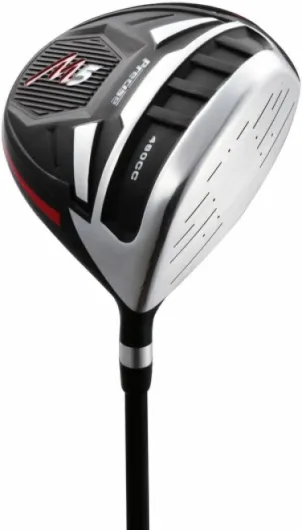
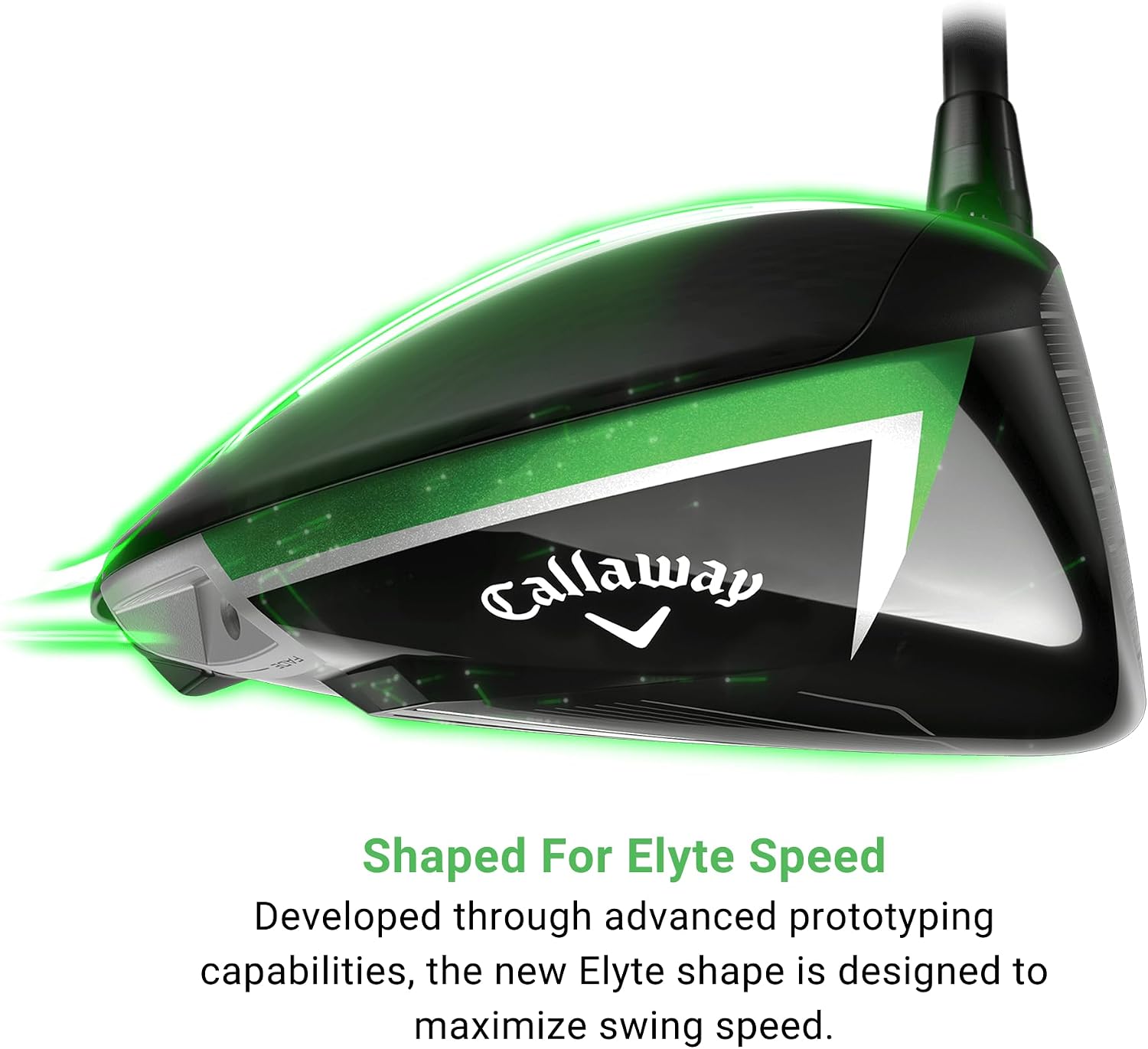
The design is pretty typical modern Callaway: mostly black, slightly stretched back profile, and a crown that isn’t screaming with graphics or wild colors. At address, the ELYTE sits square, maybe even a hair closed depending on how you set it down, which for me is comforting because my main miss is a fade. The shape is more rounded than triangular, so it doesn’t look too “techy” behind the ball. If you’re used to Callaway’s recent drivers, you’ll feel right at home.
The face has a decent amount of scorelines and a clear sweet spot visual, which I like. I’m not a fan of drivers where the face looks like a big blank mirror. Here, it’s easy to see where you’re making contact because ball marks show up clearly. Over a few sessions, I noticed my pattern tightening a bit just because I was more aware of where I was striking the face. The alignment aid on the crown is simple but helpful; it’s not too loud, just enough to center the ball.
Sound and feel are part of design too. This driver has a medium‑pitch metallic thwack, not that hollow “tin can” sound some older drivers had, but also not super muted like some premium heads. Personally, I liked it. Center strikes feel firmer and more solid, and mishits give clearer feedback without stinging your hands. On the course, playing partners commented that it sounded “strong” without being obnoxious, which lines up with how it felt to me.
If I had to nitpick, I’d say the head is maybe a touch on the “safe” side visually. There’s nothing that really stands out or makes you go “wow” when you pull it from the bag. It just looks like a modern black driver that means business. For some people, that’s perfect. For others who like flashy designs or visible carbon patterns, it might feel a bit plain. Personally, I prefer this kind of clean look because it lets me focus on the shot instead of the paint job.
Comfort and feel: easy to swing, but not for every swing speed
Comfort for a driver is really about how it feels in your hands and during the swing, and this ELYTE is mostly on the comfortable side. The midsize grip is the first thing you notice. For me (glove size L), it felt natural right away. I didn’t feel the need to re‑grip or choke down weirdly. If you usually play standard grips with no extra tape and you have small hands, this might feel slightly bulky at first, but you’d probably adjust after a few sessions.
During the swing, the club feels light‑to‑medium in total weight thanks to that 50‑gram shaft. For my 100–103 mph swing, that’s a comfortable window. I can feel the head, but it’s not dragging behind me. The shaft has a reasonably smooth load and release; it doesn’t feel like a broomstick, but also not like a noodle. People with a very smooth tempo will like it. If you have a super jerky, violent transition at the top, you might feel it wobble a bit unless you move up in shaft weight or flex.
Impact feel is quite nice for this level of driver. Center strikes feel solid and a bit springy, while misses are noticeable but not painful. The forgiveness on off‑center hits also helps comfort, because you’re not punished with harsh vibrations every time you miss the middle by a centimeter. After hitting a full large bucket, my hands and forearms didn’t feel dead, which I can’t say for some older, harsher‑feeling drivers I’ve used.
If I had to point out a downside on comfort, I’d say very fast swingers might find this setup a bit too light or soft and could feel like they have to baby it to keep it on line. Also, if you’re used to super muted, “thud” type drivers, the sound here might feel a bit louder. For the average player though, the ELYTE is easy to swing, easy to grip, and doesn’t beat you up, which is kind of what you want from a driver you’ll hit 10–14 times a round.
Materials and build: solid, modern, but not ultra‑premium everywhere
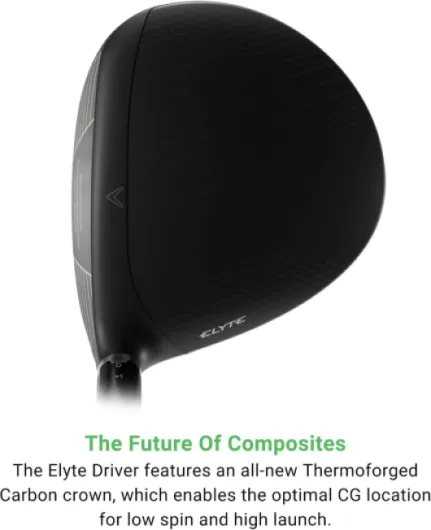
Material‑wise, it’s about what you’d expect from a current driver in this range. You’ve got a graphite Project X Denali Charcoal 50 shaft, a large metal head (Callaway doesn’t spell out every alloy here, but it’s their usual recipe of lightweight body with a strong face), and a midsize grip with a rubbery “Code” material. Nothing screams bargain bin, but it also doesn’t feel like a super exotic, tour‑only setup either.
The shaft is the main talking point in terms of materials. The Denali Charcoal 50 isn’t a no‑name; Project X is a known brand, and this doesn’t feel like a cheap made‑for shaft. It feels consistent. On the range, I hit about 60–70 balls in a row a couple of times, and I didn’t feel any weird flexing or sudden changes in feel. For a 50‑gram class shaft, it holds up fine when I step on it a bit. I wouldn’t throw it in the hands of a 115+ mph bomber and call it ideal, but for the typical mid‑handicap speed it’s quite usable.
The grip material (listed as “Code”) actually surprised me. It has a decent tacky feel even when your hands get a bit sweaty, and it didn’t feel too harsh. After a few weeks, I don’t see early wear marks or smooth spots, which sometimes happen quickly with softer grips. Midsize from the factory is a good call for a lot of adult players, especially if you’re used to adding extra tape. It feels stable on drives, and I never had any twisting in my hands, even on toe strikes.
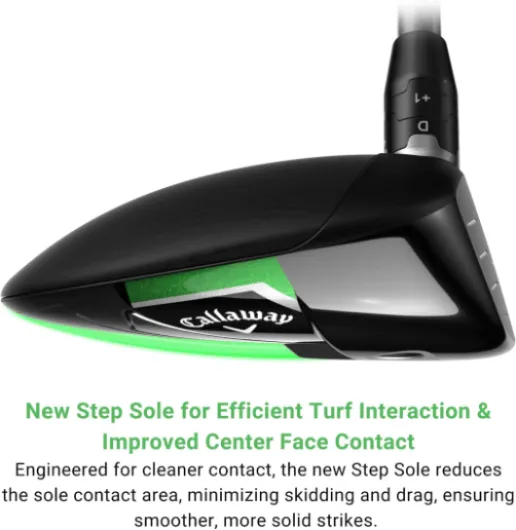
In terms of build quality, everything came straight, no weird rattles, no loose ferrules, and the finish on the head has held up decently so far. Normal tee marks on the face wipe off easily, and I haven’t chipped the paint yet despite a couple of sandy range mats. It doesn’t give off that super high‑end boutique vibe, but it definitely doesn’t feel cheap. I’d call the materials and build pretty solid for the price point, with the shaft being the standout part and the rest doing its job quietly in the background.
Durability: holding up well so far, with normal wear
In terms of durability, I’ve put this driver through about 8 full rounds plus multiple range sessions, mostly off decent mats and some grass tees. So far, the head and shaft are holding up nicely. The finish on the crown still looks good, no obvious chips or peeling, and only the usual light smudges you’d expect from handling and wiping it down. I’m not babying it either; it goes in and out of the bag with other clubs and rides on a cart most of the time.
The face shows normal ball marks, but they wipe off easily with a towel and a bit of water. I haven’t seen any weird denting or signs of the face caving in, which I’ve actually seen on cheaper drivers after a season. The sole has the usual scuff marks from sandy turf and mats, but nothing unusual. I’d say the paint and plating quality are decent for this category. It’s not bulletproof, but it’s not fragile either.
The shaft has stayed straight and true, no signs of cracking near the hosel or any odd creaking sounds. I’ve thrown it in and out of the car trunk in hot weather, and there’s been no warping or loose feeling. The grip is probably the best sign of durability so far: after several sweaty rounds, it’s still tacky and hasn’t started to smooth out or crumble. That “Code” material seems to be holding up better than some soft grips I’ve had that start to shine after a month.
Long‑term, it’s hard to judge after just a few weeks, but nothing about the ELYTE feels flimsy. If you treat your clubs normally—not slamming them into the ground or tossing them around—you should get several seasons out of this without any major issues. Just expect the usual cosmetic wear on the sole and face. From what I’ve seen so far, I’d call the durability reassuringly solid for regular play, not something you have to baby or worry about breaking under normal use.

Performance: not the longest, but very steady and forgiving
Performance‑wise, the ELYTE 2025 is all about consistency and forgiveness more than chasing pure distance. With my old driver (also 10.5°, stiff, slightly heavier shaft), my typical carry was around 235–240 yards with rollout to 250–255 on decent hits. With this ELYTE, my carry is in the same ballpark, maybe 2–5 yards more on average, but the big difference is I’m keeping way more drives in play. My worst slices are less extreme, and toe hits aren’t diving left into the trees as much.
Launch and spin felt pretty neutral. I’d call the launch medium‑high for me. On a launch monitor at the range, I was seeing launch angles around 13–14° and spin around 2600–2800 rpm on decent strikes, which is right where I like it. If you’re a natural high‑spin player, you might want a lower loft or a different shaft, but for most mid‑handicappers, this will be fine. The 10.5° loft with stiff Denali 50 seems tuned for a wide range of swings rather than something super specialized.
The biggest improvement I saw was in dispersion. Over several range sessions, my shot pattern tightened up. Instead of 3–4 balls per bucket being wild outliers, I was down to maybe 1–2 really bad ones, and the rest were within a playable window. On the course, that translated into fewer penalties and fewer punch‑outs from behind trees. I’m not suddenly a fairway‑finding machine, but I noticed my scores creeping down a bit just from having more second shots from grass instead of dirt.
It’s not perfect. If you absolutely smoke one off the center, there are drivers out there that might give you another 5–10 yards. Also, into the wind, the medium‑high flight can float a bit if you don’t keep your spin under control. But overall, the ELYTE gives steady, repeatable performance that suits someone who values hitting more fairways and playable rough over chasing a once‑per‑round monster drive they can brag about.
What you actually get with the ELYTE Driver 2025
On paper, this thing is pretty straightforward: 10.5° loft, right‑handed, stiff flex, graphite Project X Denali Charcoal 50 shaft, midsize grip, standard grip type, and a black head. It’s a classic modern driver setup aimed at the average to slightly better player who wants help but doesn’t want a chunky beginner club. The head size is in the usual 460cc ballpark, so nothing shocking there, and the overall club feels reasonably light without being whippy.
The stock shaft is the Project X Denali Charcoal 50 in stiff. It’s a mid‑weight, mid‑launch kind of profile. For me, it launched a touch higher than my previous driver (which had a 60‑gram shaft), but not ballooning. The midsize grip is an interesting choice as standard. My hands are medium‑large and I usually put extra tape under standard grips, so this actually felt nice right away. If you have small hands, you might find it a bit chunky, but I didn’t have any trouble releasing the club.
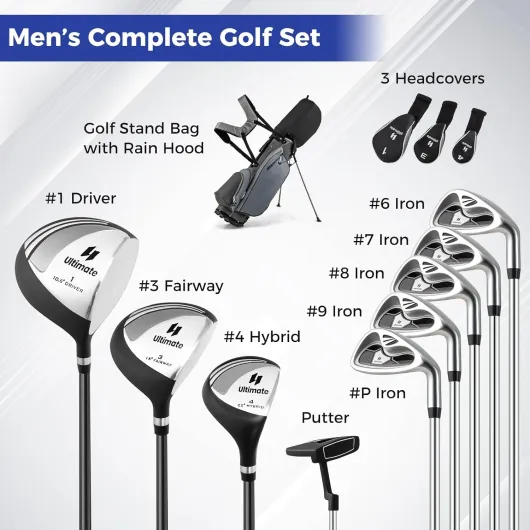
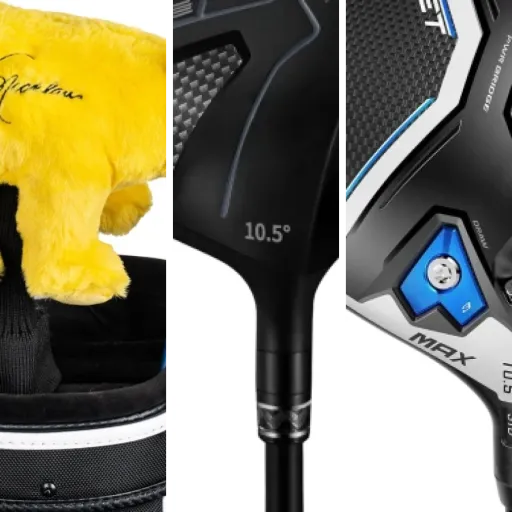
The club came as a single item (no fancy set, just the driver), with the usual Callaway headcover. No wrench or adjustable hosel tricks mentioned in the spec I saw, so don’t expect a bunch of sliding weights or crazy adjustability systems. This is more of a “set it and swing it” driver. For some people that’s a downside, but honestly, most mid‑handicap players I know never touch the adjustability once it’s set the first time.
In practice, the presentation matches what you’d expect from a mid‑tier Callaway driver: clean look, known shaft brand, and specs that are aimed at a wide audience. Nothing fancy in terms of packaging or extras, but the core product feels thought out. If you’re expecting a high‑end tour head with endless tinkering options, this isn’t it. If you just want a modern driver you can pull from the box and start hitting, that’s exactly what this feels like.
Pros
- Very forgiving on off‑center hits, keeps more drives playable
- Project X Denali Charcoal 50 shaft feels stable and consistent for moderate swing speeds
- Comfortable midsize grip and easy‑to‑trust look at address
- Solid build quality and durability for regular play
Cons
- Limited adjustability compared to some competitors in the same price range
- Not the longest option on perfect strikes for high‑speed players
- Midsize grip might feel too large for players with smaller hands
Conclusion
Editor's rating
After a few weeks with the Callaway ELYTE Driver 2025, my overall take is that it’s a very solid, forgiving driver that suits the real‑world needs of a lot of mid‑handicap golfers. It’s not built to break distance records, but it quietly improves your average drive by keeping more balls in play and smoothing out your mishits. The 10.5° head with the stiff Project X Denali Charcoal 50 shaft gives a medium‑high launch and stable feel that worked well for my 100–103 mph swing. Sound and feel are confident without being harsh, and the midsize grip is comfortable right out of the box.
It’s not perfect. Players who want a ton of adjustability or who swing either very slow or very fast might feel a bit boxed in by the stock setup and may need a shaft change. The look is quite plain—clean and functional but not exciting—and there are definitely other drivers that can squeeze out a few more yards on perfect contact. But if you care more about fairways hit and fewer penalty strokes than about bragging distance, this driver makes sense.
I’d recommend the ELYTE to mid‑handicappers and improving players with moderate swing speeds who want a reliable, forgiving driver they can keep for several seasons without fuss. If you’re a beginner on a tight budget, you can find cheaper options that will still work. And if you’re a low‑handicap power hitter chasing every last yard and tinkering with weights and settings, you’ll probably be happier with a more adjustable, tour‑oriented head. For the big group in the middle, though, this is a practical, confidence‑boosting driver that gets the job done round after round.