
Summary
Editor's rating
Good value if you prioritize forgiveness over raw distance
Big footprint, shallow face: confidence booster, not a player’s rocket
Easy to swing, forgiving on the body and the ego
Modern materials that feel solid without being flashy
Built to handle normal abuse, but not a tank
High launch, forgiving, decent distance – more control than fireworks
What you actually get out of the box
Pros
- Very forgiving on low-face and slight toe/heel strikes, especially for average swing speeds
- High, easy launch with a slight draw bias that helps reduce weak fades/slices
- Comfortable to swing with a light 60g shaft and confidence-inspiring larger head
Cons
- Not the longest or most workable 3-wood; better suited to control than shaping
- Regular flex and light shaft may feel too soft for higher swing-speed players

Specifications
View full product page →| Brand | Callaway |
A left-handed 3-wood that actually feels usable off the deck
I’ve been playing as a lefty for years, and finding a 3-wood that doesn’t feel like a punishment stick is harder than it should be. I grabbed this Callaway Elyte X Left-Hand 3-wood (Denali Charcoal 60g, Regular) mainly because my old fairway wood was tiny, unforgiving, and honestly just scary to hit off the deck. I’ve had this club on the course and the range for a few rounds now, and I’ve got a pretty clear idea of what it does well and where it falls short.
My profile: mid-handicap, swing speed on the slower side of average, and my main miss with woods is usually low on the face or a weak cut. So I’m basically the kind of player this thing is marketed at: someone who wants the ball up in the air, generally straight, and doesn’t care if it’s not the longest club in the group as long as it’s predictable. I used it off the tee on tight par 4s, off the fairway into par 5s, and a few times out of light rough.
The short version: it’s a very forgiving, confidence-boosting 3-wood, especially for left-handers who don’t see a lot of options. It’s not magic, it won’t fix a terrible swing, and it’s not the longest 3-wood I’ve hit, but it does make the bad shots less painful and the good ones pretty repeatable. The techy stuff like the Ai 10x face and tungsten weight actually shows up in how the ball flies, even if I don’t care much about the buzzwords.
If you’re a strong player chasing max distance or you like a compact, more demanding head, this probably won’t excite you. But if you’re a mid-handicap lefty who just wants a 3-wood that gets up easily, feels stable, and doesn’t punish slight mishits, it’s honestly a pretty solid option. I’ll break it down by design, feel, performance, and value so it’s clear where it shines and where it’s just “meh but it works.”
Good value if you prioritize forgiveness over raw distance
Value-wise, the Callaway Elyte X 3-wood sits in that typical big-brand price range: not cheap, but not at the absolute top either. You’re paying for a recognized name, the Ai 10x face tech, and a modern forgiving design. If you’re expecting a budget club, this isn’t it. But if you compare it to other mainstream fairway woods from big brands, the price feels in line with what you get in terms of performance and build quality.
Where the value makes sense is for mid-handicap left-handed golfers who struggle with 3-woods. Lefty options are often limited, and getting something that’s actually designed to launch easily and forgive low-face misses is worth a bit of a premium. In my case, I replaced a cheaper, older fairway wood, and the difference in consistency alone justified the spend. I’m not suddenly 20 yards longer, but I’m hitting more greens or at least leaving myself in better spots, and that’s what matters.
If you’re a high-swing-speed player or you already hit 3-woods well, the value might not be as strong. You might get more out of a lower-spin, more adjustable model that lets you fine-tune loft and face angle. This club is pretty much what it is out of the box: forgiving, high-launching, slightly draw-biased. If that matches your needs, the price makes sense. If you want something more specialized or tweakable, you might feel like you’re paying for features you don’t fully use.
Overall, I’d say it’s good value for the right golfer: someone who wants a reliable 3-wood they can actually hit off the fairway without fear, and who doesn’t mind paying a bit more than a no-name brand for proven tech and decent durability. There are cheaper options out there, but they usually don’t feel as stable or forgiving. There are also more expensive ones, but for an everyday player, I’m not sure the extra cost would translate into noticeably better scores.
Big footprint, shallow face: confidence booster, not a player’s rocket
The first thing I noticed when I put the Elyte X down behind the ball is the larger footprint and shallow face. If you’re used to compact, “player” fairway woods, this will look big. For me, that’s actually a plus. It immediately feels like I’ve got more margin for error, especially off the deck. The shallow face makes it less intimidating to hit from the fairway because it doesn’t feel like I have to pick it perfectly clean.
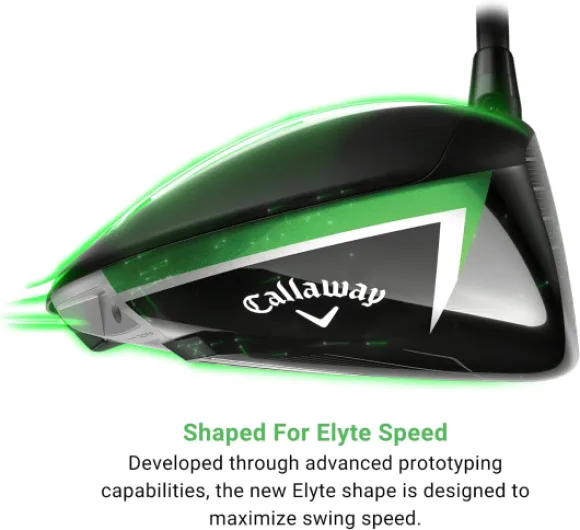
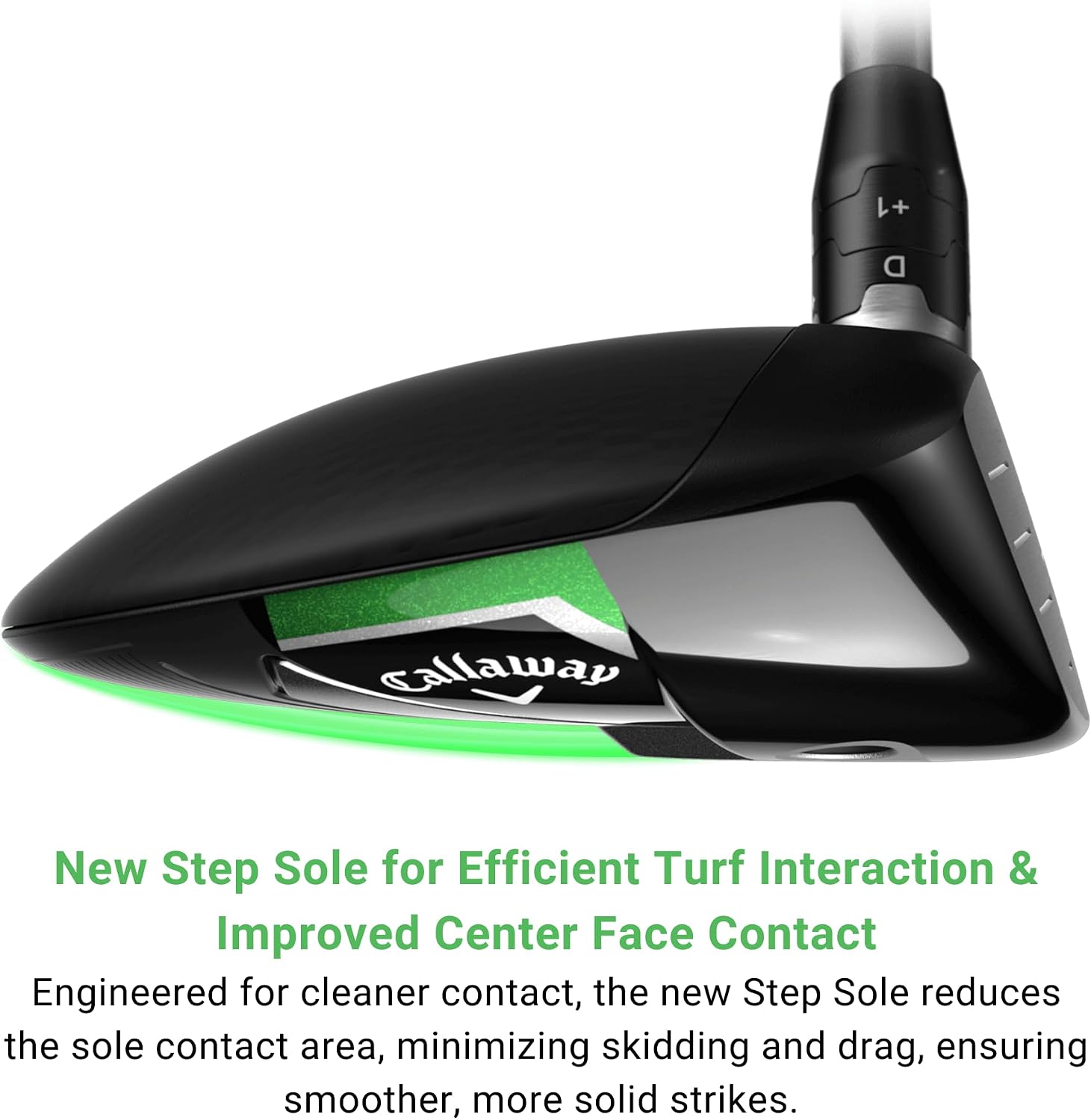
From address, the shape is pretty neutral but you can tell there’s a slight draw bias. The face doesn’t look crazy closed, but the overall setup clearly leans towards helping players who tend to leave the face open. As a lefty who occasionally leaks it right, that’s exactly what I want. When I put it down, it sits nicely on the turf, and the new Step Sole design is visible but not distracting — just a small step in the sole that’s supposed to help with turf interaction.
The crown is a simple black/chrome combo with a clean alignment aid. No wild graphics, which I like. At address, it looks modern but not loud. The head shape is rounded and friendly, not stretched out like some low-spin fairway woods. For me, that gave a sense of forgiveness before I even swung it. If you’re someone who likes a more compact, pear-shaped head, you might find it a bit chunky, but I got used to it quickly.
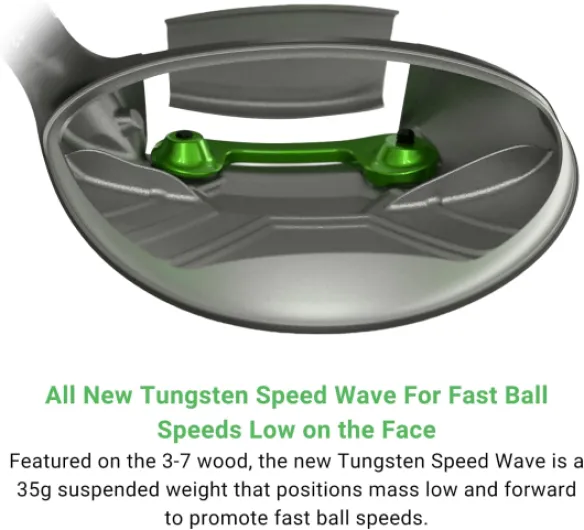
One design detail that matters: the Tungsten Speed Wave on the sole. It’s a 35g suspended weight low and forward, and in practice, it’s there to help with ball speed on low strikes. I do hit low on the face sometimes, especially off tight lies, and this club definitely punished those less than my old one. You still feel the mishit, but the ball doesn’t just dribble out. Overall, the design is clearly aimed at forgiveness and easy launch, not max workability. For my level, that’s a good thing. For someone who wants to hit every kind of shape on purpose, it might feel a bit one-dimensional.
Easy to swing, forgiving on the body and the ego
In terms of comfort, this 3-wood is easy to swing and not tiring over 18 holes. The overall weight and balance feel geared towards everyday golfers, not athletes. After a few range sessions and a couple of full rounds, my shoulders and wrists felt fine, which isn’t always the case with heavier or stiffer setups. The 60-gram shaft and balanced head weight make it feel like you’re swinging something you can control instead of fighting the club.
At impact, the feel is on the firmer side but not harsh. Center strikes feel solid and give you enough feedback to know you hit it well without that “dead” sensation some overly dampened clubs have. Mishits, especially low on the face, still let you know you missed, but they don’t sting. I hit a few thin shots on cooler mornings and didn’t get that painful vibration up the hands that some older steel-faced woods can give. So from a physical comfort angle, it’s quite friendly.
The Regular flex shaft is clearly aimed at average swing speeds. If you’re slower or you have a smoother swing, it’s comfortable because you don’t have to force it. You can swing at a normal tempo and the club does the work. I noticed that when I tried to really go after it, the timing could get a bit off and I’d see more left-right movement, so for me it rewarded a controlled, smooth swing. Once I accepted that and stopped overswinging, the consistency and comfort improved a lot.
Mentally, it’s also a comfortable club because of the larger, confidence-inspiring head. Standing over the ball, especially off the fairway, I didn’t feel that “don’t screw this up” tension I had with my older, smaller 3-wood. That alone made me swing more relaxed, which usually leads to better shots. It’s not perfect — if you’re used to very compact, precise tools, it may feel a bit bulky — but for the average golfer who just wants a forgiving, easy-to-hit 3-wood, it’s a comfortable fit in the bag.
Modern materials that feel solid without being flashy
The Elyte X uses a mix of graphite, C300 steel, tungsten, and rubber, which is pretty standard for a modern fairway wood but implemented in a way that feels solid in hand. The head uses Callaway’s C300 face cup, which is a stronger steel designed to keep ball speed up across more of the face. In practice, that means mishits aren’t punished as hard as with older, thicker-faced woods. I noticed that toe and low strikes still carried enough to stay in play, instead of dropping 30 meters short.
The shaft is a Denali Charcoal 60-gram graphite in Regular flex. It’s on the lighter side, which suits average swing speeds and players who don’t want to feel like they’re swinging a sledgehammer. For me, the shaft felt stable enough on normal swings, but when I really tried to step on it, I could feel a bit of whip. Not out of control, but you can tell it’s not built for 115 mph swings. For my mid-90s swing speed with a 3-wood, it felt about right: easy to load, no weird kick, and no feeling that the head was lagging behind.
The rubber grip (4 1/4 inches) is standard Callaway quality. It’s not super tacky like some aftermarket grips, but it’s comfortable, and even after a few sweaty rounds it didn’t feel slippery. I’d probably regrip it with something I personally prefer after a season, but out of the box it’s perfectly fine. There’s nothing fancy about it, but it doesn’t feel cheap either.
Overall, the materials give you a solid, modern club that should hold up well. There’s no sense of cutting corners, but also nothing that screams luxury or overbuilt. The finish on the head has held up decently so far: a few normal sole scratches from turf and sand, but the crown is still clean. If you treat your clubs reasonably well, this one should last several seasons without any drama. For the price bracket it sits in, the material quality matches what I’d expect from a big brand like Callaway.
Built to handle normal abuse, but not a tank
After a few weeks of range sessions and several rounds, the durability seems solid. The sole has the usual wear: light scratches from turf, sand, and the occasional small pebble, but nothing out of the ordinary. The black/chrome finish on the head has held up well so far, and I don’t see any chipping or weird marks on the crown, which is usually where cheaper finishes start to show their weakness. As long as you’re not banging it against cart paths or throwing it, it should stay looking decent.
The graphite shaft hasn’t shown any twisting, cracks, or odd flex patterns. I’ve leaned on it a few times absentmindedly (as we all do), and it didn’t feel fragile. Still, it’s a 60-gram shaft, so it’s not meant to be used as a walking stick. Treated like a normal golf club, it should last multiple seasons without any structural issues. The connection between the shaft and head feels tight; there’s no creaking or loosening at the hosel.
The rubber grip is holding up fine so far. No peeling, no early smooth spots, and it still has enough texture for a secure hold. Over time, like any stock grip, it’ll wear down and probably need replacing after a season or so if you play regularly. That’s normal maintenance, not a flaw. If you’re picky about grips, you may want to swap it sooner, but that’s more about personal preference than durability.
In short, the Elyte X feels like a normal, solidly built Callaway fairway wood. It’s not indestructible, but it doesn’t feel fragile or cheaply put together either. If you take basic care of your clubs — use the headcover, don’t slam it in the bag, wipe it down occasionally — it should hold up more than long enough to justify the purchase. I don’t see anything in the build that suggests early failure or weird wear patterns.
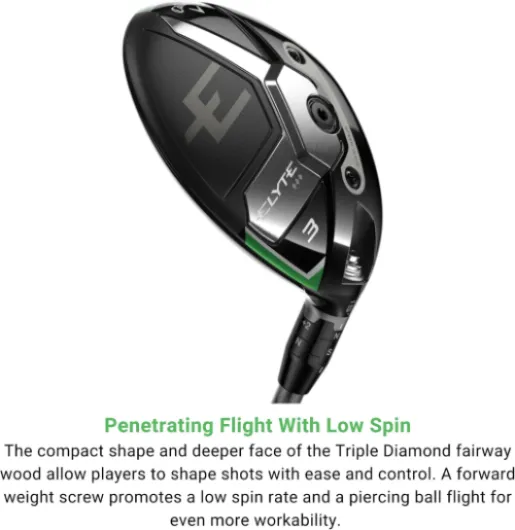
High launch, forgiving, decent distance – more control than fireworks
On the course, the performance is clearly tilted towards forgiveness and easy launch rather than raw distance or fancy shot shaping. For me, that’s a good trade-off. My typical carry with this 3-wood off the tee sat in the 200–210 yard range (around 180–190 meters), with roll pushing it a bit farther on firm fairways. Off the deck, carry was slightly shorter but still reliable. What stood out was how consistently it got the ball up in the air, even on slightly thin or low-face strikes.
The Tungsten Speed Wave and the shallow face really help with those low-face hits. I had a couple of shots where I knew I caught it too low, and with my old 3-wood those would have been low bullets that came up way short. With the Elyte X, they still launched mid-height and stayed in play, just a bit shorter than a pure strike. Not perfect, but a clear improvement. Lateral dispersion was also tighter than my previous fairway: instead of wild slices, my bad swings tended to produce a soft fade or a gentle pull, which is much easier to manage.
The Ai 10x face basically shows up as stable ball speed on slight mishits. Toe and heel strikes still lost some distance, but not dramatic amounts. I noticed that a lot of my shots ended up within a pretty similar distance range, which is exactly what you want when you’re laying up or going for a green in two. It doesn’t feel like a rocket launcher, but it feels predictable, and that’s honestly more useful for most players.
Workability is limited. I could nudge the ball left or right a bit, but it’s not a club that naturally wants to carve big fades or draws. It prefers a fairly straight, slightly draw-biased flight. If you’re the type who likes to shape every shot on purpose, you’ll probably feel a bit boxed in. But if you’re like most mid-handicaps and just want straight, high, and reasonably long, it gets the job done. It’s not the longest 3-wood I’ve ever tried, but for consistency and forgiveness, it’s pretty solid.
What you actually get out of the box
Out of the box, the Callaway Elyte X 3-wood comes with the club and a headcover, nothing more, nothing less. No tool, no fancy extras, but to be fair it’s a glued hosel fairway wood, so there’s nothing to adjust anyway. The headcover looks fine, typical Callaway style, and it’s easy to put on and take off. Not premium-feeling, not cheap either — just standard gear that does its job. After a few rounds in and out of the bag, it hasn’t torn or stretched out.
The club itself is a left-handed, 43.25" 3-wood with a Denali Charcoal 60-gram graphite shaft in Regular flex. That length feels pretty standard for a modern 3-wood. The weight of the club is listed around 2.3 pounds overall, but in the hands it feels light enough to swing without effort, especially for someone who isn’t a gym rat. It’s clearly designed with “average golfer” in mind, not tour-level swing speed.
The face uses Callaway’s Ai 10x face with a C300 face cup. In real-world terms, that just means the face is built to keep ball speed up across a decent chunk of the hitting area. I did notice that shots slightly towards the toe or a bit low didn’t drop off as hard as with my older 3-wood. That lines up with what they claim about more control points and better dispersion, but I judge it purely on what I see on the course: fewer total disasters, more playable misses.
Overall, the presentation is pretty straightforward: this is a modern, forgiving fairway wood with some tech under the hood, but it still feels like a normal club, not a gadget. Nothing about the packaging or first impression screams luxury, but everything is well put together and looks like it belongs in the bag of a serious weekend golfer, not a toy. For the price range it sits in, the overall package feels appropriate, not cheap, not over-the-top.
Pros
- Very forgiving on low-face and slight toe/heel strikes, especially for average swing speeds
- High, easy launch with a slight draw bias that helps reduce weak fades/slices
- Comfortable to swing with a light 60g shaft and confidence-inspiring larger head
Cons
- Not the longest or most workable 3-wood; better suited to control than shaping
- Regular flex and light shaft may feel too soft for higher swing-speed players
Conclusion
Editor's rating
The Callaway Elyte X Left-Hand 3-wood is a forgiving, high-launching fairway wood that suits mid-handicap golfers who just want something predictable and easy to hit. The larger footprint, shallow face, and tungsten weight all work together to help with the common low-face miss and keep mishits playable. It doesn’t feel harsh, it’s comfortable to swing, and the Ai 10x face does a good job of keeping ball speeds reasonably consistent across a decent chunk of the face.
It’s not perfect. It’s not the longest 3-wood around, and it doesn’t give you a ton of shot-shaping options. Strong players or those chasing maximum distance might find it a bit tame and prefer something more compact and adjustable. But for the average left-handed golfer who fights with 3-woods off the deck, this club makes life easier. You get solid build quality, decent durability, and performance that focuses on control and forgiveness rather than showy numbers.
If you’re a mid- to high-handicap lefty who wants a 3-wood you can actually trust on tight par 4s and into par 5s, this is a pretty solid choice. If you’re a low handicap with a fast swing and you like to work the ball, you’ll probably be happier with a different model. Overall, it’s a reliable tool, not a magic wand, and for most weekend golfers, that’s exactly what’s needed.