
Summary
Editor's rating
Value: where these wedges actually make sense
Looks and shape: not flashy, but not ugly either
Forged head feels good, shafts and grips are just okay
How they hold up: finish vs. actual build
On-course performance: spin, control, and feel
What you actually get in the set
Pros
- Three forged wedges (52/56/60) for roughly the price of one big‑name wedge
- Good spin and control from the micro‑milled faces, especially compared to basic set wedges
- Comfortable, confidence‑inspiring head shape that doesn’t look cheap at address
Cons
- Shafts play on the soft side and may feel too whippy for faster swings
- Rainbow/black finish wears off quickly on the sole and face
- Grips are basic and may need replacing sooner if you’re picky about feel

Specifications
View full product page →| Brand | LAZRUS GOLF |
Cheap wedges or hidden gem?
I’ve been playing mid‑handicap golf for a while, and wedges are usually where the money disappears fast. So when I saw the LAZRUS forged wedge set (52/56/60) for about the price of one big‑name wedge, I was curious but honestly a bit suspicious. I grabbed the right‑hand rainbow set and used them for a mix of range sessions, short‑game practice, and a few rounds.
My baseline is older Cleveland and Callaway wedges, so I’m used to "proper" clubs, not the random boxed set stuff. Going in, I expected these to feel dead or harsh, with sloppy spin and cheap grips. Instead, they felt more like entry‑level forged wedges than bargain‑bin gear. Not perfect, but definitely not junk.
Over a couple of weeks, I focused on the usual wedge jobs: 100‑yard approaches with the 52, standard sand shots and 70‑90 yarders with the 56, and flop/short‑sided shots with the 60. I also used them a lot around the practice green to see how predictable the spin and rollout were. That’s usually where cheap wedges fall apart.
Bottom line: these wedges are pretty solid for the price, especially if you’re on a budget or just getting serious about your short game. They’re not at the level of high‑end Vokey or Cleveland setups, and there are some clear compromises (mostly shaft and finish), but they absolutely get the job done and then some for most casual golfers.
Value: where these wedges actually make sense
This is where the LAZRUS wedge set really makes its case. You’re getting three forged wedges for roughly the price of one big‑name wedge. If you’re a newer golfer, a casual weekend player, or someone building a second/backup set, that’s hard to ignore. You get proper loft gapping (52/56/60), a forged head feel, real spin from the milled face, and a club that looks and plays like a "real" wedge, not a throw‑in from a cheap boxed set.
There are trade‑offs: softer, unbranded shafts, average grips, and a finish that wears quickly. If you’re a more serious or faster‑swing player, you might end up reshafting and regripping, which eats into the savings. At that point, you’re getting closer to the cost of used or discounted premium wedges, so it depends how picky you are and whether you enjoy tinkering with gear.
For the typical mid‑ to high‑handicap player who just wants decent wedges without dropping a few hundred dollars, these make a lot of sense. They give you enough spin and control to actually learn proper wedge shots and improve your short game. If you outgrow them later or decide you want something more tailored, you haven’t sunk a fortune into them.
So from a value standpoint, I’d call them good bang for the buck. Not perfect, not on the same level as tour‑level gear, but very usable and fairly priced. If your budget is tight or you’d rather spend money on lessons or rounds than on brand names, this set is worth a serious look.
Looks and shape: not flashy, but not ugly either
Design‑wise, these wedges sit somewhere between "budget club" and "decent mid‑tier." The head shape is actually pretty friendly: a rounded leading edge, slightly fuller sole, and a profile at address that doesn’t look weird or oversized. If you’ve played Cleveland or Callaway wedges from the last 10–15 years, these won’t shock you when you put them down behind the ball.
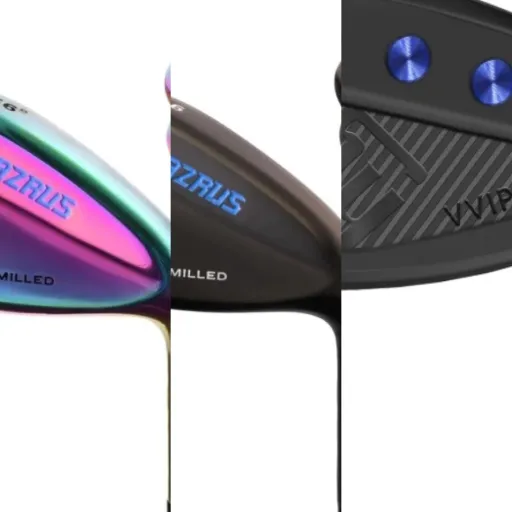
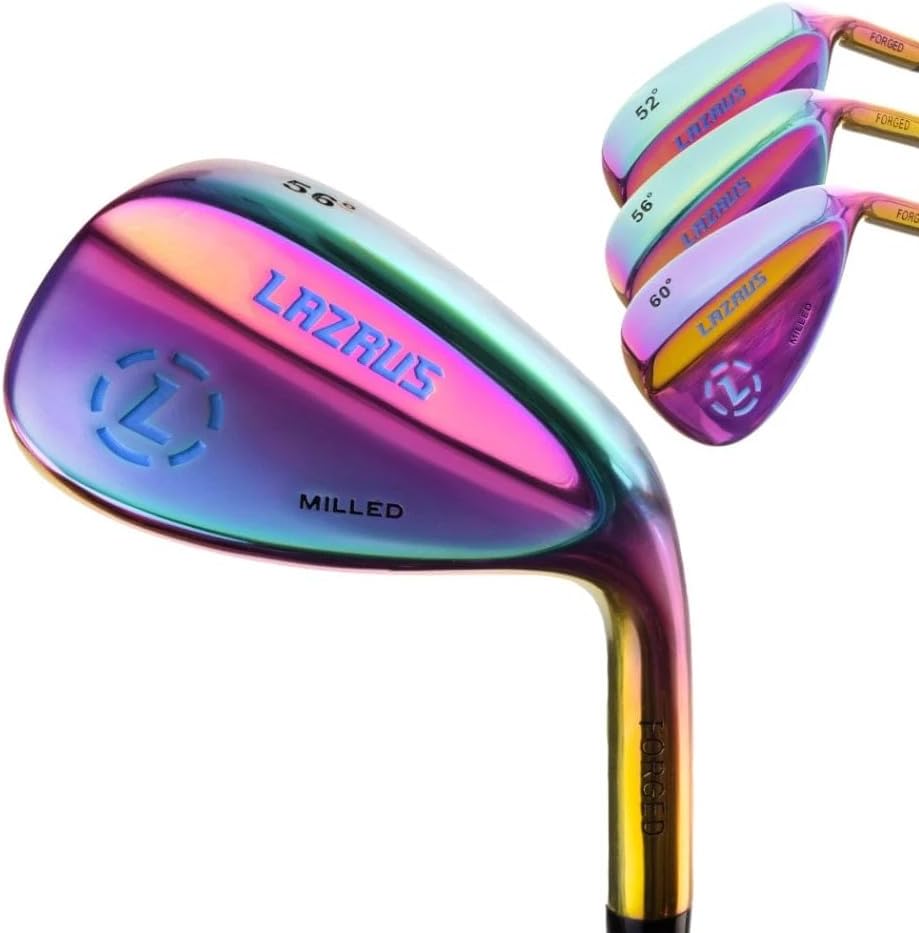
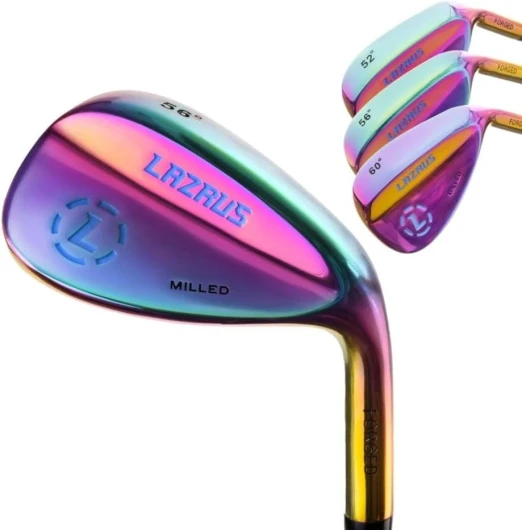
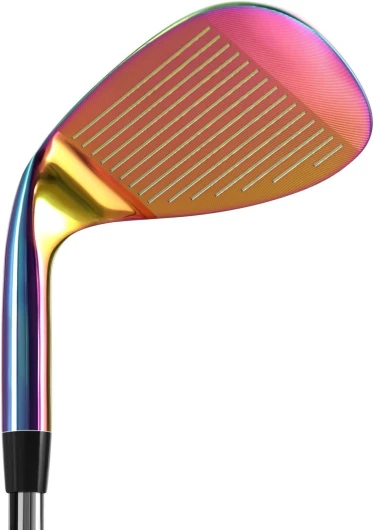
The rainbow finish is the main visual thing. When new, it looks cool and different – you get that oil‑slick look with greens and purples popping in the sunlight. On the course, it definitely stands out more than a standard chrome wedge. The downside: like other colored finishes, it doesn’t stay pretty for long. After some range work and a few rounds, the sole and face start to show wear quickly, especially if you take decent divots. It’s mostly cosmetic, but if you’re picky about looks, just know the rainbow vibe fades.
At address, the top line isn’t too thick, and the club doesn’t look clunky. The 60° has enough face area to inspire some confidence on flops and bunker shots without feeling like a giant shovel. The grooves and milling are visible without looking gimmicky. I never felt like I had to “fight” the shape to open the face or hood it down.
In short, the design is practical: classic enough for most players, with a bit of style from the finish. It’s not on the same level as a premium tour wedge in terms of refined shaping and grind options, but it’s far from cheap‑looking junk. If you can live with the finish wearing off, the overall design is totally fine for everyday golf.
Forged head feels good, shafts and grips are just okay
The heads are forged alloy steel, and you can actually feel that on contact. Compared to cast game‑improvement irons, the wedges have a softer, more solid feel when you catch them clean. On half swings and little chips, there’s a nice feedback that tells you whether you struck it out of the middle or drifted towards the toe. It doesn’t feel mushy, but it’s not harsh either. For this price range, that’s honestly better than I expected.
The shafts are where you notice the cost cutting. They’re stepped steel with no real branding and play more like a soft regular, almost into senior flex territory for stronger players. If you have a slower to moderate swing speed, that’s probably fine and might even help launch the ball a bit easier. But if you’re swinging wedges aggressively or hitting a lot of full‑swing 52s, you can feel the shaft load and unload more than with a premium wedge shaft. It’s playable, just not particularly tight or precise.
The grips are basic wrap‑style synthetic rubber. They’re usable out of the box, with decent tack and a normal thickness. They don’t feel like premium Lamkin or Golf Pride grips, but they also don’t feel like rock‑hard plastic. I didn’t have any big slipping issues, even with some sweat, but if you’re picky about grips, you’ll probably want to regrip them at some point.
So overall: head material and face milling feel like the strong point, while shafts and grips are clearly the budget part of the build. For the price of three wedges, that trade‑off makes sense, but more serious players might eventually reshaft and regrip if they really like the heads.
How they hold up: finish vs. actual build
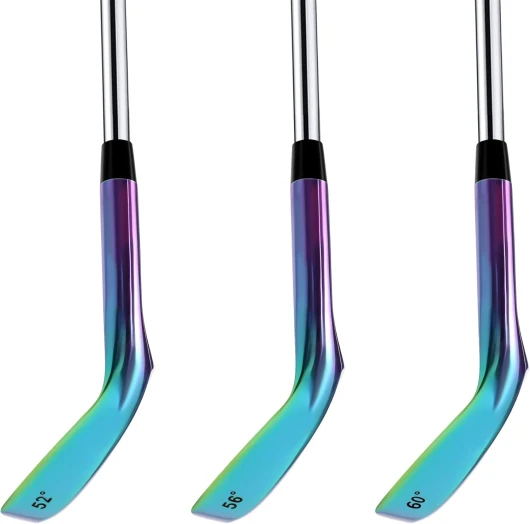
Durability is a bit of a mixed bag, and it depends on what you care about. Cosmetically, the rainbow/black‑style finish wears pretty fast. After a couple of range sessions with real turf and a few bunker shots, the sole and lower part of the face started showing clear wear lines where the coating was coming off. This doesn’t affect how they play at all, but if you like your clubs to stay pretty, you’ll probably be annoyed. It’s the same story with most colored wedges though, even from big brands.
In terms of structural durability, my experience was fine – no bending, no loose heads, no rattles. But I did pay attention to other user feedback, and a few people have had shaft issues, including one snapping up inside the grip. That seems rare and might be swing‑speed related, but it’s still worth mentioning. The shafts definitely don’t feel as heavy‑duty as a premium wedge shaft, so if you swing hard and dig big divots, you’re pushing them more than the average player.
The face and grooves held up decently over the short term. After a couple of weeks of use, the milling was still visible, and the spin didn’t suddenly drop off. Long term, any wedge will lose sharpness, but I didn’t see anything that looked out of line for this price range. They’ll last long enough for a casual golfer to get plenty of use before needing a replacement.
The one bright spot here is LAZRUS customer service and warranty. A user who snapped a shaft got a replacement quickly with almost no hassle, which honestly matters a lot at this end of the market. So even if you do get a dud shaft, they seem to take care of it. Overall: finish wears fast, shafts are okay but not bulletproof, heads themselves seem solid.
On-course performance: spin, control, and feel
Performance is where these wedges actually surprised me. The spin is legit. On clean fairway lies with a decent ball, I was able to hit 80–100 yard shots that checked up quickly and sometimes even pulled back a little, depending on green firmness. Around the green, chips and pitches grabbed more than I expected from a budget wedge. If you’re coming from a worn‑out wedge or a basic set PW/ SW, you’ll notice the extra bite right away.
The 52° worked well as a gap wedge for 90–110 yard shots and bump‑and‑run chips. Distances were consistent once I got used to them, and I didn’t see any weird fliers. The 56° is basically the workhorse: standard sand shots, 70–90 yard approaches, and mid‑height pitches. It handled bunkers just fine; the sole shape gives enough bounce for average sand without digging too much, as long as your technique is decent. The 60° is where I had the most fun – flops, high soft pitches, and short‑sided lies felt controllable. Opening the face was easy, and the milling still grabbed the ball even on partial strikes.
The only place you really feel the price is in shaft stability on harder swings. When I went after a full‑swing 52° or tried to flight the 56° down aggressively, the shaft felt a bit soft and delayed. It’s not awful, but if you’re used to a stiffer wedge shaft (like Dynamic Gold S200/S300), you’ll notice the difference. For most recreational golfers with moderate swings, it’s totally fine, and you still get good accuracy and distance control.
Overall, in practice and real rounds, these wedges do the job very well for the price. You get plenty of spin, decent feel, and predictable distances. They’re not going to magically fix a bad short game, but they give you the tools to actually learn proper wedge shots without dropping a ton of cash.
What you actually get in the set
The set I used is the right‑hand rainbow 52/56/60 combo. So you’re getting three wedges that basically cover the standard gap, sand, and lob range. The lofts are simple: 52° (gap), 56° (sand), 60° (lob). No weird lofts, no confusing options. Just the basic trio most people end up with anyway. Flex is listed as regular, shaft is stepped steel, and the grips are basic wrap‑style synthetic rubber.
In hand, each club feels like a normal, full‑weight wedge. Nothing feels hollow or toy‑like, which is usually my fear with budget sets. The heads are forged alloy steel with a micro‑milled face, so you’ve got visible milling lines that are meant to help with spin. Out of the box, the grooves and milling look clean and consistent, not like some rough sandpaper job.
LAZRUS markets these as suitable for both beginners and more experienced players, and I think that’s fair. A low‑handicap player might nitpick the shaft feel, but the head shape and general balance don’t scream “cheap starter kit.” These could easily be a main set for a newer golfer or a backup/second bag set for someone more experienced.
Overall, the presentation is simple and honest: three wedges, standard lofts, one shaft option, one grip style. No fancy fitting, no custom grind story, but also no nonsense. If you want plug‑and‑play wedges without needing a fitting cart or a spreadsheet, this set fits that bill pretty well.
Pros
- Three forged wedges (52/56/60) for roughly the price of one big‑name wedge
- Good spin and control from the micro‑milled faces, especially compared to basic set wedges
- Comfortable, confidence‑inspiring head shape that doesn’t look cheap at address
Cons
- Shafts play on the soft side and may feel too whippy for faster swings
- Rainbow/black finish wears off quickly on the sole and face
- Grips are basic and may need replacing sooner if you’re picky about feel
Conclusion
Editor's rating
If you strip away the marketing and just look at how these wedges play, they’re solid budget tools that cover all the basic short‑game jobs. The forged heads feel good, the micro‑milled faces give you real, noticeable spin, and the 52/56/60 loft combo works for pretty much any average golfer. They’re not as dialed‑in or refined as premium wedges, but they don’t pretend to be either. They simply give you proper wedges at a price that doesn’t hurt.
I’d recommend these to newer golfers, mid‑ to high‑handicappers, and budget‑minded players who want to upgrade from the generic PW/SW that came with their starter set. Also a good fit for seniors or smoother swingers, since the shafts lean a bit soft. If you’re a strong player with a fast swing who’s picky about shaft feel and grind options, you’ll probably be happier with Vokey, Cleveland, or similar – or you might buy these and reshaft, but then the price gap closes quickly.
In short: they get the job done, offer good value, and make it easier to build a full wedge setup without draining your wallet. Just go in knowing the finish will wear, the shafts aren’t tour‑level, and you’re buying smart budget gear, not luxury clubs.