Summary
Analysis score
Average of the criteria rated below
Is the DS-Adapt MAX 7-wood worth it?
Draw-biased MAX head with aggressive adjustability
Playability, shaft feel, and ease of use
Build quality and long-term reliability outlook
Distance and forgiveness for moderate swing speeds
What the DS-Adapt MAX 7-Wood actually offers
Pros
- Very forgiving, draw-biased head with carbon crown and back/heel weighting for slice-prone players
- FutureFit33 hosel offers 33 independent loft and lie combinations, rare adjustability in a 7-wood
- Lightweight Senior-flex Denali Red 50 graphite shaft suits moderate and slower swing speeds
Cons
- Adjustment tool reportedly not included and instructions criticized as unclear
- At least one report of missing headcover, which hurts perceived value and quality control
- Draw bias and soft Senior flex may not suit stronger players or those who already hit a draw

Specifications
View full product page →| Brand | COBRA |
A 7-wood built for forgiveness and fine-tuning
The Cobra DS-Adapt MAX Fairway 7-Wood aims clearly at golfers who want help getting the ball in the air and keeping it in play, without giving up adjustability. On paper, it mixes a lightweight construction, a draw-biased head, and a very flexible hosel system. It is paired here with a True Temper Denali Red 50 graphite shaft in Senior flex, so it is clearly targeting moderate swing speeds rather than aggressive hitters.
What stands out is the combination of a MAX forgiveness head with an advanced FutureFit33 adjustable hosel that offers 33 different loft and lie configurations. According to the brand, loft and lie can be adjusted independently by ±2°, and a SMARTPAD sole design is supposed to keep the face looking square regardless of the setting. That kind of adjustability is rare on a 7-wood, especially in a draw-biased, game‑improvement style head.
On the user side, the early Amazon feedback (10 reviews, 4.0/5 average) points to a club that delivers what many mid-to-high handicappers want: buyers often mention that it is forgiving, easy to launch, and long for a 7-wood. At the same time, there are a few complaints, especially about missing accessories and unclear or incomplete information on how to adjust the club. So it is not flawless from a buyer-experience standpoint.
In my opinion, this is a fairway wood that looks strong on paper for senior or slower-swing players who fight a slice and like to tinker with settings. It is less suited to players who hate dealing with adjustment charts, or those expecting a premium unboxing with every accessory included. The rest of the analysis looks at design, performance, ease of use, durability, and overall value to see how this 7-wood positions itself in the crowded game‑improvement fairway segment.
Is the DS-Adapt MAX 7-wood worth it?
Assessing value here means looking at what you get: a brand-name Cobra fairway wood, MAX forgiveness head, draw bias, a well-known graphite shaft, and an unusually advanced hosel system with 33 settings. The club also includes a headcover according to the spec, though at least one buyer reports that theirs did not arrive with one, which is a negative mark on perceived value and quality control. The adjustment tool is not listed as included, and one review clearly criticizes its absence and the lack of clear instructions, calling that “inexcusable” for an adjustable club.
The Amazon listing shows that this model sits at #8 in Golf Woods within Sports & Outdoors and has an overall 4.0/5 rating from 10 reviews. That combination—decent popularity rank and generally positive feedback—suggests that most buyers feel they got their money’s worth in terms of performance. Comments like “hits nice and far and feels good,” “super forgiving,” and “very forgiving and powerful” indicate that the core promise (easy distance with forgiveness) is being delivered for the target audience.
However, value is dragged down a bit by the user experience around adjustability and packaging. For a club marketed heavily on its FutureFit33 system and weight adjustability, not including the tool and not providing clearly understandable instructions forces some buyers to either already know what they are doing or to search online. For golfers who are not equipment nerds, that can make the product feel less complete, even if the performance is there once it is properly set up.
In my opinion, if the price sits in the typical range for a current-generation, big-brand fairway wood, the DS-Adapt MAX offers good value for a specific golfer profile: senior or moderate swing speeds, slice-prone, and willing to tune the settings. If you are a simple plug‑and‑play golfer, or if you already hit a neutral or draw ball flight, the extra cost and complexity of the adjustability might not bring much benefit, and you might find better value in a simpler, fixed‑hosel model with fewer bells and whistles but a more straightforward user experience.

Draw-biased MAX head with aggressive adjustability
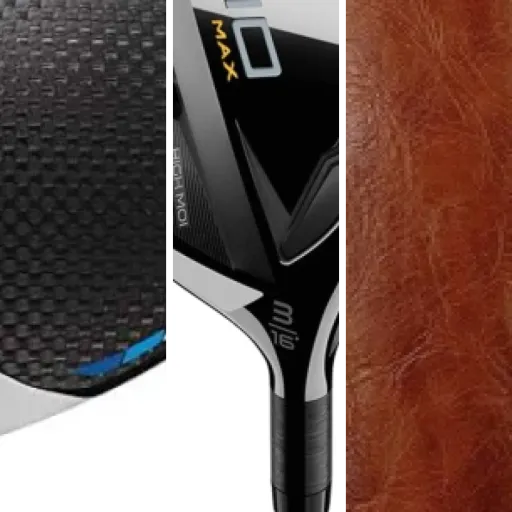
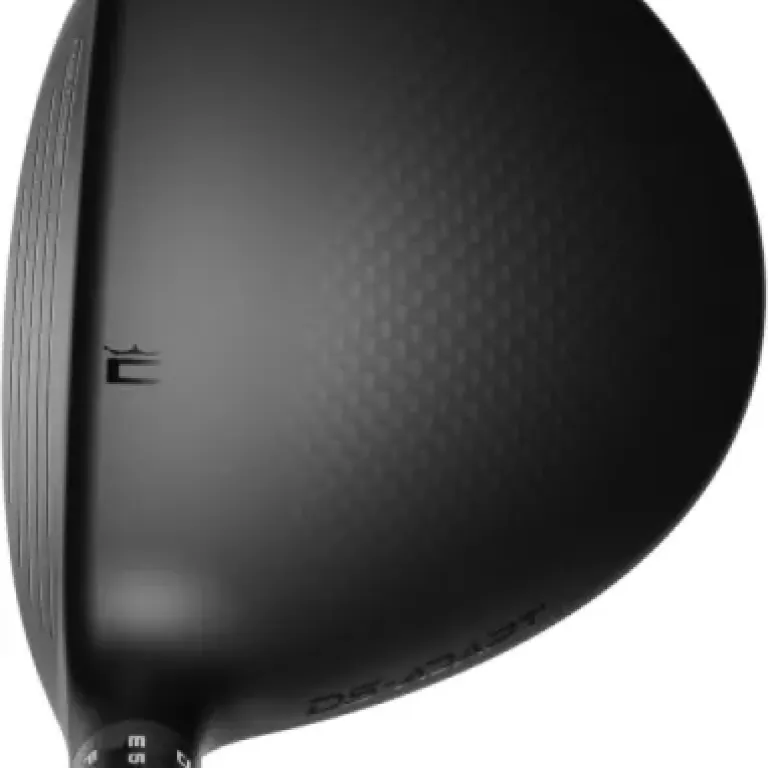
From a design standpoint, the DS-Adapt MAX 7-wood is clearly a game‑improvement fairway wood. The head is described as the brand’s most forgiving fairway shape, with a carbon crown and a larger face insert. That usually means a slightly bigger footprint at address and a deeper face, both intended to inspire confidence and help with mishits high or low on the face. Buyers who commented on performance often mention that the club is “super forgiving” and “hits nice and far,” which aligns with what you would expect from this design philosophy.
The draw bias is built into the design through both internal and external weighting. Internally, there is a weight pad in the back and heel. Externally, you can position weights in the back and heel to add more draw tendency or more stability. On paper, that is good news for players who fight a slice, especially seniors or moderate swing-speed golfers who tend to leave the face open. It also means you can gradually tune how much help you want instead of being stuck with a fixed, heavily draw-biased head.
The standout design feature is the FutureFit33 adjustable hosel. Unlike many hosels that link loft and lie changes together, this one is advertised as allowing independent loft and lie adjustment of ±2°. There are 33 possible combinations, which is far more than most adjustable fairway woods. The SMARTPAD sole design is supposed to keep the face looking square to the target even as you change settings, which can help golfers who dislike seeing a closed or open face at address. One reviewer mentions that the club is “super forgiving once you've correctly dialed in the setting right for your swing,” showing that at least some buyers are actually making use of this flexibility.
Visually, the club is listed as black, with a mix of alloy steel and graphite in its materials. That likely means a standard black crown and sole with some contrasting details, not a flashy, colorful look. In my opinion, the design direction makes sense: a confidence‑inspiring, draw-biased shape, with very granular adjustability for golfers who like to experiment. The downside is obvious: if you do not understand or use the settings, you are paying for complexity that might end up confusing instead of helping.
Playability, shaft feel, and ease of use
“Comfort” for a golf club mostly comes down to how easy it is to swing and control, and how confidence‑inspiring it is at address. This DS-Adapt MAX 7-wood uses a Senior-flex 50 g graphite shaft, which is on the lighter and softer side. For many older players or those with slower swings, that should make the club feel easy to load and help them generate speed without feeling like they are forcing it. The total package weight of 454 g including packaging suggests a relatively light club, though that figure is not precise for the head alone.
The grip is listed as 4 1/4 inches with rubber material. That measurement is a bit unusual (it is more common in tennis racquets), but it suggests a standard men’s grip size rather than an oversized or undersized grip. Rubber is the default material for most stock golf grips, so there is nothing surprising there. On paper, this should give a familiar feel for most golfers and enough tackiness for control, though no reviewer specifically comments on the grip quality or comfort, which usually means it is fine but not a standout.
Where comfort becomes more complex is in the adjustability. The FutureFit33 hosel and adjustable weights give a lot of control, but they also add a layer of complexity. One buyer explicitly complains about a “serious lack of easily understandable instructions on how to adjust the club head,” and also notes that the adjustment tool is not included. For someone who is not tech-savvy with golf equipment, that can make the club feel harder to live with, even if the head itself is forgiving. On the other hand, another buyer states that it is “super forgiving once you've correctly dialed in the setting right for your swing,” which shows that those who take the time to adjust it can get a comfortable, tailored ball flight.
In my opinion, this club is comfortable to swing for the right profile (senior, moderate swing speed, needs help with launch), but not necessarily comfortable to configure. Players who like to just set and forget might prefer a fixed-hosel, fixed-weight fairway wood. Those who enjoy fine-tuning lie and loft will likely appreciate the potential, but they should be ready to look up instructions online or already know how Cobra-style adjustability works.

Build quality and long-term reliability outlook
Durability for a modern fairway wood is mostly about head construction, shaft quality, and component fit (hosel, weights, grip). The DS-Adapt MAX uses a mix of materials: an alloy steel and graphite construction, with a carbon crown and a forged face insert. This combination is standard for current fairway woods: steel or multi-material body, thin face insert for speed, and carbon crown to save weight. There are no reports in the reviews of cracks, dents, or premature wear, which is a good sign, though the total number of reviews (10) is still small.
The True Temper Denali Red 50 graphite shaft comes from a known shaft brand, which is reassuring. Senior-flex graphite shafts can sometimes feel whippy for very fast swingers, but that is more a performance issue than a durability one. There is no mention of shaft breakage or loose heads among the comments, and that kind of problem usually shows up quickly if it is common. The listed weight of 454 g and dimensions of 121.92 x 15.24 x 17.78 cm are more about shipping than construction, so they do not tell much about robustness.
Where durability intersects with user experience is the adjustable components: the FutureFit33 hosel and the moveable weights. Adjustable hosels tend to be reliable if not abused, but they do depend on golfers using the correct torque tool and not overtightening. One review complains that the adjustment tool is not included and that instructions are unclear. That does not directly accuse the product of poor durability, but it raises a risk: if users improvise with non‑golf tools or do not seat the screws correctly, they could damage the hosel or strip the weight screws over time.
In my opinion, the DS-Adapt MAX looks solid enough on paper for normal use, in line with other modern fairway woods from big brands. The carbon crown and thin face will never be as tank‑like as a full stainless-steel head, but that is the trade-off for performance. The main long-term concern is user handling of the adjustable parts; golfers who are careful and use the proper wrench should be fine, while those who tinker aggressively without guidance might shorten the life of the adjustment hardware.
Distance and forgiveness for moderate swing speeds
On the performance front, the DS-Adapt MAX 7-wood is built around three promises: more ball speed, higher launch, and extra forgiveness. The larger forged H.O.T. face insert is marketed as increasing face flex, which on paper should give better ball speed on off‑center strikes. Combined with the low-and-back center of gravity from the carbon crown and back weighting, this should help players launch the ball higher with less spin drop‑off on mishits, which is exactly what many senior and mid/high-handicap players need from a 7-wood.
Among the published reviews, buyers often mention that the club hits “nice and far” and that it feels powerful for a fairway wood in this category. One user simply says it is “very forgiving and powerful,” which suggests that the blend of face tech and head design is doing its job for typical users. Another buyer talks about the club being “super forgiving once you've correctly dialed in the setting right for your swing,” implying that the FutureFit33 hosel and moveable weights can genuinely improve ball flight if you are willing to adjust them.
The Senior-flex Denali Red 50 graphite shaft and the relatively long 43.25" length should, in theory, help generate more clubhead speed for slower swingers, which translates to better distance. The trade-off is that a longer shaft can reduce consistency for golfers who already struggle with center contact. In my opinion, this club is tuned more towards distance and launch help than tight dispersion, despite the marketing mention of “tighter dispersion” from the carbon crown. The draw bias will also influence performance: for chronic slicers, it can straighten or even turn over shots; for players who already draw the ball, it might lead to hooks if the settings are not carefully chosen.
Overall, based on the spec sheet and comments, the performance profile looks strong for its target: slower to moderate swing speeds, slice-prone, needing height and carry. There are no detailed distance numbers in the reviews, so it is impossible to quantify gains, but the tone is mostly positive. The only real caveat is that golfers who hit it hard or naturally draw the ball may find the head too draw-biased and the shaft too soft, which would hurt both distance and accuracy.

What the DS-Adapt MAX 7-Wood actually offers
This version of the DS-Adapt MAX is a right-handed 7-wood with an advertised loft in the listing of 7 degrees, but the product name mentions 21.5 degrees. Realistically, 21.5° is the typical loft for a 7-wood, while 7° would be driver territory, so it is safe to say there is a typo somewhere in the spec line. Either way, as a 7-wood it targets the gap between a 5-wood and the longest hybrid or iron in the bag, usually for shots around 170–200 yards for the intended audience.
The club length is listed at 43.25 inches, which is quite long for a 7-wood (many competitors sit closer to 41–42 inches). On paper, that extra length could add some distance for players who can control it, but it may also be a bit less accurate for those who struggle with longer shafts. The total listed weight is 454 g for the whole package (including packaging dimensions), with the shaft being a True Temper Denali Red 50 graphite in Senior flex, so we are clearly in a lightweight, easy-to-swing territory.
The head uses a lightweight carbon crown to move weight low and back in the head. Cobra also talks about a larger forged H.O.T. face insert, designed to increase face flex and ball speed across more of the hitting area. Internally, there is an adaptive weighting system with pads in the back and heel to build in a draw bias and stability. On the sole, there are adjustable weight ports in the back and heel that allow further tuning of that draw bias.
In the box, the spec sheet says you should get the club and a headcover. Reviews show at least one buyer reporting that the headcover was missing, which suggests quality control on packaging is not perfect. There is also no adjustment tool mentioned as included, and one buyer explicitly complains that it is not part of the package. In my opinion, for a club that leans so heavily on adjustability, not clearly bundling or communicating about the tool is a weak point in the overall product presentation.
Pros
- Very forgiving, draw-biased head with carbon crown and back/heel weighting for slice-prone players
- FutureFit33 hosel offers 33 independent loft and lie combinations, rare adjustability in a 7-wood
- Lightweight Senior-flex Denali Red 50 graphite shaft suits moderate and slower swing speeds
Cons
- Adjustment tool reportedly not included and instructions criticized as unclear
- At least one report of missing headcover, which hurts perceived value and quality control
- Draw bias and soft Senior flex may not suit stronger players or those who already hit a draw
Conclusion
Analysis score
The Cobra DS-Adapt MAX Fairway 7-Wood, in this Senior-flex Denali Red 50 configuration, is clearly aimed at golfers who need help with launch, distance, and slice control. On paper, it combines a forgiving MAX head, a draw-biased weighting scheme, and an advanced FutureFit33 hosel that allows very fine tuning of loft and lie. The early Amazon feedback backs this up: most buyers describe it as forgiving, powerful for a 7-wood, and capable of delivering strong distance once the settings are dialed in.
The downsides are not really about ball flight, but about user experience and completeness. Complaints about missing headcovers, unclear adjustment instructions, and the absence of an included tool stand out in the small number of reviews. For a club that leans so much on adjustability as a selling point, that is a gap. Also, the draw bias and Senior shaft make it less suitable for players who already draw the ball or swing aggressively; those golfers might fight hooks and inconsistency rather than gain control.
In my opinion, this 7-wood is a good fit for senior and mid-to-high handicap players who tend to slice, want a higher-launching fairway option around the 21.5° loft slot, and are willing to either learn the adjustment system or get help from a fitter. Golfers who hate dealing with settings, or who expect a fully plug‑and‑play club with every accessory neatly included, might be better served by a simpler, fixed-hosel fairway wood or a more neutral head design.