
Summary
Editor's rating
Is the RocketBallz Tour Rescue good value for money?
White crown, compact head: looks you may or may not like
Feel, swing comfort, and confidence at address
Graphite shaft and rubber grip: standard build that does the job
Build quality and how it holds up over time
On-course performance: distance, launch, and forgiveness
What this RocketBallz Tour Rescue actually is
Pros
- Much easier to launch and hit consistently than a typical 4‑iron
- Compact head with good forgiveness and stable, mostly straight ball flight
- Good value on the current market compared to newer, pricier hybrids
Cons
- White crown shows wear quickly and looks a bit dated
- Sound is fairly loud and metallic, which not everyone will like

Specifications
View full product page →| Brand | TaylorMade |
A hybrid that actually replaced my 4-iron
I picked up the TaylorMade RocketBallz Tour Rescue Hybrid (RH/4/Regular, 21.4°) because my 4‑iron had basically become a decoration in the bag. I’m a mid-handicap player, swing speed somewhere around average, and long irons are not my strength. I wanted something that gets the ball up, carries consistently, and doesn’t punish me too hard when I miss the center. I’m not chasing tour-level performance, I just want a club I can trust from 180–200 yards.
Over a few weeks, I used this hybrid on the course, at the range, and off different lies: fairway, light rough, some heavier rough, and a couple of sketchy lies in divots. I also hit it side by side with my old 4‑iron and another hybrid I own from a different brand. I’m not sponsored and I paid for it myself, so I had no problem being picky about it. If it was bad, it was going straight on the second-hand market.
Overall, it did what I was hoping: it made that 4‑iron distance a lot more playable. It’s not magic, and it won’t fix a horrible swing, but it’s much easier to launch and more forgiving on thin or slightly off‑toe shots. Distances were pretty stable for me, and the ball flight was higher than with my iron, which helped hold greens. I also noticed I was less scared standing over a 190‑yard shot, which is already a win.
It’s not perfect though. The “Tour” tag is a bit misleading if you think it means ultra-forgiving. It’s easier than a 4‑iron, for sure, but it still wants a reasonably decent strike to give its best. The sound is also a bit on the loud side, and the white crown is not going to be everyone’s taste. But if you’re like me—stuck between not liking long irons and not wanting a super chunky hybrid—this RocketBallz Tour Rescue sits in a pretty interesting middle ground.
Is the RocketBallz Tour Rescue good value for money?
In terms of value, this club sits in a pretty sweet spot if you’re buying it now as an older model. When it first came out, it was priced closer to current-year hybrids from big brands, and at that price you could argue there are newer designs with slightly better tech. But on the current market, you can usually find the RocketBallz Tour Rescue at a much lower cost, often in very good condition. For what it offers—decent forgiveness, easy launch, and solid distance—it’s hard to complain about the price if you’re shopping smart.
Performance-wise, it does what most average golfers need from a 4‑hybrid: fills the gap between 5‑iron and 3‑wood, gets the ball up, and doesn’t punish every mishit. You’re not paying for the latest buzzwords, but the Speed Pocket and low-forward CG still do their job. Compared to the cost of a brand-new, top-of-the-line hybrid, this one gives you maybe 85–90% of the performance for a fraction of the price, especially if you’re not a high-speed, elite player. For a weekend golfer, that trade-off makes sense.
The main thing holding back the value for some people will be the aesthetics and age. The white crown looks dated now, and some golfers just prefer a more modern look. Also, if you’re very particular about fitting, the stock regular flex shaft might not be ideal for everyone, and re-shafting adds cost. But if your swing speed is roughly average and you’re not super picky, the stock setup is fine and keeps the total spend low.
Overall, I’d say the value is pretty solid: you get a reliable, easy-to-hit 4‑hybrid from a big brand at a price that doesn’t sting too much. There are newer models with slightly better feel or adjustability, but they also cost more. If you just want a practical club to replace a useless 4‑iron and you don’t care about having the latest release, this RocketBallz Tour Rescue gives you good bang for your buck.
White crown, compact head: looks you may or may not like
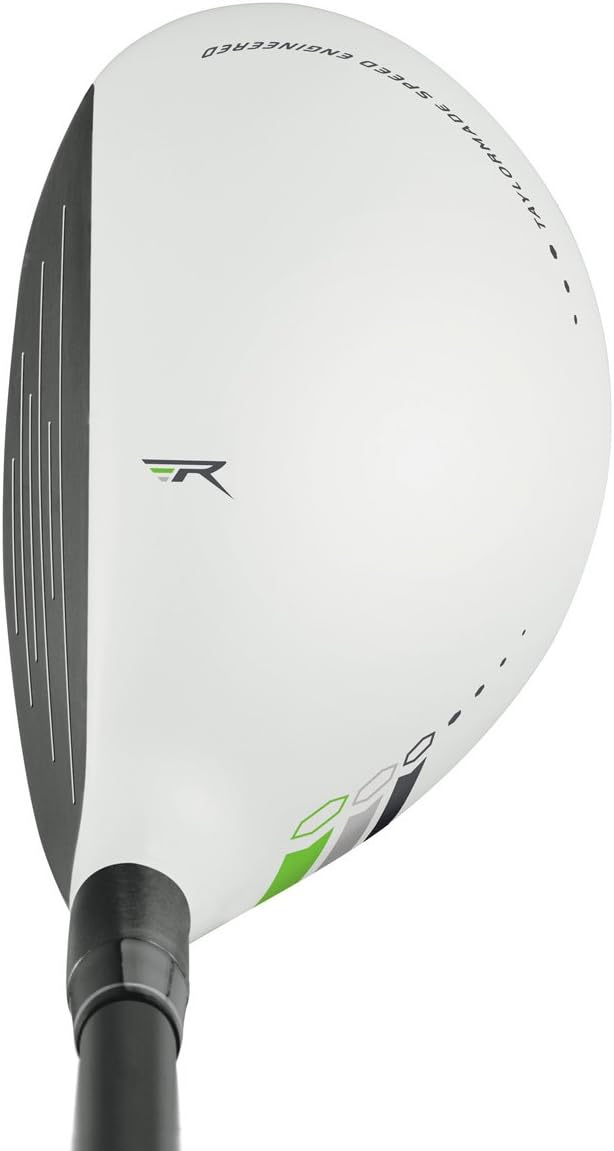
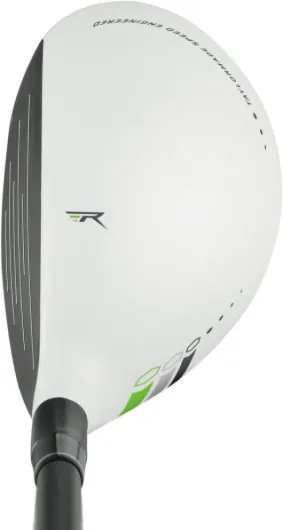
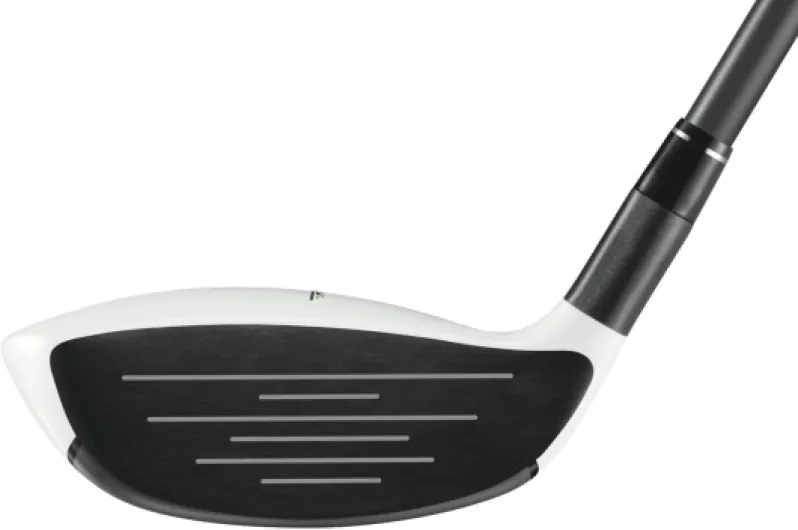
Design-wise, this RocketBallz Tour Rescue is very much from that TaylorMade era of white crowns and black faces. At address, you get a white top line and black clubface, which does help with alignment. The contrast makes it easy to see if the face is open or closed, especially in low light or on cloudy days. Personally, I got used to it quickly, but if you prefer a classic all‑black look, this might bother you at first. It definitely stands out compared to more neutral hybrids.
The head size is on the compact side for a hybrid. It’s not tiny like a driving iron, but it’s noticeably smaller than some big, chunky game‑improvement hybrids from other brands. That’s both good and bad. Good because it looks more like a real club and less like a mini fairway wood, and it gives you the feeling you can work the ball a little. Bad because if you’re terrified of mishits and want maximum confidence from a big head, this might look a bit “serious” at first. I’d say it suits mid-handicappers or improving players pretty well visually.
The sole has the visible Speed Pocket and some branding, but it’s relatively clean. No crazy shapes or colors. The white crown does tend to show marks: after a few rounds and range sessions, you start to see small scuffs and ball marks near the leading edge if you’re not striking perfectly. It doesn’t affect performance, but it does make the club look used faster than a plain dark crown would. If you’re picky about cosmetics, you’ll either need to clean it often or accept that it’ll look a bit worn.
In the bag, the white/black combo and RocketBallz branding make it look slightly dated now, just because newer models have different styling. But honestly, that’s not a big deal if you care more about performance than fashion. Overall, the design is functional and easy to aim, but not exactly subtle. It’s the kind of look you either get along with or you don’t. For me, after a couple of rounds, I stopped thinking about it and just appreciated how easy it was to line up the face at the target.
Feel, swing comfort, and confidence at address
From a comfort point of view, the RocketBallz Tour Rescue feels pretty natural to swing. The weight balance is neutral: it doesn’t feel like the head is dragging you down, but you can still feel where the head is during the swing. The regular flex graphite shaft suits an average tempo. If you have a smooth swing, it loads and unloads nicely. If you get jerky from the top, you might feel it flex a bit more, but it never felt out of control for me. I didn’t feel like I had to adjust my swing to make it work.
At address, the compact head and white crown give mixed feelings depending on your taste. Personally, after the first round, I felt more comfortable than with my 4‑iron because the hybrid just looks more forgiving. The slightly larger face area and the black face against the white crown make it easy to center the ball. You get a clear visual of where you want to strike it. If you’ve only used traditional irons before, the white might look strange at first, but it actually helps with alignment. I found myself setting up faster and thinking less about my aim.
The impact feel and sound are on the firmer, louder side. When you hit it well, you get a strong “crack” sound, not a soft “thud”. Some people like that, some don’t. I don’t mind it, but it’s definitely more metallic than a forged iron. On mishits, you feel it in the hands, but it’s not painful or harsh. There’s enough feedback to tell you where on the face you struck it, which I like. You know instantly if you caught it high on the face or towards the toe.
During a full 18 holes, I didn’t feel any fatigue from swinging this club. The weight and shaft combo are comfortable for repeated use, especially if you rely heavily on your hybrid from different lies. The stock grip is okay for comfort: not too thin, not too thick. I didn’t get any blisters or hot spots. If you prefer a softer or thicker grip, that’s an easy swap anyway. Overall, in terms of comfort and confidence, it’s a solid club: easier to live with than a long iron, and not intimidating like some super small tour hybrids.
Graphite shaft and rubber grip: standard build that does the job
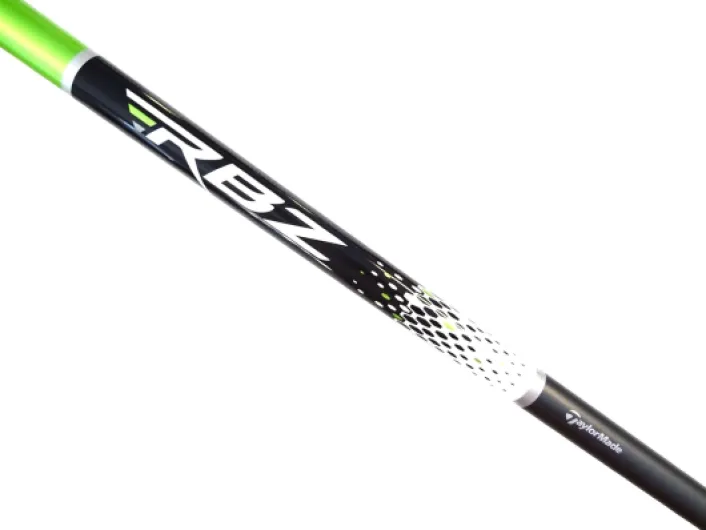
The materials on this RocketBallz Tour Rescue are pretty straightforward. The shaft is graphite, regular flex, which is standard for a hybrid aimed at average golfers. It keeps the overall weight reasonable and helps generate a bit more clubhead speed compared to a steel shaft. In the hand, it feels balanced, not tip-heavy or butt-heavy. I didn’t notice any weird whippy feeling, but I also don’t swing like a tour pro. For my medium swing speed, the shaft felt stable enough, even on slightly harder swings off the tee.
The grip is synthetic rubber, standard size. Out of the box, it feels okay: decent tackiness, not too hard, not too soft. I played a few rounds in warm weather and one in light drizzle. With dry hands, no issue at all. In humid or slightly wet conditions, it was still usable but I wouldn’t call it super grippy. If you have sweaty hands or play in rain often, I’d probably swap it for something with more texture. For most casual players though, it’s fine and doesn’t scream “cheap”. It’s just a normal stock grip that works.
The clubhead itself is made from the usual mix of steel with a Thick-Thin Crown construction. You don’t really feel that directly, but you can tell the head weight is concentrated low and forward. When you waggle the club, it doesn’t feel hollow or toy-like. Impact feels solid enough, with a bit of that “metallic” hybrid sound. Not muted, but not harsh either. Definitely more modern hybrid than old-school iron feel. If you’re used to all-steel irons, it’ll feel lighter and a bit more lively in your hands.
Overall, the materials are nothing fancy but appropriate for the price bracket. You’re not getting high-end aftermarket shafts or premium grips, but you’re also not getting junk. Everything holds up fine after several rounds: no weird shaft marks, grip still intact, head finish only showing normal wear. If you’re picky, you might regrip it and maybe eventually put a different shaft in, but out of the box, it’s good enough for most everyday golfers.
Build quality and how it holds up over time
Durability-wise, the RocketBallz Tour Rescue seems pretty solid. After several range sessions and a handful of rounds, the face shows the usual ball mark wear, but nothing abnormal. No chipping or weird dents around the Speed Pocket area, which is something I always check with these slotted soles. The sole has the typical scuffing from turf interaction, but the paint and lettering are still mostly there. It looks used, but not beaten up, which is normal for a club that’s actually played.
The white crown is the part that shows wear the most. Small scratches and slight discoloration near the leading edge appear fairly quickly, especially if you hit off sandy mats at the range. It doesn’t affect performance at all, but cosmetically it ages faster than a dark crown. If you’re fussy about how your clubs look, you might not like seeing marks so soon. Personally, I don’t really care as long as the top line is still clean enough to aim, and it is. The marks are more visible when you look closely than when you’re just addressing the ball.
The graphite shaft has held up fine. No signs of peeling or damage, and the finish is still intact. Of course, I use a headcover in the bag, which helps prevent bag chatter and shaft scratches. I’d recommend doing the same, especially if you carry a lot of clubs. The shaft doesn’t feel like it’s getting soft or whippy with use, and there’s no strange vibration or rattling inside the head, which can happen with cheaper builds.
The stock grip is okay in terms of durability. After a few weeks, it’s still tacky enough and hasn’t started to get shiny or hard. Over a full season, I’d probably regrip it anyway, but that’s standard maintenance on any club you use a lot. Nothing about the construction feels fragile. If you take basic care of it—headcover, don’t leave it baking in the car, wipe it down now and then—it should last several seasons without any structural issues. So, durability: no big red flags, just be aware that the white paint will show its age faster than darker alternatives.
On-course performance: distance, launch, and forgiveness
On the course, the main thing I noticed is how much easier it is to launch than a 4‑iron. From the fairway, my carry distances were pretty consistent around that 185–195 yard range, depending on how well I struck it. That’s roughly the same as my 4‑iron on a perfect strike, but with this hybrid, I’m getting that distance more often, not just on my best swings. Thin shots still lose distance, obviously, but they don’t dive straight into the ground the way a thin 4‑iron can. You still get something usable that at least advances the ball a good way.
The ball flight is medium-high for me. Definitely higher than my 4‑iron, and a bit higher than an older hybrid I own. That helps a lot when you’re trying to hold greens from 180+ yards. I didn’t see crazy ballooning; the forward center of gravity seems to keep spin under control. Shots into the wind held their line better than I expected. I still had to club up, but it wasn’t that annoying high floaty shot that just dies in the wind. Off the tee, teed low, it produced a strong, slightly higher flight than a driving iron, which is fine for tight par 4s.
In terms of forgiveness, it’s good but not miracle-level. Off the toe, you lose some distance and the ball wants to turn left (right-handed player). Off the heel, you get a slight fade and a bit of distance loss. But compared to a 4‑iron, those mishits are way more playable. I had a couple of swings in the light rough where I didn’t catch it perfectly, and the ball still came out okay and ended somewhere near the front of the green instead of being 30 yards short. In heavier rough, it’s decent: the compact head cuts through better than a very big hybrid, but you still need to commit to the swing.
I also tried shaping shots a bit. You can draw and fade this club, but it’s not super sensitive. For me, a little grip and stance adjustment gave me a gentle draw or fade, nothing dramatic. That’s honestly what I want from a hybrid: mostly straight with the ability to nudge it left or right when needed. If you’re a very good player wanting tight shot-shaping, you might find it a bit too stable. For the average golfer, that stability is a plus. Overall, performance-wise, it does exactly what you’d expect: reliable distance, easy launch, and decent forgiveness in a 4‑hybrid slot.
What this RocketBallz Tour Rescue actually is
This model is the TaylorMade RocketBallz Tour Rescue Hybrid, 4 hybrid, right-handed, regular flex, with a loft of 21.4°. So we’re basically in 4‑iron / 7‑wood territory. It’s built with a graphite shaft and a standard rubber grip. Nothing fancy there, just the usual mid‑range TaylorMade setup. The clubhead has that older RocketBallz look: white crown, black face, and a fairly compact profile for a hybrid, especially for something with “Tour” in the name.
The brand’s main selling points on this club are the Speed Pocket in the sole, which is supposed to increase ball speed, and the Thick-Thin Crown that allows them to push the center of gravity lower and more forward. In theory, that means higher launch but lower spin, so you get decent height without ballooning and losing distance. You can feel the Speed Pocket when you look at the sole: it’s a visible slot behind the face. Nothing new today, but at the time this came out, it was one of TaylorMade’s big tech highlights.
In the hand, it feels like a typical mid‑weight hybrid. It’s not super light like some beginner clubs, but also not heavy or demanding like a true tour-only head with a stiff, heavy shaft. The regular flex graphite shaft fits an average swing speed fine. If you swing very hard, you might find it a little soft, but for most weekend golfers it’s about right. TaylorMade uses their standard synthetic rubber grip on this one, in a standard size, which is fine if your hands are average. I didn’t feel the need to change it right away.
On paper, this club is aimed at players who want something a bit more compact and controllable than a very chunky game‑improvement hybrid, but still easier to hit than a long iron. That’s exactly where it sits in reality. It’s not a pure beginner club, and it’s not a tiny players-only driving iron. It’s somewhere in between: pretty forgiving, decent workability, and enough tech baked in to help the average golfer get the ball up and out there without feeling like they’re swinging a shovel.
Pros
- Much easier to launch and hit consistently than a typical 4‑iron
- Compact head with good forgiveness and stable, mostly straight ball flight
- Good value on the current market compared to newer, pricier hybrids
Cons
- White crown shows wear quickly and looks a bit dated
- Sound is fairly loud and metallic, which not everyone will like
Conclusion
Editor's rating
The TaylorMade RocketBallz Tour Rescue Hybrid (4H, RH, regular) is a practical solution if you’re tired of fighting with a 4‑iron. It launches the ball higher, carries consistently in the 180–200 yard range for an average swinger, and offers enough forgiveness that your slightly off‑center hits are still usable. The compact head and white/black alignment combo make it fairly easy to aim, even if the looks are a bit dated by today’s standards. Feel and sound are on the firmer, louder side, but not harsh, and the stock graphite shaft and rubber grip are perfectly serviceable for most mid-handicappers.
This club makes the most sense for mid to high handicappers who want a reliable 4‑hybrid without paying new-model prices. It’s also a decent fit for better players who like a slightly smaller hybrid head and don’t mind the older styling. On the other hand, if you’re a total beginner who needs maximum forgiveness, there are bigger, more forgiving hybrids out there. And if you’re very sensitive to looks or demand the latest tech, you’ll probably prefer a newer model. It’s not perfect, but for the money, it’s a pretty solid, no-nonsense tool that gets the job done from that awkward long-iron distance.