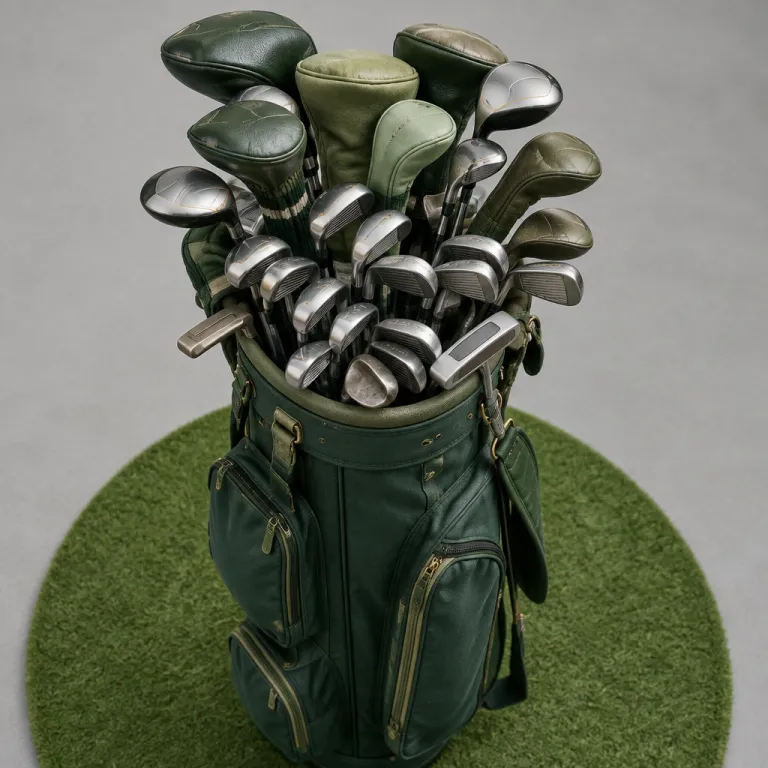
Why luxury golfers should question the full 14 club limit
The modern luxury golf culture quietly assumes that more clubs always mean more control. When you look closely at how a typical clubs bag is built for an affluent player, you often see a gap filling arms race that undermines the very idea of fewer golf clubs better scoring. The result is a heavy bag, a cluttered mind, and a handicap game shaped more by indecision than by talent.
Walk down the range at a private course like Winged Foot or Whisper Rock and you will see the same pattern repeated. A player starts with a driver, then adds a three wood, a five wood, a four hybrid, a five hybrid, a full iron set from four iron to pitching wedge, then a wedge pitching option, a gap wedge, a sand wedge, and finally a lob wedge plus a wedge putter. The number clubs creeps to the club limit allowed by the rules golf, not because the player needs every club, but because the industry has convinced them that every three to four degrees of loft must be represented.
On paper this looks like a refined game plan, yet on the course it often leads to fewer decisions that feel truly confident. You stand over a mid distance approach shot and hesitate between a soft eight iron and a hard nine iron, or between a high sand wedge and a flighted gap wedge, and that hesitation leaks into your swing. The paradox is simple ; the more you carry, the more you question, and the more your shots lose their natural feel and flow.
Luxury golfers are especially vulnerable because they can afford every specialty club that promises a half shot gain. A bespoke club bag from a brand like Vessel or Jones, filled with every possible wedge and hybrid, looks exquisite in the locker room but can be a liability between tee and green. When the bag becomes a museum of options, playing fewer clubs is often the fastest route to better scoring and a more instinctive game.
The rules golf allow a maximum of fourteen, but they never said you must use all fourteen in every round. Treat that number clubs as a ceiling, not a target, and you immediately reframe how you build your clubs bag for the courses you actually play. Once you accept that carrying fewer tools can sharpen your craft, you start to see how fewer clubs better scoring becomes a practical philosophy rather than a contrarian slogan.
The creative 10 club setup: how constraint sharpens your swing
Strip your bag down to ten carefully chosen clubs and the entire game changes. A lean setup might include a driver, a fairway wood, a mid hybrid, four irons spaced sensibly, a pitching wedge, a versatile sand wedge, and your putter, leaving deliberate gaps that invite creativity. This kind of club limit does not punish you ; it forces you to learn multiple shot shapes with each club and to trust your swing rather than your equipment catalogue.
Consider a luxury golfer at Seminole facing a 145 metre approach into a firm green with the wind quartering off the Atlantic. With a full set, they might agonize between three different wedges or a soft nine iron, each promising a slightly different carry and roll out. With a tighter selection, they accept that the pitching wedge is the right club, then focus on whether the shot should be a choked down three quarter swing or a flighted knockdown that lands short and releases.
This is where fewer golf clubs better scoring becomes tangible, because playing fewer options reduces the noise in your pre shot routine. You stop asking which club and start asking how to play the shot, which is the question that great players have always answered best. Fewer decisions at address mean more mental energy available for reading wind, slope, and green firmness, the real variables that separate a mid handicap game from a low one.
Tour professionals quietly understand this, even if their sponsors prefer a full clubs bag on television. Several players on both the PGA Tour and DP World Tour have gone into windy links events with only three wedges instead of four, or with one fewer long iron, because they value versatility over redundancy. They know that carrying fewer clubs they truly trust beats hauling an extra club bag weight of tools that only appear once every five rounds.
If you are serious about swing improvement, a constrained setup also pairs beautifully with modern training tools. When you work with a premium swing trainer system, as reviewed in detail in this guide to top golf swing trainers, you quickly see that repeating a variety of trajectories with one club builds more skill than cycling endlessly through fourteen. The fewer clubs you rely on in practice, the more your body learns to create different shots with the same shaft, loft, and lie, which is the essence of artistry in golf.
Luxury walking golf: lighter bags, better tempo, and sharper touch
There is a physical elegance to walking a course with a light bag that no cart can match. When you commit to carrying fewer clubs, the weight on your shoulders drops, your stride lengthens, and your breathing settles into a rhythm that quietly syncs with your swing tempo. Over thirty six holes at a destination like Bandon Dunes or Cabot Links, that reduced fatigue can mean the difference between crisp late afternoon iron shots and tired, heavy swings that bleed shots away.
Most premium stand bags are engineered to carry a full complement of clubs, yet they feel most balanced when the club bag is not stuffed to the gills. Remove four to eight clubs and the centre of gravity shifts closer to your spine, the straps sit more comfortably, and the bag stops twisting as you walk. That physical stability translates into a calmer pre shot routine, because you arrive at each ball less distracted by the minor irritations of lugging an overbuilt clubs bag around the course.
From a performance standpoint, carrying fewer tools also clarifies how you manage distance and trajectory. Instead of relying on a different club for every ten metres of carry, you learn to vary ball position, grip length, and swing speed with your favourite mid irons and wedges. The result is a more connected feel between your body and the club, which is exactly what luxury players chase when they invest in forged blades, milled wedges, and tour issue shafts.
Short game practice becomes especially rich when you limit yourself to a pitching wedge, a sand wedge, and your wedge putter for most green side work. On a practice green at your home club, set up three stations that force you to hit high, mid, and low shots with the same wedge pitching loft, then repeat the drill with a different club to explore how the ball reacts. This kind of constraint based training accelerates touch development far more than owning four nearly identical wedges that you rarely test under pressure.
If you pair this philosophy with a structured fitness and swing power routine, such as the program detailed in this golf training and fitness system review, you create a virtuous cycle. A lighter bag encourages more walking, more walking builds endurance, and better endurance supports a smoother tempo that holds up late in the round. In that environment, fewer golf clubs better scoring stops being a theory and becomes a lived experience, especially when the last three holes feel as fluid as the first three at sunrise.
Mental clarity and course strategy: playing fewer clubs for smarter golf
The most underrated benefit of a lean setup is psychological, not physical. Every club you carry represents a decision tree, and when the number clubs in your mind shrinks, the game feels less like a multiple choice exam and more like a conversation with the course. That shift is particularly powerful for the experienced private club player who already knows their home layout intimately.
On a familiar course, as argued in this piece on the value of repeating the same course, pattern recognition is your greatest ally. When you overlay that knowledge with a simplified clubs bag, you start to see each hole in terms of preferred landing zones rather than exact yardages tied to specific clubs. You might choose to hit the same mid iron off three different tees, accepting slightly longer approach shots in exchange for a consistent, confident swing that you trust under pressure.
There is also the quiet relief of leaving behind the clubs you secretly dislike. Every golfer has a long iron, a hybrid, or a specialty wedge that sits in the bag like a guilty secret, rarely used yet always present in the back of the mind. Removing that club is not an admission of weakness ; it is a strategic decision to eliminate a shot that you will not commit to when the match is on the line.
When you embrace playing fewer tools, you also start to plan your rounds around strengths rather than theoretical options. A player who loves their eight iron and pitching wedge might intentionally leave a gap between those and the sand wedge, trusting their ability to manipulate trajectory and spin instead of relying on a dedicated gap wedge. Over time, this approach builds a deeper relationship with your favourite clubs, and that intimacy shows up in the way the ball launches, curves, and lands on the green.
Ultimately, the philosophy of fewer golf clubs better scoring is about aligning your equipment with the way you actually play, not the way a catalogue suggests you should. Luxury in golf is not the sheer quantity of metal in your bag, but the quality of the shots you can produce on demand with the tools you truly know. What you will remember years from now is not the exact club limit you observed, but how the fairway felt at dawn when the swing, the shot, and the course all moved in the same quiet rhythm.
Key figures on bags, clubs, and performance
- A United States Golf Association equipment survey reported that over 80 percent of amateur golfers carry the full fourteen clubs, yet usage tracking showed that most players rely on the same eight to ten clubs for more than 90 percent of their shots in a typical round, highlighting the redundancy built into many bags.
- Data from Arccos Golf, based on millions of tracked shots worldwide, indicates that players who walk the course instead of riding a cart tend to score approximately one stroke better per round on average, a difference that grows on the back nine where fatigue from carrying heavier bags can otherwise erode tempo and decision making.
- Shot scope performance analysis has shown that many mid handicap golfers carry three or four wedges but use one primary wedge for more than 70 percent of their green side shots, suggesting that simplifying wedge selection could streamline practice and on course strategy without sacrificing scoring potential.
- Fitness research published by the Titleist Performance Institute has found that walking eighteen holes while carrying a traditional bag can burn roughly 1 200 to 1 500 calories, and reducing bag weight by removing four to six clubs can lower perceived exertion significantly, helping players maintain swing speed and coordination late in the round.