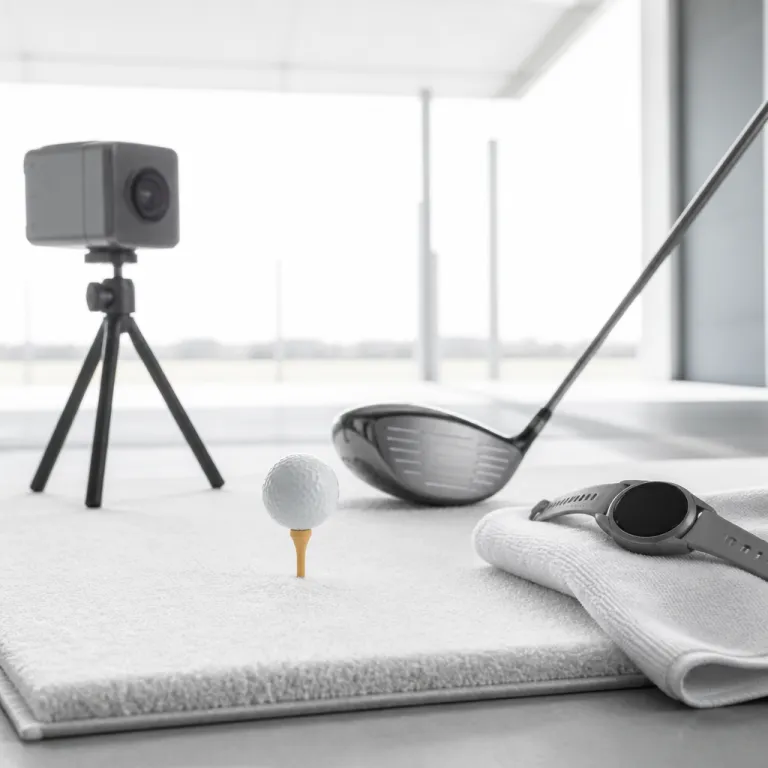
Golf GPS watches versus rangefinders and apps: choosing the right data on the course
A luxury golfer weighing the best golf GPS watch launch monitor 2026 question is really asking how much information they can handle over a four hour round. A dedicated golf GPS watch gives you constant context on every course without forcing you to pull out a phone, while a laser rangefinder or a phone app adds precision or depth but can also slow the pre shot routine. The best golf approach is to let the watch handle the full routing and strategy, then layer other tools only where they genuinely save strokes.
On the wrist, modern golf GPS watches such as the latest Garmin Approach series or the refined Bushnell ion elite feel like proper timepieces first and instruments second. A premium golf watch now offers a bright color screen, automatic shot tracking, and a database of more than 40 000 courses, yet the interface must stay simple enough that you glance once and swing. When you compare several GPS watches side by side, the real luxury is not just the screen size or the finish, but how quickly you can read front middle and back yardages and commit to a club.
Laser rangefinders still have a place for the ambitious newcomer who wants exact numbers to a tucked flag. A compact device such as a mini golf range finder with slope and vibration feedback, as reviewed in detail in this premium rangefinder test, excels when you need precise distance to a specific tree, bunker lip, or flagstick. Phone based GPS golf apps add strokes gained analytics and social features, but they drain battery life quickly and tempt you into scrolling instead of playing the game.
For most golfers asking about the best golf GPS watch launch monitor 2026 landscape, the right mix is a high end GPS watch plus a compact laser in the bag. The watch handles hole overview, hazard carry numbers, and automatic shot tracking, while the laser gives you exact yardage when the pin position matters. Phone apps then become a post round tool, where you read full analytics at home instead of on the tee.
Price is another subtle separator between these categories, especially for players entering golf through business networking who still want best golf performance. A strong GPS watch with reliable battery life and a crisp screen can now be found at a mid tier price, while top rangefinders and launch monitors climb quickly into four figures. The key is to check price against how often you play and whether the extra data will actually change your club selection or just clutter your scope of attention.
Launch monitor tiers: where the price performance sweet spot really sits
When golfers talk about the best golf GPS watch launch monitor 2026 options, they often lump all launch monitors together as if a tour truck unit and a pocket device were the same. In reality, premium home or studio launch monitors such as Foresight GCQuad or TrackMan sit in a different universe from portable radar units like FlightScope Mevo or the more advanced mevo gen models. The luxury question is not only which launch monitor is most accurate, but which one fits your practice habits and your space.
High end camera based launch monitors dominate indoor studios because they track the ball and the club with extraordinary precision. These systems measure ball speed, spin rate, launch angle, club path, and face angle, then feed that data into simulation software that recreates famous courses in photorealistic detail. For a serious golfer with a dedicated hitting bay, this level of monitor turns winter practice into a full season, but the price rivals a compact car.
Portable radar based launch monitors, including the latest mevo gen units, trade a fraction of that precision for freedom and value. You place the device a few feet behind the ball on the range, pair it with a phone or tablet, and get carry distance, total distance, launch angle, and spin estimates for every shot. For most ambitious newcomers, this category offers the best golf balance between cost and actionable data, especially when combined with a GPS watch that already knows the course layout.
Phone based launch monitors use the camera and processing power of modern smartphones to estimate ball flight. These systems are improving quickly, but they still struggle with low light, indoor spaces, and very high swing speeds, which limits their scope for elite players. They do, however, give you a taste of launch monitor feedback at a fraction of the price, which can be enough to highlight obvious issues before a fitting.
When you evaluate launch monitors, focus on which metrics you will actually use rather than the full spec sheet. A compact radar that nails carry distance, dispersion, and basic spin trends will help your game more than a studio system you never power on. Think of the launch monitor as a training partner that complements your golf GPS watch, not as a trophy gadget that lives in a drawer.
The five metrics that genuinely predict lower scores
Every ambitious golfer asking about the best golf GPS watch launch monitor 2026 ecosystem is really chasing one thing, which is lower scores in fewer rounds. The modern mix of GPS watches, launch monitors, and shot tracking platforms can drown you in data, but only a handful of metrics consistently correlate with scoring improvement. Focus on these five and your investment in tech will feel like a tailored fitting rather than a spreadsheet obsession.
Dispersion is the first and most underrated number, because it describes how tightly your shots cluster around the target line. A launch monitor or a shot scope style tracking system can show whether your misses form a predictable pattern, such as a 15 metre push with the driver or a short left bias with wedges. Once you see that pattern, you and your coach can adjust aim, club selection, or swing mechanics to keep more shots in play.
Carry distance versus total distance is the second critical metric, especially on firm courses with elevated greens. A golf launch monitor tells you how far the ball flies in the air, while your GPS watch and golf GPS apps show how that translates to real world total distance on each course. When you know your true carry numbers for every club, you stop coming up short of front middle yardages and start choosing smarter lines.
Spin rate and angle of attack form the third and fourth pillars of meaningful data. Spin rate describes how fast the ball rotates, which affects height, stopping power, and how the ball reacts in the wind, while angle of attack measures whether the club is moving up or down at impact. Launch monitors and mevo gen style devices now surface these metrics clearly, helping you understand why a particular club launches too low, spins too much, or balloons into the breeze.
The fifth metric is strokes gained by zone, which blends launch monitor numbers with on course tracking. Systems such as Garmin Approach with shot tracking or dedicated shot scope platforms compare your performance from specific distances against a benchmark handicap. When you read full strokes gained reports, you may learn that your 80 to 120 metre wedge game leaks more shots than your driver, even if the driver feels like the villain.
This is where integration with club fitting becomes powerful for the luxury minded player. As AI designed clubfaces and multi layer carbon constructions become standard, understanding your personal data helps you choose the right club models rather than simply the newest releases. A deep dive into this quiet revolution in equipment design is explored in this feature on AI driven club building and fitting, which shows how launch monitors and GPS golf data now shape every serious fitting session.
Turning shot tracking into a personal scoring blueprint
Owning the best golf GPS watch launch monitor 2026 combination means little if you never translate data into decisions. Shot tracking is the bridge between numbers on a screen and the way you actually play each course in your regular rotation. The goal is not to collect every possible data point, but to build a clear picture of where your game leaks strokes.
Modern golf GPS watches with automatic shot tracking, such as the latest Garmin Approach models or shot scope inspired systems, tag each club and record every swing. Over a handful of rounds, you see average distances, dispersion patterns, and proximity to the hole from different approach zones, all mapped to specific courses. This is far more honest than range sessions, because it reflects real lies, real wind, and real pressure.
Start by filtering your data by club and by lie type, then look for glaring gaps. Perhaps your 5 iron shows a wide scope of dispersion while your hybrid remains tight, suggesting a simple equipment swap could save several shots per round. Or your GPS watch data might reveal that you miss more greens short than long, which means your internal yardages are conservative and your club selection needs recalibration.
Next, examine strokes gained by distance band, especially from 50 to 150 metres. If your launch monitor numbers show solid contact but your on course proximity remains poor, the issue may be strategy rather than technique, such as firing at too many tucked pins. Conversely, if your GPS golf stats show strong approach play but weak scoring, the leak may be around the greens or on the tee, not in your irons.
Bring this data to your next lesson or fitting and insist that every recommendation ties back to the numbers. A good coach will use launch monitor feedback to refine your angle of attack and spin profile, then verify the changes with shot tracking over several rounds. This loop between practice bay and course is where the best golf tech earns its price and where luxury becomes performance, not just polish.
Finally, remember that not every round needs full tracking, especially on special courses or in match play. Sometimes you will want to leave the phone in the locker, let the GPS watch handle only basic distances, and focus on feel and rhythm. The point of all this technology is to free your mind on the first tee, not to turn every walk into a laboratory experiment.
Integration, ecosystems, and the hidden cost of lock in
As the market races toward the best golf GPS watch launch monitor 2026 combinations, the quiet battle is no longer only about hardware. It is about ecosystems, subscriptions, and how easily your data flows between devices, apps, and coaches. For a busy professional golfer who values time as much as money, this integration question matters as much as raw accuracy.
Garmin has built one of the most coherent ecosystems in golf, with Garmin Approach watches, handheld GPS units, and compatible launch monitors all feeding into a single app. When you wear a Garmin Approach golf watch on the course, then step into a studio with a compatible launch monitor, your shot history, club distances, and fitness data live in one place. That continuity makes it easier to track progress over months rather than just admire a single range session.
Shot scope style platforms take a slightly different path, focusing on deep on course analytics and strokes gained breakdowns. These systems pair lightweight tags on each club with a GPS watch or phone app, then generate detailed post round reports that rival tour level stats. If you already own a separate launch monitor, you can manually align its data with your shot scope analytics, but the integration is less seamless than a single brand ecosystem.
Many luxury golfers underestimate the long term cost of subscriptions and upgrades when they check price on new tech. Some launch monitors require annual fees for full data access or simulation software, while certain GPS watches lock premium course maps or strokes gained features behind memberships. Before you commit, read full details on what is included and what becomes an ongoing expense, because the most expensive part of a device is often the years after purchase.
Comfort and on course experience also matter in this integration story, especially for players who walk. Pairing a lightweight GPS watch with refined apparel and accessories, such as the high end performance socks reviewed in this guide to elevated comfort on the fairway, ensures that technology enhances rather than distracts from the walk. The best golf watches disappear on the wrist until you need them, with battery life that easily covers 36 holes and a screen that remains legible in harsh sunlight.
In practice, the smartest move is to choose one primary ecosystem for GPS watches and shot tracking, then ensure your launch monitor exports data in common formats. That way you can change clubs, coaches, or even platforms without losing years of history. Luxury in this context means optionality, not being locked into a single brand forever.
From AI designed clubfaces to smarter buying decisions
The conversation about the best golf GPS watch launch monitor 2026 landscape cannot ignore what is happening inside the clubhead. AI designed clubfaces, multi material chassis, and carbon wrapped crowns have made modern drivers and irons more complex and more tunable than ever. Without reliable launch monitor data and GPS based performance tracking, it is almost impossible for a serious golfer to choose the right club rather than simply the newest release.
During a premium fitting, a fitter will cycle you through multiple heads and shafts while a launch monitor records ball speed, launch angle, spin rate, and dispersion. Your golf GPS watch and shot tracking history then provide context, showing how those numbers translate to real scoring on your home courses. For example, a driver that adds three metres of carry but widens dispersion may be worse for your game than a slightly shorter option that keeps more tee shots in play.
Irons and wedges benefit even more from this data driven approach, because their job is to control distance and trajectory rather than chase raw speed. A launch monitor helps you dial in gapping, ensuring that each club covers a specific distance window without overlap, while GPS golf stats reveal how often you actually hit those windows under pressure. When you see that a particular iron consistently flies shorter on the course than in the bay, you can adjust loft, shaft, or even the model to close that gap.
Hybrids and fairway woods sit at the intersection of launch monitor precision and on course nuance. Many ambitious newcomers cling to long irons out of pride, even when shot tracking shows that a higher launching hybrid produces tighter dispersion and better scoring from the same yardage. Here, the best golf decision is rarely about aesthetics alone, but about how the club performs across a season of rounds, not a single demo day.
Putters may seem outside the scope of GPS watches and launch monitors, yet they benefit from data as well. Some systems now track face angle at impact and path, while on course stats reveal make percentages by distance and green type, which can guide both putter selection and practice priorities. The luxury is not owning the most expensive milled head, but owning the one whose numbers and feel align with your stroke.
In the end, the fusion of AI designed equipment, launch monitor feedback, and GPS watch tracking shifts the buying process from guesswork to evidence. You are no longer paying for marketing promises, but for measurable improvements in dispersion, carry distance, and strokes gained. That is the real value proposition behind the best golf GPS watch launch monitor 2026 ecosystem for a golfer who values both craft and performance.
Building a minimalist, high impact golf tech setup
Standing in a pro shop surrounded by golf watches, launch monitors, and accessories, it is easy to feel that you need everything. The reality is that a carefully chosen trio of tools can deliver almost all the benefits of the best golf GPS watch launch monitor 2026 combinations without cluttering your bag or your mind. Think in terms of roles rather than products, then fill each role with the most elegant option you can justify.
First, choose a primary GPS watch that fits your wrist, your style, and your tolerance for information. A refined Garmin Approach or a sleek ion elite style golf watch with strong battery life, a clear screen, and reliable course mapping should be the foundation, because it travels with you from club to club and course to course. Make sure it offers automatic shot tracking or at least easy manual entry, since those features turn simple distances into a living record of your game.
Second, add a portable launch monitor that suits your practice environment. If you mainly work on the range, a compact radar such as a mevo gen style unit gives you carry distance, dispersion, and basic spin data without requiring a studio, while indoor focused players may prefer a camera based monitor that excels in tight spaces. The goal is not to own the most expensive device, but to own the one you will actually set up three times a week.
Third, decide whether you need a separate rangefinder or whether your GPS watch and launch monitor cover enough ground. Many golfers find that a small laser with vibration feedback complements their GPS watch perfectly, especially on unfamiliar courses with complex green shapes. Others prefer to keep the bag lighter and rely on front middle back yardages from the watch, trusting their club selection and accepting a touch of artistry.
Round out the setup with a few comfort focused luxuries that make long walks more enjoyable. High quality footwear, breathable apparel, and refined accessories such as performance socks or premium gloves do not show up on any launch monitor, yet they influence how freely you move and swing. In a sport where one loose swing can cost a match, that comfort is as real a performance asset as any number on a screen.
Ultimately, the best golf tech setup is the one that fades into the background once you step onto the first tee. Your GPS watch, launch monitor, and shot tracking should inform your decisions without dictating them, leaving room for instinct, creativity, and the simple pleasure of a well struck shot. Because in the long run, what you remember is not the handicap, but how the fairway felt at dawn.
Key statistics on golf GPS watches, launch monitors, and performance data
- According to the National Golf Foundation, more than 25 % of core golfers in the United States now use some form of golf GPS or rangefinder regularly, a share that has roughly doubled over the past decade.
- Launch monitor adoption has surged among teaching professionals, with surveys from the PGA of America indicating that over 70 % of full time coaches now use a launch monitor in at least some lessons, compared with less than 30 % fifteen years ago.
- Independent testing by major golf publications has shown that knowing true carry distance for each club can reduce approach shot dispersion by up to 20 %, which translates directly into more greens in regulation for mid handicap players.
- Battery life on modern golf GPS watches has improved significantly, with many premium models now offering 20 to 30 hours of GPS mode runtime, enough for multiple rounds between charges even on long summer days.
- Strokes gained analytics from shot tracking platforms consistently show that amateur golfers lose the majority of their shots to par from 50 to 150 metres and off the tee, highlighting where launch monitor practice and GPS based strategy can have the greatest impact.
FAQ about golf GPS watches and launch monitors
Do I really need both a golf GPS watch and a launch monitor ?
For many ambitious golfers, a GPS watch and a launch monitor serve different but complementary roles. The watch gives you on course context, yardages, and shot tracking, while the launch monitor provides detailed swing and ball flight data during practice. If you play and practice regularly, owning both can accelerate improvement, but occasional golfers may be well served by a single high quality GPS watch.
How accurate are modern golf GPS watches compared with laser rangefinders ?
Modern golf GPS watches are typically accurate to within a few metres for front middle and back yardages, which is sufficient for most approach shots. Laser rangefinders can be more precise to specific targets such as flags or trees, often within one metre, but they require a clear line of sight and more time to use. Many players combine a GPS watch for general distances with a laser for exact numbers when pin position matters.
Which launch monitor metrics should a mid handicap golfer focus on first ?
A mid handicap golfer will usually gain the most from focusing on dispersion, carry distance, spin rate, angle of attack, and basic ball speed. These metrics explain why shots miss in particular directions or distances and guide both swing changes and equipment choices. More advanced numbers can be useful later, but they matter less than understanding where the ball actually goes and why.
Will using shot tracking and strokes gained data make golf feel too technical ?
Shot tracking and strokes gained analytics can feel overwhelming if you try to act on every number at once. The key is to review data after the round, identify one or two clear patterns, and build simple practice plans around them. On the course, you should still rely on routine and feel, letting the tech inform long term strategy rather than every single swing.
How should I budget for golf tech without overspending on gadgets ?
A sensible approach is to allocate a portion of your annual golf budget to technology, then prioritize a reliable GPS watch and a practical launch monitor before adding extras. Consider ongoing subscription costs and how often you will realistically use each device when you check price comparisons. Investing in fewer, higher quality tools that you use consistently will usually lower scores more than owning many gadgets that rarely leave the locker.