Scorecard-length relief and why it changes your luxury course strategy
Preferred lies used to feel like a quiet gift from the committee. Under the current Model Local Rule E-3 from the R&A and USGA, that privilege is normally restricted to placing the ball within a scorecard-length area, typically around 15–30 centimetres depending on the actual card, and every serious player needs to recalibrate. On a manicured fairway at Sunningdale or Morfontaine, that shorter preferred-lie relief distance changes how you plan each stroke and how aggressively you attack tight pins.
Under the updated Rules of Golf framework, a local rule for preferred lies still allows you to lift, clean and place the ball in the general area, but only within that defined scorecard-length zone and no nearer the hole, as set out in Model Local Rule E-3. For a golfer used to taking a full club-length of relief in other situations, this tighter standard compresses options when the ball is sitting in a shallow depression or against a subtle pitch mark in the short grass. On luxury layouts where the fairway mowing lines are razor sharp, the wrong place to set the ball can now be only a few centimetres away from a perfect lie.
The governing bodies have been clear that this change is about consistency. They want the same model of relief applied from elite professional golf down to your weekend round at the club, so the rules narrative feels coherent. For you as a player, that means learning to visualise a precise scorecard-length arc around the original ball position before you replace the ball and commit to the next play.
Think about a damp morning at your home club, with the fairways soft but the putting green surfaces still running at 11 on the Stimpmeter. Under Rule 16.1 of the Rules of Golf, free relief from temporary water in the general area still uses full club-lengths, but preferred lies under a local rule do not. That split forces better decision making, especially when your ball-move options are constrained by internal out of bounds or a subtly sloping area that can turn a simple wedge into a nervy stroke.
On a luxury course, the superintendent’s work makes these nuances even sharper. A tightly mown approach area that feeds into the putting green can tempt players to stretch that scorecard-length relief a touch too far, edging toward a wrong place that risks a penalty under Rule 14.7. When you are paying premium green fees, you cannot afford to lose a shot because you misjudged where relief allowed actually ends.
To apply scorecard-length preferred-lie relief correctly, follow the procedure in the Official Guide: mark the original spot, lift and clean the ball, then identify the scorecard-length relief area no nearer the hole, place the ball on a point within that area and ensure it comes to rest on that spot. Luxury is not just the course or the club; it is the confidence that when a local rule for preferred lies is in effect, you know exactly how to use it without flirting with a Rules of Golf infraction.
Embedded balls, pitch marks and the new art of free relief
One of the most underrated elements in the “golf rules changes 2026 explained” conversation is the clarified relief for an embedded ball. Under Rule 16.3 and the associated Clarifications published by the R&A and USGA, committees can now extend free relief to any embedded ball in the general area cut to fairway height or less, not just the one your own shot created. On a soft, overwatered luxury resort course in Portugal or the Emirates, that single tweak can save you multiple strokes in a round.
Picture a par 4 at Valderrama after overnight rain, where the fairway is pristine but peppered with old pitch marks from earlier players. Under the modern Rules of Golf framework, if your ball is clearly embedded in one of those marks in the permitted area, you may take relief without penalty, provided you drop within the prescribed club-lengths and no nearer the hole, as detailed in Rule 16.3b. That means fewer hacked wedges from broken, damaged turf and more controlled approaches that actually hold the putting green.
This evolution also shifts etiquette into something closer to strategy. When other players in your group fail to repair a pitch mark in the general area, they are not just being lazy; they are potentially creating future embedded-ball relief opportunities for someone else. On a private club where standards are high and the membership is affluent, that tension between etiquette and advantage becomes part of the quiet gamesmanship that defines professional golf culture at the amateur level.
Luxury gear interacts with these rules in subtle ways. A premium urethane ball model, like a Titleist Pro V1 or a TaylorMade TP5, tends to spin and land softer, which can increase the chance of an embedded ball in receptive fairways. When that happens, you must identify the exact pitch mark, confirm that it is at fairway height or below, then mark, lift and take relief in accordance with the embedded-ball procedure without drifting into a wrong place that would trigger a penalty.
Short game practice should now include embedded-ball scenarios. Use a high quality swing training aid on your home mat — a retractable tempo trainer for chipping and pitching works well — and rehearse the exact drop and replace-ball routine until it feels automatic. That way, when a soaked fairway at your club leaves your ball-move options limited, you can execute the relief process with the same calm precision you bring to a three metre putt on the green.
Remember that not every ugly lie qualifies. If the ball is simply sitting down in its own divot or in a scuffed area that is not a clear pitch mark, free relief is not available unless a specific local rule says otherwise. The R&A and USGA have tried to balance fairness with integrity, and the onus is on the player to know when an embedded-ball ruling is legitimate and when it is wishful thinking, using the definitions and examples in the Official Guide to the Rules of Golf as the reference point.
Broken-club replacements, ball movement penalties and how elite amateurs should adapt
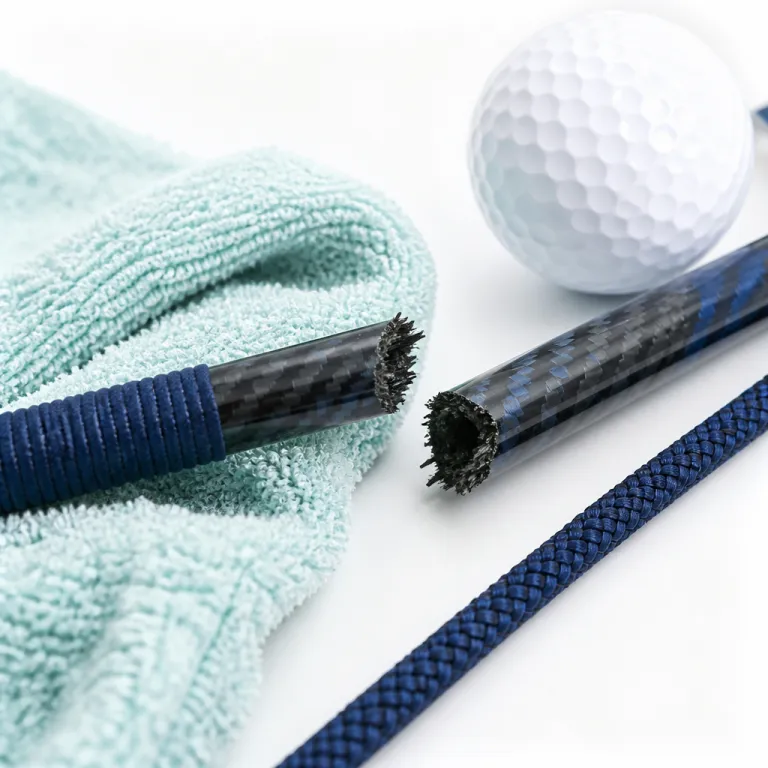
For competitive club players, the modern damaged-club replacement rule is a quiet revolution. Under Rule 4.1a(2) and Rule 4.1b(3), you may continue to use or repair a club damaged during a round, and in certain formats or under committee-adopted terms you may replace a club that is damaged during normal play. That means a cracked driver head on the 3rd tee at your championship layout no longer automatically condemns you to a long, defensive round with a fairway wood.
Imagine a medal round at your home club, where you snap a shaft against an immovable obstruction near a cart path while attempting a recovery shot. Under the current Rules of Golf framework and any additional competition conditions that permit replacement, you can have a compatible shaft fitted by on-site staff between holes and continue with a fully functional driver without incurring a penalty. For affluent players who travel with limited sets to destinations like Fancourt or Pebble Beach, that flexibility is worth as much as any new driver model.
This is where luxury equipment ecosystems start to matter. If your group plays similar high-end club brands, the chance that a replacement shaft or head can be built from parts already available at the club increases dramatically, turning a potential broken-club disaster into a minor delay. Serious players should talk with their club’s professional staff about stocking compatible components in the workshop, so that a damaged club during a big round can be dealt with quickly and within the rules.
The other quiet gift is the softened outcome for a ball-move situation you caused and then played without correcting. Previously, playing from the wrong place after you caused ball movement could mean a two-stroke penalty in stroke play; now, in many accidental-movement cases covered by Rule 9.4 and related Clarifications, that can be reduced to a single stroke. It is still a mistake, but the governing bodies have acknowledged that on fast putting greens and tightly mown surrounds, even a careful player can nudge the ball accidentally while addressing a delicate stroke.
Luxury courses with glassy putting green speeds make this especially relevant. When your ball is at rest on a steep slope at Augusta-style green speeds, a slight tap with the putter can cause the ball to move a few centimetres, and the Rules of Golf now treat that with a touch more mercy. You still must replace the ball to its original spot whenever you know or can estimate it, but the cost of forgetting to replace the ball before you play has been trimmed in many situations.
Training for this is not glamorous, yet it is essential. Set up a home practice station with a premium hitting net and mat — a backyard golf net with a quality practice surface is ideal — and rehearse marking, lifting and replacing the ball around simulated immovable obstructions and tight lies. The goal is to make the replace-ball routine as ingrained as your pre-shot waggle, so that even under pressure in a PGA-style event at your club, you never turn a simple relief situation into an avoidable penalty.
Tech bans, local rules and how to future proof your luxury golf habits
The decision by the PGA Tour to prohibit distance-measuring devices in regular competition, while other elite circuits and amateur events allow them under certain conditions, sends a clear signal. Governing bodies are comfortable with tech in professional golf, but only when it does not slow play or erode the skill of choosing a club. For the affluent club golfer, that split should shape how you integrate technology into your own routine.
At a high-end resort like Gleneagles or Quinta do Lago, the local rules sheet in your scorecard holder is now as important as your rangefinder. Some events will mirror the PGA Tour stance and prohibit DMDs, while others will allow them with slope and other features disabled, especially in corporate days where pace of play is paramount. You need to be fluent in both modes, able to play by feel and yardage book alone or to blend laser data with wind, lie and green firmness.
Luxury travel complicates this further. When you book premium stay-and-play packages through curated operators, the fine print on local rules, internal out-of-bounds definitions and relief allowed from course-specific immovable obstructions can vary widely between destinations. Before you fly, read the competition terms as carefully as you study the wine list, and use trusted guidance from the R&A and USGA to align expectations.
On the course, the new environment rewards players who think like caddies. You must know when a local rule grants free relief from sprinkler heads near the putting green, when internal boundary lines redefine a fairway edge, and when a ball-move incident on a tightly cut run-off must be corrected by replacing the ball before you play. The more complex the course architecture and the more refined the conditioning, the more these micro decisions separate a polished round from an expensive grind.
In practice, that means building rules rehearsal into your technique work. When you run short-game drills on the chipping green at your club, simulate relief from embedded-ball situations, from cart-path immovable obstructions and from wrong-place drops that must be corrected before the next stroke. Treat the rules as part of your playing technique, not as a dry appendix to the game, because on a luxury course the margins are too fine to improvise.
Ultimately, the “golf rules changes 2026 explained” theme is simple. The modern rule book is trying to be more player friendly while still protecting the integrity of the game, especially for players who invest heavily in equipment, travel and club memberships. For golfers like you, the real edge is not just a new driver model or a faster green; it is the quiet confidence that every relief decision, every replaced ball and every damaged-club ruling is handled with the same precision you bring to a flushed 6-iron at dawn.
Key figures that frame the new rules era
- According to the R&A and USGA, the 2019 modernization of the Rules of Golf reduced the total number of core rules from 34 to 24, a streamlining that set the stage for the more targeted changes now affecting scorecard-length preferred lies, embedded-ball relief and damaged-club procedures (R&A and USGA, Rules Modernization initiative, summary in the Official Guide to the Rules of Golf).
- Research published by the USGA on pace of play has shown that groups using distance-measuring devices can complete rounds several minutes faster on average than those relying solely on yardage books, a key factor behind selective DMD adoption in professional and elite amateur events (USGA pace of play research, as referenced in the USGA’s pace-of-play resources).
- Player surveys conducted by the R&A indicate that more than half of regular golfers have, at some point, been unsure about embedded-ball relief in the fairway or general area, underscoring why the expanded embedded-ball and pitch-mark relief has been a focal point of recent Clarifications (R&A golfer survey on rules understanding, reported in R&A education materials).