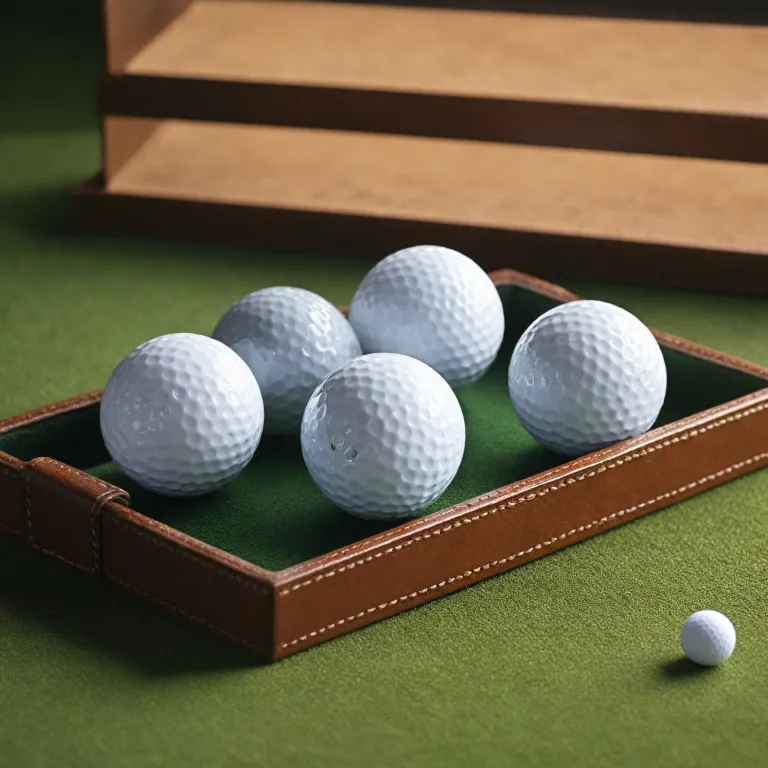

How luxury beginners should think about the best golf balls
Selecting the best golf balls for beginners in the luxury segment demands more nuance than simply chasing distance. A new golfer investing in premium gear expects a golf ball that blends soft feel, reliable carry distance, and consistent spin control from tee green. The right golf ball should help a high handicap golfer build confidence while still rewarding a smooth swing with elevated performance.
For a novice golfer, the first decision is usually between a soft golf ball and a firmer distance model. A genuinely soft feel helps beginners sense impact with the driver and irons, while a slightly low compression core supports moderate swing speeds and improves ball speed. When swing speeds sit below roughly 90 speed mph, a softer golf ball often produces higher launch, more carry, and a more stable ball flight.
Luxury minded golfers should also consider how a ball behaves around the green, not just off the tee. High spin urethane covered golf balls offer exquisite spin golf performance on chips and pitches, but they may exaggerate side spin for an average beginner’s swing. Many of the best golf balls for beginners therefore use a softer ionomer cover that balances spin control with forgiveness and keeps high spin hooks or slices in check.
Even in the premium space, a piece golf construction with two or three layers can be ideal for balls beginners rather than complex four or five piece golf designs. Simpler constructions typically generate straighter flight and more predictable carry distance for the developing golfer. The goal is not pro level shot shaping yet, but a stable golf ball that turns every solid strike into dependable distance.
Soft feel, swing speed, and distance for emerging golfers
Among luxury options, the best golf balls for beginners share one trait above all others ; they feel soft without sacrificing distance. A soft feel at impact reassures the golfer that the strike was centered, while a responsive core still converts swing speed into efficient ball speed. When a beginner swings the driver at modest swing speeds, a low to mid compression golf ball can add valuable metres of carry distance.
Many new golfers worry that a soft golf ball might be too slow off the tee. In reality, modern premium golf balls are engineered so that even a soft cover can sit over a lively core that boosts ball speed for an mph driver swing. For example, a golfer with an 85 speed mph driver swing can often gain both launch and carry by choosing a ball tuned for that specific speed mph window. Matching compression to swing speeds is more important than chasing the firmest possible feel.
Luxury beginners should also think about how their golf ball transitions from tee green. A model with balanced spin golf characteristics will launch high with the driver yet maintain enough spin control for wedges and the short game. When the ball lands on the green, a controlled level of high spin helps it stop near the target rather than releasing excessively.
Physical readiness matters as much as equipment for consistent performance. Pairing an appropriate golf ball with a focused conditioning routine, such as the back strengthening work outlined in these essential back exercises for golfers, can help a beginner maintain swing speed throughout the round. The combination of a well matched golf ball and a resilient body is the quiet luxury advantage many new golfers overlook.
Spin, control, and green side touch in premium beginner balls
For many luxury golfers, the romance of the game lives around the green, where spin and touch define character. The best golf balls for beginners must therefore offer enough spin control to hold firm greens, without punishing a high handicap golfer for minor swing errors. A ball that blends low driver spin with moderate wedge spin can be transformative for the developing short game.
High spin tour balls are tempting, but they can be unforgiving for an average beginner’s swing path. Excessive side spin with the driver turns small misalignments into large misses, costing both distance and confidence. A more balanced golf ball design, often in a two or three piece golf configuration, keeps driver spin low while still providing responsive spin golf performance on approach shots.
On partial wedges and delicate chips, a soft feel helps the golfer gauge strike quality and face angle. When the ball feels harsh, many beginners tense up and decelerate, which ruins both distance control and spin. A soft golf ball with a refined cover formulation allows the golfer to swing freely, generating natural spin and predictable roll out on the green.
Luxury players should also understand how rules interact with equipment choices, especially when playing premium golf balls in competitive settings. A clear grasp of the guidance in this overview of golf penalty rules for luxury golfers ensures that lost balls, provisional shots, and relief procedures are handled correctly. Respecting the rules while gaming a high performance golf ball is part of the refined golfer’s identity.
Luxury value: when kirkland signature and tour balls suit beginners
In the luxury space, value is measured less by price and more by performance per stroke. Some golfers are surprised that a kirkland signature golf ball can coexist in the same bag as elite tour models, especially for beginners high on enthusiasm but still refining technique. The key is understanding how different golf balls behave for a specific swing speed and typical miss pattern.
The kirkland signature balls, for example, often provide a soft feel and high spin profile at a comparatively accessible cost. For a high handicap golfer who loses several balls per round, this balance of premium performance and sensible pricing can be compelling. However, the relatively high spin may not be ideal for every beginner, particularly those fighting a slice with the driver.
By contrast, many tour validated golf balls prioritize precise spin control and workability for the pro level golfer. These models can be among the best golf balls for beginners who already possess above average swing speeds and a repeatable motion. When a golfer’s mph driver swing approaches tour like speed mph numbers, the extra layers in a four or five piece golf construction begin to pay dividends.
For most new golfers, though, a simpler two or three piece golf ball remains the wiser choice. It offers stable tee green performance, reliable carry distance, and a forgiving response on off center strikes. Luxury in this context means selecting the golf ball that elevates the golfer’s experience today, rather than chasing a pro specification that may not yet match their swing.
Matching swing training, swing speeds, and ball technology
Luxury beginners increasingly pair their equipment choices with structured swing training to unlock better performance. When a golfer uses a dedicated training system to build strength and rhythm, the best golf balls for beginners can translate those gains into tangible distance and accuracy. A well fitted golf ball becomes the final link between improved swing mechanics and on course results.
As swing speeds rise through training, ball selection may need to evolve. A golfer starting with a low compression, very soft golf ball might eventually benefit from a slightly firmer model that can handle higher ball speed without ballooning. Monitoring carry distance with both irons and the driver helps determine when a change is warranted, especially as mph driver numbers climb.
Structured practice tools, such as the program detailed in this swing trainer for golf specific workouts, can steadily increase speed mph while improving sequencing. As the golfer’s average swing speed improves, they may transition from a very low compression ball to a mid compression golf ball that still offers soft feel but adds stability. This progression keeps the ball’s performance aligned with the golfer’s evolving capabilities.
Throughout this journey, the focus should remain on tee green consistency rather than chasing maximum distance alone. A ball that flies predictably, lands with controlled spin, and supports a confident short game will always serve a high handicap golfer better than a purely distance oriented model. Luxury is ultimately expressed in the harmony between swing, golf ball, and the serene rhythm of the course.
On course strategy with the best golf balls for beginners
Even the best golf balls for beginners cannot compensate for poor strategy, especially on demanding luxury layouts. A thoughtful golfer uses the characteristics of their chosen golf ball to shape decisions from tee green. For instance, a soft feel, low spin golf ball might encourage more aggressive lines off the tee, knowing that curvature will be reduced.
When a ball offers higher spin and a softer cover, the golfer can lean on the short game to save strokes. Playing to wider parts of the green and trusting the ball’s spin control on chips and pitches can be more effective than attacking tight flags. This approach suits high handicap golfers who rely on touch rather than precise long game distance.
Understanding personal carry distance with each club is essential for maximizing performance. A beginner should track how far their golf ball flies in the air, not just total roll, especially when hazards guard the front of greens. Knowing that a particular golf ball produces consistent carry distance at a given swing speed allows for confident club selection.
Luxury golfers also appreciate how feel influences decision making under pressure. A soft golf ball that communicates impact clearly through the hands can calm nerves on delicate green side shots. When the ball, the swing, and the strategy align, even an average golfer can experience moments of pro like control that justify every investment in premium equipment.
Elevating beginner confidence with data, feedback, and feel
Modern launch monitors have made it easier than ever for beginners high on ambition to understand how their golf balls behave. Tracking ball speed, spin, and launch angle helps a golfer see whether a particular golf ball truly qualifies as the best golf choice for their swing. This data driven approach complements the traditional luxury emphasis on feel and aesthetics.
For example, a golfer might compare two golf balls at the same swing speed and note that one produces higher ball speed and longer carry distance. If that ball also offers a soft feel and reliable spin control around the green, it becomes a compelling candidate for long term use. Over time, the golfer can refine choices further, perhaps moving from a two piece golf ball to a three piece golf design as consistency improves.
Feedback from coaches and fitters remains invaluable in this process. A teaching pro can observe how a high handicap golfer delivers the club and recommend golf balls that complement their natural motion rather than fight it. Combining expert guidance with personal testing ensures that the final selection reflects both objective performance and subjective comfort.
Ultimately, the best golf balls for beginners in the luxury realm are those that make every strike feel purposeful. When a golfer senses that their chosen golf ball rewards good swings, forgives minor errors, and supports a confident short game, the game becomes more enjoyable. That blend of performance, feel, and trust is the quiet hallmark of true luxury on the course.
Key statistics about beginner golf ball performance
- Include here quantitative data on typical beginner swing speeds, average ball speed, and expected carry distance gaps between low and mid compression golf balls.
- Highlight the proportion of high handicap golfers who benefit from soft feel, low compression golf balls versus firmer distance models.
- Note the impact of increasing mph driver swing speed on optimal spin rates and tee green performance.
- Summarize how many strokes per round can be saved through improved short game spin control with appropriately fitted golf balls.
Frequently asked questions about the best golf balls for beginners
Which compression level suits most beginner golfers ?
Most beginners benefit from low to mid compression golf balls that respond well to moderate swing speeds. These models provide a soft feel while still generating adequate ball speed and carry distance. They also tend to be more forgiving on off center strikes.
Should a beginner choose a two piece or three piece golf ball ?
A two piece golf ball is usually ideal for early stages, offering stable distance and durability. As consistency and swing speed improve, a three piece golf ball can add more nuanced spin control. The transition should be guided by on course performance rather than marketing alone.
Do high spin tour balls help or hurt beginners ?
High spin tour balls can enhance green side control but often exaggerate slices and hooks with the driver. Many high handicap golfers find them less forgiving off the tee, despite their excellent short game performance. Balanced spin golf balls are usually a safer starting point.
How many models should a beginner test before deciding ?
Testing two or three different golf balls over several rounds is usually sufficient. The golfer should compare feel, distance, and green side control rather than focusing solely on brand or price. Consistent performance under varied course conditions is the best indicator of a suitable choice.
When should a beginner upgrade to a more advanced golf ball ?
An upgrade makes sense when swing speeds increase and ball striking becomes more consistent. At that point, a more advanced piece golf construction can unlock additional spin control and distance. Regular feedback from a coach or fitter helps time this change effectively.