
Summary
Editor's rating
Value for money: where it lands compared to other travel covers
Design: smart in some places, slightly clunky in others
Materials and build: not luxury, but tough enough for real travel
Durability after a few trips: what’s holding up and what to watch
Performance in airports and on the road: does it actually protect your clubs?
What you actually get and how much space you really have
Pros
- Hard ABS top gives solid protection for club heads during flights
- Durable 1680D nylon body with good padding and sturdy zippers/wheels
- Easy to maneuver in airports thanks to smooth in-line wheels and multiple handles
Cons
- May not fit larger staff bags with divider tops over 11.8 inches in diameter
- Can feel top-heavy and tip over when fully loaded if not balanced well

Specifications
View full product page →| Brand | OutdoorMaster |
A golf travel bag that doesn’t feel like dragging a corpse through the airport
I picked up the OutdoorMaster Golf Travel Bag in Rock Black for a couple of recent trips where I had to check my clubs. I’m not a tour pro, just a weekend golfer who flies a few times a year and is tired of praying my driver survives baggage handling. I wanted something with wheels, a hard top for the club heads, and that didn’t weigh as much as a small car. This one seemed to tick those boxes on paper.
Over two trips (four flights total, plus car trunks and hotel shuttles), I used this bag with a standard cart bag and a full set of clubs, plus shoes and some extra clothes stuffed in. So this isn’t a lab test; it’s just how it behaved in real travel conditions: check-in counters, conveyor belts, and getting slammed sideways in the back of an Uber. I paid attention to how easy it was to move, how protected the clubs felt, and how annoying it was to store when I got home.
My main goal was simple: no broken clubs and minimum hassle in airports. I’ve used soft travel covers before that felt like padded duffel bags, and I’ve also tried those full hard-shell coffins that protect well but are bulky and a pain to store. This OutdoorMaster model is kind of in between: hard shell around the top, soft but thick body, and wheels. On paper, that’s a good compromise, so I wanted to see if it actually works out that way.
Overall, it did its job: my clubs came out fine, the wheels held up, and it was reasonably easy to handle. It’s not perfect—there are a few design choices that bugged me, and the size limit on the divider top might be an issue for some people—but for the price point and what it’s aiming to do, it’s a pretty solid travel solution. I’ll break down what worked and what didn’t in more detail below.
Value for money: where it lands compared to other travel covers
Price-wise, this OutdoorMaster sits in that mid-range zone: not the cheapest soft cover out there, but also not in the same bracket as the big-name hard cases that cost a lot more. Considering you get a hard top, solid wheels, thick fabric, and a usable storage bag, I’d say the value is pretty good if you actually plan to travel with your clubs more than once. It feels like you’re paying for protection and practicality, not for a logo.
Compared to the cheaper fully soft covers I’ve used before, this one clearly offers better head protection and feels more structured. Those basic covers can work if you travel once in a blue moon, but you’re always slightly nervous about your driver. Here, the added peace of mind from the hard top alone is worth a bit of extra money, at least for me. On the flip side, compared to the full hard-shell cases, you’re saving some cash and weight, and you’re not stuck with a giant plastic coffin to store at home.
There are some compromises though. The 11.8-inch maximum divider top diameter limit means if you have a big staff bag, this might simply not work. Also, while the padding is good, it’s not on the same level as some premium travel covers that cost significantly more. So if you want absolute maximum protection and money isn’t an issue, there are tougher options out there. This is more of a “good enough for most people” kind of product.
Overall, I’d rate the value as solid: you get strong protection where it matters most, decent build quality, and easier storage than a full hard case, at a price that’s reasonable. It’s not the cheapest, not the fanciest, but for a regular golfer who flies a few times a year, it hits a sensible sweet spot between cost, protection, and convenience.
Design: smart in some places, slightly clunky in others
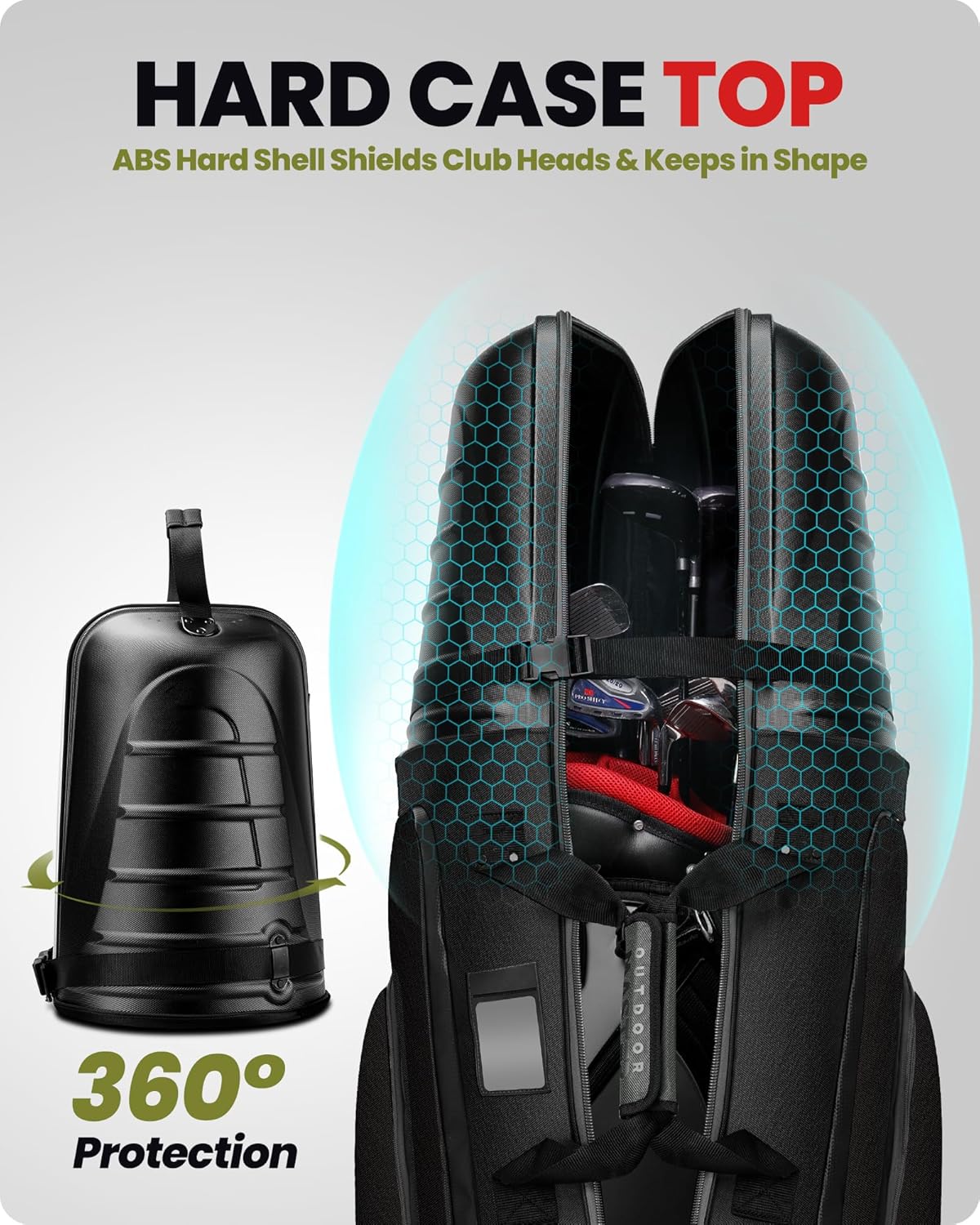
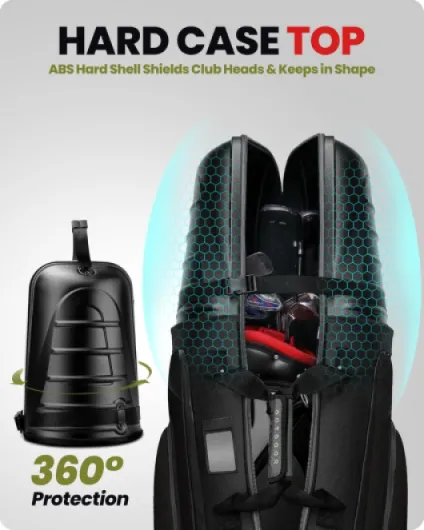
The overall design is a mix of hard shell at the top and soft padded body. The hard ABS top is there to protect the club heads from being crushed, which is the main weak point of typical soft covers. In practice, that part does what it’s supposed to do. I didn’t see any dents or flex after flights, and my driver and fairway woods came out exactly as they went in. I still used a separate club protector bar inside (I’m paranoid), but honestly, the top on its own feels pretty solid.
The rest of the bag is 1680D ballistic nylon with extra cushioning. That sounds like marketing, but in hand it’s basically thick, stiff fabric with a good amount of padding. When you grab the side and push, it doesn’t just collapse like a thin duffel. There’s some structure. That’s useful when the bag gets stacked with other luggage. You’re not getting full hard-case protection along the whole length, but you’re also not stuck with a floppy sack.
On the handling side, there are multiple handles and a shoulder strap. The top handle is reinforced and is the one I used the most, especially when dragging it upright on the wheels. There are side handles too, which are handy for lifting it off a conveyor belt or out of a car trunk. The shoulder strap is there if you want to carry it like a giant sports bag, but honestly, once it’s loaded with clubs and shoes, that’s more punishment than convenience. I tried it once for a short distance and went straight back to rolling it.
If I had to nitpick the design, I’d say it’s more practical than pretty. The Rock Black color is just…black. Nothing flashy, which I actually like because it doesn’t scream “steal my clubs.” But if you’re hoping to spot it from a mile away on the baggage carousel, you might want to add a bright luggage tag or strap. Also, when it’s fully packed, it can feel a bit top-heavy, so if you’re not careful when standing it upright, it can tip over. Not a deal-breaker, but something you notice when you’re juggling other bags.
Materials and build: not luxury, but tough enough for real travel
The bag uses 1680D ballistic nylon for the main body, which is on the tougher end of what you usually see in travel covers. It feels thick and a bit stiff, in a good way. I had it dragged across rough pavement, rolled it over curbs, and watched airport staff toss it onto carts. After two trips, the fabric had a couple of light scuffs but no tears, no fraying seams, and no loose threads. So in real use, it holds up fine so far.
The hard shell top is ABS plastic. It’s not indestructible, but it’s rigid enough that when I pressed down hard with both hands, it barely flexed. That’s exactly what you want around your club heads. I didn’t notice any cracks or stress marks after flying. Compared to full hard cases I’ve tried, this feels slightly lighter and a bit less tank-like, but for someone who travels a few times a year instead of weekly, it’s a reasonable trade-off between protection and weight.
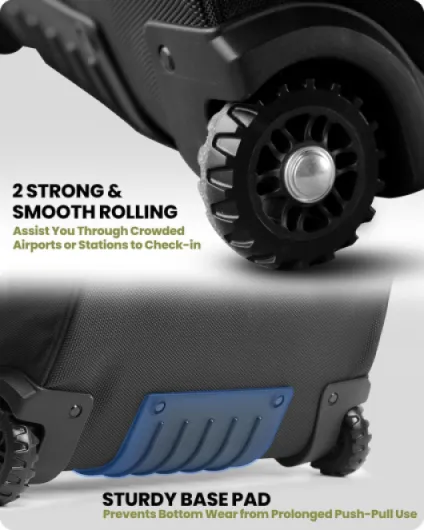
The wheels are in-line skate style with a rubber base. They’re not cheap plastic rollers; they have a bit of softness, which helps on rougher surfaces. I rolled this thing through a busy airport, over expansion joints, and across parking lots. The wheels stayed smooth, didn’t wobble, and didn’t pick up chunks or flat spots. If something is going to fail first on a bag like this, it’s usually the wheels or zippers. So far, both are holding up. The zippers are chunky and haven’t snagged on me yet.
One thing to keep in mind: the whole bag weighs about 8.38 pounds empty. That’s relatively light for something with a hard top and heavy-duty fabric. Once you add a full set of clubs, shoes, and extras, it’s still not featherweight, but at least the bag itself isn’t what’s killing you. The materials feel chosen more for practicality and durability than looks, and that suits the purpose. It’s not premium leather or anything fancy; it’s just tough nylon, solid plastic, and decent hardware that seem built to take some abuse.
Durability after a few trips: what’s holding up and what to watch
Durability is always a bit of a guess until you’ve abused something for a year, but after a couple of trips I can at least say how it’s aging so far. The fabric still looks in good shape: a few light marks from conveyor belts and dirty hands, but no cuts or worn-through spots. The stitching around the handles and stress points is still tight. I checked them specifically because that’s where cheap bags usually start to go. No loose threads or separation yet.
The hard ABS top hasn’t shown any cracks or major scuffs. There are some surface scratches, which is normal after going through airline handling, but nothing deeper. I tried pressing on it pretty hard after the last flight to see if it had weakened; it still feels solid. If anything is going to fail there, it would probably be from a really hard impact or being crushed under something way heavier, but for standard travel abuse it seems fine.
The wheels are the part I was most worried about, since if those go, the whole thing becomes a chore to move. After multiple airport runs and parking lots, they still spin smoothly. No weird grinding, no wobble. The axle area doesn’t show any obvious flex or cracks. They’re not fancy, but they’re clearly better than the cheap plastic ones you see on bargain covers. Same story with the zippers: still smooth, no teeth missing, and the pulls haven’t bent.
Long term, I’d keep an eye on the handles and the area where the hard top meets the soft body, since those are the main stress zones. But based on the first few trips, I’d say durability is pretty solid for the price range. It feels like something that can handle several seasons of occasional travel, not a one-and-done bag. If you’re a touring pro flying every week, you might want something even more bulletproof, but for a regular golfer who flies a few times a year, this seems up to the task.
Performance in airports and on the road: does it actually protect your clubs?
In terms of real-world performance, the main question is simple: do your clubs survive the trip? For me, the answer was yes. I did two round-trip flights with connections, so four times checking the bag and four times picking it up off a carousel. I also had a couple of shuttle rides where the driver stacked other suitcases on top of it. When I opened it at the hotel each time, nothing had shifted badly, no shafts were bent, and no heads were loose. That’s the baseline I was looking for.
The combo of the hard shell top + thick padded sides + internal straps seems to work. My cart bag sat snug inside, strapped down by the two interior straps. There was still a bit of internal movement if I shook the whole thing, but it never felt like the clubs were banging around freely. I also liked that the body has a 2x thickened cushion layer (their wording, but you can feel it). When you press on the side, there’s enough padding that you don’t feel the club heads or shafts right away.
Rolling performance was honestly one of the better surprises. The in-line wheels and rubber base handled smooth airport floors easily, but also didn’t freak out on rougher concrete outside. It tracked straight, didn’t twist around, and I didn’t have to fight it to keep it rolling upright. The only time it got annoying was when I overloaded the side pockets and made the weight distribution uneven; then it wanted to lean a bit. That’s more on me than the bag, but it’s worth noting: pack smart if you want it to roll nicely.
In crowded airports, the multiple handles helped a lot. I could grab the top handle to drag it behind me, use the side handle to yank it off a conveyor belt, or grab two handles to haul it into a trunk. It’s still a big, heavy item once loaded, so don’t expect it to feel light, but the design makes it manageable. Overall, performance-wise, it gets the job done: good protection for normal use, easy rolling, and no nasty surprises so far.
What you actually get and how much space you really have
Out of the box, you get the main golf travel bag and a separate carry/storage bag. The travel bag itself is about 49.6 inches (126 cm) long, which is enough for a standard driver with a headcover and a normal cart bag. I used it with a 10.5° driver and a mid-size cart bag, and there was still a bit of room at the top so nothing felt crammed. The brand does warn that if your cart bag’s divider top is over 11.8 inches in diameter, it might not fit. That’s not just legal talk; my buddy has a really chunky staff bag and we tried it—no chance, it was too tight.
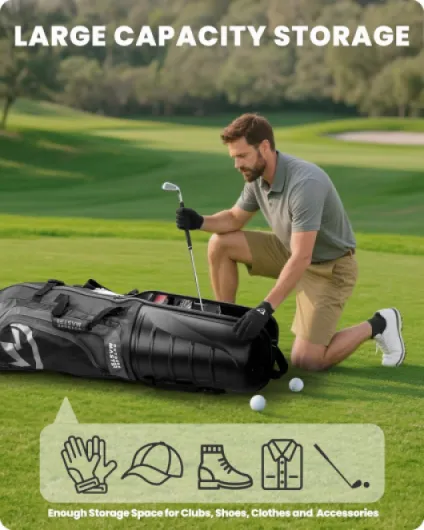
The interior is roomy enough for a full set of clubs, and I managed to stuff in some extra gear: rain jacket, gloves, and a couple of sleeves of balls. There are two internal fixing straps that go around your golf bag to keep it from wobbling too much. They help, but don’t expect it to be rock solid inside if the airline throws it around. You still feel some movement when you shake it, but nothing crazy. For a normal user who isn’t shipping it across the world every week, it’s acceptable.
On the outside, you get three pockets, which is handy. I used one for shoes (they also provide separate shoe bags), another for tees, balls, and a towel, and the last one for random stuff like a small umbrella and a hat. Just keep in mind: the more you cram into those pockets, the heavier and more awkward it gets to lift into a car, especially if you’re doing it alone. It’s easy to get greedy with the space and then regret it at the airport curb.
The included carry bag is mainly for storage when you’re not traveling. You can fold the big travel cover into it and stash it in a closet. It’s not super compact—it’s still a lot of fabric and padding—but compared to a full hard case, it’s much easier to hide away. In short, in terms of presentation and what’s included, you’re getting a functional, fairly spacious travel cover that’s clearly built around the idea of protecting a normal cart bag, not a giant tour staff bag.
Pros
- Hard ABS top gives solid protection for club heads during flights
- Durable 1680D nylon body with good padding and sturdy zippers/wheels
- Easy to maneuver in airports thanks to smooth in-line wheels and multiple handles
Cons
- May not fit larger staff bags with divider tops over 11.8 inches in diameter
- Can feel top-heavy and tip over when fully loaded if not balanced well
Conclusion
Editor's rating
If you’re a regular golfer who flies with your clubs a couple of times a year, the OutdoorMaster Golf Travel Bag hits a pretty practical balance. The hard shell top does what it’s supposed to do: keep your club heads safe from crushing. The padded nylon body and internal straps add enough stability that your bag isn’t flopping around inside, and the wheels make airport runs much less painful. After a few flights, my clubs came out fine and the bag itself only showed normal scuffs, no real damage.
It’s not perfect. If you use a big staff bag with a divider top over about 11.8 inches, you might be out of luck—it’s just not built for that size. And while the padding and materials are solid for the price, this isn’t a tank-level case like some of the higher-end hard shells. It’s more for the average golfer than for someone flying with clubs every single week. But for most people, that’s actually a good fit: it protects well enough, rolls smoothly, and doesn’t take over your whole garage when you store it.
So, who is it for? Golfers with standard cart or stand bags who want reliable protection and easy maneuvering without going overboard on price or bulk. Who should skip it? Folks with oversized staff bags, or those who travel constantly and want the absolute toughest case money can buy. For everyone else, this is a pretty solid, no-nonsense option that gets the job done without trying to be fancy.