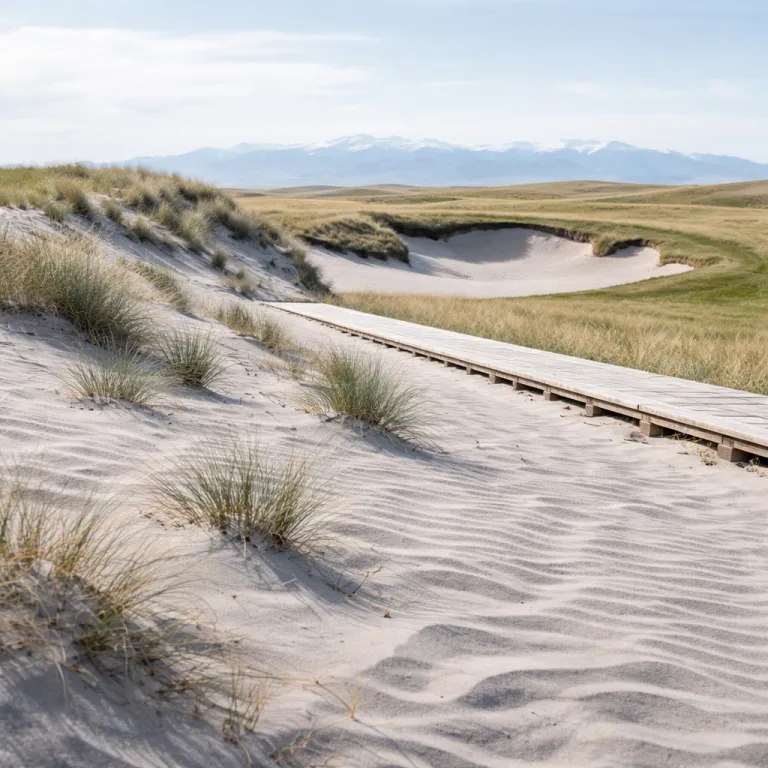

Rodeo Dunes and the new frontier of destination golf on the front range
Rodeo Dunes is already reshaping how serious players read the map of American destination golf. This Rodeo Dunes golf Colorado review starts with geography, because the land just east of the Colorado Front Range quietly solves a problem that Sand Valley and Bandon Dunes never could for Denver based golfers. The property lies near Roggen, roughly fifty miles from downtown Denver, so this new golf resort promises true dream golf scale without demanding a full week away from work and club commitments.
The site itself is a heaving sea of natural sand dunes, closer in spirit to Sand Hills in Nebraska than to the manicured parkland golf courses ringing most cities. Coore & Crenshaw walked the land for months after signing on as lead architects in 2022, flagging hole corridors that barely needed a bulldozer, which is classic Coore Crenshaw design philosophy and a clear signal that the course rodeo identity will lean into wind, contour and firm sand rather than lush rough. Expect wide fairways that invite aggressive play from the tee, then punish the wrong angle into a green with short grass runoffs instead of thick rough.
This first Coore course at Rodeo Dunes sits within a larger vision backed by developer Michael Keiser Jr. and the Cervi family, echoing the development pattern at both Sand Valley and Bandon Dunes while still feeling distinctly Colorado. Early routing maps and public comments from the team suggest multiple future courses, with the opening eighteen acting as the anchor golf course and a second Crenshaw course likely following once demand proves itself among public golf travelers. For golfers used to flying to remote golf resort destinations, the ability to play two or three courses over a long weekend on the Front Range will change how they plan annual trips.
From a luxury perspective, the rodeo element is not a theme park gimmick but a nod to working ranch history on this land, which matters when you care about authenticity as much as conditioning. The dunes here are raw and wind shaped, so every hole will evolve subtly over time as sand shifts and fescue tightens, giving repeat visitors a reason to return and re read the ground game. This Rodeo Dunes golf Colorado review therefore treats the property less as a finished product and more as a living sand dunes ecosystem that will reward patient study as the resort moves through its phased opening.
For equipment focused readers planning an early trip, this is a place where a spring gear refresh makes real performance sense, especially around lower spin golf balls and versatile wedges for tight lies. A curated guide such as the one on what to swap before the season peaks pairs naturally with a venue built on firm fairway turf and fast running approaches. When the wind whips across the Front Range and the sand underfoot stays dry and tight, the right club setup will matter as much as your course management.
Inside the Coore and Crenshaw design: holes, greens and the rhythm of the round
Any serious Rodeo Dunes golf Colorado review has to start on the tee, because Coore and Crenshaw courses are defined by what you see and feel when you place the ball on that first peg. At Rodeo Dunes the architects are expected to lean into their trademark wide fairway design, giving you room to swing freely while still demanding that you choose the correct side of the short grass to open up the green. This balance between apparent generosity and subtle punishment is what separates a true dream golf experience from a merely scenic golf course.
Expect the opening stretch of holes to use the most dramatic sand dunes as both backdrop and strategic hazard, with at least one short par four hole rodeo style that tempts you to drive near the green while hiding trouble in the wrong hollow. The much discussed fourth hole in early routing chatter is rumored to play along a ridge of exposed sand, where a bold line over the corner rewards you with a simple pitch while the safer line leaves a semi blind approach. That kind of risk reward design is classic Coore Crenshaw, and it will make Rodeo Dunes one of the more thought provoking public golf options within easy reach of a major city.
Greens at Coore and Crenshaw courses rarely shout with wild tiers, instead they whisper with interior contours that only reveal themselves after several rounds of play. At Rodeo Dunes the green complexes will likely bleed seamlessly into surrounding short grass, allowing you to putt, chip or even bump a hybrid from ten or fifteen metres off the surface. Luxury in this context is not about waterfalls or overbuilt clubhouses, but about the freedom to choose multiple shots into every green and feel the ball react honestly on firm sand based turf.
For traveling golfers who care about the full experience, the supporting details matter as much as the routing, from the feel of the club in hand to the elegance of the bag on the cart. This is the kind of minimalist stage where an understated premium carry bag looks at home, and resources like a guide to elegant women’s golf bags for discerning players speak directly to that aesthetic. When you walk a Coore course across the Colorado land, every element of your kit becomes part of the visual story against the pale sand and big sky.
Because this is the opening chapter of a larger golf resort, the rhythm of the round at Rodeo Dunes will also be shaped by how the future second and third courses slot into the property. Keiser and his team have historically sequenced golf courses so that each new design offers a distinct flavor, and there is no reason to expect a different strategy here on the Front Range. That means the first course rodeo identity may lean more into width and ground game, leaving room for a later layout to explore tighter corridors or a different wind exposure across the sand hills style terrain.
Access, itineraries and what Rodeo Dunes signals for luxury public golf
Accessibility is where this Rodeo Dunes golf Colorado review diverges sharply from the usual narrative around remote dream golf destinations. Bandon Dunes and Sand Valley require flights, long drives and at least four or five days on site, which is glorious but demanding for golfers balancing work, family and club obligations. Rodeo Dunes, by contrast, sits close enough to Denver that a committed player can leave the office early on Friday, play an evening nine holes, then log thirty six more holes on Saturday before heading home.
Early indications from the development team suggest that Rodeo Dunes will operate as a primarily public golf venue with some form of limited membership or lodging priority, following the template that Michael Keiser has used successfully at other golf resort projects. For the first season, booking windows are expected to favor on site guests, with day play tee times opening later and likely selling out quickly on peak summer weekends. That means serious golfers should plan itineraries well in advance, treating a two night stay with three or four rounds of play as the optimal way to experience multiple courses once they are all open.
From a luxury travel standpoint, the proximity to Denver’s broader hospitality scene changes the equation, because you can pair a rugged sand dunes golf immersion with high end dining and city hotels before or after your stay. The Cervi family land holdings around the property give the developers room to expand lodging options over time, potentially adding more intimate club style accommodations alongside larger resort units. As the portfolio of golf courses grows, Rodeo Dunes could evolve into a Front Range counterpart to Sand Hills and Bandon Dunes, but with a uniquely accessible rhythm that suits frequent shorter trips.
On course, the minimalist aesthetic puts a quiet spotlight on personal accessories, from leather scorecard holders to refined ball markers laid gently on the green. If you care about those details, a resource on refined golf ball marker choices aligns perfectly with the understated luxury of walking a Coore Crenshaw layout in the high plains light. When the only sounds are wind in the native grasses and the thump of a well struck shot off firm sand, those small touches feel amplified rather than frivolous.
Ultimately, Rodeo Dunes signals that the future of high end public golf is not just about remote seclusion, but about finding extraordinary land within realistic reach of major metros. For golfers who measure trips in both hours and holes, the ability to play world class design on natural dunes without burning an entire week is a meaningful shift. In the end, what stays with you is not the handicap, but how the fairway felt at dawn.
Key figures and context for Rodeo Dunes and destination golf
- Rodeo Dunes is being developed on a large tract of natural sand based land near Roggen, Colorado, less than an hour’s drive from central Denver on the Front Range, with early construction focused on the first Coore & Crenshaw eighteen.
- The project follows a multi course golf resort model similar in scale and ambition to Bandon Dunes in Oregon and Sand Valley in Wisconsin, both of which feature several eighteen hole golf courses on contiguous sand dunes terrain.
- Coore and Crenshaw have previously designed acclaimed minimalist layouts at Sand Hills in Nebraska and multiple courses at Bandon Dunes, establishing a track record for routing golf holes that rely on existing contours rather than heavy earthmoving.
- Public golf access at comparable dream golf destinations typically combines advance booking windows for on site guests with limited day play tee times, encouraging golfers to stay multiple nights and play several courses in one trip.
Questions golfers often ask about Rodeo Dunes and similar resorts
How will Rodeo Dunes compare to established destinations like Bandon Dunes and Sand Valley ?
Rodeo Dunes shares key DNA with Bandon Dunes and Sand Valley, including sand based soils, multiple courses and minimalist design from architects such as Coore and Crenshaw. The crucial difference is proximity to a major metro area, because the Colorado Front Range location allows Denver based golfers to plan shorter, more frequent trips. While the scale and number of golf courses may eventually resemble those older resorts, the rhythm of play and travel will feel more flexible for time pressed players.
What style of golf should players expect from the Coore and Crenshaw design at Rodeo Dunes ?
Golfers can expect wide fairways, firm turf and green complexes that favor the ground game, all hallmarks of Coore and Crenshaw design. Rather than forced carries over water, strategy will come from choosing the correct line off the tee and using contours in the land to feed shots toward hole locations. This style rewards creativity and patience, making Rodeo Dunes particularly appealing for golfers who enjoy walking and thinking their way around a golf course.
Will Rodeo Dunes be accessible for public golf, or mainly for members and resort guests ?
Based on patterns at similar dream golf properties developed by Michael Keiser, Rodeo Dunes is expected to prioritize public golf while still offering advantages to on site guests. That usually means resort guests receive earlier access to tee times and better odds of securing prime morning or afternoon rounds. Day play is typically available but more limited, so serious golfers who want multiple rounds across different courses should plan to stay at the golf resort itself.
How should golfers plan equipment and packing for a trip to a sand dunes course on the Colorado front range ?
Firm sand based turf and frequent wind on the Front Range favor lower spin golf balls, versatile wedges and reliable long irons or hybrids for controlling trajectory. Golfers should pack for walking, with comfortable shoes and a lightweight but durable golf bag that suits the minimalist aesthetic of a Coore and Crenshaw course. Accessories such as ball markers, gloves and layering pieces matter more than usual, because conditions can shift quickly across exposed dunes land.
What does Rodeo Dunes signal about the future of luxury golf resorts in the United States ?
The development of Rodeo Dunes suggests that future luxury golf resorts may focus less on remote isolation and more on extraordinary land within reach of major cities. By combining world class minimalist design with realistic travel times, projects like this broaden the audience for high end public golf beyond those able to commit a full week to travel. For golfers who value both quality and convenience, that shift could redefine how they allocate time and budget across multiple golf trips each season.