Summary
Analysis score
Average of the criteria rated below
Value for money: strong, especially if you don’t mind future upgrades
Compact, hybrid-style design with an iron replacement mindset
Head, shaft and grip: solid but clearly budget-focused
Durability: solid head, normal cosmetic wear, upgradeable shaft
Performance: forgiving and straight, with modest distance
What the PGF Gold Tour Precision #7 actually is
Pros
- Forgiving hybrid design with low CG and perimeter weighting that helps average golfers launch the ball easily
- Versatile 32° loft works as a mid-iron replacement and can be used for chipping and pitching
- Strong value for money, with many buyers praising the cost-to-performance ratio and considering adding more lofts from the same line
Cons
- Distance reported as underwhelming by at least one buyer compared with other clubs of similar loft
- Stock graphite shaft and standard grip are basic and may push picky players toward upgrades

Specifications
View full product page →| Brand | PGF GCWarehouse |
A hybrid built to replace your mid irons
The PGF Gold Tour Precision Hybrid #7 is clearly aimed at golfers who are tired of fighting with their 6–7 irons. On paper, it tries to mix the forgiveness of a hybrid with the yardages and control of a mid iron. It comes as a right-handed club, graphite regular shaft, with a 32° loft that lines up roughly with a traditional 6–7 iron depending on the brand. The overall weight is listed at 0.41 kg, which is in the normal range for a graphite-shafted hybrid.
What stands out is the positioning: this club sits in a family of hybrids covering #7 to PW, and Amazon buyers have given the range a 4.4/5 average over 231 ratings. That is not perfection, but it suggests that most golfers who took the plunge are satisfied. Several comments describe it as easy to hit, forgiving, and practical for chipping and pitching, which hints that it is meant as a safety club rather than a pure distance weapon.
The brand, PGF GCWarehouse, is far from the big names like TaylorMade, Callaway or Ping, but the product has climbed to #2 in Hybrid & Utility Golf Clubs on Amazon. That ranking usually means a mix of attractive price and reasonable performance. Some buyers even mention considering a full set of these hybrids to replace traditional irons, which is quite a strong sign of confidence for a lesser-known label.
In my opinion, this club targets golfers in the mid to high handicap range who want something simple, straight and forgiving, and who are not obsessed with squeezing every last meter of distance. It is not presented as a tour-level rocket, more as a practical tool to reduce fat shots, duffs and slices. If you are looking for a budget-friendly hybrid to plug a gap around 140–160 yards and help around the green, this #7 looks like a realistic candidate on paper.
Value for money: strong, especially if you don’t mind future upgrades
The PGF Gold Tour Precision Hybrid #7 positions itself clearly as a value product. It is not from a major tour brand, yet it sits at #2 in the Hybrid & Utility Golf Clubs category on Amazon and holds a 4.4/5 average rating across 231 reviews. That combination of popularity and decent feedback usually points to a good performance-to-price ratio. Even though the exact price is not displayed here, the tone of several comments (“good value for the money”, “great cost”) suggests that this club is meaningfully cheaper than big-name hybrids from TaylorMade, Callaway, Ping or Titleist.
From a spec standpoint, you are getting a forged carbon steel face, stainless construction, graphite shaft, and a hybrid head designed with perimeter weighting and low CG. That is a modern recipe, not outdated tech. The compromises appear mainly on the shaft and grip, which several golfers mention as decent but not premium. One user explicitly says the head is very good and plans to change the shaft to turn it into what they consider a top-tier club. Another likes the stock flex but still prefers to swap grips for a thicker Jumbo+ model. In other words, the club is playable out of the box, but also a good base for upgrades if you want to invest later.
The performance feedback supports the value proposition. Buyers talk about easy launch, forgiveness, straight shots, and versatile use for chipping and pitching. The main criticism is underwhelming distance for at least one golfer, but even that review ends up positive because the control and reduction of fat shots are more important to them. For many amateur players, that trade-off is totally acceptable, especially when the club costs less than a premium alternative.
In my opinion, the value is strong if you fit the target profile: a recreational player looking for a forgiving, mid-loft hybrid to replace a difficult iron, without paying for a big brand logo. If you are very picky about shaft feel or want maximum distance gains, you might be better served by a higher-priced model or by budgeting for an immediate reshaft. For everyone else, this looks like a sensible way to add a reliable, confidence-boosting club to the bag without blowing up the budget.

Compact, hybrid-style design with an iron replacement mindset
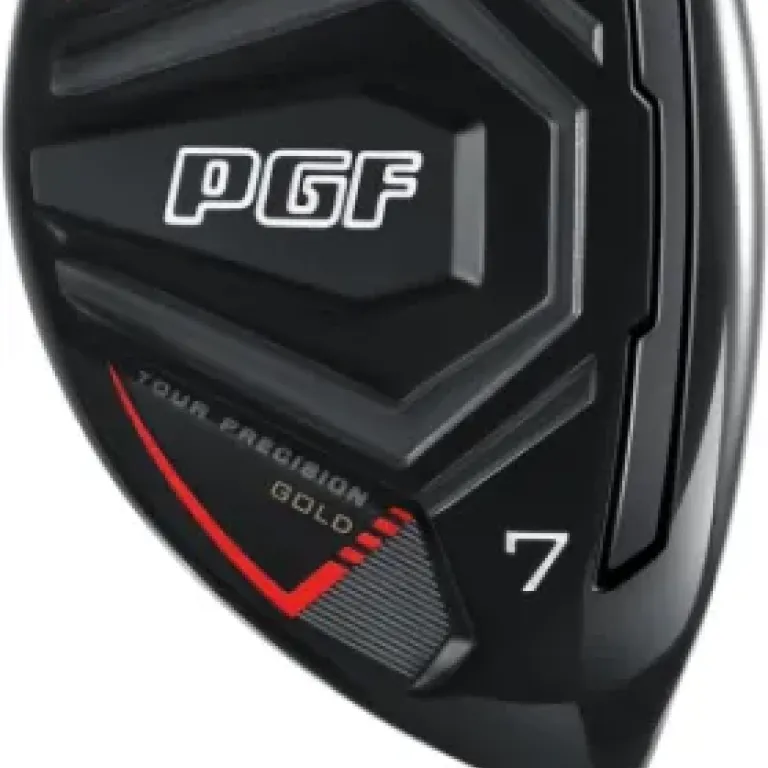
From the description and user comments, the PGF Gold Tour Precision Hybrid #7 goes for a compact, player-style profile rather than a huge, oversized hybrid head. The brand talks about a “sleek, player-focused compact profile” and “iron-like precision,” which suggests a head that is not too bulky at address, aiming to appeal to golfers who normally prefer the look of irons but want more forgiveness. The color is black, with a blacked-out finish on the head that some reviewers mention appreciating, even if wear marks start to show after a bit of play.
The head shape is described as having a higher toe and a raised crown, with a dot on top to help with alignment. That alignment dot is a small but practical feature for mid-handicappers who struggle to center the ball on the face. A buyer who posted a video notes liking the raised crown and alignment aid, saying it helps with aim and confidence at address. The compact profile should also make it easier to use this club from a variety of lies: fairway, light rough, and even for bump-and-run style chips.
The internal design is built around perimeter weighting and a low center of gravity. The manufacturer mentions strategic heel-toe weighting and a thinner center with a thicker perimeter on the face. On paper, this means a wider effective sweet spot and more stable ball speeds on mishits. The low CG should promote higher launch, especially useful for golfers who struggle to get mid irons airborne. Combined with the 32° loft, this is clearly set up to give an easy, high ball flight rather than a low, penetrating one.
In my opinion, the design is coherent for the target golfer: a compact hybrid that does not look intimidating, with visual help for alignment and a structure built around forgiveness. It is not a flashy, tech-heavy design with sliding weights or adjustable hosels. Instead, it is a straightforward shape that tries to inspire confidence at address and give predictable, straight shots. For players who like a clean, blacked-out look and want something simpler than a bulky game-improvement hybrid, this approach makes sense.
Head, shaft and grip: solid but clearly budget-focused
The PGF Gold Tour Precision Hybrid #7 mixes a forged carbon steel face with a stainless steel body, according to the product description and at least one buyer who mentions the stainless head. The forged face is supposed to be thinner in the center and around the edges, with a thicker outer frame to maintain durability. On paper, this kind of construction is common in modern hybrids and irons: thin areas to boost ball speed, thicker support to avoid cracks and deforming. The head weight and internal heel-toe weighting are designed to push mass to the perimeter and keep the club stable on off-center hits.
The shaft is graphite in regular flex, with no famous shaft brand mentioned. That usually means an in-house or generic graphite model, which is standard in this price range. One review explicitly says the shaft feels good but suggests that replacing it with a higher-end shaft would make the club feel closer to a top-tier product. Another buyer, on the other hand, says they like the flex and find the club consistent and forgiving with the stock setup. So the shaft seems decent but not premium, which matches the overall budget orientation.
The grip is a standard size synthetic rubber grip. Nothing fancy here either: no mention of multi-compound textures, alignment markings, or oversized versions. A golfer who prefers thicker grips says they usually swap to Jumbo+ grips, which confirms that the factory grip is basic and standard. For many players, that is perfectly fine, and grips are anyway one of the cheapest components to upgrade if needed.
In my opinion, the materials are exactly what you would expect from a mid-priced hybrid that sells well on Amazon: a head design that is reasonably advanced on paper (forged face, perimeter weighting, low CG) paired with a cost-controlled shaft and grip. The positive side is that you get a modern head concept at a relatively low entry price; the downside is that players who are very sensitive to shaft feel or grip texture will probably plan on some customization. For most recreational golfers, the stock build should still get the job done.

Durability: solid head, normal cosmetic wear, upgradeable shaft
On paper, the durability of the PGF Gold Tour Precision Hybrid #7 relies on a forged carbon steel face backed by a stainless steel construction. The manufacturer talks about a face designed with a thinner center and perimeter, reinforced by a thicker outer layer to improve durability across the hitting area. This type of structure is common in modern clubs and usually handles regular play without structural issues, as long as you are not abusing the club on rocks or range mats with embedded stones.
Among the published reviews, there is no wave of complaints about the head breaking, caving in, or the hosel loosening. One golfer who has used a similar loft from the line over a couple of rounds and range sessions mentions that the finish seems durable so far, even if some light marks appear. Another buyer who plays the #9 in the series notes that the black face can scuff and let the silver metal show through, which they consider normal at this price point and something that would likely happen on more expensive clubs too. So the main durability topic seems to be cosmetic wear on the black finish, not structural failure.
The shaft and grip are more basic, and this is where long-term durability and feel may diverge more between users. A reviewer says the club head is very good quality but thinks the shaft should be replaced with a better one to reach a top-tier feel. This comment is more about performance and perceived quality than about breakage, but it shows that the shaft is a logical upgrade path if you want to keep the head long term. The synthetic rubber grip, being standard, will probably wear like any other budget grip and may need replacement after a season or two of regular play.
In my opinion, there is nothing alarming on the durability front. You get a stainless/forged head that should handle normal use, some cosmetic wear on the black finish as you would expect, and a serviceable shaft and grip that can be swapped later. For the price bracket this club sits in, that is a reasonable durability picture: not bulletproof luxury, but solid enough for regular weekend golf without babying the club.
Performance: forgiving and straight, with modest distance
Performance is where the PGF Gold Tour Precision Hybrid #7 gets the most consistent feedback in the Amazon comments. Several verified buyers describe it as easy to hit, forgiving, and reliable. One review of a similar loft in the same line mentions that every shot went dead straight with yardages in line with what you would expect from that loft. Another buyer, talking specifically about the 32° version, calls it very consistent, easy to use and forgiving, with good distance for them. This lines up with the design choices: low center of gravity, perimeter weighting, and a hybrid head that is supposed to help average swings launch the ball higher and straighter.
On the versatility side, one golfer highlights that the club is not just for full swings. They use it for chipping and pitching as well, and say it helps eliminate fat shots and duffs around the green. That is a strong point for players who struggle with wedges and mid irons: a hybrid that you can use from the fairway, rough, and even for bump-and-run shots simplifies club selection and reduces stress on tricky lies. The 32° loft is also well suited for those mid-range approaches where you want height and some stopping power.
It is not all positive, though. A review specifically mentions that distance feels underwhelming. The user still rates the club well overall, saying the benefits in forgiveness and ease of use are worth the trade-off in raw yardage. This fits the profile: the face and construction seem tuned more for consistency and a high launch than for squeezing maximum ball speed. Another buyer notes that the head feels very solid but believes a better shaft would unlock more performance, hinting that the stock shaft might limit some faster swing players.
In my opinion, this is a performance package targeting control and forgiveness rather than distance records. If you already hit a 7-iron quite far and want a low-spin bullet, this is probably not the right tool. If you are a mid or high handicapper who mainly wants the ball in the air, going straight, and roughly the same distance every time, this hybrid concept makes sense. The 4.4/5 average over more than 200 ratings suggests that, for most recreational golfers, it delivers on that promise.

What the PGF Gold Tour Precision #7 actually is
The PGF Gold Tour Precision Hybrid #7 is a right-handed hybrid golf club with a graphite regular flex shaft and a 32° loft. That loft is in the range of a modern 7-iron or slightly weaker 6-iron, depending on the brand. The club weighs about 0.41 kg, which is pretty standard for a graphite-shafted hybrid, and it is delivered with a standard size synthetic rubber grip. There is no mention of adjustability, so everything is fixed: loft, lie, and shaft.
The manufacturer describes the face as forged carbon steel with a higher toe and internal heel-toe weighting. The design goal is clear: push weight to the perimeter, lower the center of gravity, and make it easier to launch the ball higher with more forgiveness across the face. The club sits in a lineup with lofts from #7 to PW, so the concept is to let you replace the tricky mid and short irons with hybrids that look and behave more friendly for average swings.
Among the published reviews, several buyers highlight that the club is easy to hit and quite versatile. One user says it works well for chipping and pitching, reducing fat shots and duffs. Another comment mentions the #9 from the same line and describes straight ball flights, consistent yardage for the loft, and a nice high apex that helps the ball stop near the pin. These opinions suggest the design is more control and forgiveness oriented than pure distance focused.
On the flip side, at least one golfer points out that distance feels underwhelming compared with other clubs of similar loft. Another says the head quality seems good but plans to replace the shaft with a higher-end option to get the club closer to a premium feel. In my opinion, that sums up the positioning well: solid head concept, budget-oriented shaft and grip, and overall a value play rather than a premium, tech-heavy hybrid.
Pros
- Forgiving hybrid design with low CG and perimeter weighting that helps average golfers launch the ball easily
- Versatile 32° loft works as a mid-iron replacement and can be used for chipping and pitching
- Strong value for money, with many buyers praising the cost-to-performance ratio and considering adding more lofts from the same line
Cons
- Distance reported as underwhelming by at least one buyer compared with other clubs of similar loft
- Stock graphite shaft and standard grip are basic and may push picky players toward upgrades
Conclusion
Analysis score
The PGF Gold Tour Precision Hybrid #7 looks like a practical tool for golfers who just want the ball in the air and going roughly where they aim. With its 32° loft, perimeter weighting, and low center of gravity, it behaves more like a friendly mid-iron replacement than a distance cannon. The head design is coherent, the blacked-out look is clean, and user comments repeatedly mention forgiveness, straight shots, and useful versatility for chipping and pitching. The 4.4/5 average over more than 200 ratings and a #2 category ranking on Amazon back up the idea that most buyers feel they got solid value.
The weak spots are fairly clear as well. Distance seems modest for at least some players, and the stock shaft and grip are more budget than premium. A couple of golfers say the head feels good enough that they plan to upgrade the shaft and possibly the grip to get closer to a high-end feel. Cosmetic wear on the black face is mentioned, but more as an expected side effect than a real problem. In my opinion, this club is best suited to mid and high handicappers who struggle with traditional 6–7 irons and want a simple, forgiving hybrid without paying big-brand prices.
If you are a low handicapper chasing maximum ball speed and fine-tuned shaft profiles, or if you are very sensitive to distance loss, you might want to look at more expensive hybrids with premium stock components. But if your priority is to hit more greens, avoid fat shots, and gain confidence from fairway and light rough, this PGF #7 offers a convincing mix of performance and price, with room to upgrade the shaft and grip later if you feel like it.