Summary
Analysis score
Average of the criteria rated below
Value for money: who this PGM putter makes sense for
Head shape, alignment, and shaft: a straightforward mallet setup
Grip feel and stroke comfort according to golfers
Stainless steel build and synthetic grip: solid but standard choices
Build quality and longevity: what the feedback suggests
Stability, roll, and alignment: how it seems to perform
What this PGM mallet putter offers on paper
Pros
- High-MOI mallet head with bold alignment line that many buyers say improves directional accuracy
- Comfortable, non-slip midsize/oversize grip with shock-absorbing core for better control and reduced vibration
- Stainless steel construction and well-balanced feel at a budget-friendly price point
Cons
- Right-hand only and single 34" length limit fit options for players outside the average height range
- Lacks advanced features (adjustable weights, premium face insert) and brand prestige of higher-end putters

Specifications
View full product page →| Brand | PGM |
A budget mallet putter that’s getting solid feedback
The PGM 34" mallet putter targets golfers who want a stable, modern-style putter without dropping a few hundred dollars on a big-name brand. On paper, it ticks several boxes that matter on the green: a high-MOI mallet head to resist twisting, a bold alignment line, a low center of gravity, and a stepped steel shaft. It’s sold as unisex, right-hand only, with a 34-inch length that fits a wide range of adult players.
In the Amazon comments, this model sits around 4.5/5 stars from roughly 18 reviews, which is not a giant sample but clearly leans positive. Buyers often mention good balance, a solid strike, and a grip that feels secure. Several comments come from people using it as a first mallet putter or as a practice putter on indoor greens, which gives a pretty clear idea of who is actually picking it up: beginners, returners to the game, or players building a budget set.
From the spec sheet, nothing screams high-end tech, but the fundamentals look sound: stainless steel construction, 3° of loft, regular flex, and a head shape designed for forgiveness. The advertised low center of gravity and high MOI are basically what you’d expect from a mallet aimed at straight, stable putts rather than fancy adjustability or premium inserts. The listed weight of about 0.89 kg (club plus head) suggests a fairly standard-feeling putter rather than an ultra-light toy.
In my opinion, this club positions itself clearly: not a prestige putter, but a practical tool for someone who wants a consistent roll and simple alignment at a modest price. It’s not going to replace a tour-level model for a picky low-handicap player, but for casual rounds, practice greens, or a first mallet experience, the combination of specs and feedback looks decent.
Value for money: who this PGM putter makes sense for
This PGM 34" mallet putter sits in the budget to mid-range segment, far below the $300–$500 price tags attached to big-brand tour models. Even though the exact live price isn’t listed here, the way buyers talk about it — “you don’t have to spend $500 to get it,” “good value for a first mallet putter,” “budget mallet putter” — makes it clear that it’s marketed as an affordable option. For many golfers, especially beginners or casual players, that’s a key factor in deciding whether to pull the trigger.
From a features-versus-price perspective, the putter offers a lot of the essentials: a high-MOI mallet head, bold alignment line, low center of gravity, and a non-slip, shock-absorbing grip. Reviews repeatedly mention that it feels well balanced and that the grip and alignment help with accuracy. One buyer even says it looks and performs like a high-end club, which is a strong compliment in this price bracket. Another highlights that it serves well as a practice putter on an indoor green, which means you can save your expensive gamer putter for the course if you own one.
On the flip side, you’re not getting brand prestige, custom fitting, or cutting-edge multi-material head technology. There’s no mention of interchangeable weights, face inserts with specific hardness ratings, or specialized milling patterns. For advanced golfers who are extremely sensitive to feel and want a very specific roll profile, that might be a limitation. Also, the current sample of reviews is relatively small (18 ratings), so there’s less community data than on big-name putters with thousands of reviews.
In my opinion, the value equation is pretty clear: if you want a simple, modern mallet with stable performance, decent materials, and mostly positive feedback at a modest cost, this PGM putter makes sense. It’s well suited for beginners, returning golfers, or anyone building a backup/office/practice setup. If you’re a low-handicap player chasing the tiniest performance gains or you care a lot about brand image and resale value, you’ll probably look elsewhere and pay more. For its apparent target audience, though, the value for money looks good.

Head shape, alignment, and shaft: a straightforward mallet setup
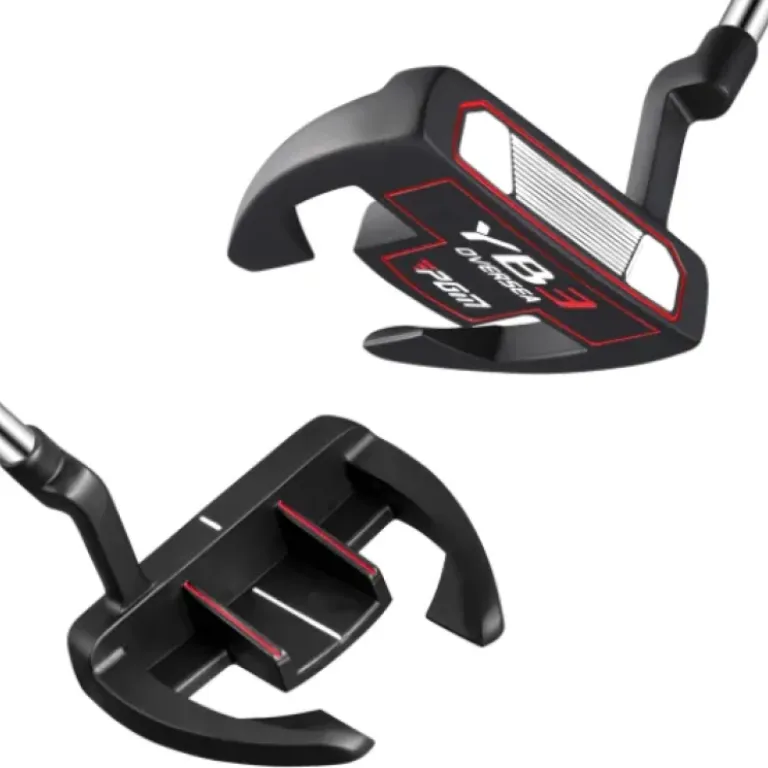
Design-wise, the PGM putter leans on a high-MOI mallet head with a bold single alignment line on top. Mallet designs are generally chosen for stability and forgiveness, and here the brand explicitly claims anti-twist behavior thanks to the high moment of inertia. That usually translates, at least in theory, to straighter putts when contact isn’t perfectly in the center. Several reviews echo this concept in plain terms: users talk about a “solid strike” and a head design they’re “a big fan of,” especially when comparing it to older or cheaper blade putters they had before.
The bold single-line alignment system is another key part of the design. Instead of multiple lines or complex shapes, PGM went for one strong visual cue. Multiple buyers mention that the line on top helps them align better and improves directional accuracy. That’s exactly the point of these markings: making it easier to square the face to the target and aim your starting line. If you struggle with alignment clutter, a single, high-contrast line can be easier to trust than busy patterns.
The shaft is a precision engineered stepped steel shaft. A stepped design means visible diameter transitions along the shaft, which is classic for steel golf shafts. PGM claims this helps minimize torque, which, if done properly, should keep the face angle more stable during the stroke. The shaft is regular flex, which is standard for a putter and not something that most players obsess over in this club type, but it confirms we’re not dealing with a whippy or gimmicky build. According to one review, the putter feels well balanced, which suggests that the head and shaft weight pairing is at least in line with typical expectations.
Visually, the black color theme with contrasting alignment line gives it a straightforward, modern look. There’s no mention in comments of flashy graphics or distracting patterns, which hints that the design is relatively clean. In my opinion, that fits the target golfer: someone who wants a stable mallet with simple alignment and doesn’t care about boutique finishes. On paper, the design is solid and functional, not particularly original, but clearly focused on forgiveness and ease of aim.
Grip feel and stroke comfort according to golfers
Comfort on a putter is mostly about the grip shape, texture, and vibration damping. Here, PGM uses a midsize or oversize synthetic rubber grip with a textured, weather-resistant surface and a shock-absorbing core. On paper, that combination aims to give you a secure hold in all conditions, while softening impact vibrations so your hands don’t feel every little jolt. That’s especially relevant for longer practice sessions on the putting green, where repetitive strokes can get tiring with a harsh-feeling club.
Among the Amazon comments, several buyers highlight the grip as a strong point. One review explicitly says the grip provides a comfortable, firm hold with no slipping, which suggests the texture and thickness are doing what they’re supposed to do. Another user mentions that the grip has a nice stickiness, again pointing to good traction without needing a death grip. There are no recurring complaints about the grip being too thin, too hard, or poorly finished, which is often where cheaper putters cut corners.
The overall balance of the putter also plays into comfort. A buyer using it on an indoor putting green notes that it feels well balanced, which typically makes it easier to swing the putter head back and through smoothly. A stable mallet head with a low center of gravity, combined with a regular flex steel shaft, should, in theory, encourage a pendulum-style stroke. That can help reduce strain on the wrists and forearms, especially for newer golfers who tend to fight the putter rather than let it swing.
In my opinion, for a budget-friendly putter, the comfort package looks solid: a thicker, non-slip grip, shock-absorbing core, and reports of good balance. It’s not marketed with fancy ergonomic tech, but the basics are covered. If you’re picky about grip size and feel you might eventually swap in a premium aftermarket grip, but for many casual players and beginners, the stock setup seems to satisfy without much fuss.

Stainless steel build and synthetic grip: solid but standard choices
The PGM mallet putter is built primarily from stainless steel, both for the head and the shaft. That’s a very common material choice in putters and typically offers decent durability, resistance to rust, and consistent weight distribution. There’s no mention of fancy face inserts, milled carbon, or multi-material constructions; this is a straightforward stainless design. For golfers, that usually means predictable feel and a robust club that can handle regular bag life, provided it isn’t abused.
The shaft is a stainless steel stepped design. Steel shafts in putters are more or less the industry norm because they keep flex low and feedback clear. The stepped structure helps tune stiffness and weight, and the brand highlights that it is “precision engineered” to reduce torque. On paper, that should help keep the putter face from twisting during the stroke, which aligns with the overall stability theme of this model. None of the Amazon comments complain about shaft quality, wobbling, or bending, which is reassuring for a budget-oriented club.
The grip material is synthetic rubber with a textured, non-slip surface, offered in midsize or oversize. Rubber grips are standard for putters, and the bigger profile can help reduce wrist action and promote a smoother, shoulder-driven stroke. Multiple buyers mention that the grip feels comfortable, sticky, and secure, with one review specifically noting no slipping and appreciating the feel. The grip is also described as having a shock-absorbing core, which on paper should cut down vibrations on contact and make repeated putting practice less tiring on the hands and wrists.
Overall, the materials list looks reliable but not premium. There’s no titanium, aluminum face insert, or exotic composite shaft here, but that’s not really expected in this price bracket. In my opinion, the stainless steel plus synthetic rubber combo is more than enough for casual players and beginners. The focus seems to be on durability and predictability rather than innovation. The 4.5/5 average rating with no serious complaints about construction suggests that, for most buyers, the material choices are doing their job without drama.
Build quality and longevity: what the feedback suggests
Durability for a putter comes down to head material, shaft strength, grip wear, and general build quality. This PGM model uses stainless steel for both the head and shaft, which should, in theory, offer decent resistance to rust and everyday knocks. Stainless is a safe, proven choice for clubs that will live in a bag, ride in carts, and get leaned on around the green. There’s no talk of fragile inserts or complex multi-piece constructions, so there are fewer potential failure points than on some high-tech designs.
The grip is synthetic rubber described as weather-resistant and textured for non-slip control. On paper, that suggests it’s intended to hold up under various conditions, from humid summer rounds to cooler practice sessions. Rubber grips do eventually wear and smooth out with heavy use, but that’s normal for any putter and relatively cheap to replace. None of the current reviews mention premature grip wear, peeling, or loose installation, which is a good sign, especially at this price level where corners can sometimes be cut.
Looking at the user comments, the tone around build quality is generally positive. Buyers mention that the putter “seems well made,” “feels, looks, and performs like a high-end club,” and is “quite functional for a budget mallet putter.” One person specifically says they’re using it regularly on an indoor putting mat, which tends to involve lots of repeated strokes and handling, and they still describe it as well balanced with good quality. Importantly, there are no reports of heads loosening, shafts bending, or paint chipping badly, at least within the small pool of about 18 reviews.
In my opinion, while the sample of feedback isn’t huge and there’s no long-term data spanning years, the combination of stainless steel construction and lack of serious complaints suggests respectable durability for casual and intermediate use. If you’re a heavy golfer playing multiple rounds a week in tough conditions, a more premium build might be worth considering. But for the typical buyer using it for weekend rounds and home practice, this putter should hold up fine as long as it’s treated reasonably.

Stability, roll, and alignment: how it seems to perform
Performance claims for this PGM putter revolve around three main ideas: anti-twist stability (high MOI), a low center of gravity for smoother roll, and a bold alignment line to improve aim. On paper, that’s exactly what you want from a mallet in this category. A high moment of inertia means the head should resist twisting when you strike the ball off-center, which helps keep putts on line even when the stroke isn’t perfect. The low center of gravity is meant to reduce skidding and get the ball rolling end-over-end more quickly.
In the reviews, several buyers indirectly confirm these intentions. One calls out a “solid strike with the ball,” which hints at a stable head and consistent contact. Another says the alignment lines on top help them line up their shot much better and that they’ve been more accurate with direction since using it. There’s also mention of the non-slip surface on the face providing more consistency, which suggests that the face texture is gripping the ball enough to produce a reliable roll. None of these are lab measurements, but they give a picture of how everyday golfers experience the club.
A few comments frame the putter as good value for a first mallet or a practice tool. One buyer using it primarily on an indoor putting green is happy with balance and accuracy, and another who’s restarting golf says it’s functional and well made for a budget mallet. That kind of feedback lines up with the spec sheet: this isn’t trying to compete with top-tier tour putters, but it aims to give stable, repeatable results for typical amateur play.
There is one more reserved review: a 4-star rating where the buyer says, “you get what you pay for” and jokes that their misses are probably not the putter’s fault. That sums up the realistic expectation level. In my opinion, if you’re chasing ultra-precise feel and custom fit, this won’t rival a $400+ name-brand model. But for most golfers looking for straighter putts, clear alignment, and a stable head without spending big, the performance feedback is encouraging and fits the advertised features.
What this PGM mallet putter offers on paper
This PGM putter is a 34-inch, right-handed, mallet-style club with a regular flex stainless steel shaft. It’s marketed as unisex for adults, so it’s aimed at a broad range of golfers rather than a niche segment. The loft is listed at 3 degrees, which is pretty standard for a putter and should, in theory, help get the ball rolling rather than hopping too much off the face. The overall item weight is about 0.89 kg, which includes the head, shaft, and grip, so it sits in the normal range for a mallet putter.
The brand highlights several technical talking points: a high-MOI mallet head to resist twisting on off-center strikes, a low center of gravity for smoother roll, and a precision engineered stepped steel shaft meant to minimize torque. None of these concepts are unique in the golf world, but they are exactly what a lot of budget-conscious golfers are looking for: stability and forgiveness rather than exotic materials or complex adjustability. The putter face is described as having a non-slip surface, which suggests some sort of milled or textured pattern to help grip the ball.
The grip is synthetic rubber, available in midsize or oversize, with a textured, non-slip finish. That combination is very common on modern putters because it tends to suit players who want more control in the hands and a bit of vibration damping. The color scheme is mainly black, which usually pairs well with alignment lines and reduces glare. For storage and shipping, the club comes in a package measuring about 35.5 x 4.75 x 4.75 inches and a package weight slightly under the club’s own listed weight, which is standard packaging detail but at least confirms there’s nothing oversized or odd going on.
Among the published reviews, people often frame this putter as a good starter or backup option. One buyer mentions picking it up as part of building budget sets for their sons, and another calls it great for use on an indoor putting green. That matches the spec sheet: simple, modern mallet design with basic tech at what appears to be a modest price (even if the exact current price isn’t quoted). In my opinion, it’s clearly positioned as a value-focused club rather than something chasing premium branding.
Pros
- High-MOI mallet head with bold alignment line that many buyers say improves directional accuracy
- Comfortable, non-slip midsize/oversize grip with shock-absorbing core for better control and reduced vibration
- Stainless steel construction and well-balanced feel at a budget-friendly price point
Cons
- Right-hand only and single 34" length limit fit options for players outside the average height range
- Lacks advanced features (adjustable weights, premium face insert) and brand prestige of higher-end putters
Conclusion
Analysis score
The PGM 34" mallet putter positions itself as a straightforward, budget-friendly option for golfers who want stability and easy alignment without paying premium-brand prices. On paper, it covers the basics well: stainless steel construction, a high-MOI mallet head, low center of gravity, and a non-slip, midsize/oversize grip with a shock-absorbing core. In the public reviews, the recurring themes are good balance, a solid strike, and a grip that feels secure and comfortable. Several buyers say the alignment line genuinely helps them aim better, which is exactly what most mid- and high-handicap players need on the greens.
It’s not perfect or particularly advanced. You’re not getting adjustable weights, exotic materials, or a huge body of long-term durability data. The brand doesn’t carry the same prestige as the big names, and very demanding players might find the feel less refined than their favorite premium putter. But the 4.5/5 average rating from around 18 reviews and the lack of serious complaints suggest that, for its price bracket, it gets the job done and then some.
In my opinion, this PGM putter is a solid pick if you’re a beginner, a returning golfer, or someone assembling a second setup for practice or guests. If you already own a high-end putter and obsess over micro-differences in feel and roll, this probably won’t replace it. For most casual golfers looking for a stable, easy-to-aim mallet at a sensible cost, it looks like a good, low-risk bet.