Summary
Analysis score
Average of the criteria rated below
Price–performance balance versus big-name drivers
Design, looks and address impression (from buyers’ comments)
Grip, handling and ease of swing
Titanium head, PVD finish and ultra-light graphite shaft
Build quality and long-term prospects
Forgiveness, ball flight and distance according to golfers
What this KVV driver actually offers
Pros
- Forgiving performance with a low centre of gravity and large sweet spot, according to multiple buyers
- Lightweight graphite shaft and 10.5° loft that should suit many recreational right-handed golfers
- Price reported as much lower than PXG/XXIO while delivering comparable distance for some users
- Titanium head with PVD coating and a 2-year warranty for reasonable durability assurance
Cons
- Only one configuration: right-handed, regular flex, 10.5° loft, standard grip, no adjustability
- Limited long-term durability feedback due to small number of reviews
- Standard grip size only; golfers with larger hands may need to pay for a regrip

Specifications
View full product page →| Brand | KVV |
A budget driver that claims big-brand performance
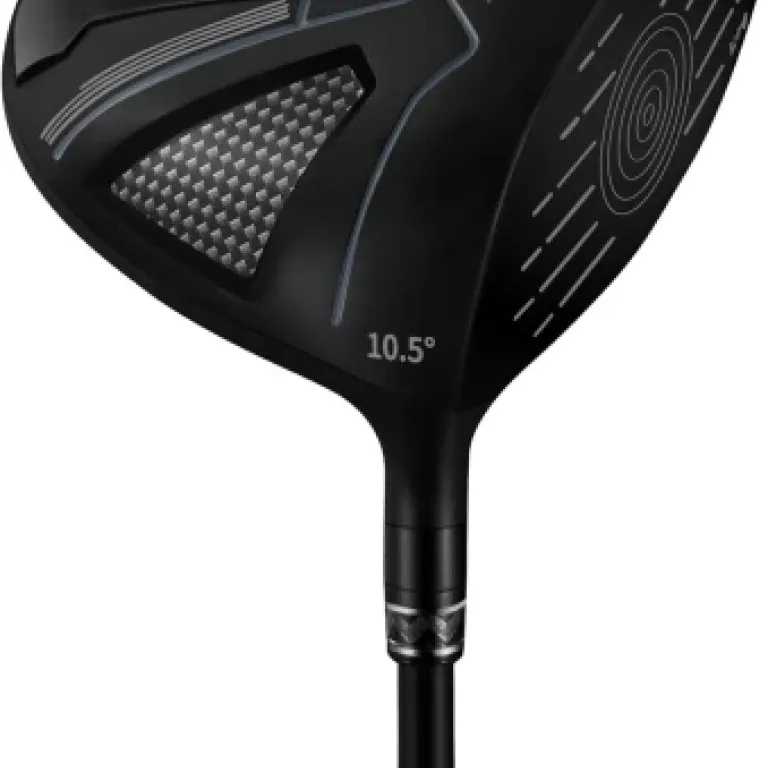
The KVV Golf Driver for men and women sits in a tricky segment: it tries to offer the look and distance of big-name drivers from PXG, XXIO or other major brands, but at a much lower price. On paper, it ticks a lot of boxes: 10.5° loft, regular flex graphite shaft, titanium head, and a low center-of-gravity design advertised for higher launch and forgiveness. The club is right-handed only and comes with a headcover, which is standard for this category.
What stands out in the public comments is that several buyers directly compare it with much more expensive drivers they already own. One user puts it side by side with a PXG, another with a XXIO, and both say distance is roughly on par for them. That kind of comparison is more valuable than generic praise, because it gives a clearer idea of where this KVV sits in real golfers’ bags: not just as a beginner toy, but as a potential alternative to premium gear for casual and mid-handicap players.
The overall rating is currently 5.0/5 from a small base of 8 reviews. That’s very positive, but the low number of reviews means it’s still early days. There are no horror stories about build quality or shaft failures, but also not enough long-term feedback to be fully confident about durability. In my opinion, this looks like a driver that targets golfers who want modern specs and a decent look without paying top-brand prices.
If you’re expecting cutting‑edge adjustability, custom shafts, or multiple loft options, this is clearly not that product. It’s a simple, fixed‑spec driver: 10.5° loft, regular flex, standard grip, standard length around 45 inches, and only for right-handers. The key question is whether its performance and feel, as reported in the reviews, are solid enough to make it a sensible purchase versus both entry-level boxed set drivers and used premium models. The rest of the analysis focuses on that point: forgiveness, distance, build, and value.
Price–performance balance versus big-name drivers
The strongest argument for this KVV driver is clearly value for money. Several buyers explicitly compare it with premium drivers they already own. One calls it “a solid driver with great value” and notes that when they hit balls side by side with a PXG, it was “a par overall” in terms of performance, especially highlighting forgiveness. Another golfer coming from a XXIO says the KVV delivers the same distance for them but at a “much much better” price and goes as far as to “highly recommend to try.” These comments show that at least some golfers see it as a realistic alternative to drivers that cost multiple times more.
Even without a displayed price here, its Best Sellers Rank (#26 in Golf Club Drivers) and the way buyers talk about cost make it clear this sits in the budget to mid‑range tier, not in the premium category. For that tier, you’re getting a titanium head, PVD coating, light graphite shaft, and a 2‑year warranty. You’re not getting adjustability, custom shaft options, or multiple loft choices, but that’s normal at this level. In many cases, a golfer on this budget is choosing between a new off‑brand driver like this and a used big‑brand model that may not match their flex or loft as well.
The main compromises from a value perspective are limited configurations and unknown resale value. It’s right‑hand only, regular flex only, 10.5° only, standard grip only. If you need stiff flex, different loft or left‑handed, you’re out of luck unless you start changing components, which eats into the value. Resale value is also likely lower than big‑name drivers, so if you like to flip clubs regularly, this may not hold value as well as a mainstream brand.
In my opinion, for a recreational right‑handed golfer who fits the regular‑flex, 10.5° profile, this club looks like good value. You get performance that several buyers feel is comparable to far more expensive drivers, at a lower entry price, with a simple package. If you’re picky about shafts, lofts, or brand prestige, the value equation changes and you might be better off with a used premium driver. But for someone who just wants a modern, forgiving driver without spending a lot, the KVV makes a strong case on the price–performance front.
Design, looks and address impression (from buyers’ comments)
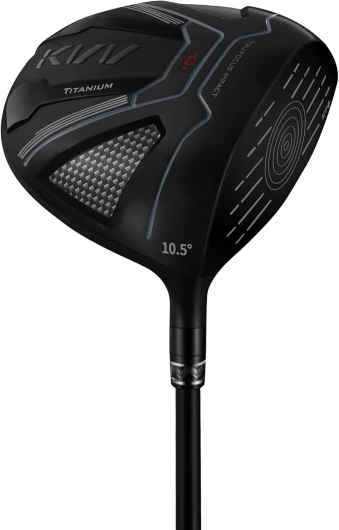
From the photos and the comments, the design language of this KVV driver clearly tries to imitate major OEM drivers. Buyers mention that it has “the look of a major OEM golf brand” and describe it as “cool looking” and “SIIIICK” visually. The colorway is black, with a titanium head finished in PVD, which usually gives a darker, slightly more premium look than plain painted metal. That darker finish can also help some players frame the ball at address because there’s less glare compared with shiny chrome.
One reviewer who compared it side by side with their existing driver notes that the head size and face size are very similar to their current mainstream driver. That suggests this is not a compact, players‑only head, but rather a full‑size, high‑forgiveness style. The same reviewer also mentions the face is set slightly closed, which is a deliberate design choice to help many amateurs square the face more easily. A slightly closed face often leads to a more left‑biased starting line for right‑handers, which can help fight a slice but may not please players who already hit strong draws.
The sound at impact is mentioned in the reviews as “a bit different” compared with some 3–5‑year‑old drivers, and another buyer says the face “sounds better when touching the ball.” Since there are no detailed technical notes about internal rib structures or acoustic tuning, it’s safe to say this isn’t marketed as some kind of acoustic engineering masterpiece. In my opinion, the brand is going for a modern titanium sound that feels in line with current drivers, and the comments suggest they roughly hit that target, even if it’s slightly different from older clubs.
Overall, the design seems aimed at giving golfers a confidence‑inspiring look at address without standing out as a cheap clone. The PVD‑coated titanium head, standard 45" length, and conventional head shape all point in that direction. If you like wild colors or compact tour heads, this probably won’t excite you. But if you just want a driver that looks like what your playing partners are using from big brands, this KVV appears to blend in quite well visually.
Grip, handling and ease of swing
Comfort on a golf driver mainly comes down to weight, balance, and grip feel. This KVV driver is listed at around 1 pound with a lightweight graphite shaft, and several golfers in the comments immediately notice how light it feels compared with their existing clubs. One reviewer mentions that their playing partners commented on how lightweight it was when they tried a few shots. That kind of feedback suggests the club is on the lighter side of the spectrum, which usually benefits players who struggle to generate speed with heavier drivers.
The standard rubber grip is described by the brand as ergonomic and anti‑slip, with the aim of providing “easy control even in wet conditions and after extended use.” One buyer confirms that the grip is standard size only and warns that golfers with bigger hands who like midsize grips may want to change it. That’s an extra step, but regripping is common in golf, and at least the stock grip seems acceptable for average‑sized hands according to the lack of complaints in the reviews.
Because of the regular flex and light build, this driver should, in theory, be easier to swing for beginners and intermediate players than a heavier, stiff‑flex tour model. A lighter shaft typically helps reduce fatigue over 18 holes and allows smoother tempo for many amateurs. However, very fast swingers might find a light regular‑flex shaft too soft or whippy, which can hurt both comfort and control. There’s no mention of hand shock or harsh feel at impact in the comments, which is a good sign, but also not enough data to make strong claims about vibration dampening.
In my opinion, this club looks comfortable for average‑speed recreational golfers who want something easy to swing and not too demanding. If you are tall with large hands or swing very fast, the standard grip and regular‑flex light shaft might not be ideal out of the box, and you might end up changing the grip or the shaft. For the target audience, though – casual players, newer golfers, or those coming from heavy old drivers – the reported lightness and simple grip should feel user‑friendly and not tiring over a round.

Titanium head, PVD finish and ultra-light graphite shaft
The core of this club is its titanium driver head paired with a 100% ultra-light graphite shaft. Titanium is standard in modern drivers because it allows a large head with thin walls, keeping weight low while maintaining strength. KVV adds a PVD coating on the head, which is mainly there for scratch and corrosion resistance and a darker aesthetic. On paper, PVD should help the club maintain its appearance longer than a simple painted finish, especially around the sole and face where drivers tend to get scuffed from turf and sand.
The shaft material is graphite, advertised as ultra‑light, which fits the feedback from golfers who comment that the club feels very light. A lighter shaft can help players with moderate swing speeds gain a bit of extra clubhead speed, but it can also feel less stable to very aggressive swingers. There are no detailed torque or weight specs published, so this looks like a generic regular‑flex shaft tuned for average amateurs, not something aimed at high‑speed players who usually look for low‑torque, heavier options.
The grip is standard-size rubber, with an anti‑slip pattern according to the description. One buyer explicitly points out that the grip is standard only, with no midsize or oversize factory options. They also mention that people with large hands who prefer midsize grips would likely need to regrip the club. That’s not unusual at this price point, but it’s something to factor in if you know you need a different grip size – add the cost of a new grip to your mental budget.
In my opinion, the material package is solid but basic: titanium head, PVD finish, light graphite shaft, standard rubber grip. There’s nothing cutting‑edge like carbon crowns, exotic shaft materials, or multi‑material faces. The upside is that these materials are proven and, if assembled correctly, should deliver consistent performance for the target audience. The downside is that golfers chasing the latest multi‑material tech or premium aftermarket shafts will not find that here, and might be better off looking at higher‑end or adjustable models.
Build quality and long-term prospects
On paper, the KVV driver checks the right boxes for durability: a titanium head for strength, a PVD coating to limit scratches and corrosion, and a graphite shaft from a known material category rather than some unknown plastic. The brand advertises the PVD finish as a way to prevent scratches and corrosion, which should help the club keep its appearance over time, especially if you use the included headcover between shots or at least between rounds.
In the published reviews, there are no reports of breakage, loose heads, or shaft failure so far. Golfers focus mostly on performance, weight, and feel, which often indicates that the basic build quality is at least acceptable. One user mentions playing a virtual round and another describes a range session and course warm‑up, with no negative comments about the club falling apart or showing premature wear. Combined with the 2‑year warranty, that gives a minimum level of reassurance: if there is a manufacturing defect, you should be covered within a reasonable time frame for a golf club.
The honest caveat is that the sample size is still small: roughly 8 reviews and no multi‑season feedback. That means long‑term durability over several years and hundreds of rounds is still an open question. Premium drivers from big brands often have more proven track records simply because they’ve been owned and reported on by thousands of golfers. Here, you’re relying more on the material choices (titanium, PVD, graphite) and the warranty promise than on a big pool of long‑term user stories.
In my opinion, there’s nothing in the specs that raises red flags for durability in normal use. If you treat the club reasonably, use the headcover, and don’t regularly slam it into the ground or range mats, it should hold up like most titanium drivers in this price range. If you are extremely hard on your equipment or play very frequently, you might still prefer a brand with a long history of proven heads and shafts, but for typical recreational use, this KVV driver looks reassuring enough given its construction and current feedback.

Forgiveness, ball flight and distance according to golfers
Performance is where this KVV driver gets the most concrete feedback from buyers. The brand emphasizes a low centre of gravity and oversized sweet spot for higher launch and forgiveness. In the comments, multiple golfers back up the forgiveness claim. One verified purchaser comparing it with a PXG driver says that even on mis‑hits, the KVV still delivers “decent distance and direction” and calls out forgiveness as a key strong point. Another golfer who took it to the range says forgiveness on off‑centre strikes is similar to their current gamer, with misses off the heel behaving in a familiar way.
On distance, the picture is a bit more nuanced but still positive. One golfer who previously used a XXIO says the KVV is “very light, nice looking, same distance” for them, which is strong praise considering XXIO is a premium brand known for helping moderate swing speeds. Another reviewer eyeballing distances at the range notes that the KVV produced a higher ball flight and was a bit shorter on centre strikes compared with their usual driver. They attribute this to a slightly shorter length (45" vs 45.5") and a different lie angle, not necessarily to a weak face. Higher launch and a touch less shaft length can easily produce a few yards less carry for some swings while still being very playable.
Shot shape comments are also interesting. The more detailed review mentions the KVV is set up with a slightly closed face and that they were hitting draws with both their gamer and the KVV. A closed face and low CG can help players who fight a slice move toward straighter or draw‑biased shots. For golfers who already draw the ball, that might risk over‑drawing if they’re not careful, but nothing in the comments suggests wild hooks. Sound at impact is described as different but not in a negative way, and one buyer even prefers the sound, saying the face “sounds better when touching the ball.”
In my opinion, this driver’s performance profile is clear: forgiveness and ease of launch first, absolute max distance second. The 10.5° loft, regular flex, slightly closed face and low CG all line up with that. If you want a forgiving driver that behaves like many mainstream 10.5° regular‑flex models and you’re not obsessed with squeezing out the final 5 yards, this seems to do the job. High‑speed players looking for a low‑spin bomber or very specific launch conditions will likely be better off elsewhere.
What this KVV driver actually offers
On the spec sheet, the KVV driver is a fairly classic modern club: 10.5° loft, regular flex, 45" length, graphite shaft, and a titanium head with PVD coating. The weight is listed at about 1 lb for the club, which is in line with many lightweight drivers on the market. It is explicitly marked as a right-handed driver with standard grip size and standard length, without any adjustability for loft or lie. That positions it as a simple, plug‑and‑play option, rather than a driver for golfers who like to tweak settings.
KVV advertises a low centre of gravity design to promote a higher trajectory and more forgiveness. The face is described as having an oversized sweet spot, again targeting forgiveness on off‑centre hits. One reviewer who compared it directly to their current gamer noted that the head size and face size were very similar to their name‑brand driver, and also pointed out that the KVV appears to be set up with a slightly closed face. That kind of setup usually aims to help players who fight a slice, encouraging a draw‑biased ball flight instead.
The shaft is marketed as 100% ultra-light graphite, which should help slower to moderate swing speeds generate a bit more clubhead speed. In the comments, more than one golfer mentions how light the club feels compared with their usual driver. There’s also a 2‑year warranty, which is a reassuring detail in this price segment, where some brands only offer a year. The driver comes with a headcover included, which is basic but useful for keeping the PVD finish from getting bag chatter.
In my opinion, this presentation clearly targets recreational golfers, not gear nerds. No interchangeable weights, no adjustable hosel, and no multiple loft options. Just a single configuration that, on paper, should suit a wide chunk of average‑speed right‑handed players. If you want a simple driver that behaves broadly like mainstream 10.5° regular‑flex options, this spec sheet fits that brief. If you’re looking for left‑handed versions, stiff flex, or custom grip sizes without extra work, this model will not cover those needs.
Pros
- Forgiving performance with a low centre of gravity and large sweet spot, according to multiple buyers
- Lightweight graphite shaft and 10.5° loft that should suit many recreational right-handed golfers
- Price reported as much lower than PXG/XXIO while delivering comparable distance for some users
- Titanium head with PVD coating and a 2-year warranty for reasonable durability assurance
Cons
- Only one configuration: right-handed, regular flex, 10.5° loft, standard grip, no adjustability
- Limited long-term durability feedback due to small number of reviews
- Standard grip size only; golfers with larger hands may need to pay for a regrip
Conclusion
Analysis score
Looking at the specs and the public feedback, the KVV Golf Driver positions itself as a simple, forgiving driver aimed at recreational right‑handed golfers who want big‑brand style performance without paying big‑brand prices. The combination of a 10.5° loft, regular‑flex ultra‑light graphite shaft, titanium head and low centre of gravity points clearly toward ease of launch and forgiveness. Multiple buyers back that up, saying forgiveness is strong and distance is comparable, for them, to much pricier drivers from PXG and XXIO.
It’s not a club for tinkerers: there’s no adjustability, no loft options, no flex choices, and only a standard‑size grip. That keeps costs down but also limits who it fits perfectly straight from the factory. The current 5.0/5 rating from 8 reviews is very positive, though still a small sample. On the durability side, titanium with a PVD finish and a 2‑year warranty is reassuring, but long‑term data is still limited. In my opinion, the trade‑off is clear: you sacrifice some brand prestige, adjustability, and custom options in exchange for a lower price and performance that, for many average players, seems close enough to premium drivers.
If you’re a right‑handed beginner to mid‑handicap golfer with moderate swing speed who just wants a modern, forgiving driver that looks the part, this KVV is worth serious consideration. If you’re a high‑speed player, left‑handed, very particular about shaft specs, or you like to tweak loft and lie, you’ll probably be happier putting your money into an adjustable big‑brand head, even if that means buying used. Overall, this KVV driver comes across as a solid value play with convincing user feedback in its target category.